


























Views
Downloads
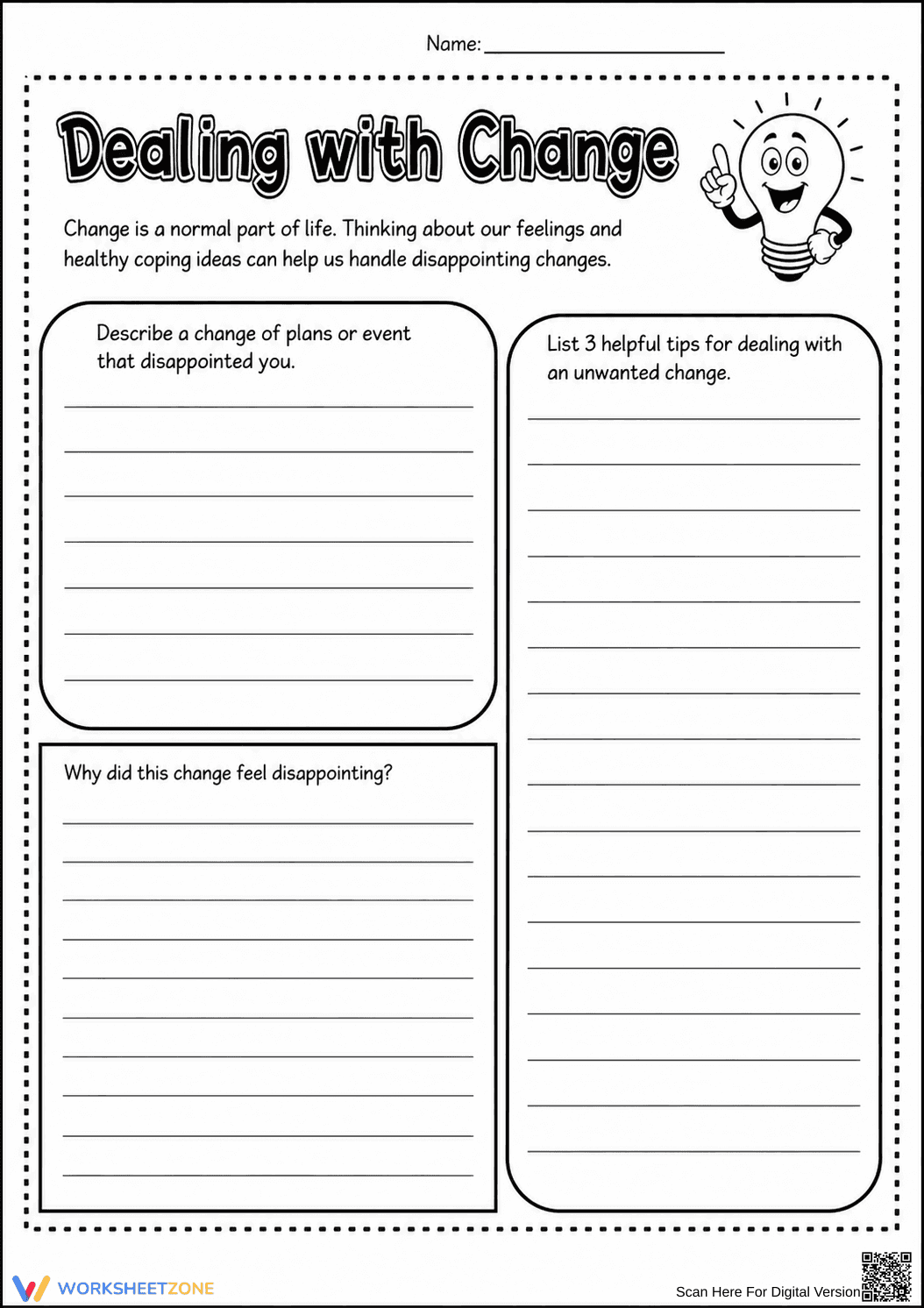

Printable Dealing with Change Worksheet | Grade 4 SEL
Paste this activity's link or code into your existing LMS (Google Classroom, Canvas, Teams, Schoology, Moodle, etc.).
Students can open and work on the activity right away, with no student login required.
You'll still be able to track student progress and results from your teacher account.
This Grade 4 social-emotional learning worksheet helps students develop healthy coping strategies for unexpected situations. By reflecting on personal experiences with disappointment, learners build emotional resilience and practice articulating their feelings. The structured prompts guide students to process unwanted changes and brainstorm actionable advice for themselves and others.
At a Glance
- Grade: 4 · Subject: Social-Emotional Learning
- Standard:
CCSS.ELA-LITERACY.W.4.4— Produce clear and coherent writing appropriate to the task- Skill Focus: Coping with change and emotional regulation
- Format: 1 page · 3 problems · No answer key · PDF
- Best For: Morning work or counseling sessions
- Time: 15–20 minutes
This single-page resource features three distinct writing sections designed to scaffold emotional reflection. Students first describe a specific change of plans that caused disappointment, then explain the underlying reasons for their feelings. Finally, a dedicated section prompts them to list three helpful tips for managing unwanted change, accompanied by an engaging lightbulb illustration to encourage positive problem-solving. The open-ended format provides ample lined space for detailed responses.
This worksheet is designed for immediate classroom implementation with a streamlined workflow.
- Print (1 minute): The black-and-white design ensures quick, ink-saving duplication for the entire class.
- Distribute (1 minute): Hand out the sheets during morning meetings, advisory periods, or as a calm-down activity.
- Review (3 minutes): The self-explanatory prompts require no direct instruction, allowing teachers to facilitate rather than lecture.
With under two minutes of total teacher prep time, this resource is highly suitable for emergency sub plans or spontaneous SEL interventions.
Aligned to primary standard CCSS.ELA-LITERACY.W.4.4, this activity requires students to produce clear and coherent writing in which the development and organization are appropriate to task, purpose, and audience. By articulating complex emotions and structuring advice, learners practice essential expressive writing skills. Both standard codes can be copied directly into lesson plans, IEP goals, or district curriculum mapping tools.
Integrate this worksheet into your weekly routine during dedicated SEL blocks or morning meetings. It serves as an excellent independent reflection activity after a class discussion about flexibility and resilience. Alternatively, school counselors can utilize it during small group sessions to guide conversations around managing disappointment. As students write, observe their ability to identify specific emotions rather than just general frustration—this provides valuable formative assessment on their emotional vocabulary. Expect completion to take between 15 and 20 minutes.
This resource is ideal for upper elementary students, particularly those in fourth grade, who are actively developing self-awareness and self-management skills. The straightforward layout supports learners who benefit from clear, segmented tasks when processing big emotions. Pair this worksheet with a read-aloud book about overcoming obstacles or a classroom anchor chart detailing healthy coping mechanisms to reinforce the concepts.
Integrating structured emotional reflection into the school day significantly impacts student well-being and academic readiness. This resource targets CCSS.ELA-LITERACY.W.4.4, challenging students to produce clear and coherent writing appropriate to the task while processing personal experiences. According to a comprehensive EdReports 2024 analysis, embedding social-emotional learning directly into core academic tasks like writing improves both emotional regulation and literacy outcomes. When students are given dedicated time to articulate their feelings regarding unexpected events, they develop stronger executive functioning skills and greater cognitive flexibility. This targeted practice helps learners transition from reactive frustration to proactive problem-solving. By combining expressive writing with emotional intelligence building, educators can foster a more supportive classroom environment that equips students with the lifelong skills necessary to handle adversity and adapt to new situations effectively.


