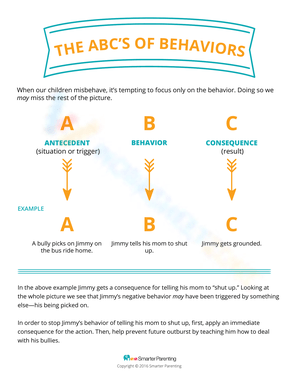
The biggest difference between useful and weak ABC data is whether the behavior line is observable enough for another adult to picture it. In grade 5, vague labels like disrespectful, off task, or rude do not tell a team much. A better note sounds like this: after teacher assigned a 20-minute independent writing task, student put head down, said no twice, and did not begin for 7 minutes. That version includes the antecedent, a measurable behavior, and a time marker that can be discussed later.
This level of detail matters because grade 5 students are expected to self-manage more than younger students, and adults can sometimes mistake skill gaps for defiance. If a student argues only when a task requires extended writing, the pattern may point to academic load or frustration rather than a broad behavior problem. If a student escalates during group work but not during solo tasks, peer demands may be doing more of the work than the assignment itself.
Why printable PDF worksheets still work well for upper elementary behavior tracking
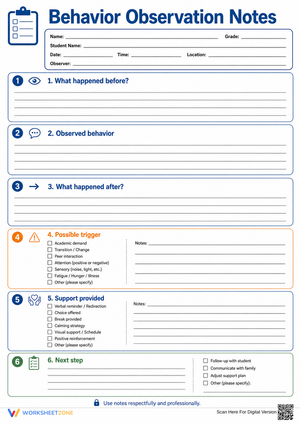
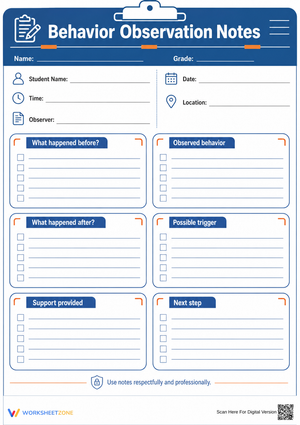
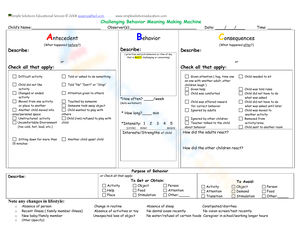
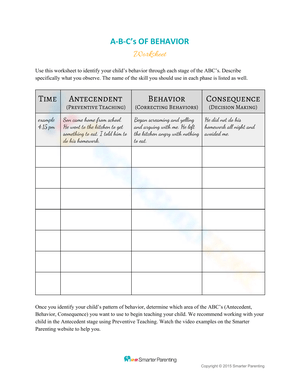
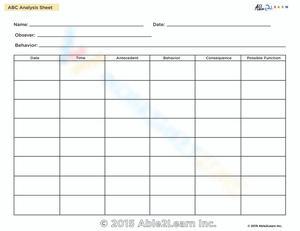
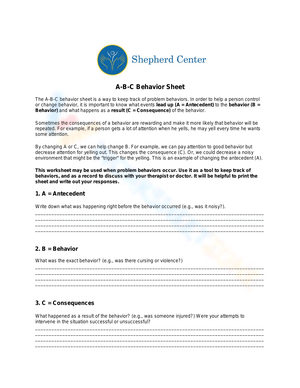
Printable ABC forms continue to work because they fit how schools actually run. A classroom teacher can keep a few copies on a clipboard, a special educator can bring one to a push-in block, and a counselor or behavior support staff member can use the same layout during observation. The format is simple enough for quick notes, but detailed enough to support later discussion. That balance is especially helpful in grade 5, where behavior concerns are often tied to changing expectations for independence, peer interaction, and work completion.
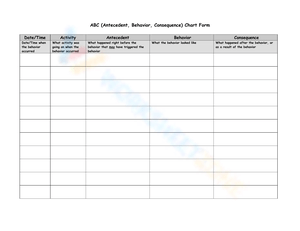
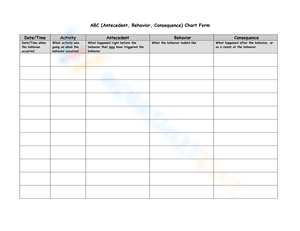
The Autism Internet Modules: ABC Chart Form shows why this kind of layout remains common. A good form does not need extra design features to be useful. It needs clear space for sequence, setting, and response. For teachers, the PDF format also reduces friction. You can print a small stack, place them in a sub folder, bring them to an RTI or MTSS meeting, or compare several observations side by side when a team is deciding next steps.
- Use one sheet for a single observation when the goal is a clean snapshot of one routine.
- Use multiple sheets across a week when the team is checking whether the same trigger appears more than once.
- Keep the form near the location where the concern occurs so notes are recorded while details are still fresh.
How ABC documentation supports PBIS, RTI, and team problem-solving
ABC forms are not just observation sheets. They can support wider school systems when the notes are reviewed for patterns. Center on PBIS: What is PBIS? emphasizes building supports that are proactive and consistent across settings. In classroom practice, ABC data helps teams decide whether a student needs a reteach of expectations, an adjustment to task structure, a different prompt before transitions, or more direct support with peer interactions.
That is also why these worksheets can be helpful in RTI or MTSS conversations and in discussions linked to individual student plans. A team does not need dozens of pages to begin. Even three to five strong observations from comparable routines can be more useful than a larger stack of vague notes. Teachers can look for repeated antecedents, identify which adult responses calm or extend the behavior, and decide what to test next in the classroom.
Classroom Implementation
In a grade 5 classroom, ABC worksheets are most effective when they are matched to predictable routines. Teachers often get the clearest data during entry tasks, transitions between subjects, independent work blocks, group projects, and the return from recess or lunch. Those are moments when students are managing directions, peer dynamics, and sustained work, so the worksheet can help staff tell whether the issue is linked to task avoidance, social conflict, attention, or frustration.
Try planning observations around one narrow question at a time. If the concern is blurting, observe during whole-group instruction and again during partner talk. If the concern is refusal, observe during independent writing and math practice rather than every part of the day. Narrow observation windows make the data easier to compare, and they keep adults from overrecording minor behaviors that are not tied to the main concern.
- During centers or stations, note whether the trigger is a peer interaction, a wait time, or a change in materials.
- During independent practice, record the exact task demand, such as multi-step directions, written output, or error correction.
- During transitions, capture how quickly the behavior begins after a cue and what adult response follows.
- During social conflict, describe the student actions and peer responses without assigning motives.
Frequently Asked Questions
1. What is an antecedent behavior consequence worksheet?
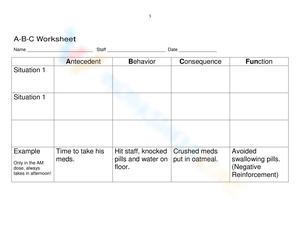
An antecedent behavior consequence worksheet is a 3-part observation form used to record what happened before a behavior, the behavior that was observed, and what happened after it. Teachers use it to document patterns during class routines so support decisions are based on evidence instead of memory or broad labels.
2. How should teachers use an ABC chart with a 5th grade student?
Use the chart during one routine where the concern appears most often, such as independent work, transition time, or group work. Record only observable actions, the task or event that came right before them, and the response that followed. After 3 to 5 observations, compare the notes for repeated patterns.
3. What behaviors should teachers record on an ABC worksheet?
Record behaviors that can be seen or heard clearly, such as left seat, argued with peer, refused to start assignment, crumpled paper, or called out during instruction. Avoid personality labels. Grade 5 teams get better results when entries describe the action, the duration when possible, and the exact classroom context around it.
4. Can ABC worksheets support IEP, RTI, or behavior planning?
Yes. ABC worksheets can support RTI, MTSS, behavior planning, and team discussions because they show repeated triggers and outcomes across settings. They are especially helpful when several adults work with the same student. A short set of accurate observations often gives a team a better starting point than one general referral note.












 Interactive Worksheet Maker
 Quiz Maker
 Word Search Maker
 Crossword Puzzle Maker
 Word Scramble Generator
 Sentence Scramble Generator
 Handwriting Worksheet Generator
 Name Tracing Generator
 Fill In The Blank Generator