In upper elementary, students are expected to manage partner talk, group projects, changing routines, and peer conflict with more independence than they had in earlier grades. For autistic students, those situations can be hard if social communication, perspective-taking, or flexible responding needs direct instruction. A well-made worksheet helps when it gives students a clear way to practice one skill at a time and then connect that practice to real classroom moments.
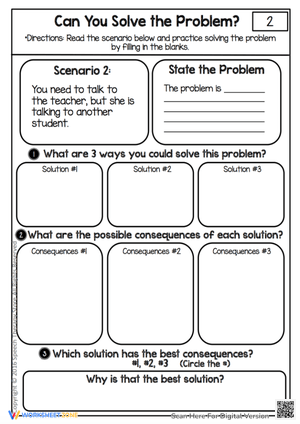
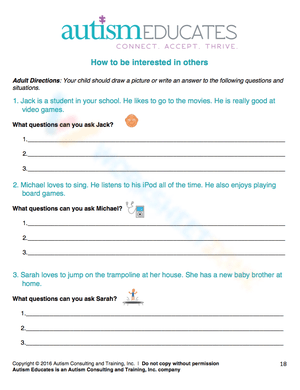
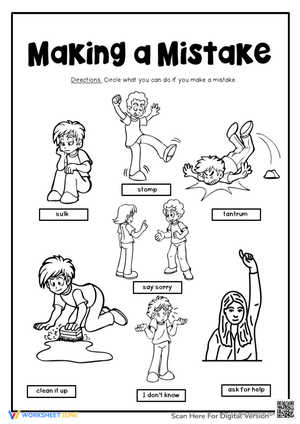
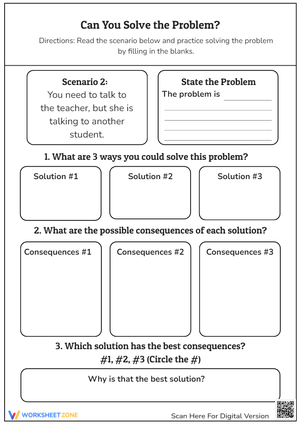
Worksheetzone's 5th grade social skills for autism worksheets respect that balance. They include realistic school scenarios, short text blocks, and concrete response tasks so students can focus on conversation choices, friendship moves, expected behaviors, and social problem solving without getting overloaded by the format.
What do teachers expect when searching for autism-friendly social skills worksheets?
When teachers sort through printable materials, the strongest choices are usually predictable and easy to scan. Students with autism often respond better when the page design lowers uncertainty. That means directions should be short, examples should be concrete, and the same response pattern should repeat across activities so the student can spend energy on the social target instead of decoding a new format every time.
- Clear directions: One-step or two-step prompts are easier to use during intervention blocks and inclusion support.
- Visual structure: Boxes, cue words, and consistent spacing help students locate the task quickly.
- Realistic situations: Grade 5 topics should sound like lunchroom talk, recess disagreements, partner work, clubs, and classroom discussions.
- Single-skill focus: A page on conversation turns should stay on that skill instead of mixing inferencing, handwriting, and behavior reflection in one task.
- Teacher-ready flexibility: Good PDFs work in resource rooms, counseling groups, and general education classrooms with only light adaptation.
Teachers also tend to get better results when a worksheet includes space for speaking, circling, or choosing between options rather than long open-ended writing. Many fifth graders can explain a social idea aloud before they can write it in detail, especially during a challenging interaction.
Best worksheet topics for fifth graders with autism
Upper-elementary social skills instruction should match the social demands students face every day. In grade 5, that usually means moving beyond simple manners lessons and targeting peer interaction with more nuance. The most useful worksheet sets often stay centered on a few high-value topics that can be retaught across settings.
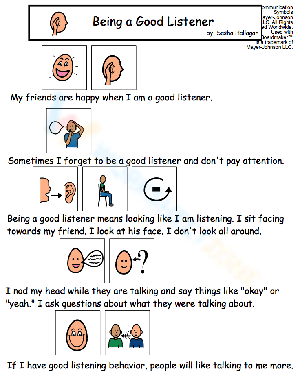
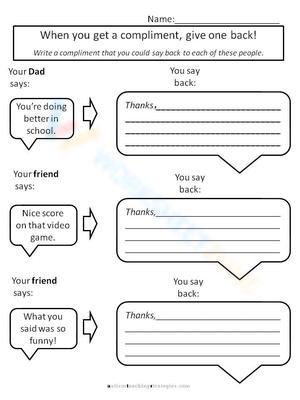
- Conversation turns: Students practice how to enter a conversation, stay on topic, ask a follow-up question, and notice when it is someone else’s turn to speak.
- Friendship skills: Pages can focus on inviting a peer, joining a group respectfully, responding to rejection, or showing interest without controlling the activity.
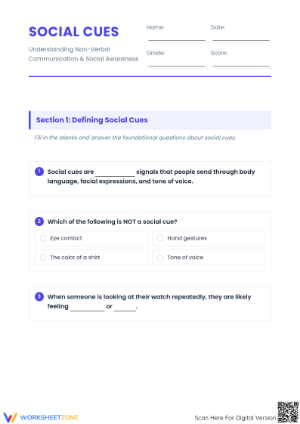
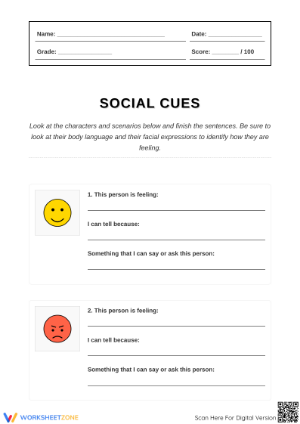
- Reading social cues: Students identify tone of voice, facial expressions, body language, and context clues that signal when a peer is annoyed, confused, or ready to talk.
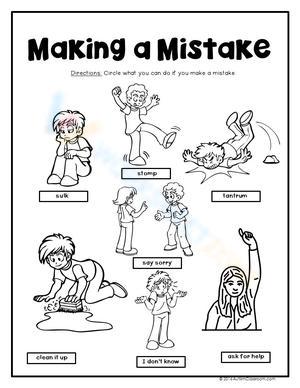
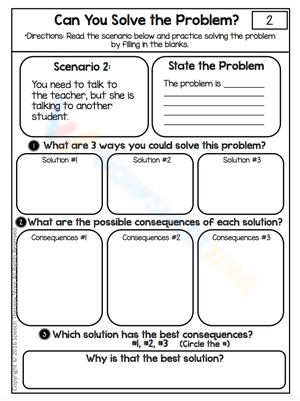
- Conflict and repair: Worksheets can walk students through small school conflicts such as interrupting, losing a game, or disagreeing during group work.
- Flexible thinking: Fifth graders often need direct practice with changes in plans, different opinions, and situations where there is more than one acceptable response.
These topics are usually more effective than broad pages labeled only social skills because teachers can connect them to IEP goals, behavior plans, or current classroom routines. Specific skills are easier to model, prompt, and observe.
Classroom Implementation
In a school setting, printable worksheets are most useful when they slide into an existing routine instead of becoming a stand-alone event. Teachers can use them during morning meetings, social skills groups, special education push-in support, counseling time, or a brief intervention block before a known social pressure point such as lunch or collaborative work.
- Preview the skill: State the exact target in plain language, such as “today we are practicing how to disagree without sounding rude.”
- Model first: Show a strong example and a weak example so students hear the difference.
- Complete one section together: Guided practice helps you check whether the student understands the scenario before working alone.
- Role-play immediately: Use the same language from the worksheet in a short partner exchange.
- Revisit the skill later: Bring the same page back during reflection or before another social demand so the language stays active.
This routine works especially well in mixed settings because the worksheet gives a concrete script for adults. Paras, counselors, and classroom teachers can all reinforce the same language when the format is consistent.
How to adapt worksheets for IEP goals and mixed-ability groups
One strength of PDF worksheets is that teachers can keep the same topic while changing the response load. That helps when a fifth grade team is working with students who have different reading levels, language demands, or behavior support plans. The page does not need to be identical for every learner to keep the same instructional target.
- Reduce the language load: Read the scenario aloud, highlight one key sentence, or cover extra answer choices if the student gets overwhelmed.
- Add visual supports: The NPDC/UNC visual supports fact sheet identifies visual supports as an evidence-based practice that can help with social, communication, behavior, and academic routines across school settings.
- Shorten the task: Use two items instead of ten, then spend the saved time on discussion and rehearsal.
- Pair with sentence frames: Students may answer more accurately with starters such as “I can say…” or “A better choice is…”
- Link to the IEP goal: If the goal targets peer conversation, collect data only on turn-taking or follow-up questions instead of scoring every part of the page.
Teachers can also group students by support need rather than by grade-level reading strength alone. A student who reads well may still need heavy prompting for interpreting social cues, while another student may need the opposite balance.
Frequently Asked Questions
1. What social skills should fifth graders with autism practice most at school?
In grade 5, teachers usually get the most value from conversation turns, friendship skills, reading social cues, flexible thinking, and conflict repair. Those skills show up daily in partner work, recess, lunch, and class discussions.
2. Are PDF worksheets enough for teaching social skills to students with autism?
No. They work best as part of explicit instruction that includes modeling, guided practice, role-play, prompts, and feedback. The worksheet organizes the lesson, but students still need live practice to use the skill with peers.
3. How can teachers adapt social skills worksheets for IEP goals?
Keep the same social target but change the amount of reading, writing, or answer choices. You can read prompts aloud, add sentence frames, shorten the page, or collect data only on the skill named in the IEP goal.
4. What features make a social skills worksheet effective for autistic upper-elementary learners?
The best pages are visually clear, predictable, and age-appropriate. They focus on one skill at a time, use realistic school situations, and give teachers an easy way to connect paper practice to speaking and behavior in class.












 Interactive Worksheet Maker
 Quiz Maker
 Word Search Maker
 Crossword Puzzle Maker
 Word Scramble Generator
 Sentence Scramble Generator
 Handwriting Worksheet Generator
 Name Tracing Generator
 Fill In The Blank Generator