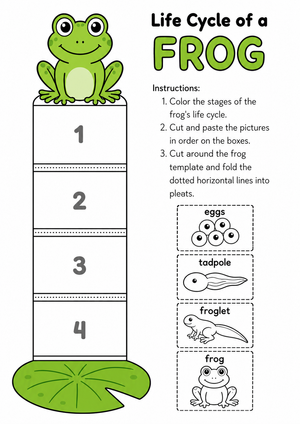
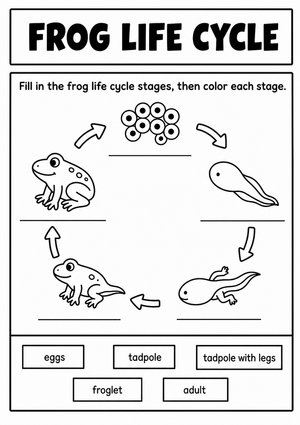
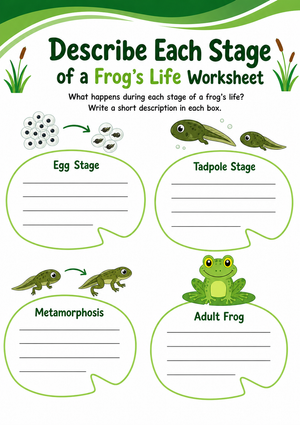
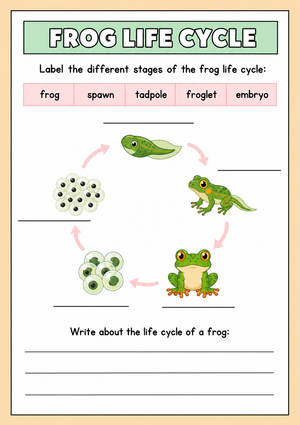
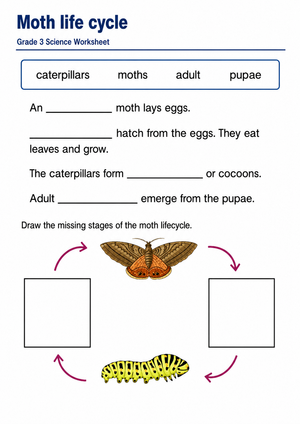
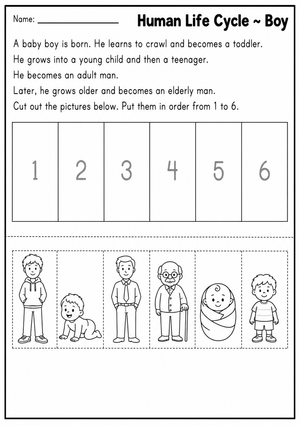
These animals life cycle printable worksheets for 3rd grade give teachers a ready set of sequencing, labeling, and comparison tasks built directly around NGSS 3-LS1-1 — the standard asking students to recognize birth, growth, reproduction, and death as stages shared across otherwise very different species. Each worksheet stands alone, targeting one animal group or one conceptual task, so the set fits naturally as daily warm-ups, guided practice, or a formative check after direct instruction.
What Each Worksheet Asks Students to Do
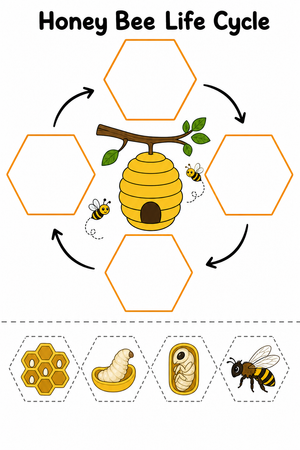
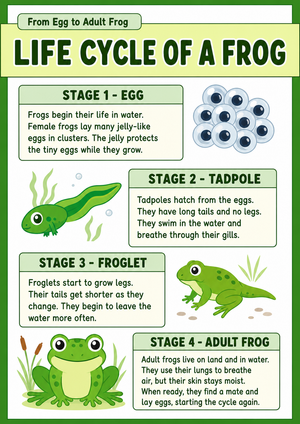
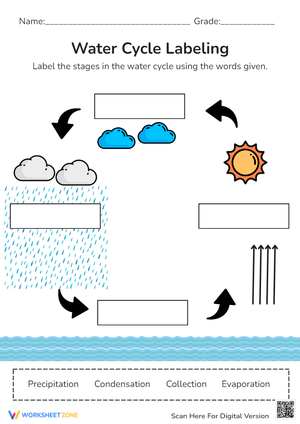
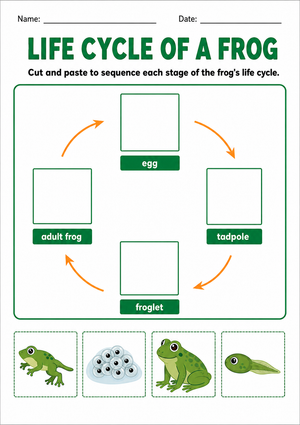
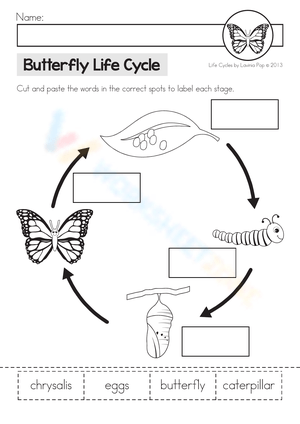
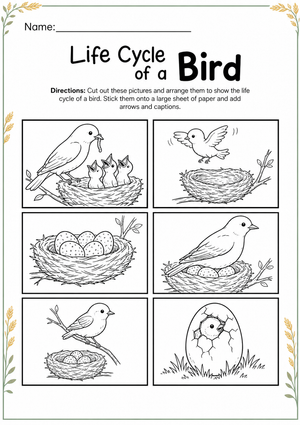
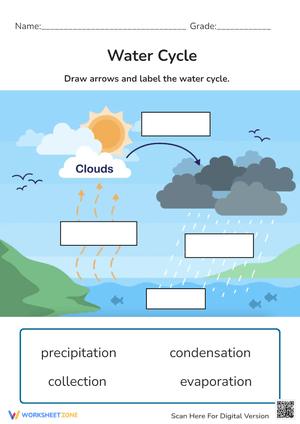
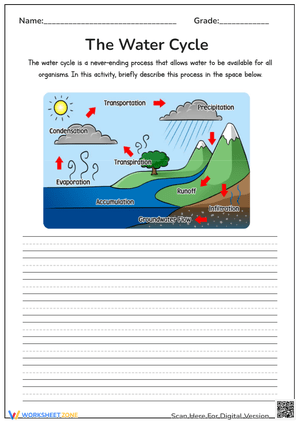
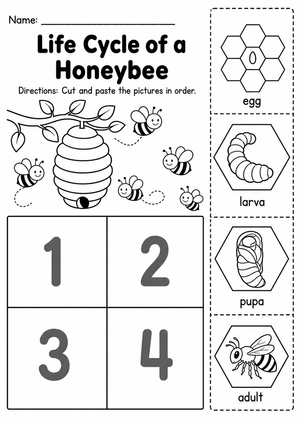
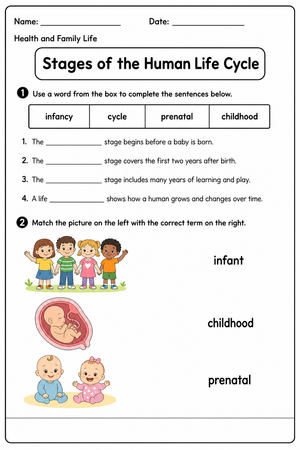
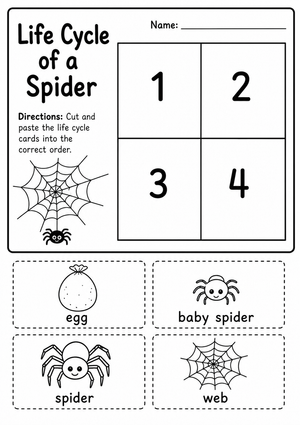
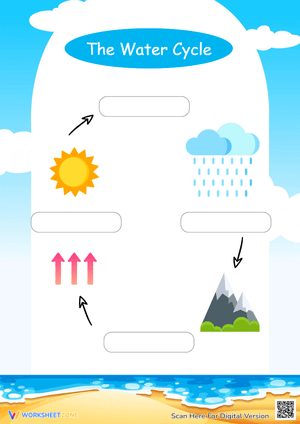
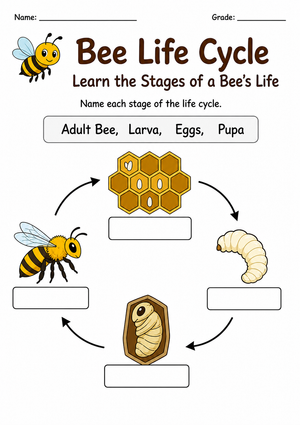
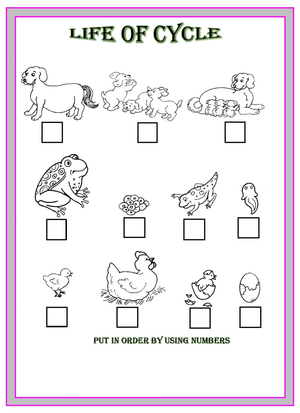
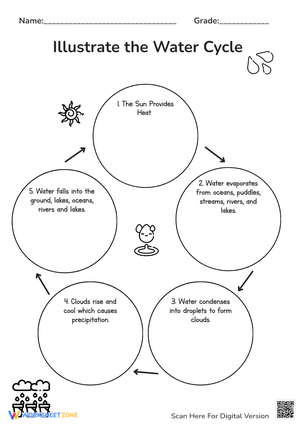
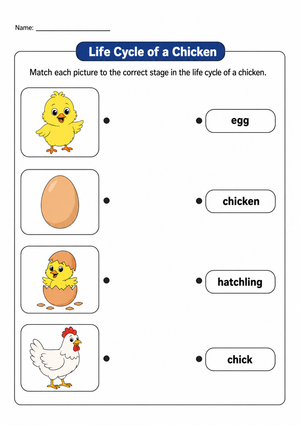
The set moves through four kinds of work. Sequencing tasks have students arrange the stages of a specific animal's life in correct order — butterfly, frog, grasshopper, robin, sea turtle, and dog each appear on separate worksheets. Labeling activities give students a diagram with blank stage names to fill in, either from a word bank or from recall depending on where in the unit the worksheet falls. Comparison tasks place two animal life cycles side by side and ask students to mark where the cycles align and where they diverge. Vocabulary matching rounds out the set, pairing terms like larva, pupa, nymph, and metamorphosis with illustrations and short definitions.
Third graders can say "baby frog" and "adult butterfly" without hesitation. What they need is sustained exposure before those same students use tadpole, nymph, and pupa with any reliability. Encountering the same vocabulary across different animals and different activity formats — labeling one week, matching the next, writing explanatory sentences the week after — gives students the repetition they need without turning it into rote drill.
Three Errors That Show Up in Student Work on This Topic
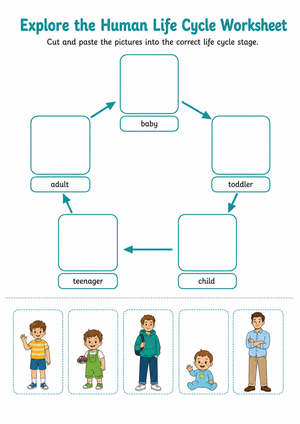
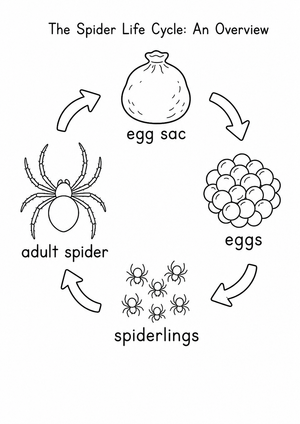
The most predictable error is sequencing a life cycle as a straight line. Ask a student to place caterpillar → chrysalis → butterfly in order and most of them succeed. Then ask what happens after the adult butterfly stage and many of them stall — they have learned the stages as a list, not as a recurring loop. The circular diagram format in this set addresses this directly: the layout requires students to draw a return arrow from the adult back to the egg, and several worksheets include a follow-up prompt asking them to explain in a sentence what the adult does to restart the cycle.
A second error involves collapsing larva and pupa into a single "middle stage." In actual student work, this shows up as a chrysalis labeled as a larva — the reasoning being that it's clearly not the egg and not yet the butterfly, so it must be the in-between thing. The functional distinction gets lost: larva is the feeding and growth stage; pupa is when the body reorganizes entirely. Because the worksheets ask students to describe what is happening at each stage rather than simply name it, this confusion surfaces before it solidifies into a fixed misconception.
For incomplete metamorphosis, students frequently decide a grasshopper nymph has already finished developing because it resembles the adult. They are reading shape rather than function, and without someone pointing to the absent wings on the nymph panel and asking what that means, many students move on without registering the developmental gap. The comparison worksheet that places complete and incomplete metamorphosis side by side creates a direct opportunity to address that before the unit assessment.
Working These Worksheets Into Your Science Block
The strongest first session pairs the initial sequencing worksheet with a brief observation — a two-minute clip of a caterpillar forming a chrysalis, or a live caterpillar in a classroom container if the timing works. The printed diagram alone does not convey the sense of time and physical change that makes a life cycle feel like a real process rather than a series of static pictures. After that first session, the remaining worksheets work well in the first 10–12 minutes of science class before whole-class discussion begins.
For a three-week unit, assigning one animal group per day during the first week and running comparison worksheets in the second week puts spaced retrieval principles to work: students re-encounter vocabulary from earlier sessions in a new context rather than reviewing everything at once. By the time they reach the frog-vs.-dog comparison worksheet, they have already labeled each animal separately — the comparison task becomes synthesis rather than review. That is a meaningfully different cognitive demand than assigning all comparison work at the start of the unit.
The labeling worksheets also serve as quick formative checks. A scan of completed work at the end of a lesson takes about three minutes and tells you whether the vocabulary is in place before you move into animal class comparison lessons. Finding that twelve students labeled the chrysalis as a larva is worth knowing on Tuesday rather than on the day of the unit test.
Tailoring the Set to Students Working at Different Levels
These animals life cycle printable worksheets for 3rd grade include diagram-based labeling activities that work well as the entry point for students with heavier reading loads or language support needs — the visual does most of the cognitive work, and a word bank shifts the task from recall to recognition without removing the vocabulary practice. Once students label diagrams reliably with that support in place, removing the word bank and requiring cold recall is the natural next step. That progression — recognition before recall — reflects how vocabulary acquisition actually works without lowering the standard.
Students who move through sequencing tasks quickly benefit from explanation prompts. Instead of ordering stages, they write a sentence about what is happening biologically at each one. "The pupa stage is when the caterpillar's body breaks down and reorganizes into its adult form" requires much more precise understanding than placing a picture in sequence. That kind of mechanistic explanation is where 4th and 5th grade life science begins, and students who write those sentences in 3rd grade have a head start on the reasoning they will need later.
The comparison worksheets function as natural extension work for students who finish early. Applying the same side-by-side format to two animals not covered in the set — a student who chooses to compare a cicada to a salamander, for example — draws on everything already practiced without requiring additional materials. Most third graders take that kind of self-directed application seriously, especially when they choose the animals themselves.
Standard Alignment
The animals life cycle printable worksheets for 3rd grade in this set align with NGSS 3-LS1-1: "Develop models to describe that organisms have unique and diverse life cycles but all have in common birth, growth, reproduction, and death." Sequencing and labeling tasks address the "develop models" component directly — students construct a visual representation of a life cycle rather than simply reading one provided for them. Comparison tasks address the "unique and diverse" clause by asking students to identify what varies across cycles and what stays constant across species.
The vocabulary work throughout the set also connects to CCSS ELA RI.3.4, which addresses determining the meaning of domain-specific words in informational text. The terms students practice here — larva, pupa, nymph, metamorphosis, offspring — appear in science reading passages and assessments across the full school year, so the practice carries well beyond the life cycle unit itself.
Frequently Asked Questions
Which animals are covered across the worksheets?
The set includes butterfly, grasshopper, frog, robin, sea turtle, and dog — covering complete metamorphosis, incomplete metamorphosis, amphibian development, a bird, a reptile, and a mammal. That range supports the cross-class comparisons required by NGSS 3-LS1-1 without using animals so unfamiliar that students cannot visualize the stages.
Do students need prior instruction before starting these activities?
The sequencing worksheets work as introductory activities and produce a useful baseline before formal teaching begins. Labeling and comparison worksheets assume students have encountered the vocabulary at least once in class. Assigning a labeling task before any instruction tends to create frustration rather than productive challenge — particularly for students who do not encounter science vocabulary outside of school.
How do the comparison worksheets meet the NGSS modeling requirement?
NGSS 3-LS1-1 calls for students to "develop models," which means constructing a representation, not just reading one. The comparison worksheets ask students to build a side-by-side model of two cycles, decide where stages align, and mark where they diverge. A worksheet that only presents a finished diagram and asks comprehension questions does not meet the modeling standard; these worksheets ask students to do the construction themselves.
How do these fit into a typical unit sequence?
These animals life cycle printable worksheets for 3rd grade work best spread across a three-to-four-week unit — one animal group per session during the introductory phase, comparison tasks mid-unit, and vocabulary review in the final week before assessment. Spreading the work across sessions rather than clustering it into one stretch gives students enough time between exposures for vocabulary and conceptual distinctions to consolidate before the unit test.