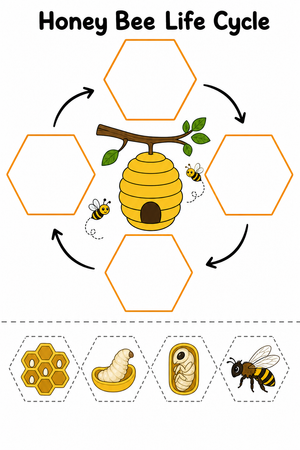
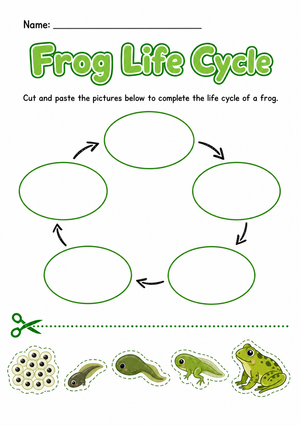
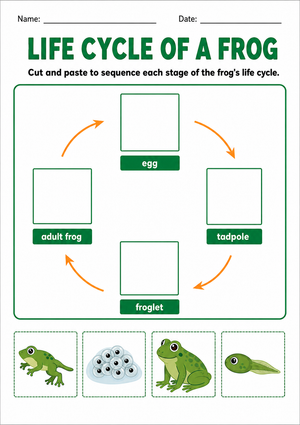
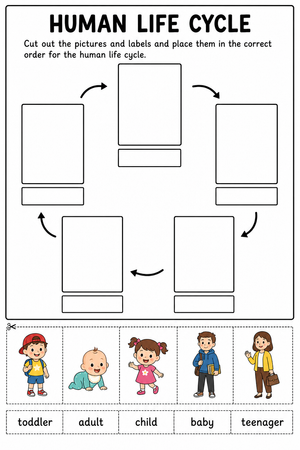
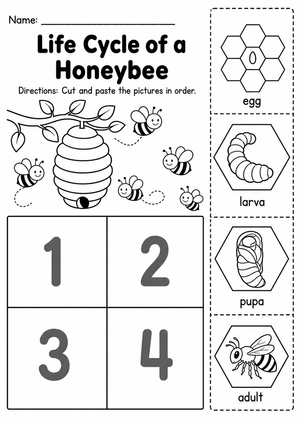
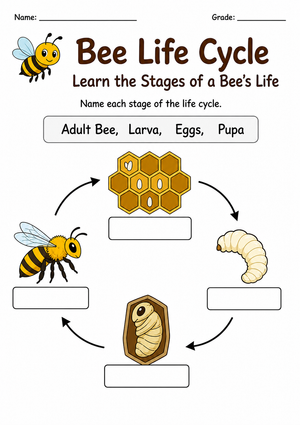
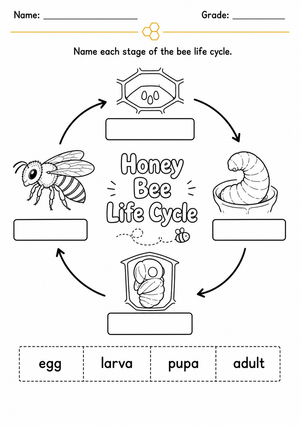
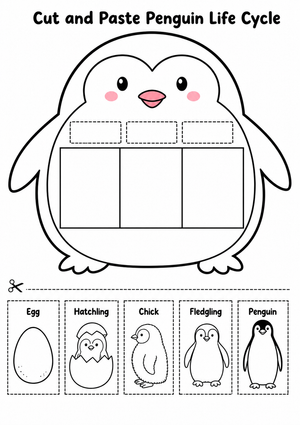
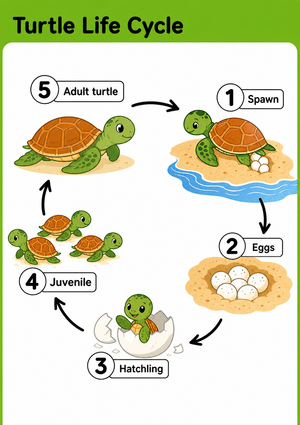
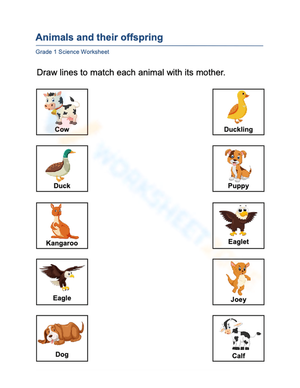
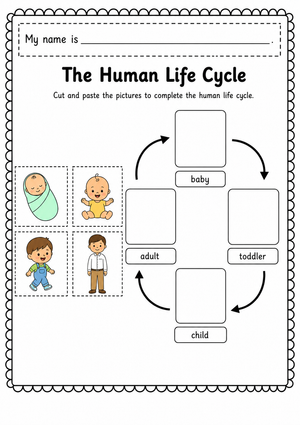
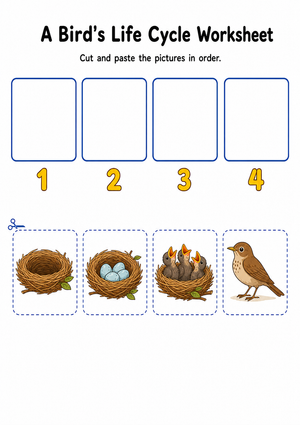
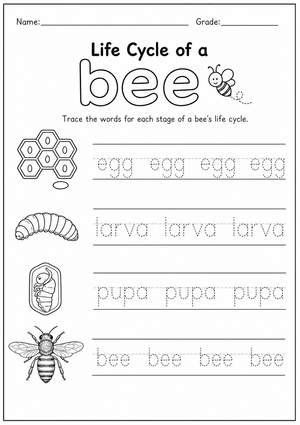
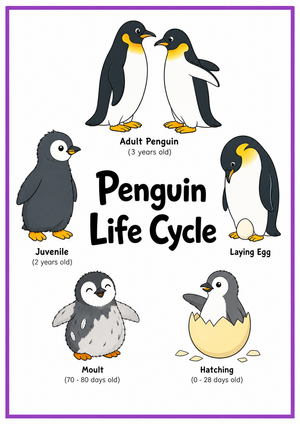
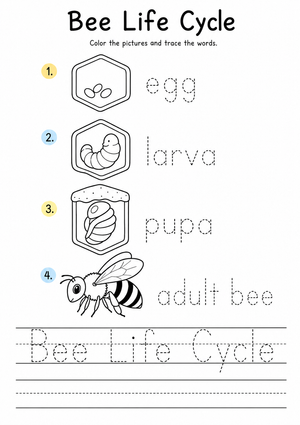
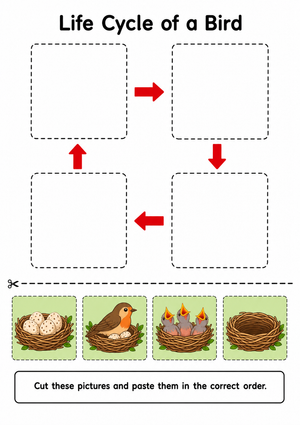
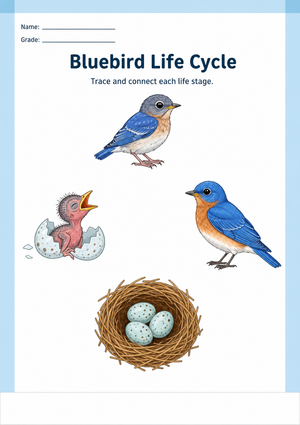
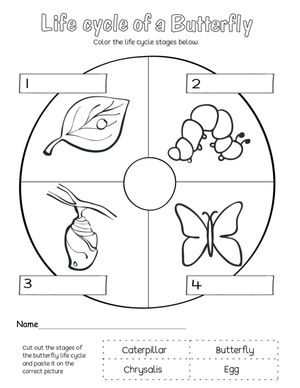
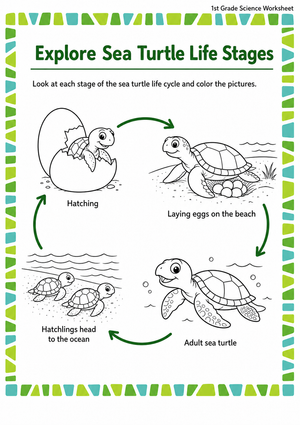
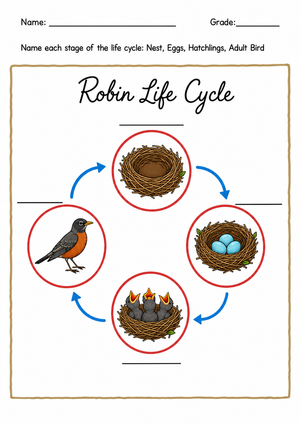
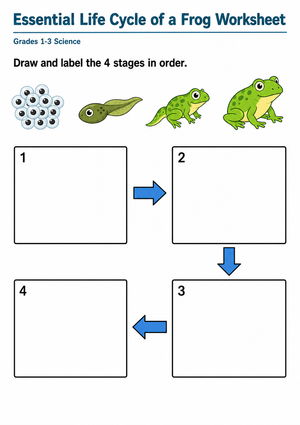
These animals life cycle worksheets for 1st grade center on four organisms — butterfly, frog, chicken, and ladybug — chosen because their stage-to-stage changes are dramatic enough to hold a first grader's attention and concrete enough to anchor evidence-based class discussion. Each worksheet is a standalone task: cut-and-paste sequencing, labeled diagram completion, vocabulary matching, or sentence frames tied to one specific animal. Teachers select what fits the lesson rather than working through a fixed sequence.
What Each Worksheet Targets
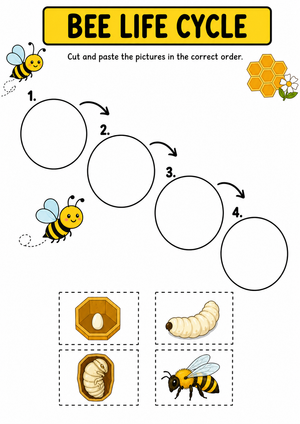
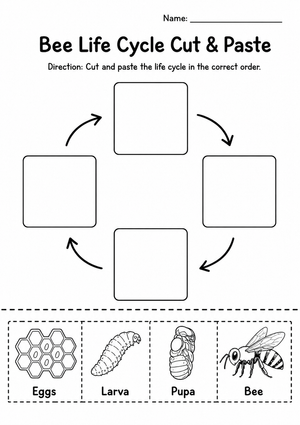
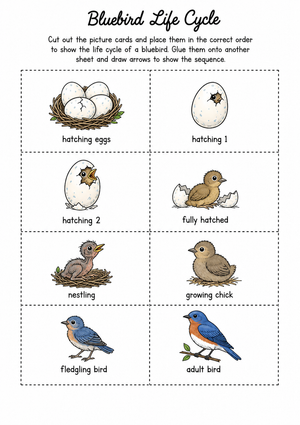
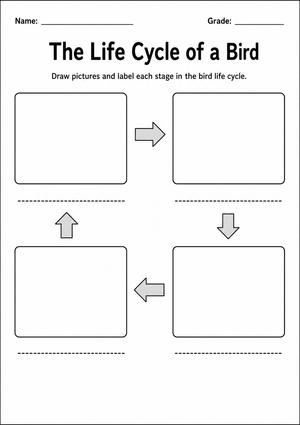
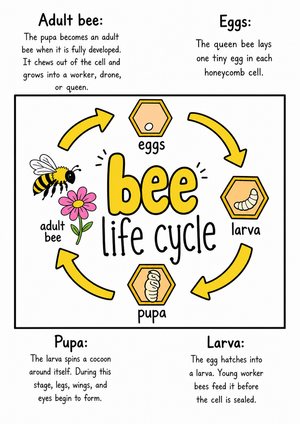
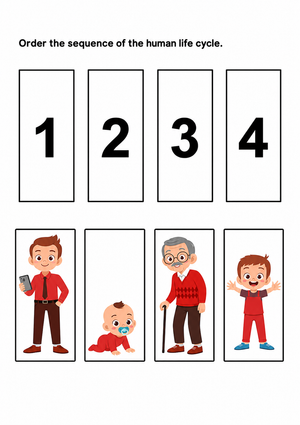
The animals life cycle worksheets for 1st grade in this collection address five overlapping skill areas across the four organisms. Sequencing worksheets ask students to cut out illustrated stages and arrange them in the correct order around a circular template — a format that makes the "cycle" physical rather than abstract. Once the order is established, students glue down and label each stage using a word bank. Vocabulary worksheets pair terms like larva, pupa, metamorphosis, and hatch with illustrations, then ask students to match, trace, or write the words in context. Diagram worksheets present a partially labeled life cycle and require students to fill in missing stage names from memory or from a provided bank. Several worksheets include a compare-and-contrast box where students note how the juvenile organism differs from the adult — a direct match to the observational language built into first-grade science expectations.
Errors Students Make That These Worksheets Surface
The butterfly life cycle produces one specific, predictable sequencing error: students place the chrysalis before the caterpillar. They look at both images, notice the caterpillar appears more "animal-like," and assume the pupal stage comes later because it resembles the finished butterfly more closely. A worksheet that asks students to number the stages and write a one-sentence justification for each placement catches this before the misconception calcifies.
The frog life cycle creates different confusion. Students almost universally know that tadpoles live in water, but many place the "tadpole with legs" card after the "froglet" card because legs seem like a later addition rather than a transitional feature. Worksheets that include a close-up illustration clearly distinguishing the legless tadpole from the tadpole-with-legs stage reduce that error substantially. With the ladybug, students frequently assume the larva is an entirely different insect — it looks nothing like the spotted adult — and that disconnect is worth addressing directly before students touch the worksheet, not after they have already written down the wrong answer.
Standard Alignment
These worksheets align with NGSS 1-LS3-1 (Heredity: Inheritance and Variation of Traits), which asks first graders to make observations and build an evidence-based account showing that young animals resemble, but are not identical to, their parents. The compare-and-contrast tasks on the diagram worksheets map directly onto that standard's language: students record physical similarities and differences between juvenile and adult stages, producing a simple written or drawn record of observable traits. The sequencing component also supports the crosscutting concept of Patterns — first graders are expected to identify repeating patterns in the natural world, and a correctly ordered, student-produced life cycle circle is a tangible artifact of that work.
Building These Worksheets Into Your Lesson Plans
Sequencing worksheets work best as mid-lesson anchor tasks, not openers. A ten-minute introduction — photographs, a short read-aloud, or a focused class discussion — before distributing the worksheet gives students enough prior knowledge to work independently rather than sitting frozen because they cannot picture what a tadpole looks like or recall how a caterpillar changes.
These animals life cycle worksheets for 1st grade also slot naturally into science centers. Pair the cut-and-paste version with a set of plastic animal figurines or laminated sequencing cards so students physically arrange the objects in the correct order before committing to glue on paper. That kinesthetic rehearsal step cuts sequencing errors substantially for students who need to manipulate concrete objects before transferring to a two-dimensional task. The vocabulary matching worksheets make strong morning warm-ups during a life cycle unit — they run four to six minutes and prime students for whatever direct instruction follows.
Adjusting the Worksheets for a Range of Learners
For students still developing fine motor control, pre-cut the stage illustrations before distributing the sequencing worksheet. The conceptual task — placing the stages in the correct order — stays fully intact; the physical barrier disappears. For students who finish quickly and accurately, remove the word bank from the vocabulary worksheet so they retrieve terms from memory rather than select from a list. That one adjustment shifts the cognitive demand from recognition to recall without requiring a different worksheet entirely.
Students who are still learning to decode benefit from worksheets that lead with illustrations rather than text. Every stage label in these sets is paired with a clear diagram, so a student who cannot yet read "chrysalis" can still place the stage correctly through visual matching. For students who are ready for more challenge, the compare-and-contrast sentence frames extend naturally: instead of producing one sentence per stage, they write two — one describing physical appearance and one describing where or how that stage lives.
Frequently Asked Questions
Which animal works best as a starting point for first-time life cycle instruction?
Start with the chicken. Its four stages — egg, hatching chick, growing chick, adult — involve no metamorphosis, so the sequence feels intuitive and the vocabulary load stays manageable. Once students grasp that organisms grow in a predictable order and that young animals resemble but differ from adults, the butterfly and frog life cycles make sense as examples of dramatic transformation rather than confusing exceptions to something they never quite understood.
Do these worksheets require a full science unit to be useful?
No. Each worksheet covers one animal and requires no prerequisite activity beyond a brief class discussion. A single butterfly sequencing worksheet gives students meaningful exposure to life cycle concepts even outside a dedicated unit. Teachers running integrated literacy blocks frequently use the vocabulary worksheets alongside animal nonfiction texts without constructing a separate science sequence around them.
How do completed worksheets serve as assessment evidence?
A correctly sequenced and labeled diagram is direct evidence of NGSS 1-LS3-1 understanding — specifically, that a student can describe observable changes across an organism's life. A student who places "larva" after "pupa" on the ladybug worksheet has flagged a specific misconception rather than a general confusion, and that precision makes a re-teach conversation significantly shorter. The animals life cycle worksheets for 1st grade in this set produce written student artifacts that document both what students understand and exactly where instruction needs to return.
Are these appropriate for kindergartners or second graders?
Kindergartners complete the chicken and butterfly worksheets comfortably with teacher support during whole-group instruction; the frog and ladybug worksheets fit first grade better because of their multi-stage sequences and higher vocabulary demands. Second graders working below grade level use these worksheets as review; the diagram and compare-and-contrast tasks also extend naturally into second-grade life science by supporting written explanations that go beyond basic labeling.