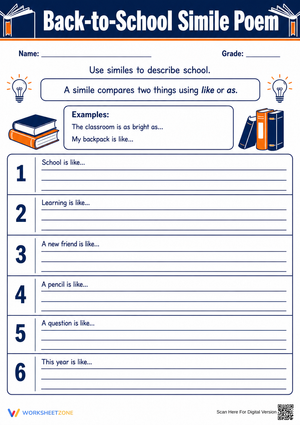
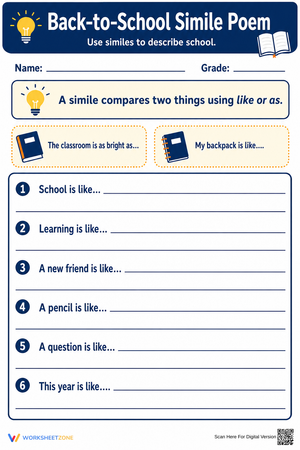
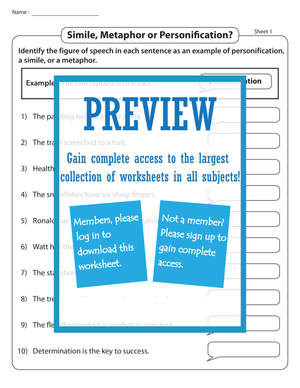
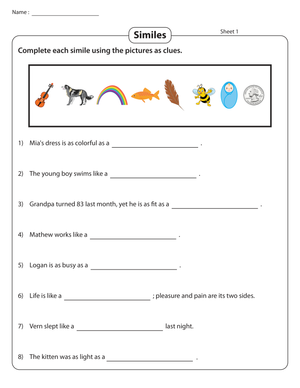
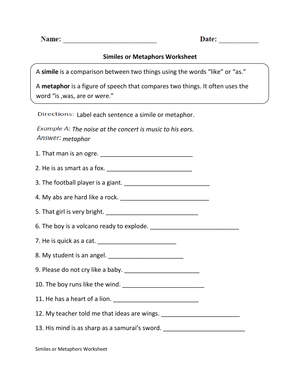
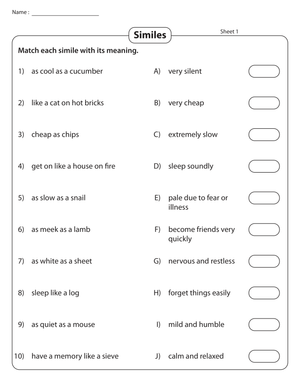
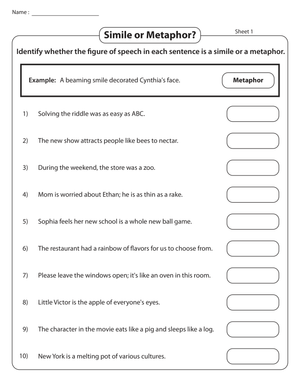
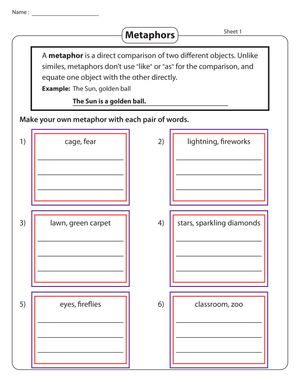
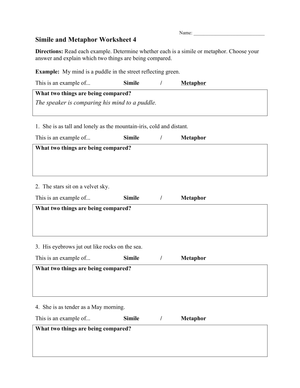
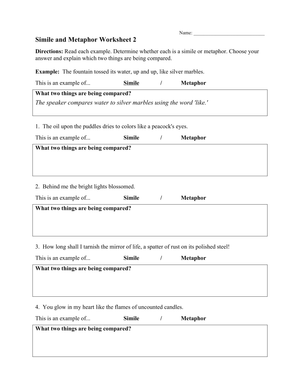
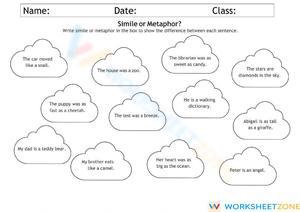
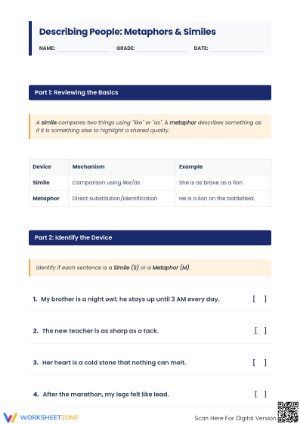
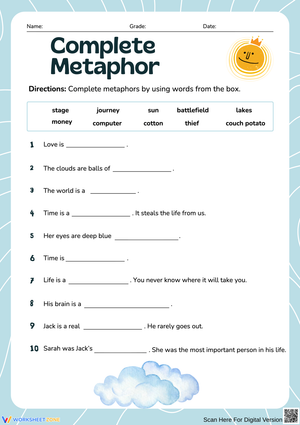
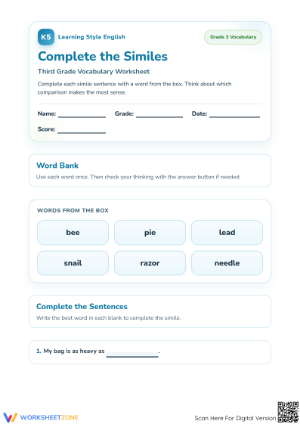
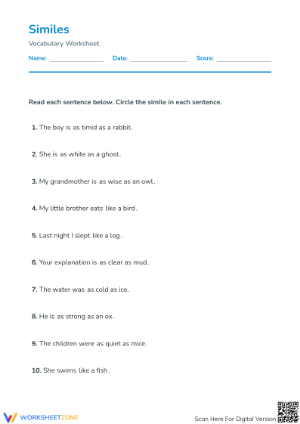
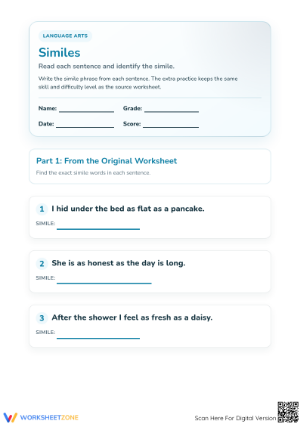
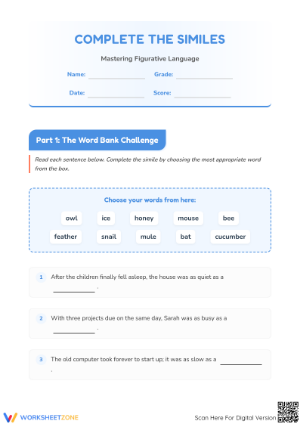
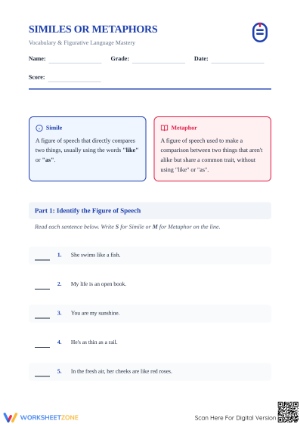
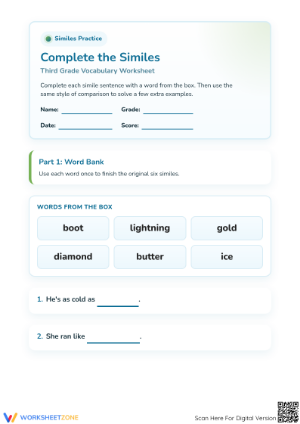
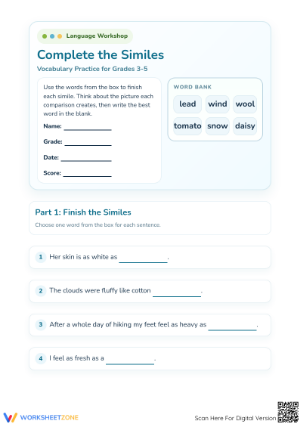
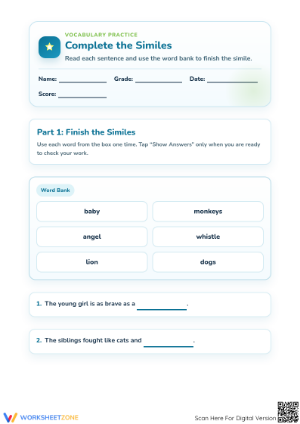
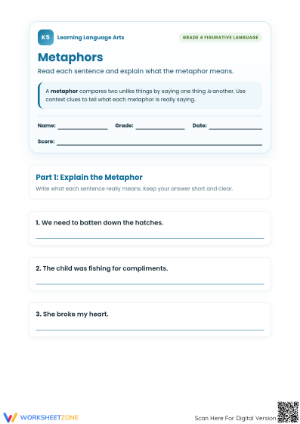
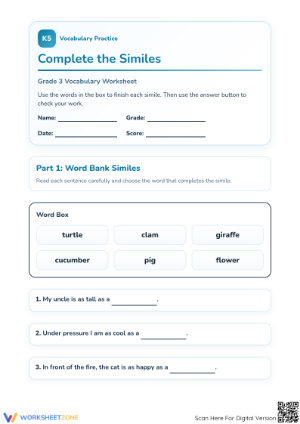
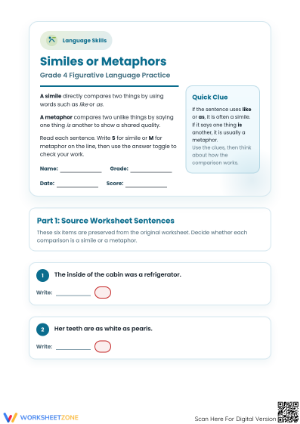
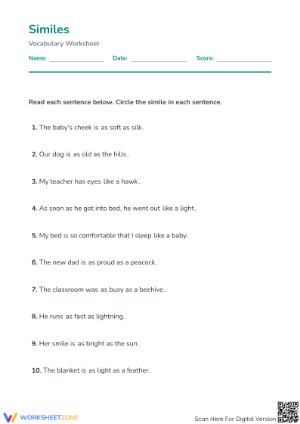
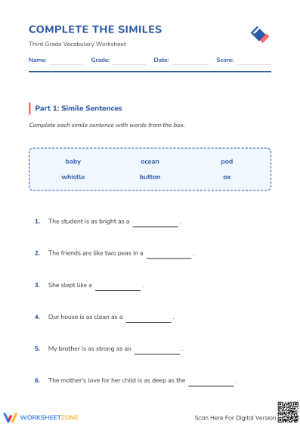
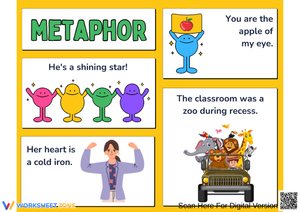
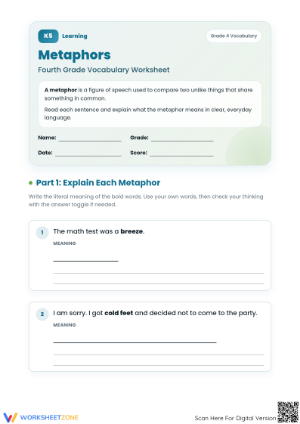
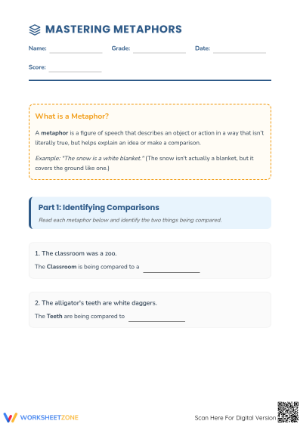
Simile and metaphor worksheets give upper-elementary teachers a structured way to introduce, practice, and check one of the trickiest parts of the language strand: figurative comparison. Most sets built for grades 3-6 move through three predictable task types. First, students identify whether a sentence contains a simile or a metaphor. Then they explain what the comparison actually means, so as busy as a bee becomes a statement about working quickly without stopping. Finally, short prompts ask students to write their own comparisons about a familiar topic, which is where you find out who really understands the concept.
Aligning Practice to CCSS L.4.5.A and L.5.5.A
Figurative language is not an extra in the upper grades; it sits directly inside grade-level language standards. Fourth grade names it explicitly, and fifth grade raises the bar toward interpretation in context.
According to the Common Core State Standards Initiative, standard CCSS.ELA-Literacy.L.5.5.A asks grade 5 students to interpret figurative language, including similes and metaphors, in context. That single benchmark shapes how upper-elementary teachers sequence practice, moving students from simply spotting a comparison toward explaining exactly what it means and why an author chose it.
In grade 4, CCSS.ELA-Literacy.L.4.5.A focuses on explaining the meaning of simple similes and metaphors, such as as pretty as a picture, in context. Worksheets that mirror this language help you point directly to the standard during planning meetings and report-card conferences. When you match the task to the standard, the practice stops feeling like busywork and starts building toward the skills your assessments will measure.
Sequencing From Identification to Interpretation
The most common mistake with figurative language practice is jumping straight to interpretation before students can reliably tell a simile from a metaphor. A worksheet sequence should build in order. Start with sorting: give students a stack of sentences and have them label each as simile or metaphor, using the like or as signal words as the first clue.
Once identification is solid, shift to meaning. Ask students to rewrite a comparison in plain language, then explain what the two things have in common. This is the step that reveals whether a student sees the shared trait or is just matching a pattern. Only after those two stages should you ask students to interpret figurative language inside a full paragraph or poem, where the surrounding sentences carry part of the meaning.
Here is the pattern I see in classroom data: students often ace metaphor identification while stumbling on meaning, because a metaphor states the comparison directly and feels easier to spot than to unpack. Similes, with their obvious like and as cues, are easier to find but push students toward the harder interpretation step. Sequencing your worksheets so that identification and meaning are separate tasks, rather than one blended question, keeps that gap visible and gives you cleaner evidence of what to reteach.
Whole-Group Mini-Lessons Versus Small-Group Intervention
The same worksheet can serve two very different instructional moments. In a whole-group mini-lesson, use the top of the page as a shared model. Read a simile aloud, think through the comparison out loud, and annotate one example together before students work the rest independently. This keeps the cognitive load low and shows students exactly what a complete answer looks like.
For small-group intervention, slow the same page down. Pull four or five students who struggled on a formative check and work through two or three items together, with each student explaining a comparison before moving on. Reading interventionists often find that figurative language is where below-grade-level readers lose meaning, because idioms and metaphors do not translate literally. A worksheet that isolates a handful of clear examples gives those students repeated, low-stakes reps without the pressure of a full text.
Pairing Simile and Metaphor Worksheets With Idioms and Adages
Similes and metaphors rarely travel alone in the curriculum. In grades 3-6, they are usually taught inside a broader figurative language unit that also covers idioms, adages, and proverbs. Pairing these worksheets creates a cohesive arc instead of a set of disconnected lessons.
A practical rhythm is to spend the first week on similes and metaphors, since they share the logic of comparison, then move to idioms and adages, which rely more on cultural knowledge and memorized meaning. When students hit an idiom like hit the books, they can lean on the comparison thinking they built earlier. Keeping the worksheet format consistent across the unit, so every page uses the same identify, explain, and write structure, lets students focus on the new content rather than relearning the task each time.
Teacher Tips for Getting More From Each Worksheet
A few small moves make these worksheets work harder. Use the writing section as a quick formative assessment: collect three student-written comparisons the day before a unit test, and you will know instantly who needs a reteach. Keep a running anchor chart of the best student examples so the class builds a shared bank of models. When you grade, mark the meaning explanation, not just the identification, because that is where grade-level understanding actually lives.
Save time by scanning one clean copy of each version into a digital folder organized by standard. When a sub day or an unexpected review block appears, you can pull the right level in seconds. And rotate topics across the year so students see comparisons about science, social studies, and everyday life, which keeps the skill from feeling like an isolated ELA drill and reinforces that figurative language shows up everywhere they read.
Frequently Asked Questions
1. What grade level typically learns similes and metaphors under Common Core?
Similes and metaphors are most commonly taught in grades 3-6. Common Core names them directly at grade 4 in CCSS.ELA-Literacy.L.4.5.A and again at grade 5 in L.5.5.A, so upper elementary is the core window, with grade 3 often serving as an introduction.
2. How do simile and metaphor worksheets differ between grade 4 and grade 5?
Grade 4 worksheets, aligned to L.4.5.A, emphasize explaining the meaning of simple similes and metaphors in short, clear examples. Grade 5 worksheets, aligned to L.5.5.A, push toward interpreting figurative language inside longer passages, where students use surrounding context to determine meaning.
3. How can teachers use these worksheets for formative assessment?
Use the meaning and writing sections as a quick check before a unit test. Collect a few student-written comparisons or a short explanation, sort them into secure, developing, and needs-reteach piles, and use those groups to plan targeted small-group intervention the next day.
4. Should simile and metaphor worksheets be taught alongside idioms and adages?
Yes. In most grade 3-6 units, similes and metaphors are taught first because they share the logic of comparison, then idioms, adages, and proverbs follow. Keeping a consistent worksheet format across the unit helps students transfer their comparison thinking to the more culturally based expressions.












 Interactive Worksheet Maker
 Quiz Maker
 Word Search Maker
 Crossword Puzzle Maker
 Word Scramble Generator
 Sentence Scramble Generator
 Handwriting Worksheet Generator
 Name Tracing Generator
 Fill In The Blank Generator