


























Views
Downloads



Printable Similes Worksheet | Grade 3 ELA Complete Guide
Paste this activity's link or code into your existing LMS (Google Classroom, Canvas, Teams, Schoology, Moodle, etc.).
Students can open and work on the activity right away, with no student login required.
You'll still be able to track student progress and results from your teacher account.
This Grade 3 similes worksheet provides a comprehensive path for students to master figurative language through 25 structured activities. By engaging with comparisons using "as" and "like," learners develop the ability to distinguish literal and nonliteral meanings in English Literature. This resource ensures students can confidently identify and create similes to enhance their descriptive writing.
At a Glance
- Grade: 3 · Subject: ELA - Literature
- Standard:
CCSS.ELA-LITERACY.L.3.5.A— Distinguish literal and nonliteral meanings of phrases in context- Skill Focus: Identifying and Creating Similes
- Format: 4 pages · 25 problems · Answer key included · PDF
- Best For: Independent practice or small group instruction
- Time: 30–45 minutes
What's Inside
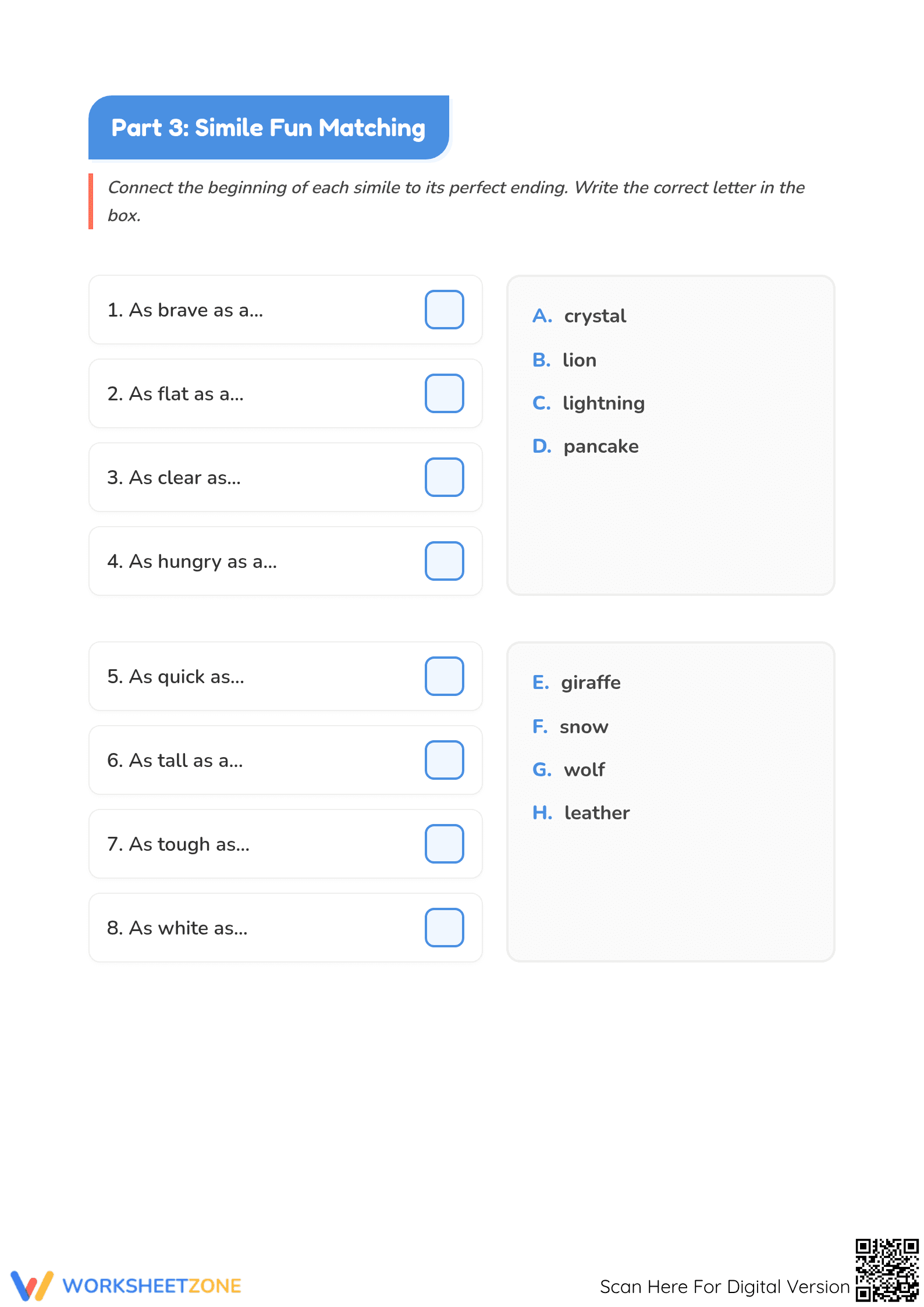
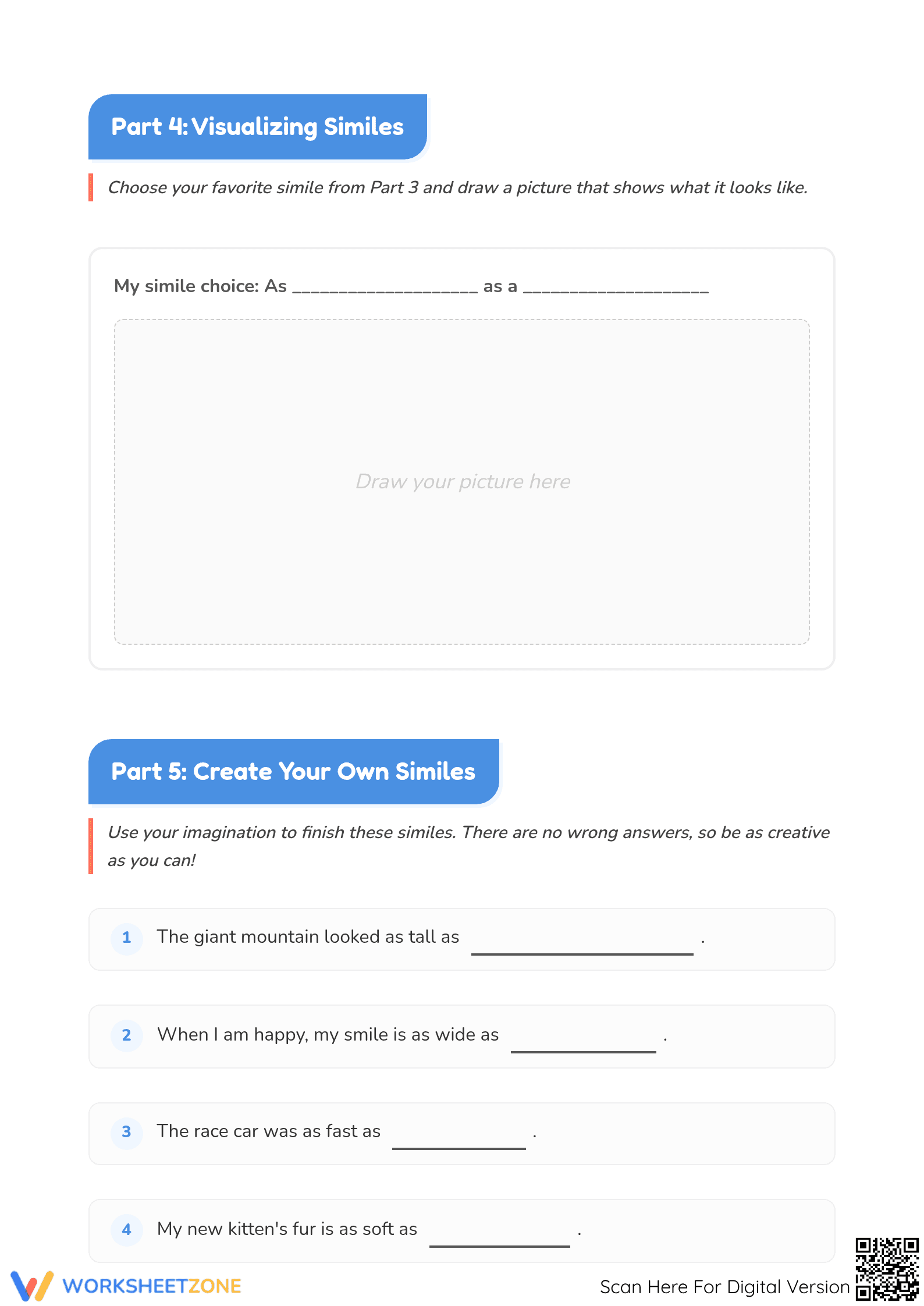
This four-page instructional packet contains five distinct sections designed to build mastery. It includes 10 word-bank cloze sentences, 2 creative writing prompts, 8 matching pairs, a visualization activity for artistic learners, and 4 open-ended imaginative completions. The clear layout features ample writing space and a full answer key for efficient grading and self-correction.
Zero-Prep Workflow
- Step 1: Print the 4-page PDF packet (30 seconds).
- Step 2: Distribute to students for independent or partner work (1 minute).
- Step 3: Review answers using the included key or scan the QR code for digital access (2 minutes).
The total teacher preparation time is under four minutes, making this an ideal choice for emergency sub plans or last-minute literacy center rotations.
Standards Alignment
The primary focus is CCSS.ELA-LITERACY.L.3.5.A, which requires students to distinguish literal from nonliteral meanings. By completing similes like "as quiet as a mouse," students analyze how figurative language conveys specific moods and traits. This standard code can be copied directly into lesson plans, IEP goals, or district curriculum mapping tools.
How to Use It
Use this worksheet during the "You Do" phase of a figurative language lesson to assess individual student comprehension. It also serves as an effective formative assessment tool; observe if students struggle with the matching section versus the creative writing tasks to identify who needs additional scaffolding with word relationships. Expected completion time is 35 minutes.
Who It's For
This resource is tailored for Grade 3 general education students but works well as a review for Grade 4 or as an intensive intervention for older students. It pairs naturally with a descriptive writing passage or an anchor chart displaying common animal-based similes to support English Language Learners during the creative writing sections.
Effective instruction in figurative language, such as similes, is critical for developing reading comprehension and nuanced writing skills in the intermediate grades. According to Fisher & Frey (2014), students who engage in structured practice with word relationships like CCSS.ELA-LITERACY.L.3.5.A are better equipped to navigate complex literary texts and express abstract concepts. This 4-page Grade 3 ELA worksheet provides exactly this type of evidence-based practice, moving from recognition to application across 25 distinct tasks. By utilizing a scaffolded approach—starting with a word bank and concluding with imaginative creation—the resource aligns with the gradual release of responsibility model. Research from ScienceDirect TpT Analysis suggests that high-quality, print-and-go worksheets significantly reduce teacher burnout while maintaining rigorous alignment to state and national standards for figurative language mastery.


