


























Views
Downloads
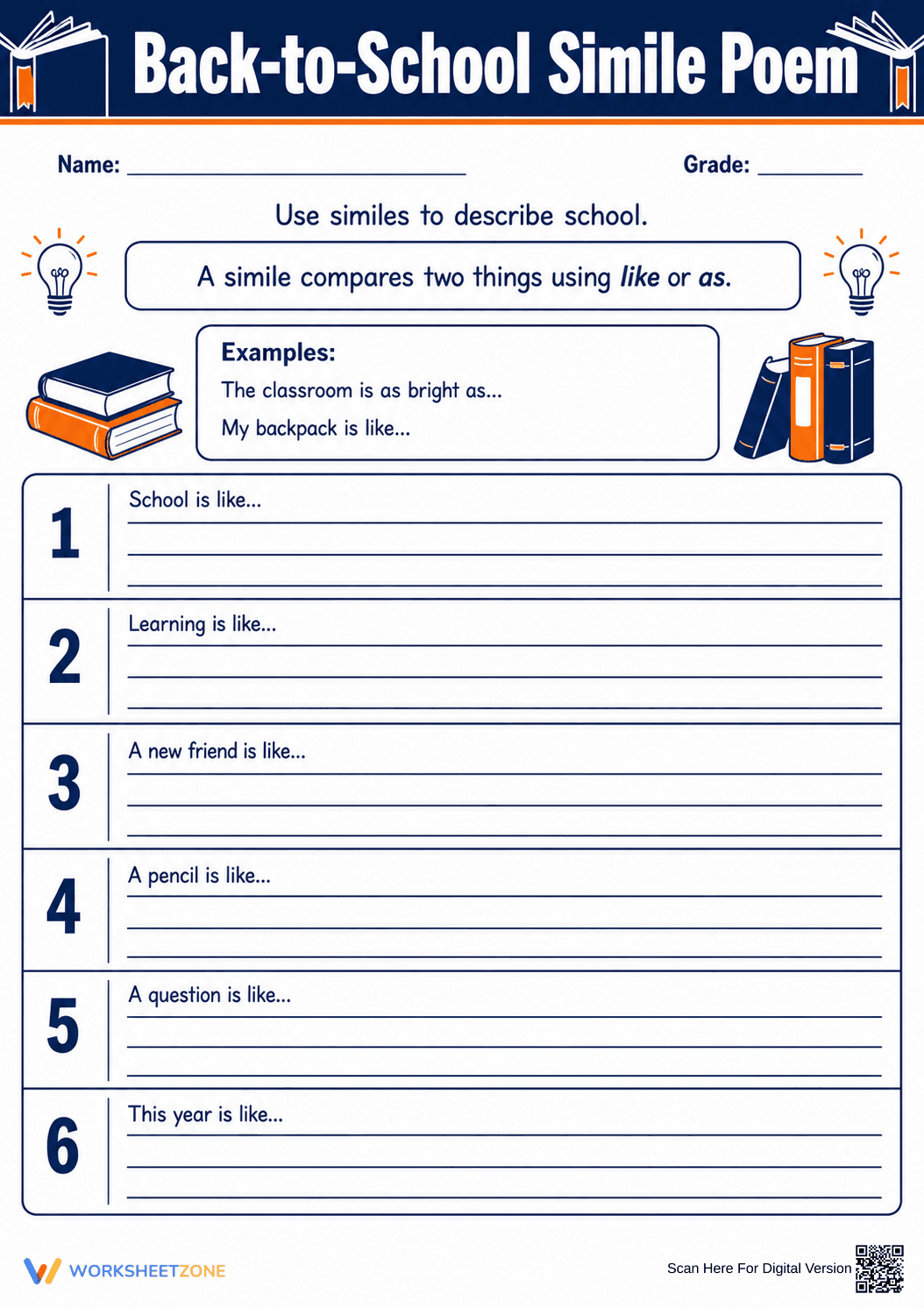

Back-to-School Simile Poem | Grade 4-6 Essential
Paste this activity's link or code into your existing LMS (Google Classroom, Canvas, Teams, Schoology, Moodle, etc.).
Students can open and work on the activity right away, with no student login required.
You'll still be able to track student progress and results from your teacher account.
This Grade 4-6 figurative language worksheet helps students master similes through creative poetry writing. By using "like" or "as" to describe common school experiences, learners develop a deeper understanding of comparative language. This resource provides a structured framework for students to express their feelings about the new school year while practicing essential literary devices.
At a Glance
- Grade: 4-6 · Subject: ELA
- Standard:
CCSS.ELA-LITERACY.L.4.5.A— Explain the meaning of simple similes and metaphors in context- Skill Focus: Simile Construction
- Format: 1 page · 6 problems · Open-ended · PDF
- Best For: Back-to-school icebreakers and writing
- Time: 15–25 minutes
What's Inside
The worksheet features a clean, notebook-style layout with navy and orange accents. It includes a clear definition of a simile and two helpful examples to scaffold student understanding. The core of the page consists of 6 numbered writing prompts, each providing ample lined space for students to complete their comparative sentences using "like" or "as."
Zero-Prep Workflow
- Print: Select the single-page PDF and print enough copies for your class in under 30 seconds.
- Distribute: Hand out the sheets as a morning warm-up, bell ringer, or writing center activity.
- Review: Have students share their favorite similes aloud to check for understanding and build classroom community.
Total teacher preparation time is under 2 minutes, making this an ideal sub plan or first-week activity for busy educators.
Standards Alignment
The primary focus is `CCSS.ELA-LITERACY.L.4.5.A`, which requires students to interpret and use figurative language. By completing these prompts, students demonstrate their ability to create meaningful comparisons between abstract concepts (learning, questions) and concrete objects. This standard code can be copied directly into lesson plans, IEP goals, or district curriculum mapping tools.
How to Use It
Use this as a formative assessment during the first week of school to gauge students' prior knowledge of figurative language. It also serves as an excellent "getting to know you" activity. Observe if students can move beyond simple comparisons to more descriptive, vivid imagery. Expected completion time ranges from 15 to 25 minutes depending on the depth of student responses.
Who It's For
This resource is designed for upper elementary and middle school students in Grades 4, 5, and 6. It is particularly effective for English Language Learners (ELLs) who benefit from the provided sentence frames. Pair this with a mentor text like "Quick as a Cricket" or a simile anchor chart for a complete introductory lesson.
According to Fisher & Frey (2014), the use of sentence frames and structured prompts is a critical component of the gradual release of responsibility model, particularly when introducing complex literary devices like similes. This worksheet applies these principles by providing a clear definition, modeled examples, and then transitioning to independent student production. By focusing on the CCSS.ELA-LITERACY.L.4.5.A standard, the activity ensures that students are not just identifying figurative language but are actively constructing it to convey specific meanings. Research indicates that early mastery of comparative language significantly improves overall reading comprehension and descriptive writing quality in the middle grades. This 1-page resource provides the necessary scaffolding to move students from basic identification to creative application within a 20-minute instructional block.


