




























1 / 4
0
Views
0
Downloads

0.0
0
Save
0 Likes
Share
Explore Similes and Metaphors: Worksheet 1
0 Views
0 Downloads

Paste this activity's link or code into your existing LMS (Google Classroom, Canvas, Teams, Schoology, Moodle, etc.).
Students can open and work on the activity right away, with no student login required.
You'll still be able to track student progress and results from your teacher account.
Information
Description
What It Is:
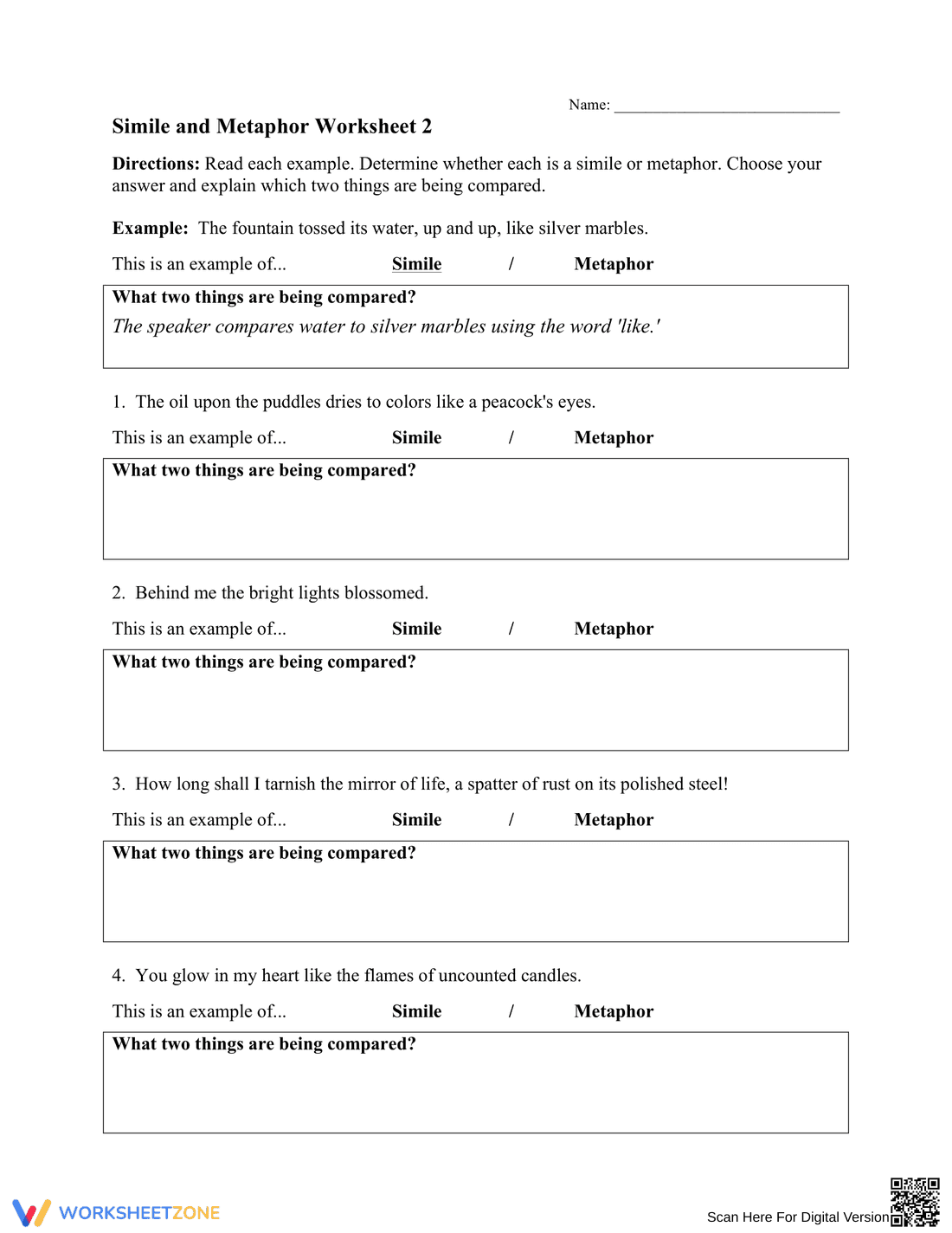
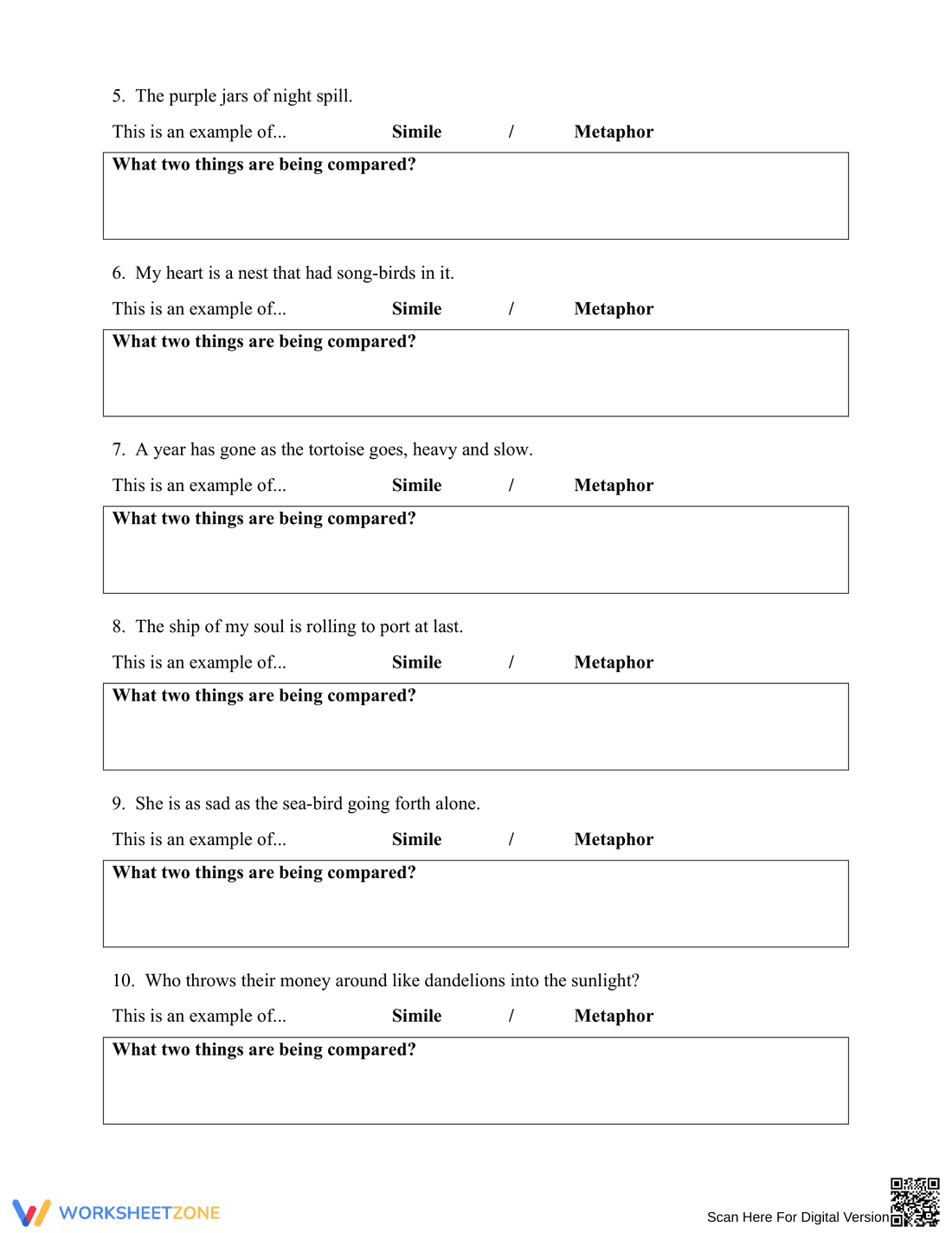
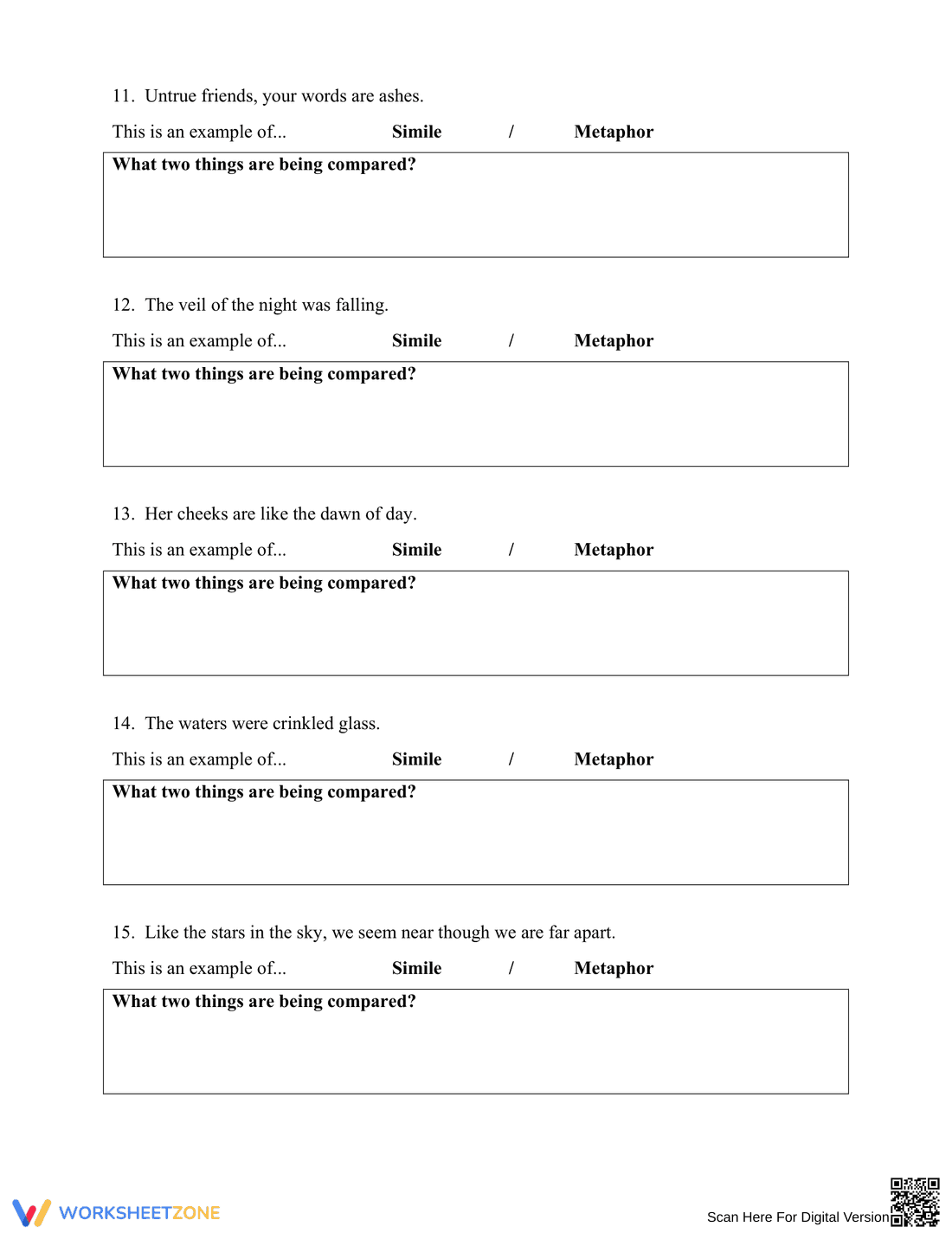
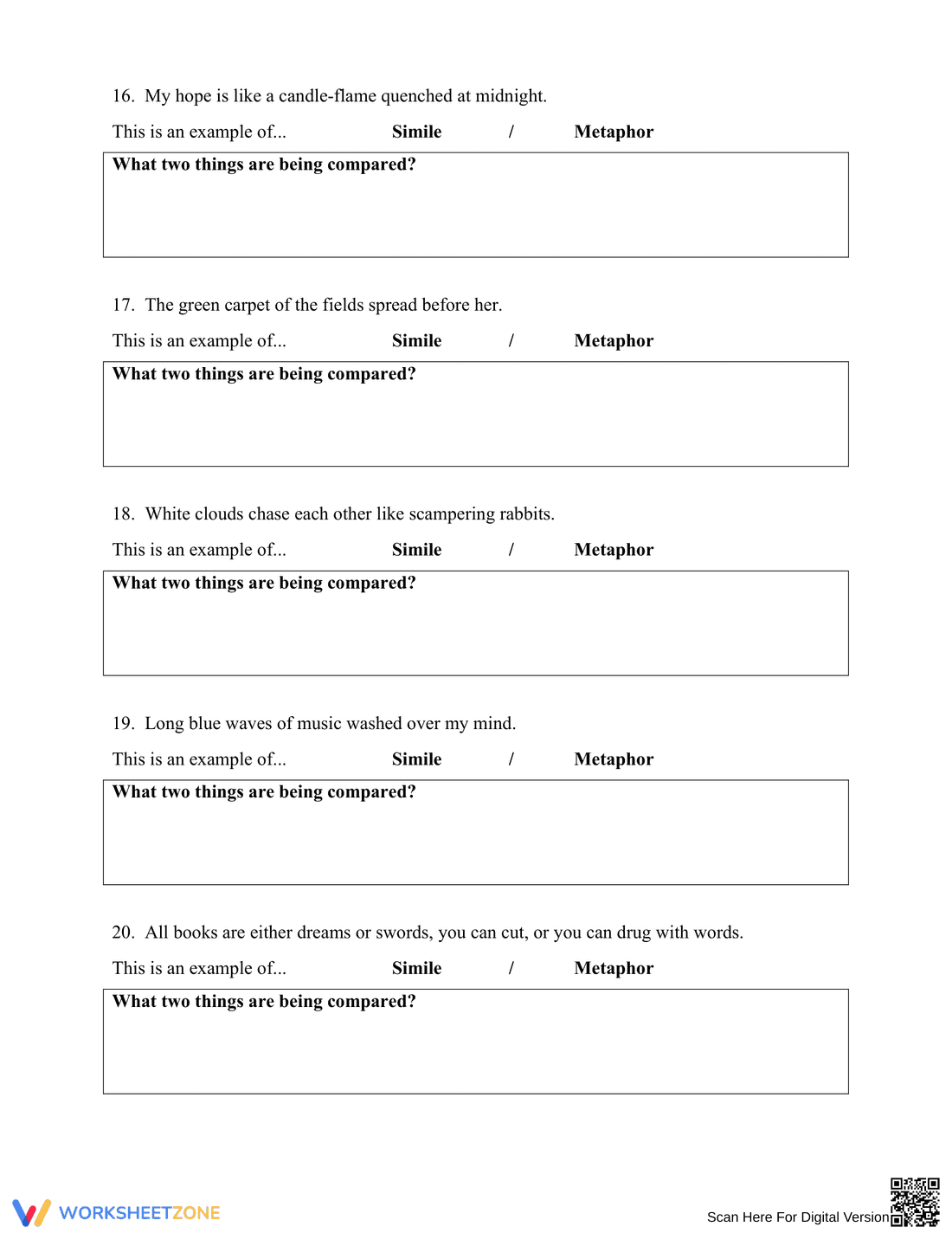
This is a worksheet titled 'Simile and Metaphor Worksheet 2'. It presents four sentences, and for each, the student must identify if it is a simile or a metaphor. The student must also explain what two things are being compared in each sentence. An example is provided: 'The fountain tossed its water, up and up, like silver marbles.'
Grade Level Suitability:
This worksheet is suitable for grades 4-6. It requires an understanding of figurative language, specifically similes and metaphors, and the ability to analyze sentences to identify the comparison being made.
Why Use It:
This worksheet reinforces the understanding of similes and metaphors. It encourages students to analyze sentences and identify the elements being compared, improving reading comprehension and critical thinking skills. It also helps them differentiate between similes and metaphors.
How to Use It:
Students should read each sentence carefully. They should circle either 'Simile' or 'Metaphor' based on their understanding. Then, in the provided space, they should write a short explanation of what two things are being compared in the sentence.
Target Users:
This worksheet is targeted towards elementary and middle school students who are learning about or need to practice identifying similes and metaphors. It is also useful for students who need to improve their reading comprehension and analytical skills.
This is a worksheet titled 'Simile and Metaphor Worksheet 2'. It presents four sentences, and for each, the student must identify if it is a simile or a metaphor. The student must also explain what two things are being compared in each sentence. An example is provided: 'The fountain tossed its water, up and up, like silver marbles.'
Grade Level Suitability:
This worksheet is suitable for grades 4-6. It requires an understanding of figurative language, specifically similes and metaphors, and the ability to analyze sentences to identify the comparison being made.
Why Use It:
This worksheet reinforces the understanding of similes and metaphors. It encourages students to analyze sentences and identify the elements being compared, improving reading comprehension and critical thinking skills. It also helps them differentiate between similes and metaphors.
How to Use It:
Students should read each sentence carefully. They should circle either 'Simile' or 'Metaphor' based on their understanding. Then, in the provided space, they should write a short explanation of what two things are being compared in the sentence.
Target Users:
This worksheet is targeted towards elementary and middle school students who are learning about or need to practice identifying similes and metaphors. It is also useful for students who need to improve their reading comprehension and analytical skills.


