


























Views
Downloads

Printable Metaphors Worksheet | Grade 4 ELA Practice
Paste this activity's link or code into your existing LMS (Google Classroom, Canvas, Teams, Schoology, Moodle, etc.).
Students can open and work on the activity right away, with no student login required.
You'll still be able to track student progress and results from your teacher account.
Metaphor Interpretation for Fourth Grade
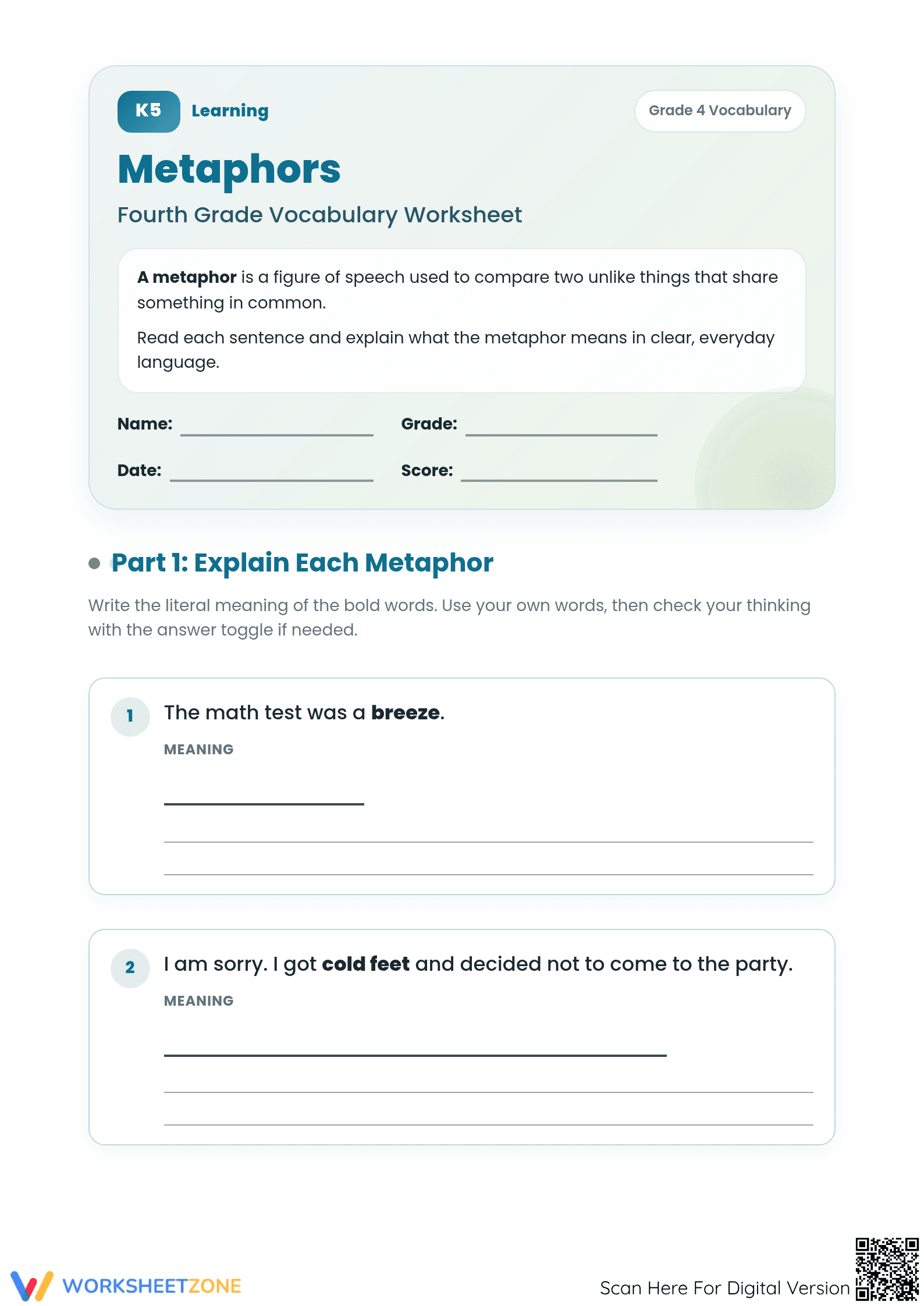
This Grade 4 figurative language worksheet helps students master the art of interpreting metaphors through 9 targeted exercises. By comparing unlike things to uncover deeper meanings, learners build essential vocabulary and reading comprehension skills. This resource ensures students can explain metaphorical phrases in everyday language, transitioning from literal to figurative understanding with confidence and accuracy.
At a Glance
- Grade: 4 · Subject: English Language Arts (ELA)
- Standard:
CCSS.ELA-LITERACY.L.4.5.A— Explain the meaning of simple similes and metaphors in context- Skill Focus: Metaphor Interpretation and Figurative Language
- Format: 4 pages · 9 problems · Answer key included · PDF
- Best For: Individual practice or guided reading sessions
- Time: 20–30 minutes
What's Inside
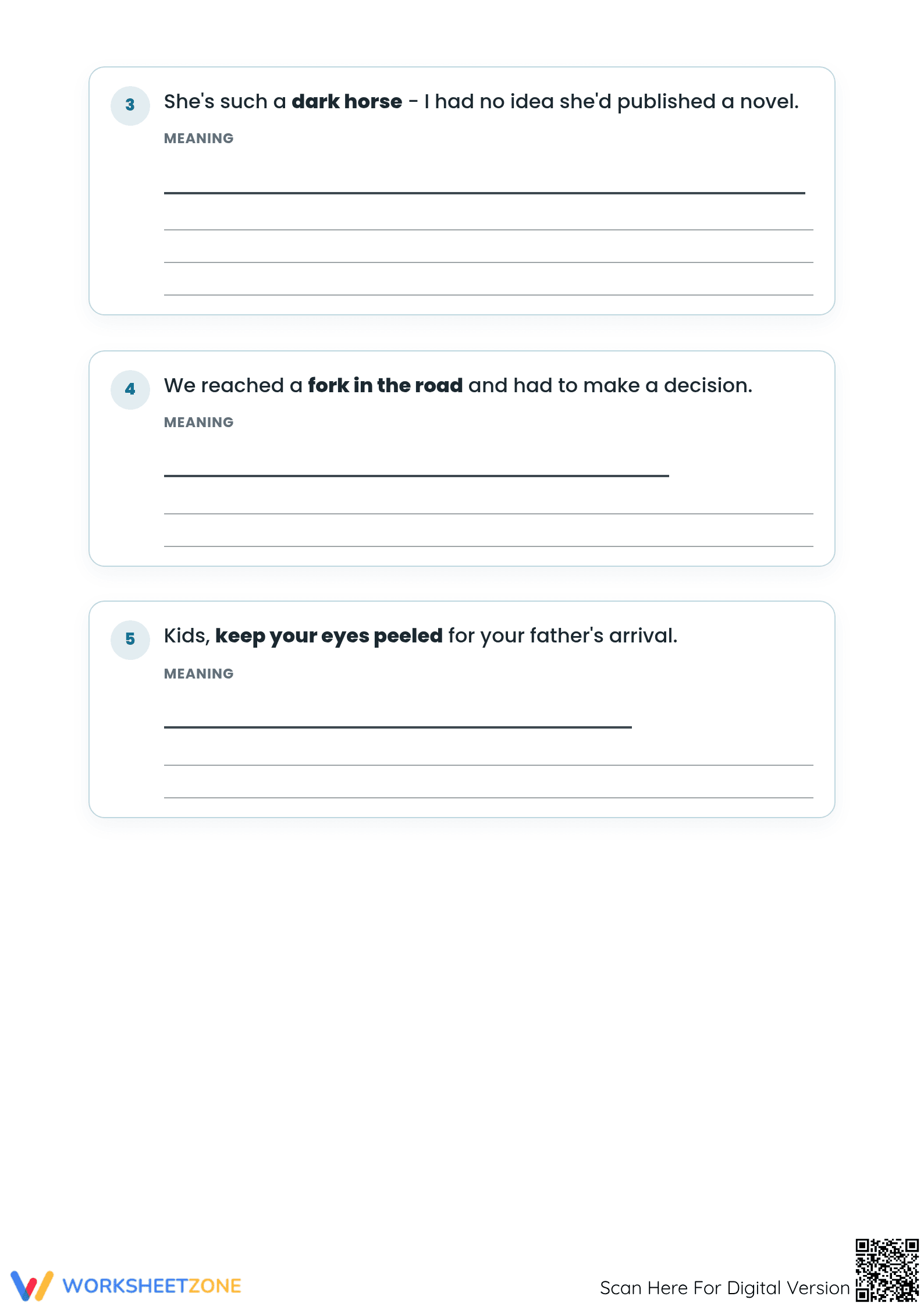
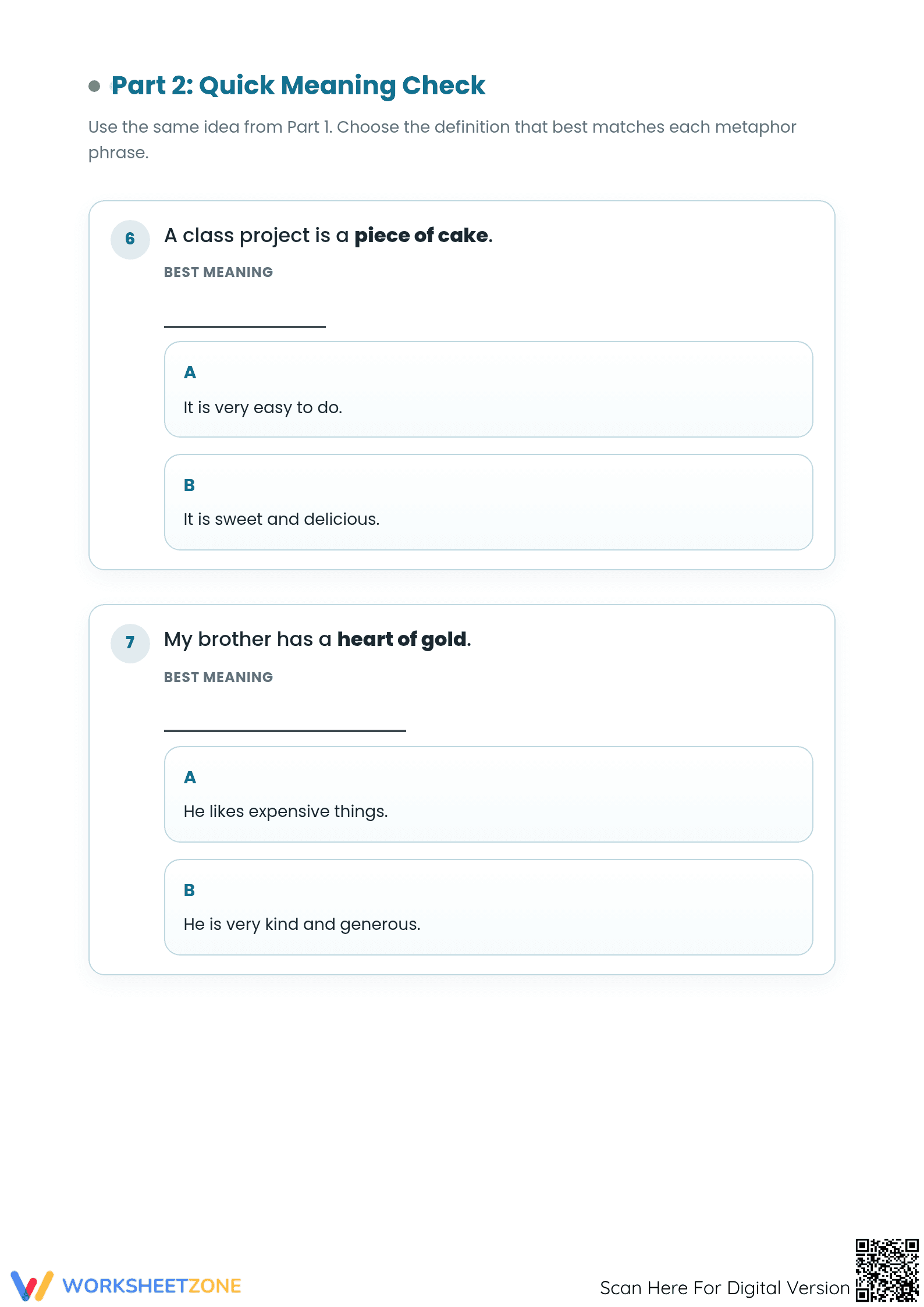
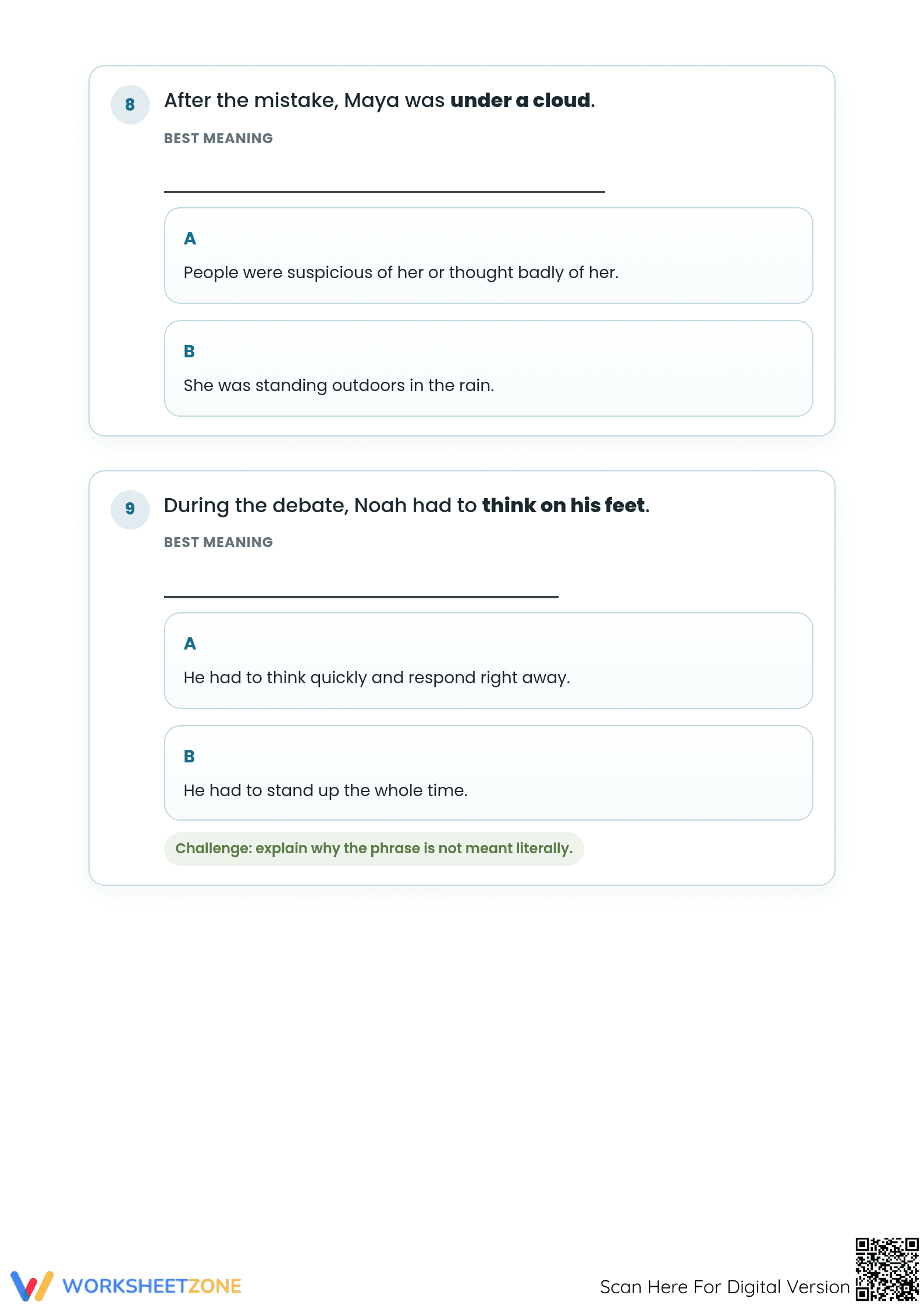
This resource includes two distinct sections designed to scaffold student learning. Part 1 features five open-ended prompts requiring students to write literal explanations for bolded metaphors like "a breeze" and "cold feet" within sentence contexts. Part 2 offers four multiple-choice "Quick Meaning Checks" to verify comprehension of common idioms and metaphorical expressions. A clear answer key is provided for immediate feedback.
Skill Progression
- Guided practice: The worksheet begins with clear definitions and familiar metaphorical examples to anchor student understanding.
- Supported practice: Students interpret figurative language within complete sentences, using context clues to translate bolded phrases into literal, everyday language.
- Independent practice: The final section challenges students to select the best definition from multiple options and explains the logic behind non-literal meanings.
Standards Alignment
The primary focus is `CCSS.ELA-LITERACY.L.4.5.A`, which requires students to "Explain the meaning of simple similes and metaphors (e.g., as pretty as a picture) in context." It also supports `CCSS.ELA-LITERACY.L.4.6` by expanding academic vocabulary. Both standard codes can be copied directly into lesson plans, IEP goals, or district curriculum mapping tools.
How to Use It
Use this worksheet as a formative assessment after a direct instruction lesson on figurative language. During the activity, observe if students struggle with the literal vs. figurative distinction in Part 1 to identify those needing additional sentence frames. Expect completion in 25 minutes, making it an ideal choice for literacy centers or independent desk work following a whole-class reading of a text rich in imagery.
Who It's For
This resource is designed for Grade 4 students, including English Language Learners who benefit from explicit instruction in non-literal English idioms. It serves as an excellent differentiation tool when paired with a mentor text or an anchor chart featuring common comparisons. The clear layout supports students with executive functioning challenges by breaking the 9 tasks into manageable, labeled sections.
Mastering metaphors is a critical milestone in Grade 4 literacy, as students shift from learning to read to reading for deeper meaning. According to research from Fisher & Frey (2014), explicit instruction in figurative language, such as the interpretations required by standard CCSS.ELA-LITERACY.L.4.5.A, significantly enhances a student's ability to navigate complex informational and literary texts. This worksheet provides the structured repetition necessary to move students beyond literal interpretations, a skill that the 2024 NAEP frameworks identify as essential for middle-school readiness. By requiring both open-ended explanations and multiple-choice verification across 9 unique tasks, this resource ensures that learners do not just memorize definitions but actually internalize the logic of metaphorical comparison. This evidence-based approach to vocabulary acquisition builds the cognitive flexibility required for high-level reading comprehension, providing teachers with a reliable tool for measuring progress toward state and national standards.


