




























Views
Downloads
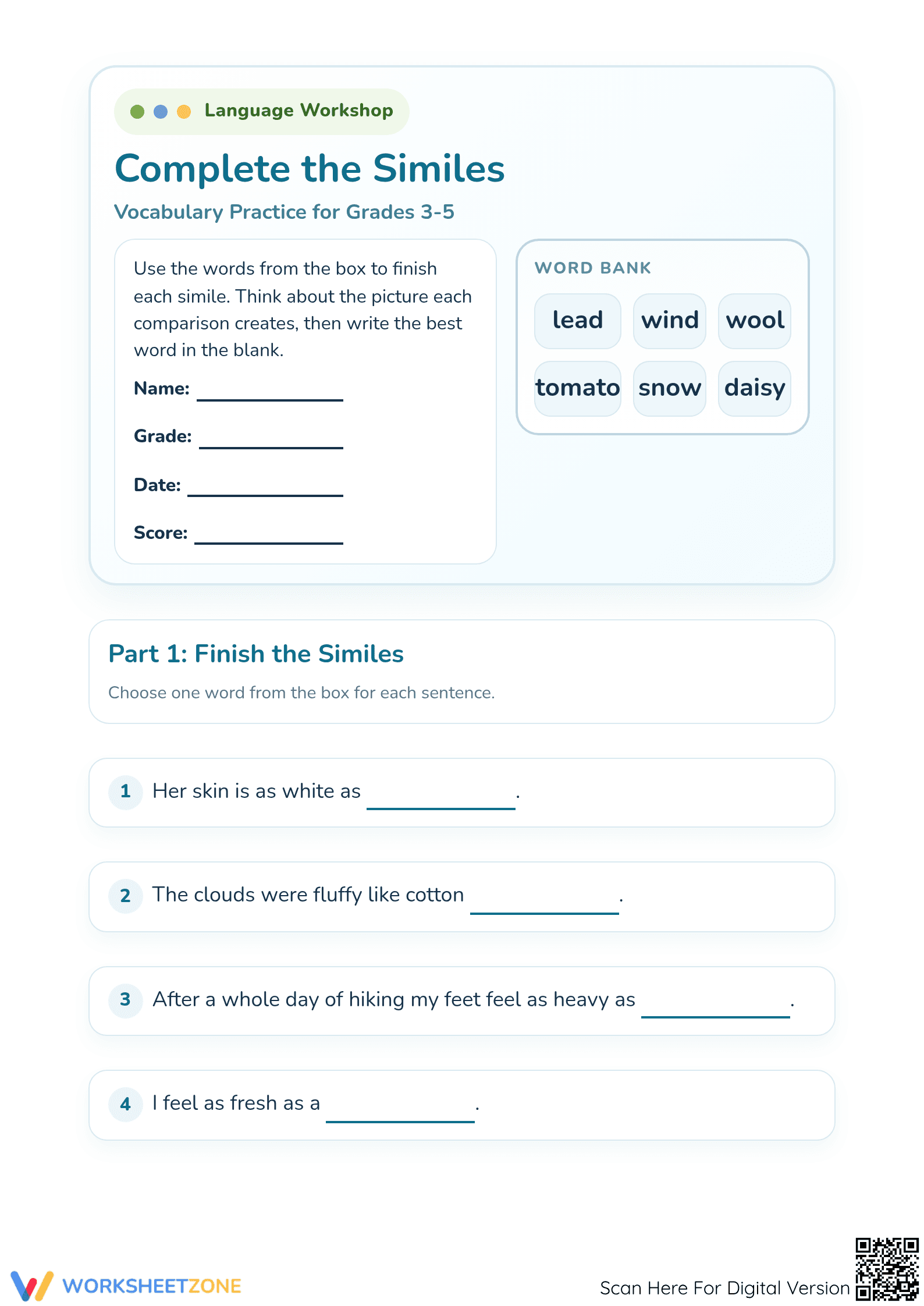


Essential Similes Practice Worksheet | Grades 3-5 Printable

Paste this activity's link or code into your existing LMS (Google Classroom, Canvas, Teams, Schoology, Moodle, etc.).
Students can open and work on the activity right away, with no student login required.
You'll still be able to track student progress and results from your teacher account.
Building strong figurative language skills is essential for elementary readers and writers. This Complete the Similes worksheet provides targeted vocabulary practice for students in Grades 3, 4, and 5. By filling in common comparisons like "white as snow" or "red as a tomato," learners deepen their understanding of how authors create vivid mental imagery through descriptive speech.
At a Glance
- Grade: 3–5 · Subject: English Language Arts
- Standard:
CCSS.ELA-LITERACY.L.4.5.A— Distinguish the literal and nonliteral meanings of words and phrases in context- Skill Focus: Similes and Comparative Language
- Format: 2 pages · 10 problems · Answer key included · PDF
- Best For: Vocabulary centers and homework assignments
- Time: 15–20 minutes
This comprehensive two-page PDF features 10 structured simile problems designed for upper elementary students. The first page includes a helpful word bank to scaffold early success, while the second page transitions to independent recall for common comparisons. The layout includes clear name, date, and scoring sections, making it easy for teachers to track progress. A full answer key is provided to facilitate quick grading or student self-checking.
Skill Progression
- Guided practice: Students begin with items 1–4, using a provided word bank of concrete nouns to finish common similes with visual and linguistic support.
- Supported practice: Items 5–6 continue the word bank format but require closer reading of sentence context to choose the logically correct comparison.
- Independent practice: The final four items challenge students to recall common figurative structures without a list, fostering true internalisation of comparative language.
This approach follows the gradual-release model, transitioning students from "I Do/We Do" supported moments into independent application.
Standards Alignment
The primary alignment for this resource is CCSS.ELA-LITERACY.L.4.5.A, which requires students to explain the meaning of simple similes and metaphors in context. Additionally, it supports L.5.5.A by building the foundational vocabulary needed for higher-level interpretative reading. Both standard codes can be copied directly into lesson plans, IEP goals, or district curriculum mapping tools.
How to Use It
Use this worksheet as a formative assessment after an introductory lesson on figurative language. Observe students as they move from the word bank section to the independent recall section; those struggling with the latter may need more exposure to idioms and metaphors through read-alouds. This 20-minute activity works perfectly as a morning work "bell-ringer" or a transition activity between reading blocks to reinforce descriptive writing techniques.
Who It's For
This resource is tailored for general education students in Grades 3–5, English Language Learners (ELLs) who need explicit instruction in English idioms, and special education students working toward vocabulary-based IEP goals. It pairs naturally with a mentor text that utilizes heavy imagery, such as Owl Moon by Jane Yolen, allowing students to see similes used by professional authors before practicing on their own.
Effective figurative language instruction requires moving beyond identification to meaningful application. According to Fisher & Frey (2014), scaffolds like word banks and context clues help students bridge the gap between literal comprehension and interpreting non-literal phrases. This worksheet applies these principles to address CCSS.ELA-LITERACY.L.4.5.A, ensuring students can complete and understand similes. Providing a structured environment for comparative language practice, this resource builds mental schemas for reading fluency and creative writing. Research suggests high-quality, printable vocabulary resources significantly reduce teacher planning time while aligning with state frameworks. This 10-task worksheet helps Grades 3-5 learners develop the specific skill of using similes to enhance communication, making it an essential tool for descriptive literacy in elementary classrooms.


