


























0
Views
0
Downloads

10.0
0
Save
0 Likes
Share
Simile, Metaphor, Personification: Identifying Literary Devices
0 Views
0 Downloads
Paste this activity's link or code into your existing LMS (Google Classroom, Canvas, Teams, Schoology, Moodle, etc.).
Students can open and work on the activity right away, with no student login required.
You'll still be able to track student progress and results from your teacher account.
Information
Description
What It Is:
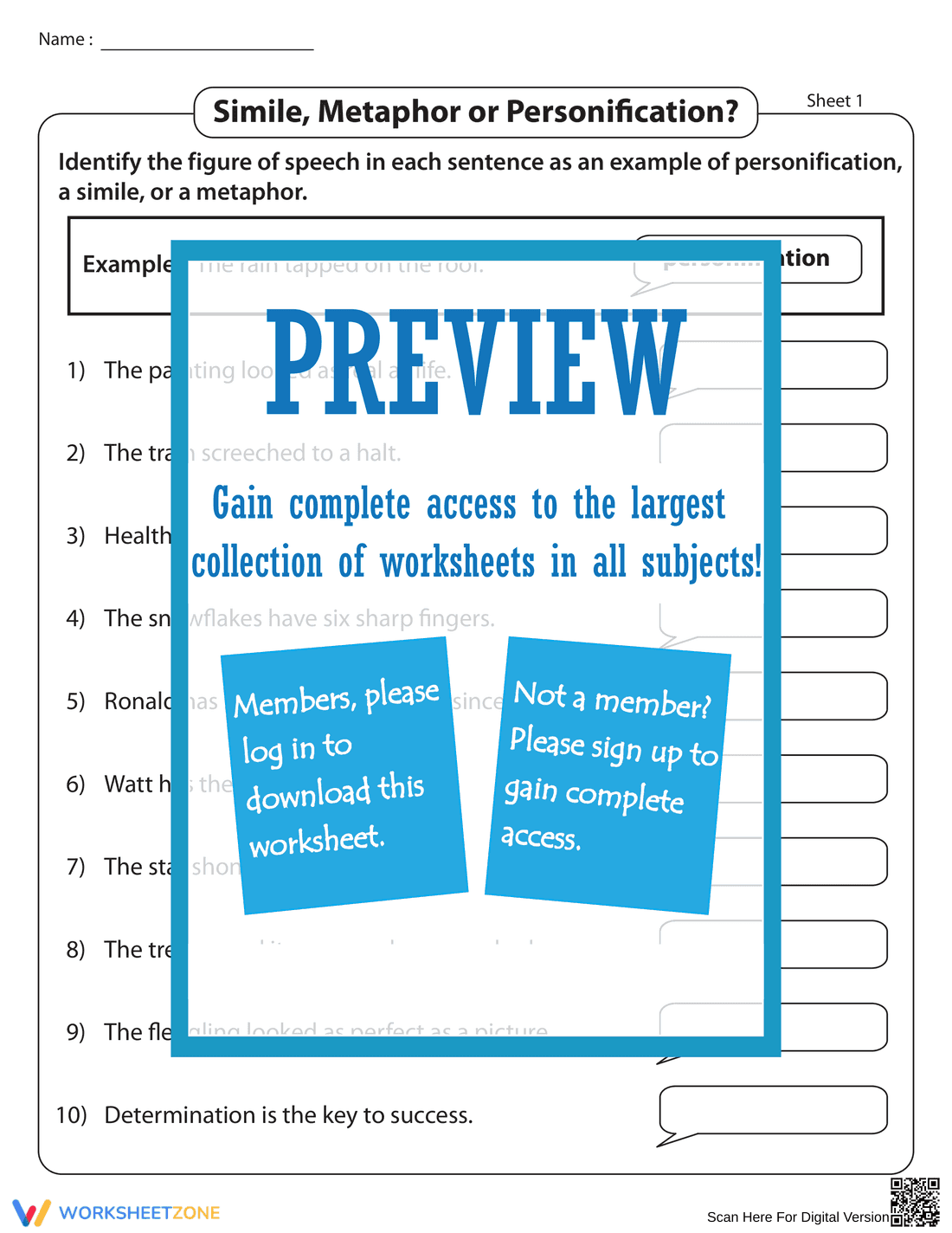
This is an educational worksheet focused on identifying figures of speech. The worksheet presents ten sentences and prompts the student to identify each as either a simile, a metaphor, or personification. An example sentence is provided, 'The rain tapped on the roof,' with the answer 'personification.' Each numbered sentence has a blank speech bubble next to it where the student can write their answer.
Grade Level Suitability:
This worksheet is suitable for grades 6-8. The complexity of the sentences and the abstract nature of identifying figures of speech require a solid understanding of language arts concepts typically taught in these grades.
Why Use It:
This worksheet helps students develop their understanding of figurative language, specifically similes, metaphors, and personification. It improves their reading comprehension and analytical skills by requiring them to interpret the meaning of sentences beyond their literal interpretation.
How to Use It:
Students should read each sentence carefully and determine whether it contains a simile, a metaphor, or personification. They should then write their answer (simile, metaphor, or personification) in the speech bubble provided next to each sentence. Review the example provided before starting.
Target Users:
The target users for this worksheet are middle school students (grades 6-8) learning about figurative language in their English or Language Arts classes. It is also suitable for students who need extra practice identifying similes, metaphors, and personification.
This is an educational worksheet focused on identifying figures of speech. The worksheet presents ten sentences and prompts the student to identify each as either a simile, a metaphor, or personification. An example sentence is provided, 'The rain tapped on the roof,' with the answer 'personification.' Each numbered sentence has a blank speech bubble next to it where the student can write their answer.
Grade Level Suitability:
This worksheet is suitable for grades 6-8. The complexity of the sentences and the abstract nature of identifying figures of speech require a solid understanding of language arts concepts typically taught in these grades.
Why Use It:
This worksheet helps students develop their understanding of figurative language, specifically similes, metaphors, and personification. It improves their reading comprehension and analytical skills by requiring them to interpret the meaning of sentences beyond their literal interpretation.
How to Use It:
Students should read each sentence carefully and determine whether it contains a simile, a metaphor, or personification. They should then write their answer (simile, metaphor, or personification) in the speech bubble provided next to each sentence. Review the example provided before starting.
Target Users:
The target users for this worksheet are middle school students (grades 6-8) learning about figurative language in their English or Language Arts classes. It is also suitable for students who need extra practice identifying similes, metaphors, and personification.


