




























Views
Downloads



Mastering Metaphors Worksheet | Printable Grade 4 ELA

Paste this activity's link or code into your existing LMS (Google Classroom, Canvas, Teams, Schoology, Moodle, etc.).
Students can open and work on the activity right away, with no student login required.
You'll still be able to track student progress and results from your teacher account.
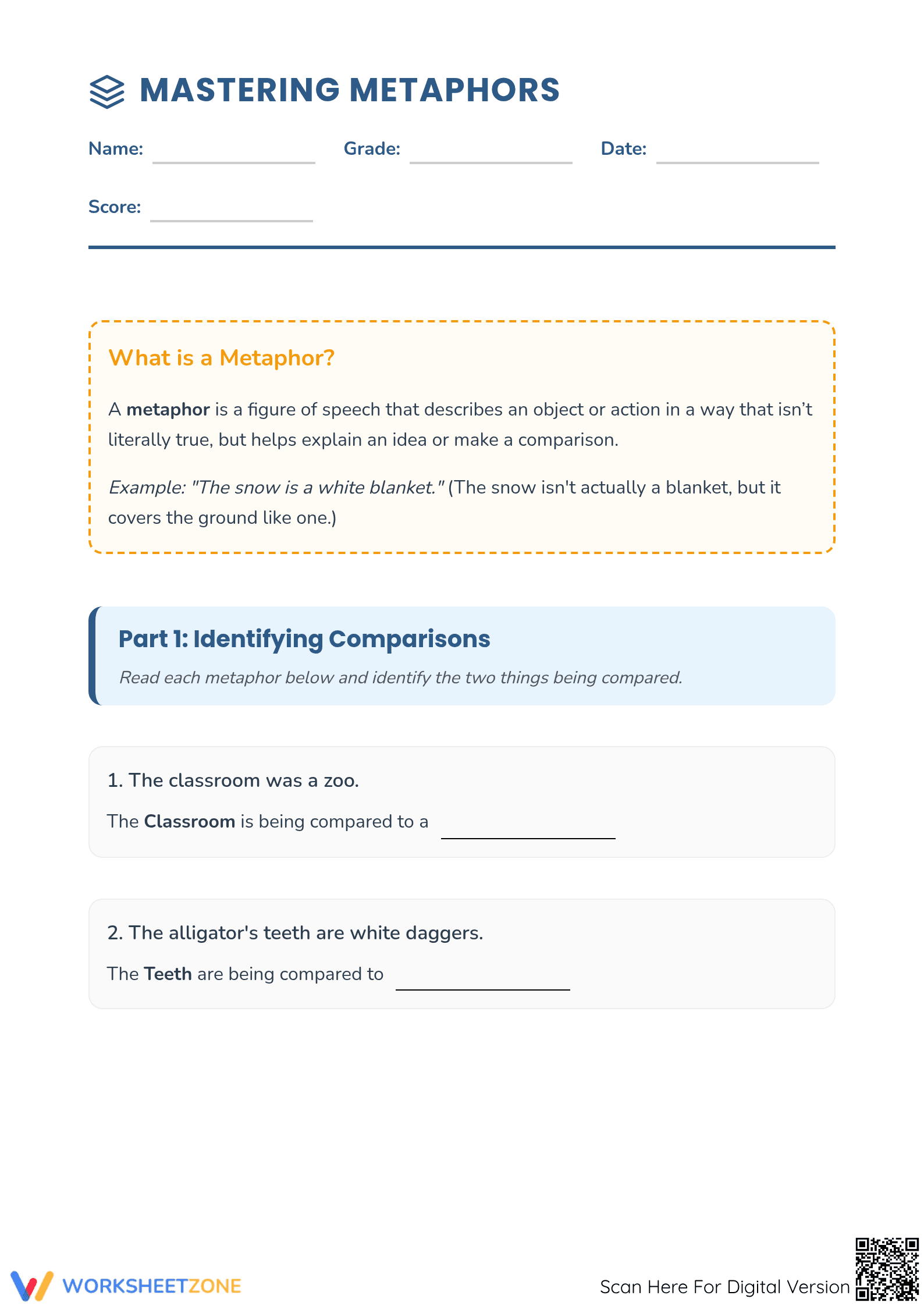
This printable metaphor worksheet helps fourth-grade students master figurative language through structured identification and creative application. By breaking down complex comparisons into manageable components, learners develop a deep understanding of how metaphors enrich writing and communication. Students move beyond literal meanings to interpret the nuanced relationships between objects and actions in varied contexts.
At a Glance
- Grade: 4 · Subject: English Language Arts
- Standard:
CCSS.ELA-LITERACY.L.4.5.A— Explain the meaning of simple similes and metaphors in context- Skill Focus: Figurative Language Mastery
- Format: 5 pages · 16 tasks · Answer key included · PDF
- Best For: Literacy centers and independent practice
- Time: 25–35 minutes
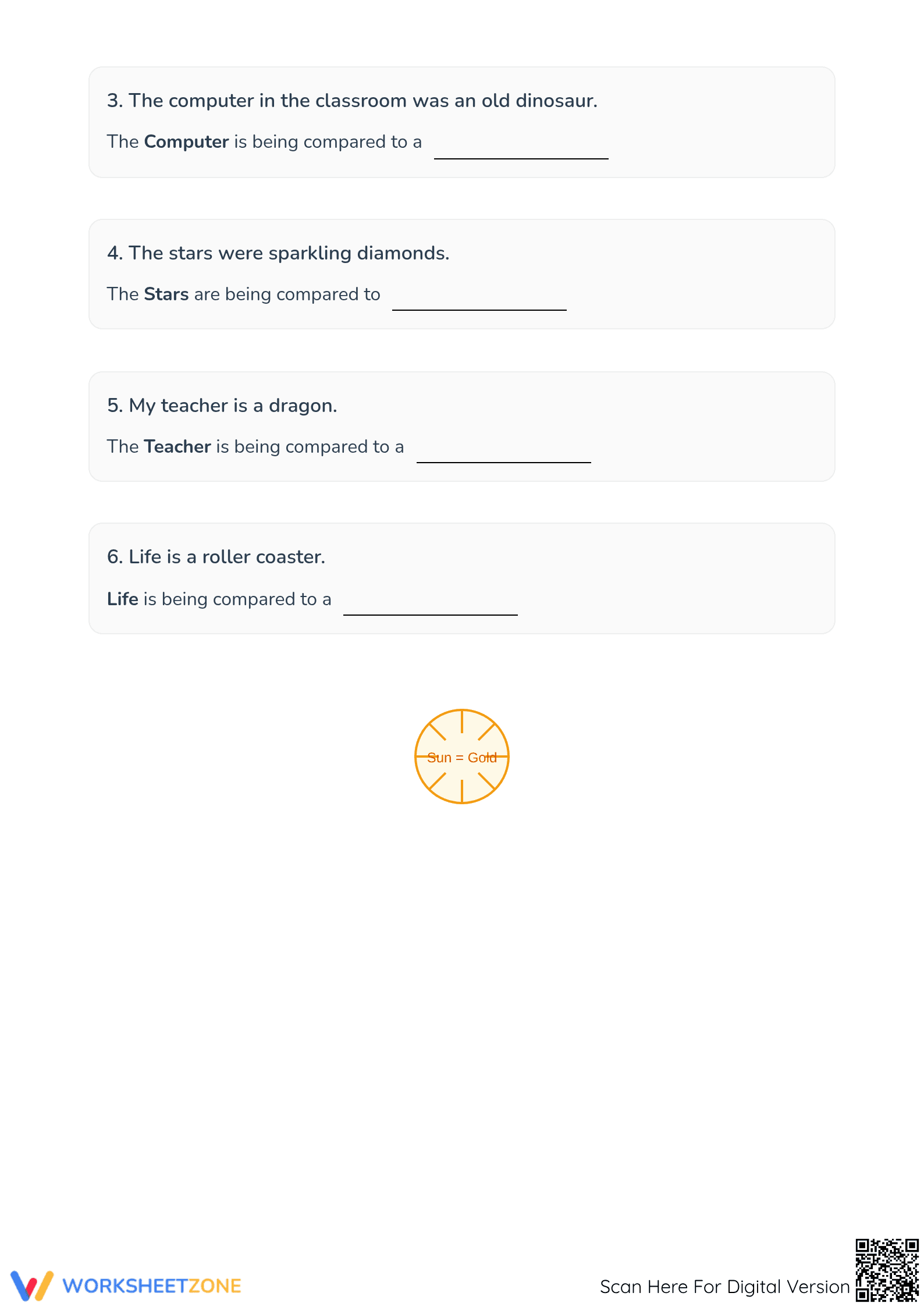
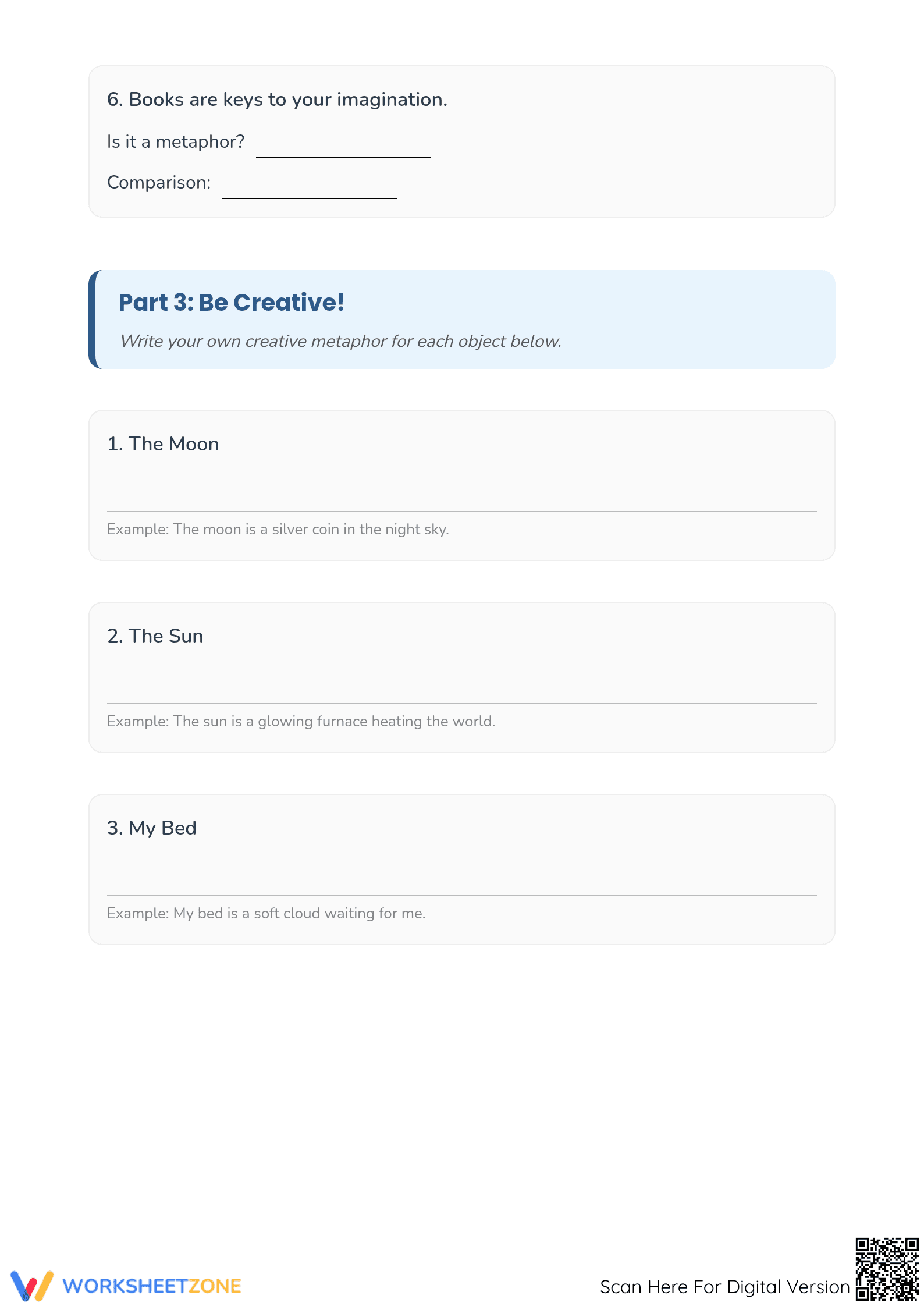
This comprehensive 5-page PDF bundle includes sixteen distinct tasks organized into three developmental parts. The resource begins with a clear definition and worked example to anchor student understanding. It features identifying comparisons, distinguishing metaphors from similes, and original metaphor generation. A full five-page answer key is provided for immediate feedback and easy grading of all included student exercises.
Skill Progression
- Guided Practice: Six introductory items require students to identify the two objects being compared within a provided metaphor, reinforcing the foundational structure of figurative comparisons and building confidence through recognition.
- Supported Practice: Six intermediate tasks challenge students to distinguish between metaphors and similes, requiring them to explain the specific linguistic markers behind their classification to build deeper analytical strength.
- Independent Practice: Three creative prompts and a bonus challenge task students with generating their own original metaphors, moving from simple recognition to authentic linguistic production in a structured environment.
This gradual release approach ensures that students have the conceptual foundation and practical experience to apply these figurative language skills effectively in their own writing projects.
The primary focus of this worksheet is CCSS.ELA-LITERACY.L.4.5.A, which requires students to explain the meaning of simple similes and metaphors in context. By requiring students to identify what is being compared and why, the worksheet directly addresses the meaning-making component of the standard. Both standard codes can be copied directly into lesson plans, IEP goals, or district curriculum mapping tools.
Deploy this resource during the independent practice phase of a figurative language lesson to check for understanding. It also serves as an excellent formative assessment tool; teachers should observe if students struggle to identify the non-literal connection in Part 1, which may indicate a need for more concrete modeling. The expected completion time for the full set is roughly 30 minutes.
This resource is designed for Grade 4 general education students, but its clear scaffolding makes it highly effective for ELL learners and students requiring RTI Tier 2 support. It pairs naturally with a mentor text like "Owl Moon" or a classroom anchor chart displaying common figurative language examples to provide additional visual reinforcement during the lesson.
The development of figurative language skills is a critical milestone in the transition from literal to abstract comprehension. According to Fisher & Frey (2014), scaffolded practice in identifying and generating metaphors is essential for students to move beyond surface-level reading and engage with the deeper, non-literal meanings of complex texts. This worksheet facilitates that transition by providing 16 targeted tasks that align with CCSS.ELA-LITERACY.L.4.5.A, moving students from basic recognition to creative synthesis. Research from EdReports 2024 emphasizes that high-quality literacy materials must include explicit opportunities for students to manipulate language structures, a requirement met by the generative prompts in Part 3 of this resource. By integrating identification, distinction, and creation, this 5-page PDF provides the rigorous practice necessary for Grade 4 students to achieve mastery in figurative language, ensuring they are prepared for the increased symbolic complexity of middle-grade literature and advanced academic writing demands.


