


























Views
Downloads

Essential Similes Worksheet | Grade 3 ELA Practice
Paste this activity's link or code into your existing LMS (Google Classroom, Canvas, Teams, Schoology, Moodle, etc.).
Students can open and work on the activity right away, with no student login required.
You'll still be able to track student progress and results from your teacher account.
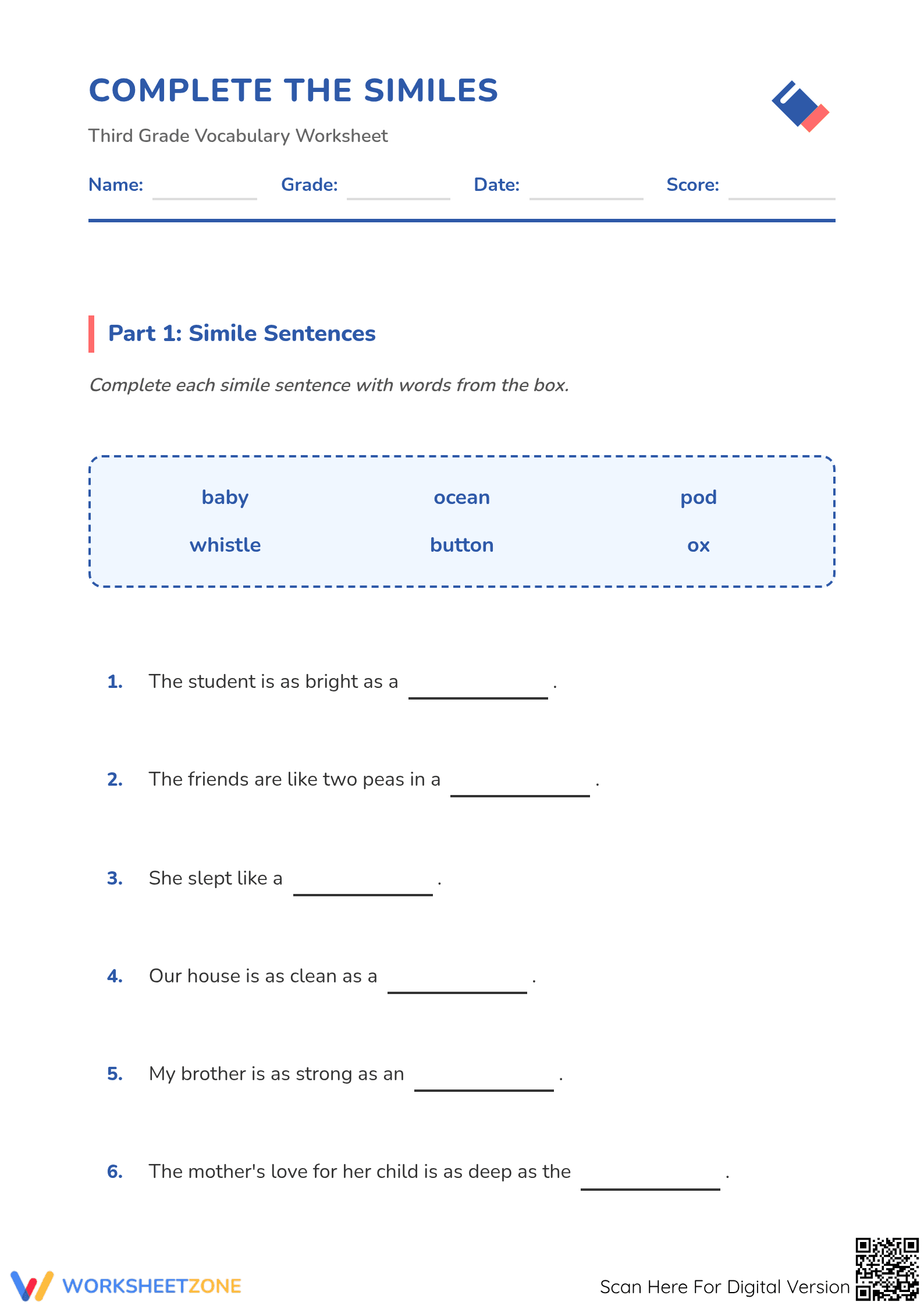
This Grade 3 similes worksheet helps students identify and construct figurative language to enhance their descriptive writing. By comparing two unlike things using "like" or "as," learners develop a deeper understanding of word relationships and nuances. This resource provides structured practice to move students from basic recognition to creative application in their own sentences.
At a Glance
- Grade: 3 · Subject: ELA
- Standard:
CCSS.ELA-LITERACY.L.3.5.A— Distinguish literal and nonliteral meanings of words and phrases in context- Skill Focus: Similes and Figurative Language
- Format: 2 pages · 13 problems · Answer key included · PDF
- Best For: Vocabulary building and descriptive writing practice
- Time: 15–20 minutes
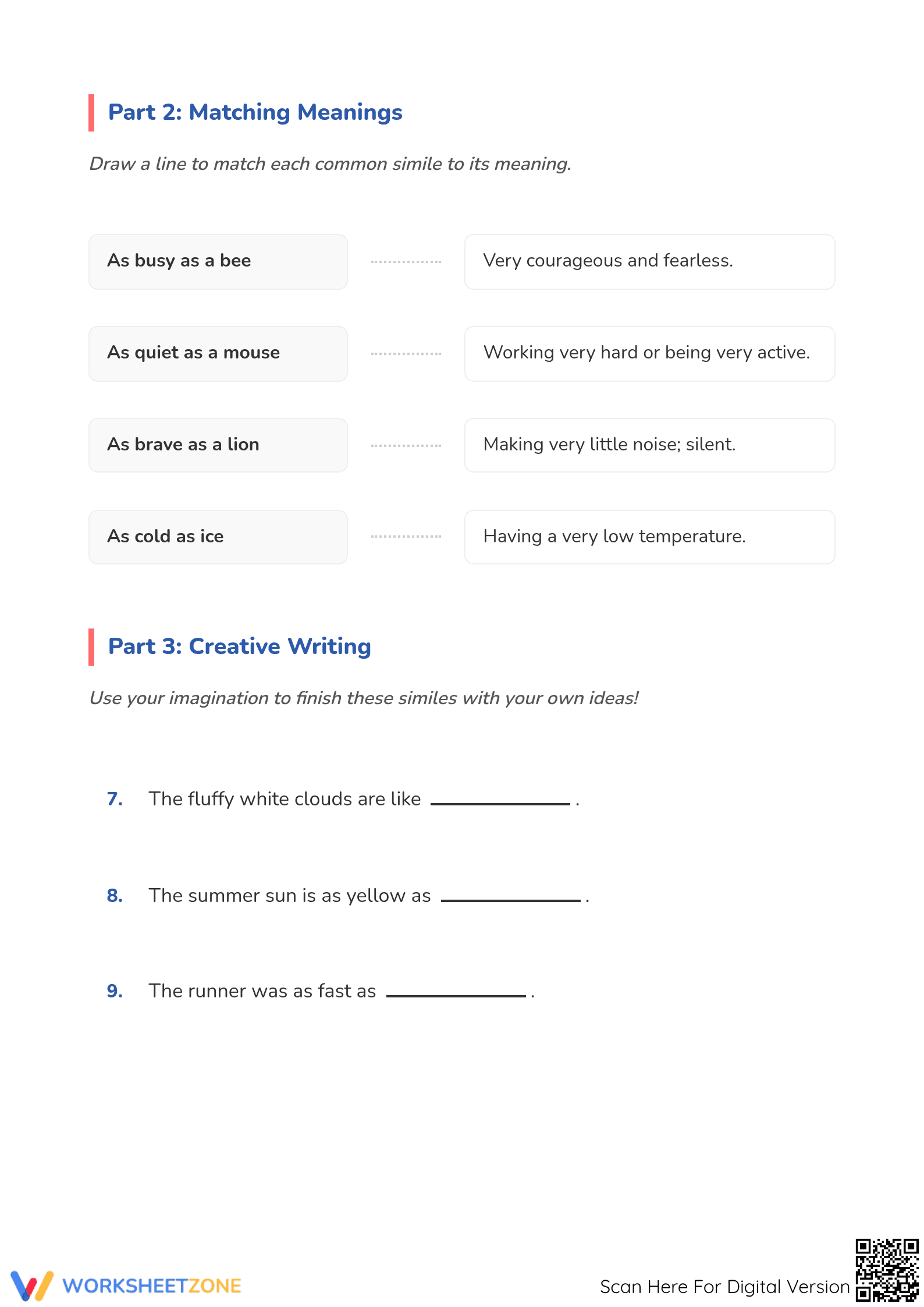
What's Inside: This two-page PDF features three distinct sections designed to build mastery. It includes a word bank for sentence completion, a matching activity to connect common similes with their literal meanings, and a creative writing section. A full answer key is provided to facilitate quick grading or student self-correction.
Skill Progression
- Guided Practice: 6 fill-in-the-blank sentences using a provided word bank to scaffold initial identification of common comparisons.
- Supported Practice: 4 matching tasks where students link common figurative phrases to their real-world definitions to ensure conceptual understanding.
- Independent Practice: 3 open-ended prompts requiring students to generate original similes based on visual or conceptual cues.
This progression follows the gradual-release model, ensuring students feel confident before attempting independent creation.
Standards Alignment
This resource aligns with CCSS.ELA-LITERACY.L.3.5.A, which requires students to distinguish literal and nonliteral meanings of words and phrases. It also supports L.3.5, focusing on understanding word relationships and nuances in word meanings. Both standard codes can be copied directly into lesson plans, IEP goals, or district curriculum mapping tools.
How to Use It
Use this worksheet during the guided practice phase of a lesson on figurative language. It works well as a follow-up to a mentor text reading where similes are highlighted. Teachers can observe students during the matching section to identify those struggling with nonliteral meanings. Expected completion time is 15 to 20 minutes.
Who It's For
This is designed for third-grade students but serves as excellent remediation for fourth graders or enrichment for second graders. It is particularly helpful for English Language Learners (ELLs) who need explicit instruction in idioms and figurative expressions. Pair this with a simile scavenger hunt in a favorite classroom novel.
According to the RAND AIRS 2024 report, explicit instruction in figurative language is a critical component of developing reading comprehension and vocabulary depth in the elementary years. This worksheet targets CCSS.ELA-LITERACY.L.3.5.A by providing 13 specific tasks that bridge the gap between literal interpretation and figurative understanding. Research from Fisher & Frey (2014) emphasizes that the gradual release of responsibility—moving from word-bank supported tasks to independent creative writing—is the most effective way to ensure students internalize complex linguistic structures like similes. By engaging with both recognition and production, students are better equipped to decode descriptive texts and improve their own narrative writing. This resource provides the necessary scaffolding to help Grade 3 learners master nonliteral meanings, a skill that NAEP data consistently identifies as a predictor of long-term literacy success and academic achievement across various subject areas.


