


























1 / 2
0
Views
0
Downloads

0.0
0
Save
0 Likes
Share
Understand Simile and Metaphor with Worksheet
0 Views
0 Downloads
Paste this activity's link or code into your existing LMS (Google Classroom, Canvas, Teams, Schoology, Moodle, etc.).
Students can open and work on the activity right away, with no student login required.
You'll still be able to track student progress and results from your teacher account.
Information
Description
What It Is:
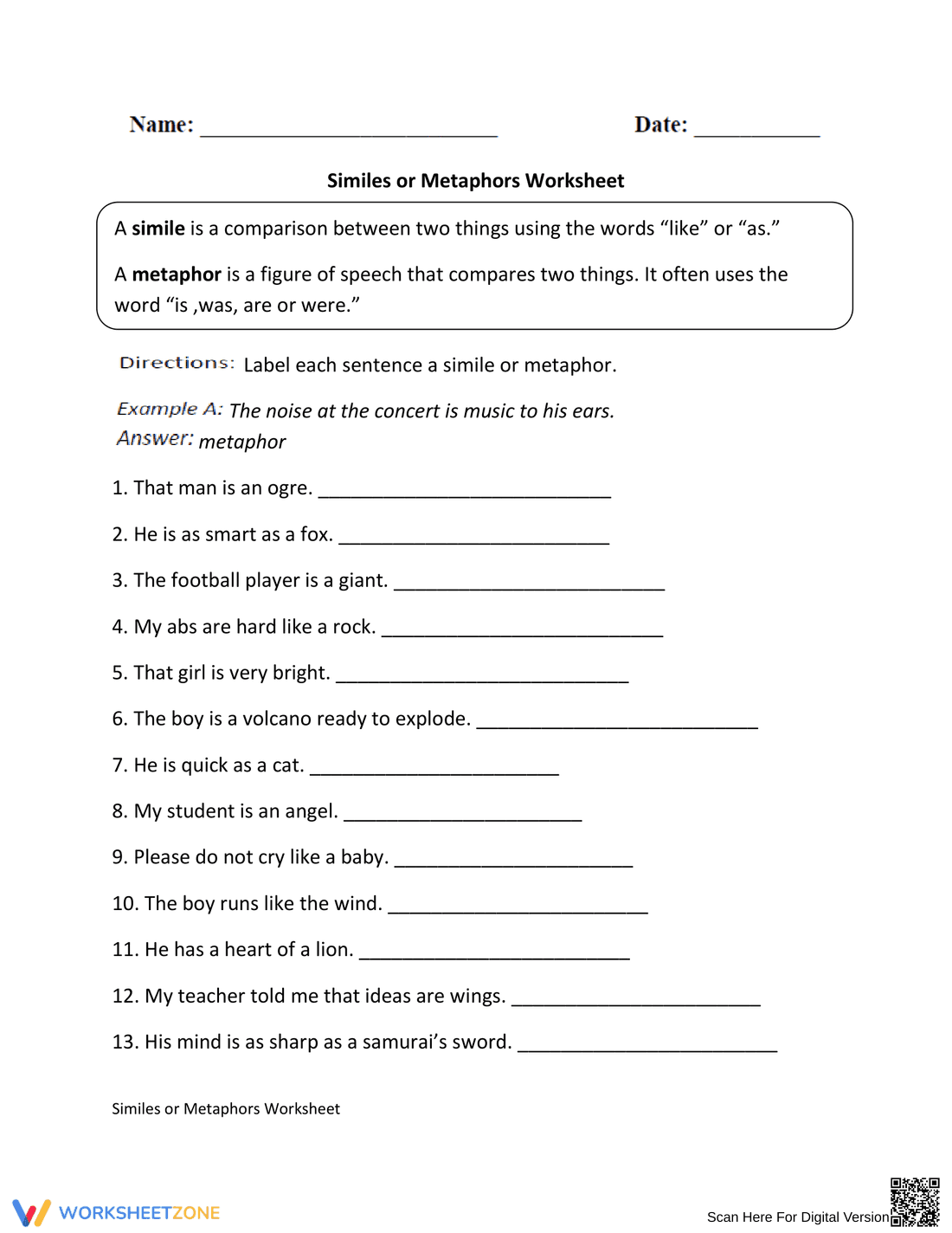
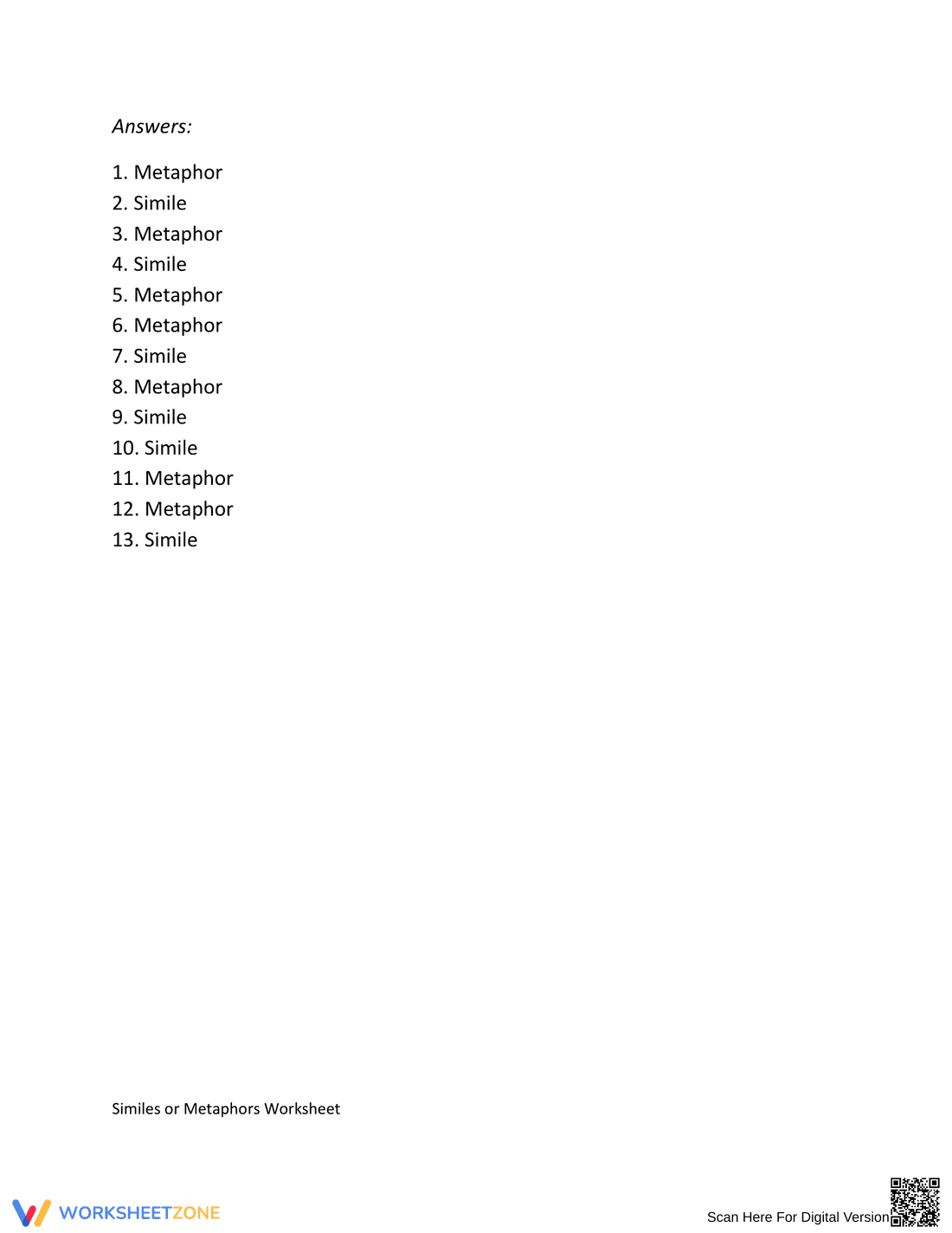
This is a worksheet focused on teaching the difference between similes and metaphors. It provides definitions of each literary device at the top. The main activity involves reading 13 sentences and labeling each one as either a simile or a metaphor. An example is provided to guide students.
Grade Level Suitability:
This worksheet is suitable for grades 4-6. The concepts of similes and metaphors are typically introduced in these grades, and the sentence structures are relatively simple, making them accessible to this age group.
Why Use It:
This worksheet helps students understand and differentiate between similes and metaphors, improving their reading comprehension and writing skills. It provides practice in identifying these figures of speech within sentences.
How to Use It:
Students should first read the definitions of similes and metaphors provided at the top of the worksheet. Then, they should read each sentence carefully and determine whether it is a simile or a metaphor, writing their answer on the provided line next to each sentence.
Target Users:
This worksheet is designed for elementary and middle school students learning about figurative language, specifically similes and metaphors. It is also helpful for teachers looking for a ready-made activity to reinforce these concepts.
This is a worksheet focused on teaching the difference between similes and metaphors. It provides definitions of each literary device at the top. The main activity involves reading 13 sentences and labeling each one as either a simile or a metaphor. An example is provided to guide students.
Grade Level Suitability:
This worksheet is suitable for grades 4-6. The concepts of similes and metaphors are typically introduced in these grades, and the sentence structures are relatively simple, making them accessible to this age group.
Why Use It:
This worksheet helps students understand and differentiate between similes and metaphors, improving their reading comprehension and writing skills. It provides practice in identifying these figures of speech within sentences.
How to Use It:
Students should first read the definitions of similes and metaphors provided at the top of the worksheet. Then, they should read each sentence carefully and determine whether it is a simile or a metaphor, writing their answer on the provided line next to each sentence.
Target Users:
This worksheet is designed for elementary and middle school students learning about figurative language, specifically similes and metaphors. It is also helpful for teachers looking for a ready-made activity to reinforce these concepts.


