


























Views
Downloads

Printable Similes and Metaphors Worksheet | Grade 4 ELA
Paste this activity's link or code into your existing LMS (Google Classroom, Canvas, Teams, Schoology, Moodle, etc.).
Students can open and work on the activity right away, with no student login required.
You'll still be able to track student progress and results from your teacher account.
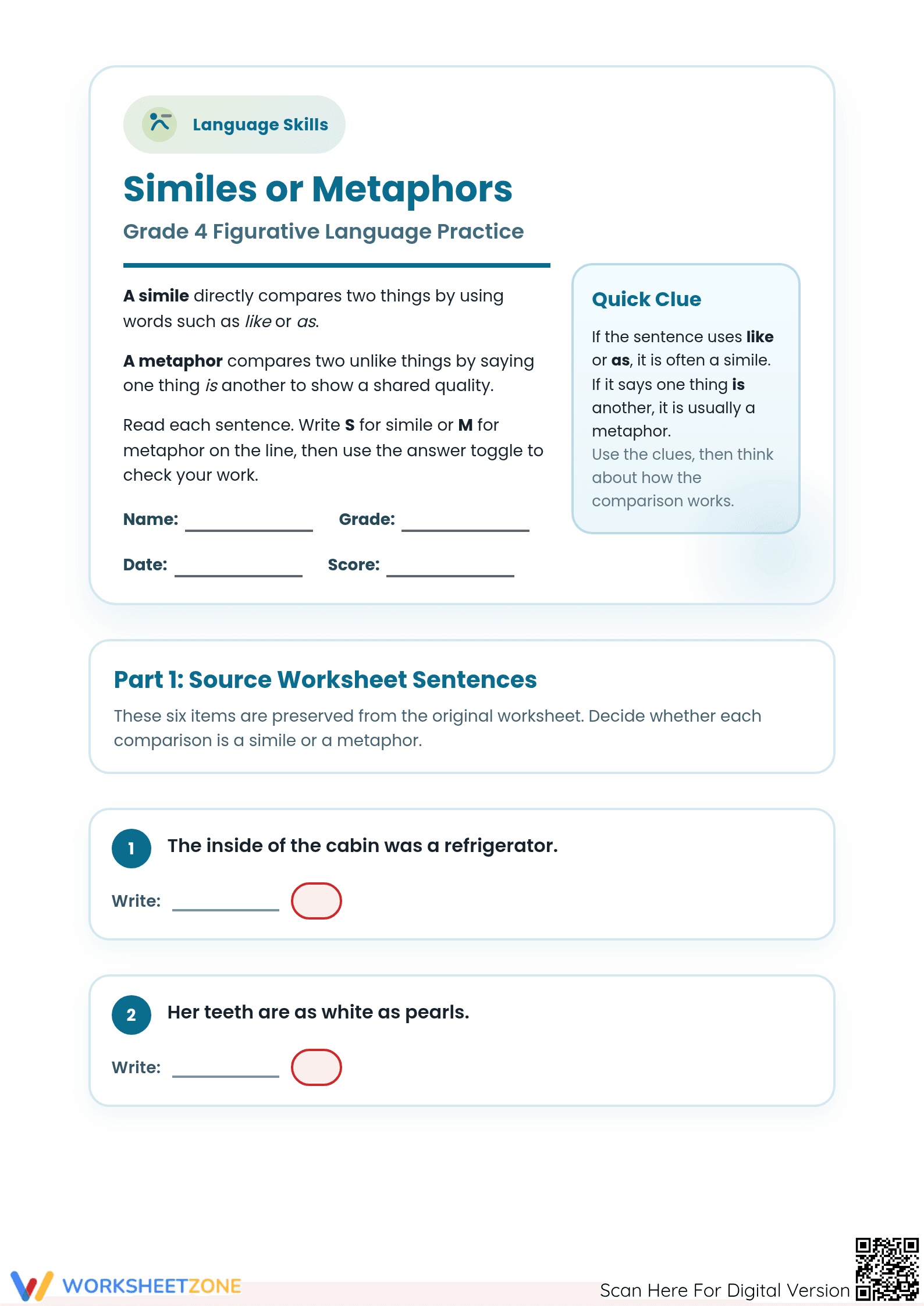
This Grade 4 worksheet helps students distinguish between similes and metaphors through targeted sentence analysis. By identifying comparison keywords versus direct identification, learners strengthen their reading comprehension and linguistic precision. This resource ensures students can effectively categorize non-literal language in diverse texts.
At a Glance
- Grade: 4 · Subject: English Language Arts
- Standard:
CCSS.ELA-LITERACY.L.4.5.A— Explain the meaning of simple similes and metaphors in context- Skill Focus: Figurative Language Identification
- Format: 3 pages · 10 problems · Answer key included · PDF
- Best For: Literacy centers and independent practice
- Time: 15–20 minutes
What's Inside
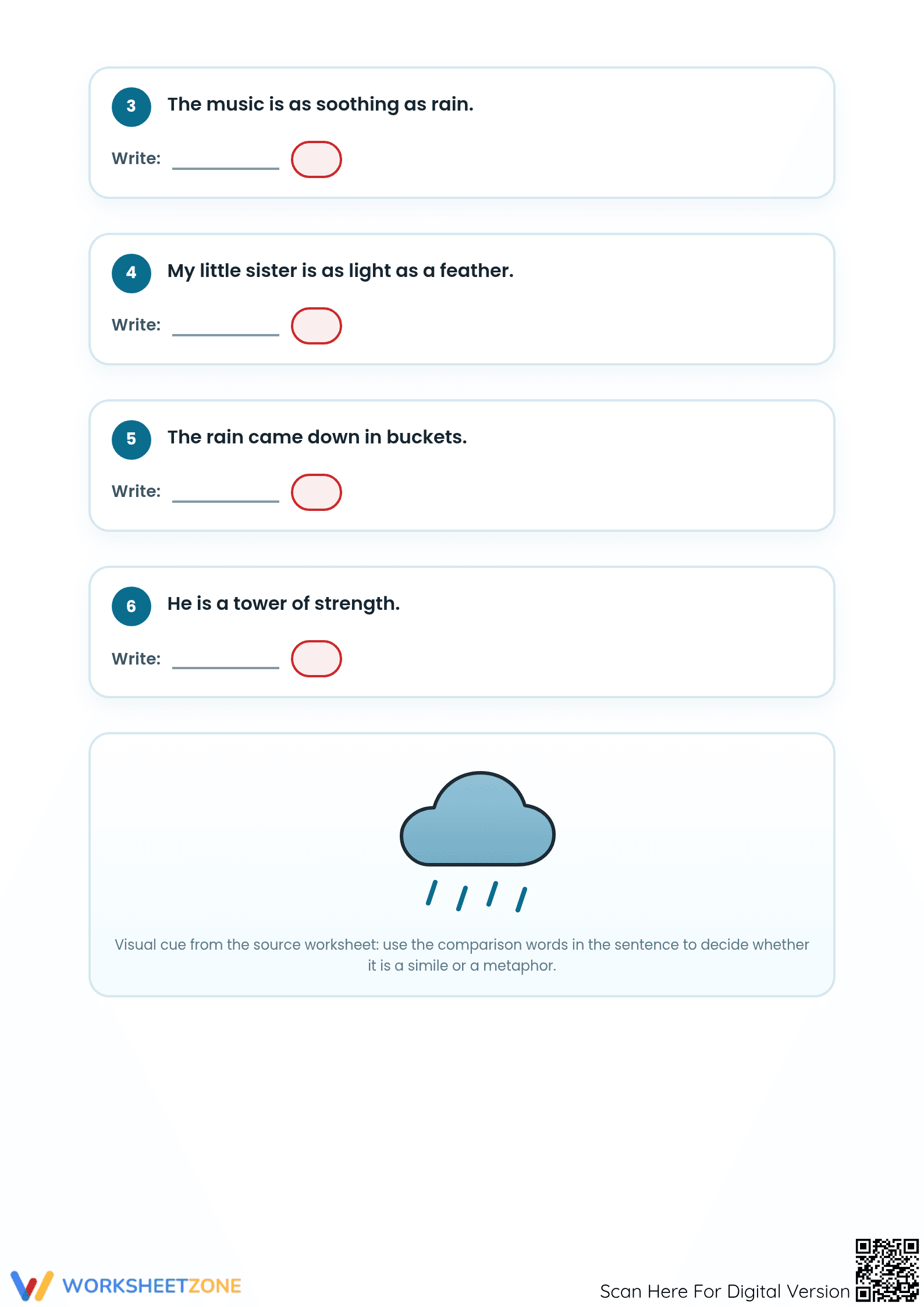
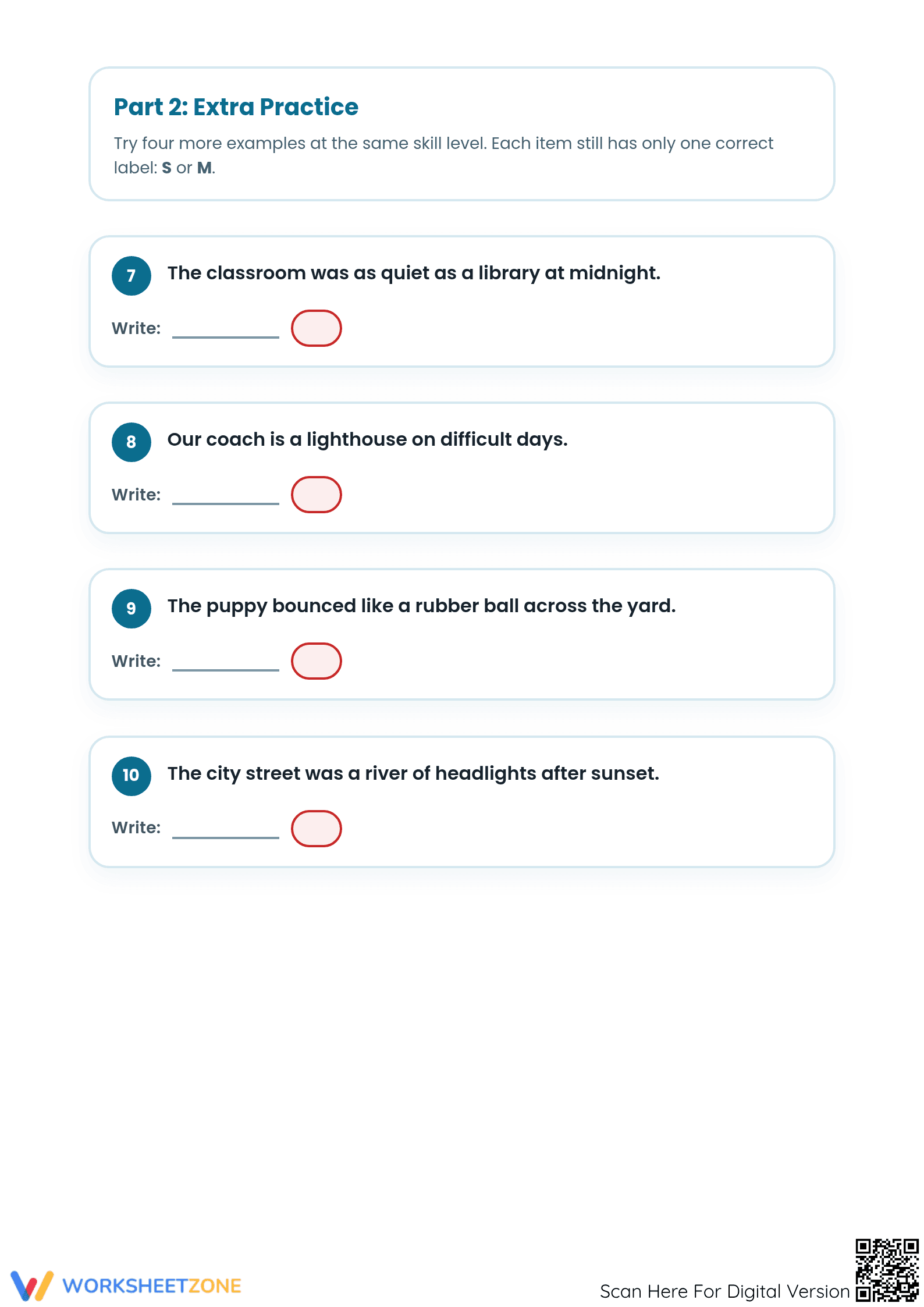
This printable 3-page packet features 10 identification tasks to build fluency in figurative language. Page one introduces definitions with a "Quick Clue" box. The worksheet includes six core sentences in Part 1 and four "Extra Practice" items in Part 2, including a full answer key for quick grading.
Skill Progression
- Guided Practice: The first section provides definitions and a hint box to scaffold the initial identification of sentences.
- Supported Practice: Part 1 includes sentences that challenge students to apply knowledge with less visual support, bridging to independence.
- Independent Practice: Part 2 offers "Extra Practice" items where students independently evaluate comparisons without the introductory clue box.
This follows a gradual release model from explicit matching to independent application of figurative language rules.
Standards Alignment
This resource aligns to CCSS.ELA-LITERACY.L.4.5.A, requiring students to explain the meaning of simple similes and metaphors. By categorizing comparisons, the worksheet builds foundational logic for literary analysis. This standard code can be copied directly into lesson plans, IEP goals, or curriculum mapping tools.
How to Use It
Use this as a formative assessment after a mini-lesson to check for understanding. Observe whether students rely solely on clue words or identify the underlying comparison. This activity takes 15 to 20 minutes as a bell-ringer or homework assignment.
Who It's For
This worksheet is for fourth-grade students, but serves as review for fifth graders or a challenge for advanced third graders. It helps English Language Learners with non-literal expressions. Pair this with poetry analysis to see these skills applied in longer narratives.
Instruction in figurative language, specifically the ability to distinguish between similes and metaphors, is a critical component of intermediate literacy development as emphasized by the research of Fisher & Frey (2014). This worksheet provides high-quality, structured practice for the CCSS.ELA-LITERACY.L.4.5.A standard, ensuring students recognize the subtle ways authors employ comparisons to enhance meaning and imagery. Explicit practice with non-literal language is essential for moving students from surface-level comprehension toward deeper inferential understanding. By providing 10 specific, classroom-tested sentences for analysis, this resource supports the gradual release of responsibility necessary to master complex literary devices. The inclusion of a comprehensive answer key allows for immediate student feedback, which is vital for reinforcing correct linguistic categorization and identifying misconceptions early in the learning process. Teachers can utilize this printable tool as a reliable bridge between basic vocabulary acquisition and the increasingly sophisticated reading demands found in Grade 4 literature and informational texts.


