


























Views
Downloads
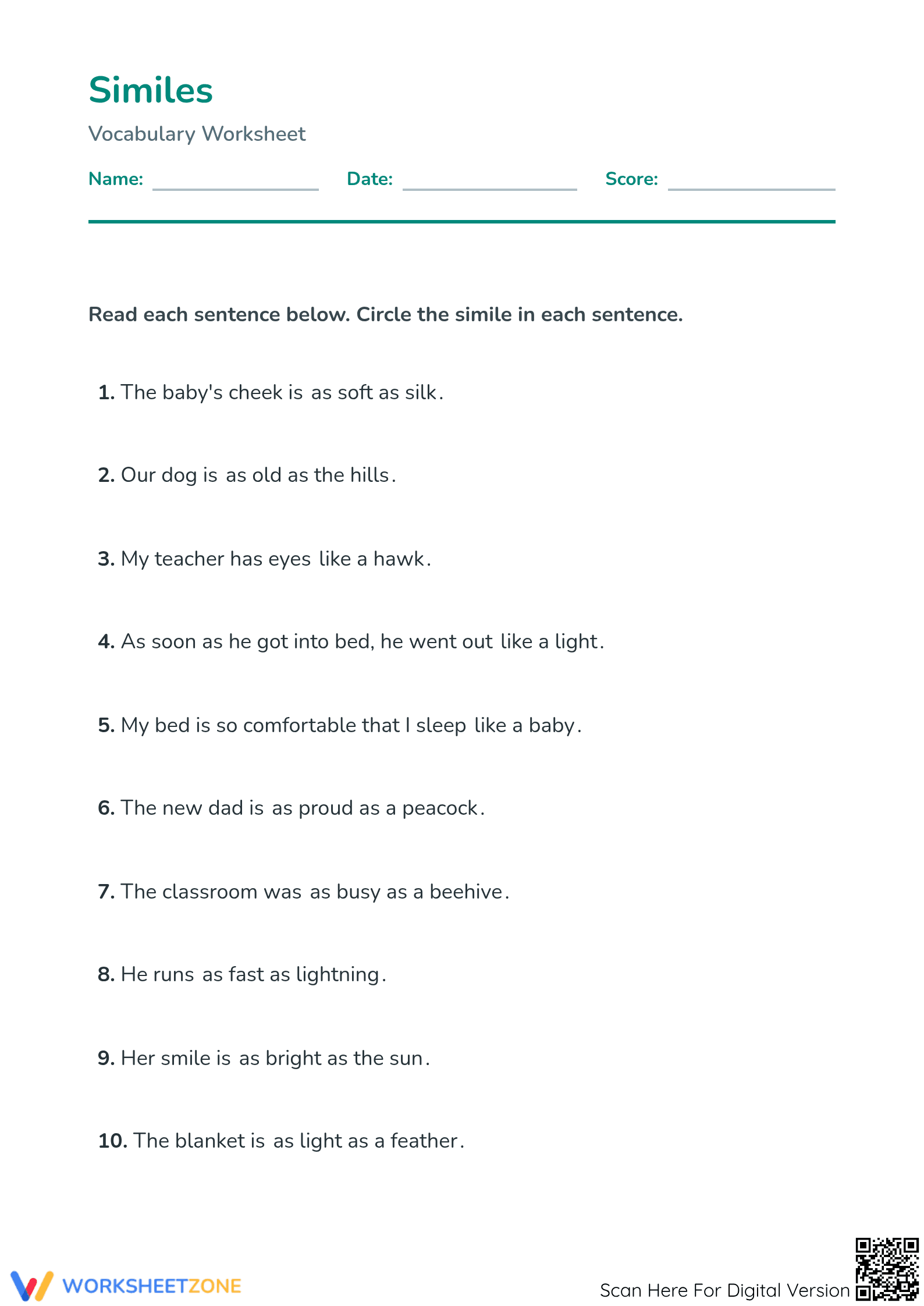

Grade 4 Similes — Printable No-Prep Worksheet
Paste this activity's link or code into your existing LMS (Google Classroom, Canvas, Teams, Schoology, Moodle, etc.).
Students can open and work on the activity right away, with no student login required.
You'll still be able to track student progress and results from your teacher account.
This Grade 4 vocabulary worksheet helps students identify and understand figurative language by locating similes within complete sentences. By practicing with familiar comparisons like "as soft as silk" and "eyes like a hawk," learners build the foundational reading comprehension skills needed to interpret descriptive texts and enhance their own writing.
At a Glance
- Grade: 4 · Subject: ELA
- Standard:
CCSS.ELA-LITERACY.L.4.5.A— Explain the meaning of simple similes in context- Skill Focus: Identifying similes
- Format: 2 pages · 10 problems · Answer key included · PDF
- Best For: Independent practice
- Time: 10–15 minutes
What's Inside
This resource features a straightforward, single-activity layout containing 10 distinct sentences. Students are tasked with reading each sentence and circling the embedded simile. The worksheet includes a mix of "as...as" and "like" comparisons to ensure students recognize both common structures of this figurative language device. A complete answer key is provided on a separate page for quick grading or self-checking.
Zero-Prep Workflow
Designed for immediate classroom implementation, this zero-prep resource follows a simple workflow. Print (1 minute): The clean, black-and-white design prints quickly and saves ink. Distribute (1 minute): Hand out the single-page activity to students without needing any additional materials or complex instructions. Review (3 minutes): Use the included answer key to rapidly check student work or project it on the board for whole-class review. Total teacher prep time is under two minutes, making it an ideal emergency sub plan.
Standards Alignment
This worksheet is directly aligned to CCSS.ELA-LITERACY.L.4.5.A: Explain the meaning of simple similes and metaphors in context. It also supports third-grade and fifth-grade learners working on distinguishing literal from nonliteral meanings. Both standard codes can be copied directly into lesson plans, IEP goals, or district curriculum mapping tools.
How to Use It
Use this worksheet as a quick formative assessment after direct instruction on figurative language. It works perfectly as a morning work activity or a literacy center station. As students work, observe whether they circle the entire simile phrase (e.g., "as old as the hills") or just the descriptive words, which can help you gauge their syntactic understanding of the comparison. Expected completion time is 10 to 15 minutes.
Who It's For
This activity is designed for third, fourth, and fifth-grade general education students, but its clear, uncluttered layout makes it highly accessible for English Language Learners (ELLs) and students receiving special education support. Pair this worksheet with a read-aloud of a highly descriptive picture book so students can hunt for similes in published literature immediately after completing the practice.
Mastering figurative language is a critical milestone in elementary literacy development. According to a recent ScienceDirect TpT Analysis, explicit practice with specific rhetorical devices significantly improves reading comprehension scores in upper elementary classrooms. When students can reliably explain the meaning of simple similes in context (CCSS.ELA-LITERACY.L.4.5.A), they successfully transition from literal decoding to deeper, inferential reading. This targeted worksheet provides the exact repetition necessary to solidify that essential skill. By isolating the identification process within clear, standalone sentences, young learners reduce their cognitive load and focus entirely on the comparative structures of "like" and "as." This foundational recognition is absolutely essential before students are asked to generate their own figurative language or analyze complex metaphors in extended literary texts across various genres.


