What a Circle of Control Worksheet Actually Does
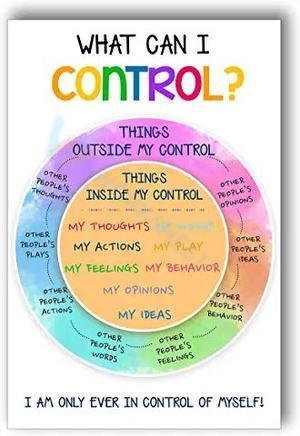
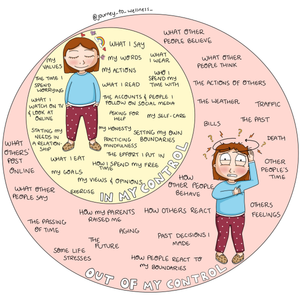
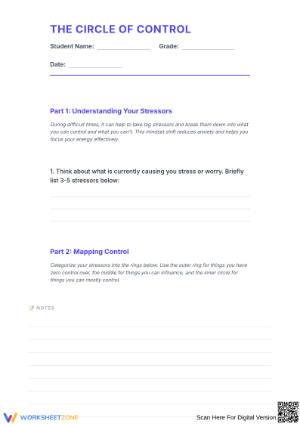
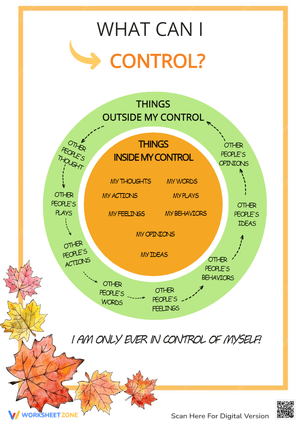
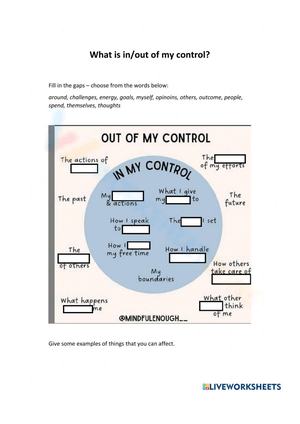
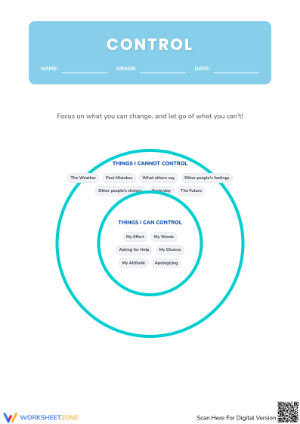
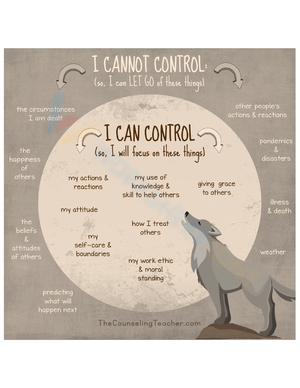
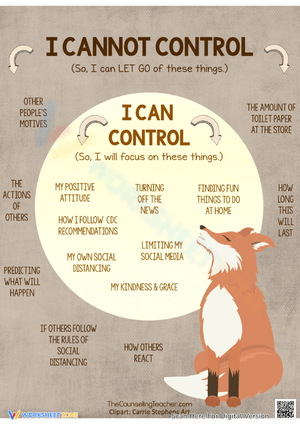
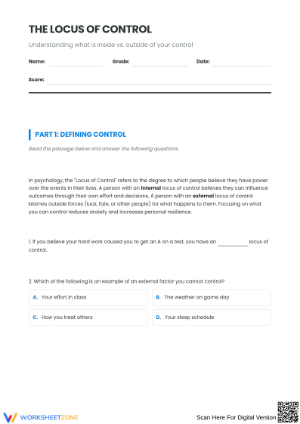
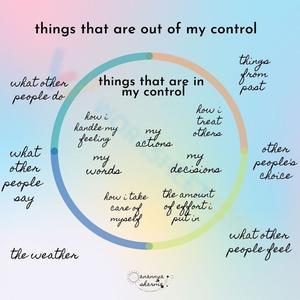
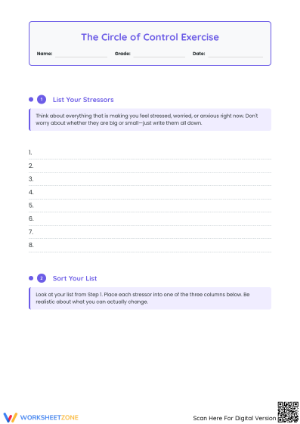
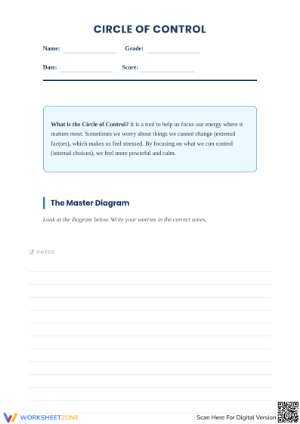
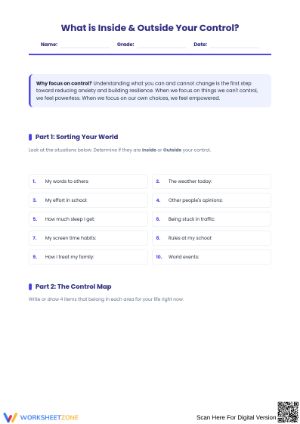
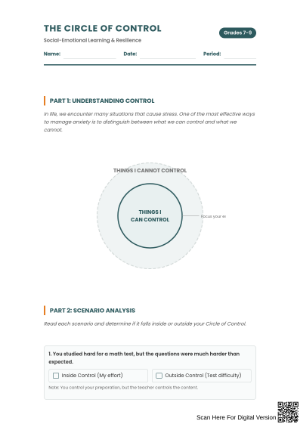
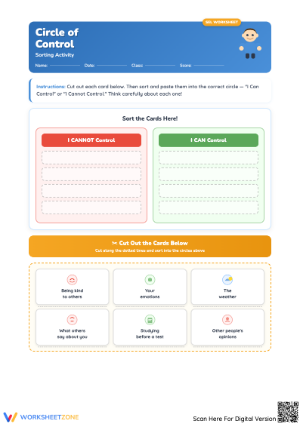
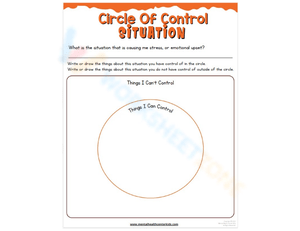
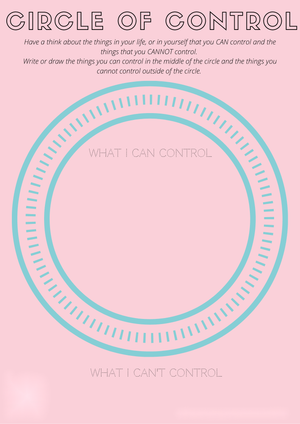
A circle of control worksheet gives students a simple, visual way to separate what they can control from what they can't. On the page, students sort real situations, stressors, or behaviors into an inner circle of things they own and an outer space filled with things they don't. When a student writes "I can control my effort" and "I can't control the weather" in the right spots, an abstract coping idea becomes something they can see and point to.
For teachers, that visual sort is the whole value. Instead of telling a frustrated student to "calm down," you hand them a structure that redirects attention toward the choices, words, actions, and effort that are still theirs. It turns a vague pep talk into a concrete thinking routine you can reuse every week.
Where the Circle of Control Comes From
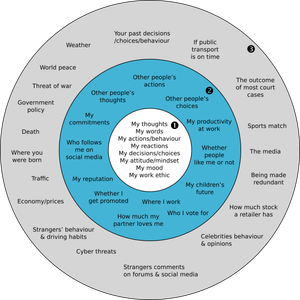
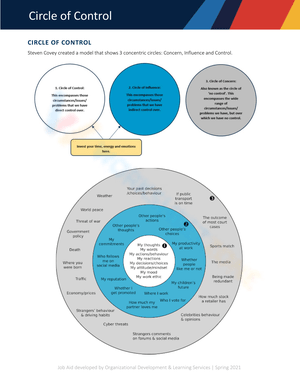
The concept traces back to Stephen Covey's The 7 Habits of Highly Effective People, which describes a wide circle of concern that holds a smaller circle of influence, which in turn holds a circle of control. Covey's point was that people who pour energy into the outer circle of concern feel powerless, while people who focus on the inner circle of control build momentum.
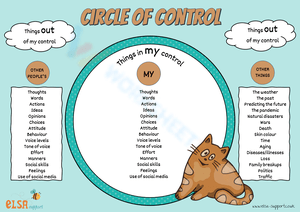
Classroom versions strip that framework down to something students can use in minutes. Most worksheets ask students to sort items into what they can control (their own choices, words, actions, and effort) versus what they can't (other people's actions, past events, and unexpected outcomes). The Mental Health Center Kids explainer frames this two-part sort as the core move: name the worry, then decide which side of the circle it belongs on.
Setting Up the Sort: Two Circles or Three Zones
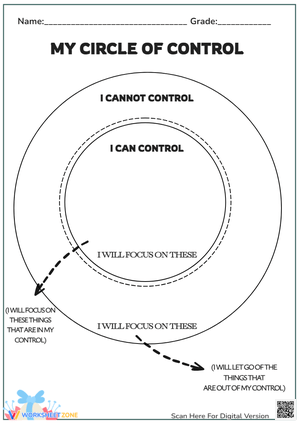
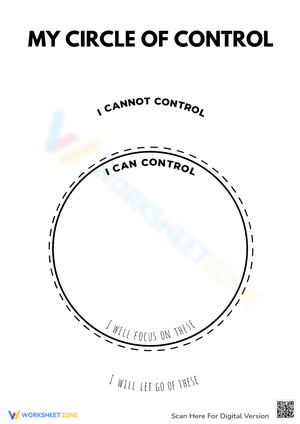
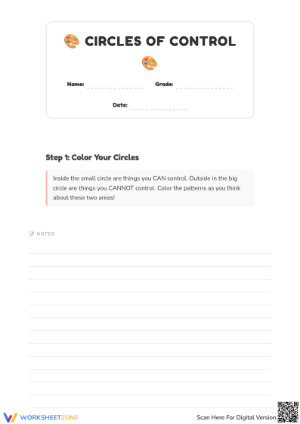
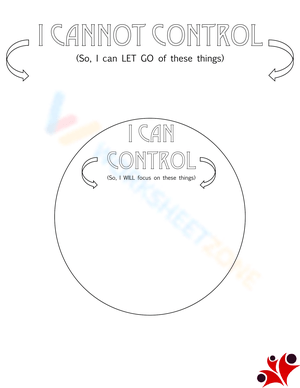
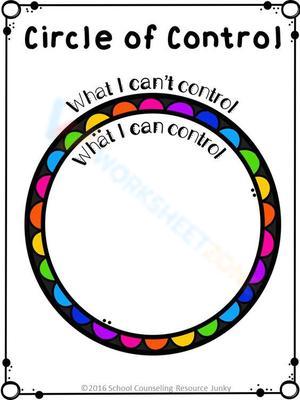
The simplest layout is a single circle inside a larger boundary. Students list controllables inside and non-controllables outside. This two-part version works well for early elementary because the choice is binary and fast.
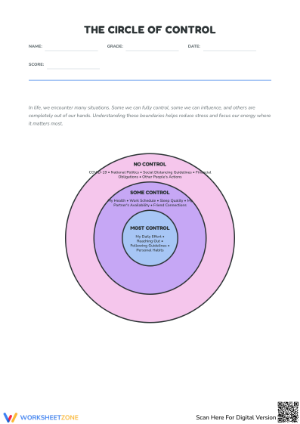
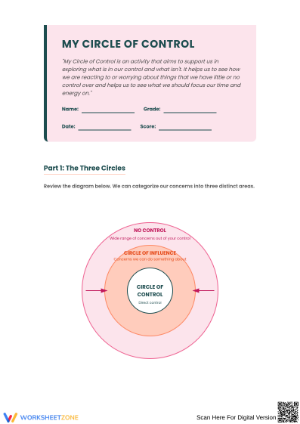
Older students often need more nuance, so many worksheets expand to three zones: no control, some control, and most control. A middle schooler worrying about a group project can place "my teammates' effort" in the middle zone instead of forcing it to an all-or-nothing answer. That middle band is where a lot of honest classroom conversation happens, because it names the messy reality that influence is not the same as control.
Here is the shift most teachers miss: the goal is not to sort items "correctly" but to move a student's energy. When a student parks a worry in the outer circle, the follow-up question matters more than the placement. Ask, "So what's the one thing in your inner circle you could do next?" That single pivot converts the worksheet from a labeling exercise into an action plan, which is why the tool outlasts the single lesson it was introduced in.
Grade-Band Differentiation
Differentiation here is mostly about the number of zones and the kind of scenarios you supply.
- Early elementary (K-2): Use the two-circle version with picture cues and read-aloud scenarios like "my friend won't share" or "I want a turn." Keep the controllables to a short list: my body, my words, my attitude.
- Upper elementary (3-5): Introduce the three-zone version and let students generate their own examples from recess, group work, and homework.
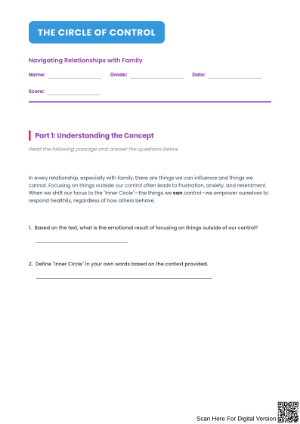
- Middle and high school: Use it inside advisory or a behavior check-in, with scenarios about grades, friendships, and events outside school. Older students can write a short reflection under the sort instead of just listing items.
Supporting Students With Anxiety and Behavior Needs
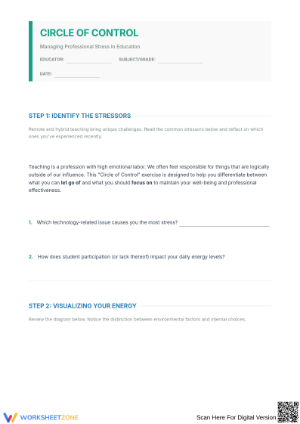
The circle of control is a natural fit for calming corners, one-on-one counseling, and behavior intervention plans. A dysregulated student is usually stuck on the outer circle, replaying something they cannot change. The worksheet gives them a legitimate place to put that worry and then a doorway back to action.
According to Edutopia, adapted circle of control activities give special education students a concrete, visual way to process situations they cannot change. The approach builds resilience by narrowing attention to four controllables their own choices, words, actions, and effort instead of the outcomes that sit outside their reach.
For neurodivergent students, keep the sort short and predictable. Pre-fill a few items so the blank page doesn't become its own stressor, and revisit the same worksheet after a hard day so the routine feels familiar rather than novel each time.
Connecting It to SEL Competencies
The circle of control isn't a standalone trick; it maps cleanly onto broader social-emotional learning. CASEL's school guide materials link self-regulation tools like this one to competencies such as self-management and responsible decision-making. When a student decides which worries to release and which actions to take, they are practicing exactly the self-management skills those frameworks describe.
That connection helps when you need to justify the activity to an administrator or fold it into an existing SEL scope. It also gives you language for feedback: instead of "good job," you can name the skill—"you just showed self-management by choosing what to focus on."
Classroom Implementation
The worksheet works best as a repeated routine, not a one-time lesson. A few practical moves:
- Morning meeting check-in: Once a week, have students name one thing in their inner circle they'll focus on that day. It takes three minutes and sets a tone of agency.
- After a conflict: Pull the worksheet out during a reset instead of during the heat of the moment. Let the student sort first, then debrief.
- Debrief with a pivot question: Always end with, "What's one controllable action you'll take?" The action, not the sort, is the point.
- Revisit and compare: Keep completed sheets and look back after a few weeks so students can see how their thinking about control has shifted.
Store a small stack in the calming corner and a class set for group lessons. When the tool is always within reach, students start reaching for it on their own, which is the real sign it's working.
Frequently Asked Questions
1. What is the circle of control and where does the concept come from?
It's a visual tool that helps students separate what they can control from what they can't. The idea comes from Stephen Covey's The 7 Habits of Highly Effective People, which nests a circle of control inside a circle of influence inside a circle of concern.
2. How do teachers use circle of control worksheets in the classroom?
Teachers use them in morning meetings, calming corners, small-group SEL sessions, and one-on-one counseling. Students sort stressors into what they can and can't control, then commit to one controllable action.
3. What grade level is the circle of control activity best for?
It works across K-12. Early elementary students do best with a simple two-circle sort, while upper elementary and middle school students benefit from a three-zone version that adds a "some control" middle band.
4. How can these worksheets support students with behavior or anxiety needs?
They give anxious or dysregulated students a concrete place to put worries they can't change and a clear path back to action. That's why they fit well inside behavior intervention plans and calming-corner routines.
5. How is the circle of control different from the circle of influence and circle of concern?
The circle of concern holds everything a student cares about, the circle of influence holds what they can affect, and the circle of control holds what they directly decide. Most classroom worksheets focus on that innermost circle.












 Interactive Worksheet Maker
 Quiz Maker
 Word Search Maker
 Crossword Puzzle Maker
 Word Scramble Generator
 Sentence Scramble Generator
 Handwriting Worksheet Generator
 Name Tracing Generator
 Fill In The Blank Generator