When a student can only describe a character as nice or mean, they are missing most of what a text is telling them. Character traits worksheets give teachers a concrete way to move readers past those flat labels and into the kind of specific, evidence-based description that grade-level reading standards expect. For a third-grade classroom running guided reading groups, independent stations, or whole-class mini-lessons, a well-built worksheet becomes the bridge between hearing a story read aloud and being able to talk or write about it with precision.
Worksheetzone built its character traits collection with this exact gap in mind. Rather than asking students to circle a single adjective, the tasks push them to separate what a character looks like or does from who a character really is on the inside, then back that description up with proof from the text.
Internal vs External Traits: The Core Distinction
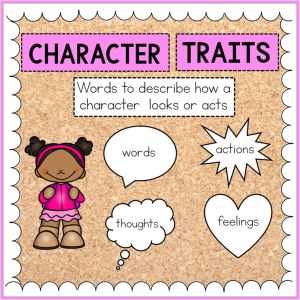
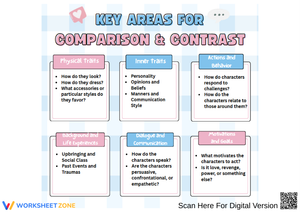
Most character traits worksheets split the skill into two categories. External traits are the physical, observable details: hair color, height, the clothes a character wears, or an action anyone watching would notice. Internal traits are the emotional and personality-based qualities that explain motivation, such as being cautious, generous, stubborn, or easily discouraged.
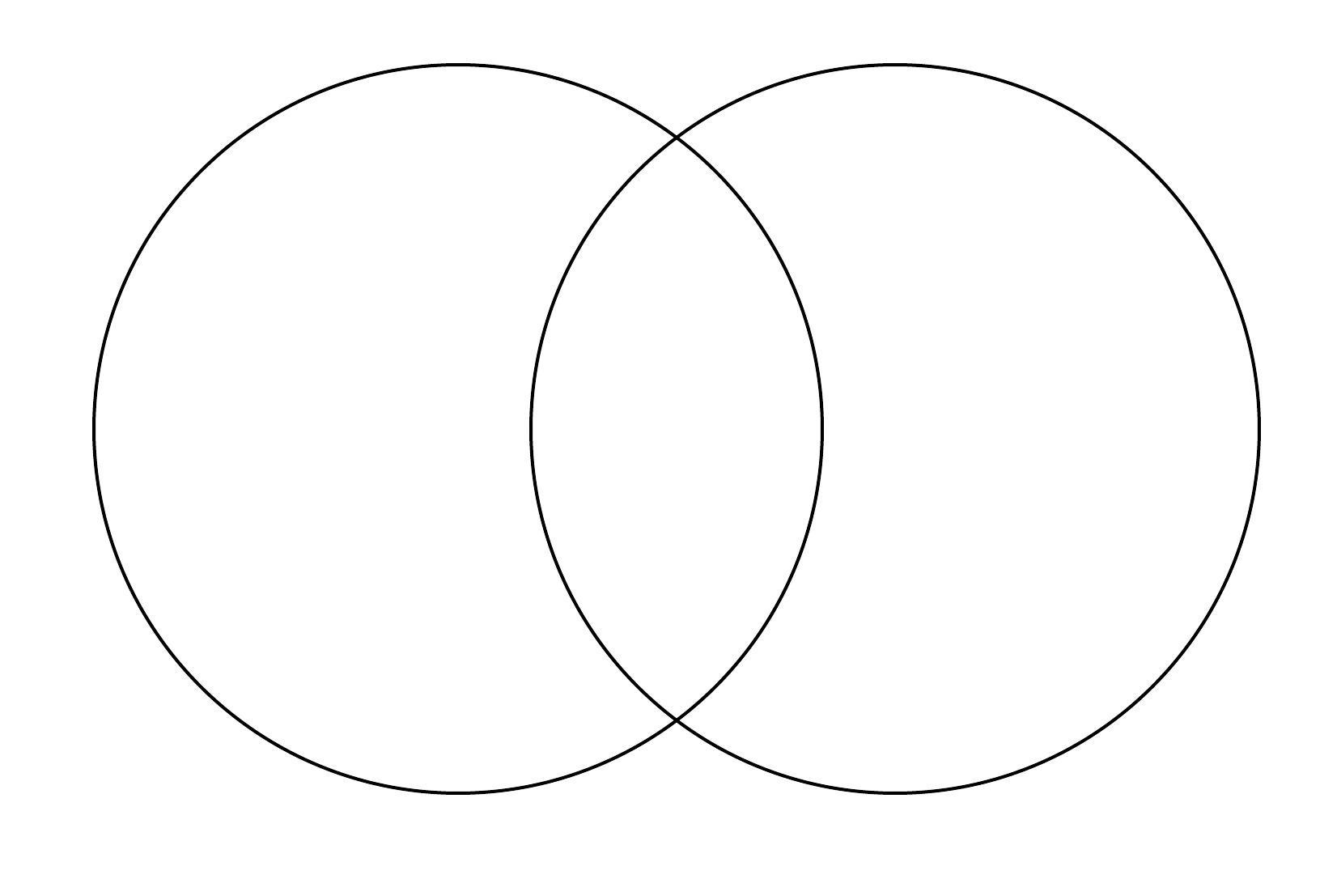
Teaching students to sort clues into these two buckets before they ever write a full sentence keeps the task manageable. A simple two-column chart, one side labeled outside and one labeled inside, gives students a low-stakes place to practice noticing details before they have to synthesize them into a trait word.
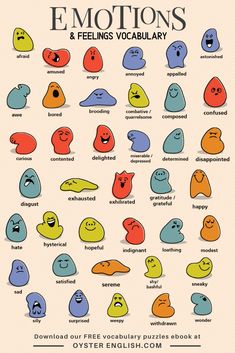
Building a Trait Word Bank Beyond Nice, Mean, Happy, Sad
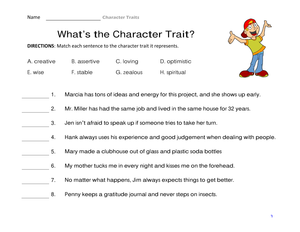
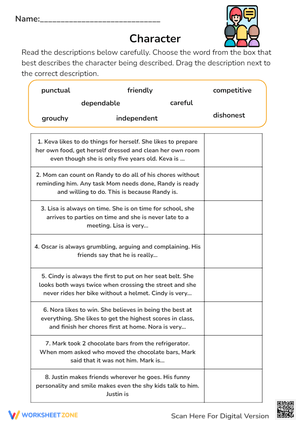
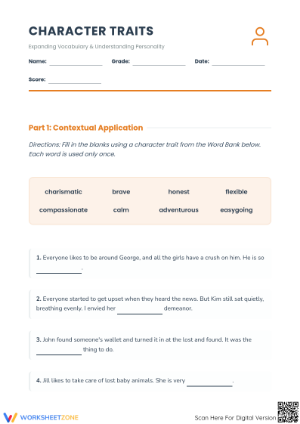
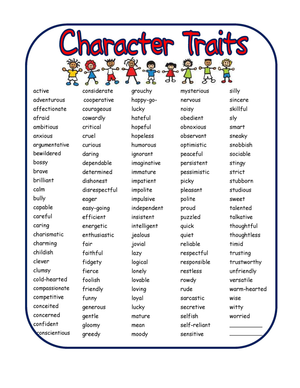
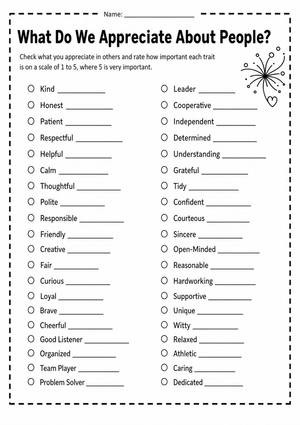
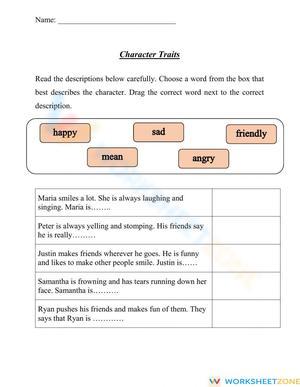
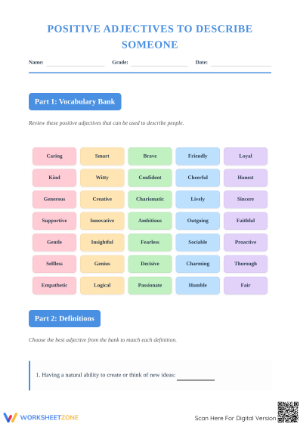
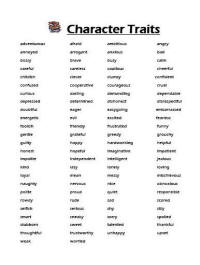
One of the most common bottlenecks in this unit is not comprehension, it is vocabulary. Students frequently understand exactly how a character feels or behaves but default to the same four or five words because that is the working vocabulary they have on hand. A dedicated trait word bank, printed alongside the worksheet or posted on an anchor chart, solves this quickly. Grouping words by category, confident, timid, curious, generous, impatient, gives students a menu to pull from instead of forcing them to invent precise language on the spot, and teachers typically see richer written responses within a week or two of introducing the bank.
Rotating in three to five new words per week, tied to whatever text the class is reading, keeps the bank growing without overwhelming students who are still cementing the internal versus external distinction.
Pairing Trait Identification with Textual Evidence
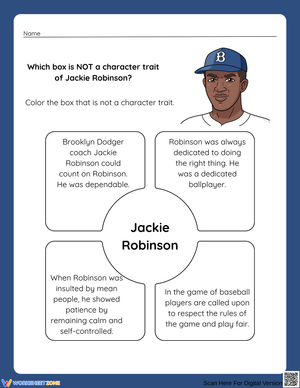
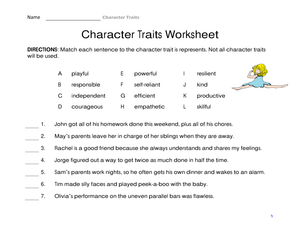
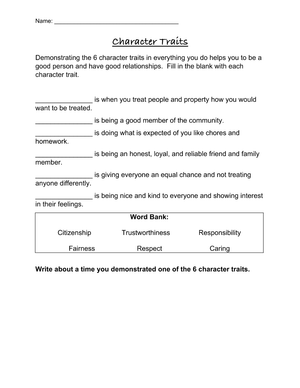
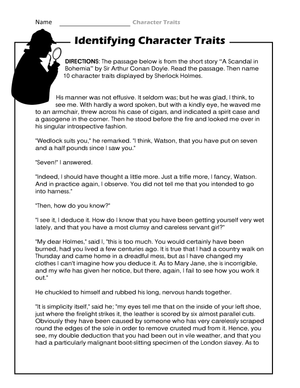
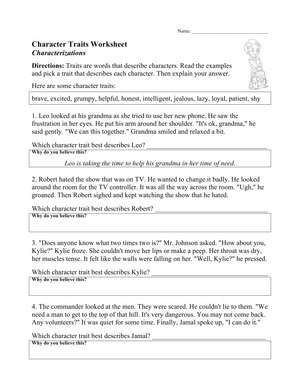
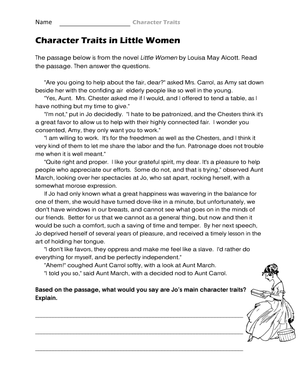
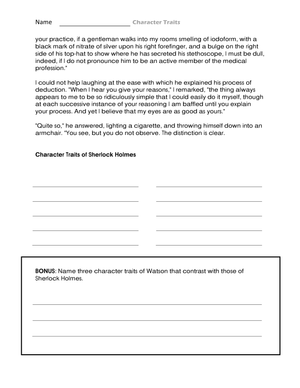
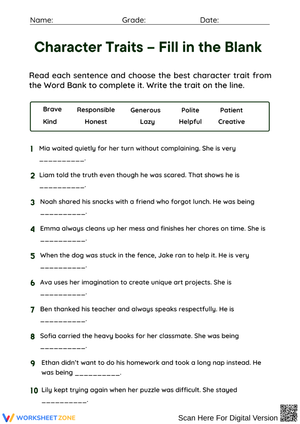
Naming a trait is only half the standard. Students also need to point to the specific line, action, or piece of dialogue that supports their choice. Worksheets built around a show, don't tell format handle this well: one box asks for the trait word, the adjoining box asks for the exact evidence from the story that proves it.
This pairing does double duty. It reinforces the habit of returning to the text rather than guessing, and it gives teachers an easy way to spot-check whether a student's trait choice is actually supported or just a reasonable-sounding guess.
Aligning Practice with CCSS.ELA-LITERACY.RL.3.3
CCSS.ELA-LITERACY.RL.3.3 asks third-grade readers to describe characters in a story using their traits, motivations, or feelings, and to explain how their actions contribute to the sequence of events. Character traits worksheets map onto this standard almost exactly, since the trait-plus-evidence structure already requires students to connect a character's inner qualities to what happens in the plot.
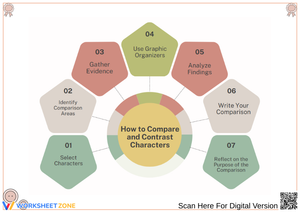
According to the RL.3.3-aligned worksheet collections cataloged by Common Core ELA resource libraries, this standard sits inside a broader progression that starts with describing how characters respond to events and later asks students to compare and contrast characters using specific textual details, giving teachers a clear throughline for planning across the year.
Classroom Implementation
Most third-grade character traits activities fit inside a 15 to 20 minute block, which makes them a natural fit for a station rotation, an independent seatwork slot after guided reading, or a quick formative check before students move into literature circles. A simple implementation pattern that works across classrooms:
- Read or reread a short passage as a class or in small groups.
- Have students sort two or three observable clues into internal and external columns.
- Ask students to name one trait word and cite the exact evidence that supports it.
- Collect the worksheet as a quick formative checkpoint before moving to a longer written response or a literature circle discussion.
Keeping the routine consistent across the week, same structure, new text, helps students focus their effort on the thinking rather than relearning the format each time.
Frequently Asked Questions
1. What is the difference between internal and external character traits on a worksheet?
External traits are the physical or observable details a reader could see or hear directly, like a character's appearance or a specific action. Internal traits are the emotional and personality-based qualities that explain why a character behaves the way they do, such as being brave, curious, or easily frustrated.
2. What grade level typically works on character traits worksheets?
Third-grade classrooms are a common focus point for this skill, since it lines up directly with CCSS.ELA-LITERACY.RL.3.3, though the underlying skill of describing characters builds from earlier grades and continues to develop in later ones.
3. How do character traits worksheets align with reading comprehension standards like RL.3.3?
RL.3.3 asks students to describe characters using their traits, motivations, or feelings and to explain how their actions affect the story's events. A worksheet that pairs trait identification with textual evidence practices that exact combination of skills in one task.
4. How long should a character traits worksheet activity take in class?
Most grade-level activities are designed to fit inside a 15 to 20 minute window, making them workable for an independent station, a small-group rotation, or a quick whole-class check before a longer literacy block.
5. How can teachers use character traits worksheets for small-group intervention?
Simplify the task by narrowing the trait word bank to two or three choices, or pre-highlighting the evidence sentence so students only match it to the right trait. For advanced groups, remove the word bank and ask students to generate their own vocabulary or compare two characters from the same text.












 Interactive Worksheet Maker
 Quiz Maker
 Word Search Maker
 Crossword Puzzle Maker
 Word Scramble Generator
 Sentence Scramble Generator
 Handwriting Worksheet Generator
 Name Tracing Generator
 Fill In The Blank Generator