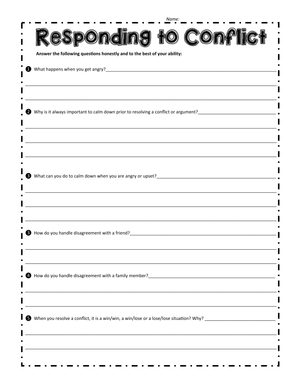
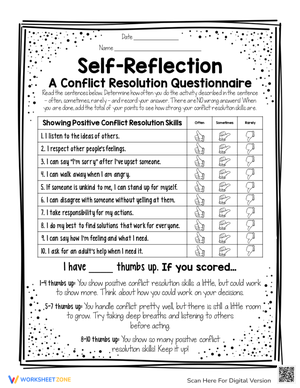
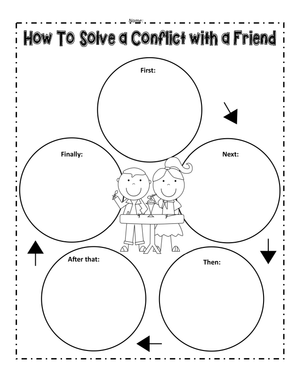
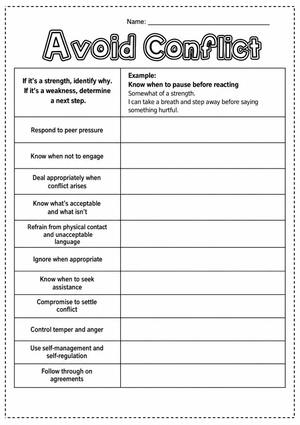
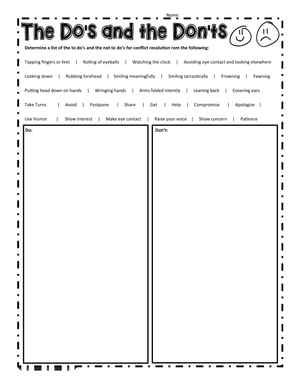
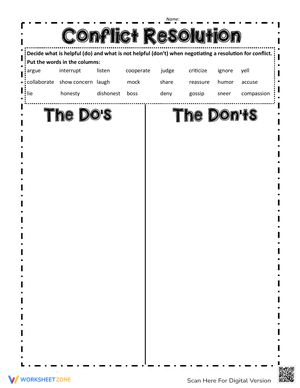
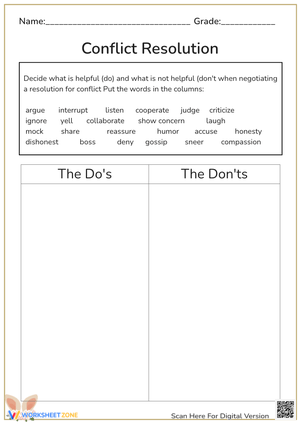
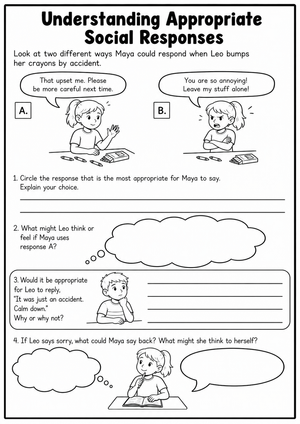
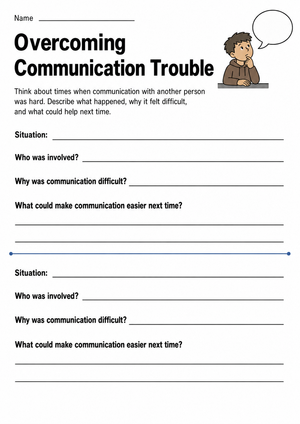
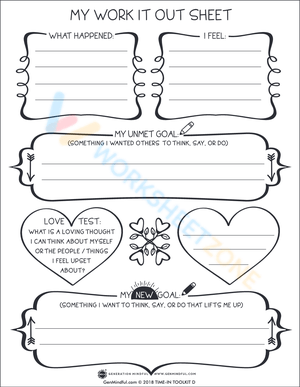
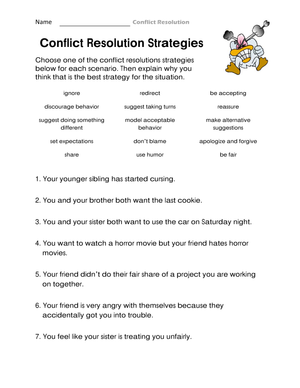
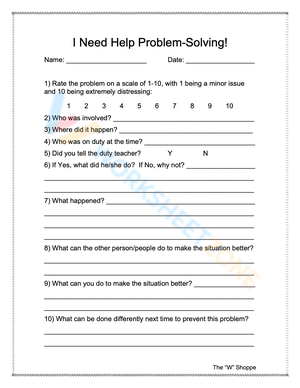
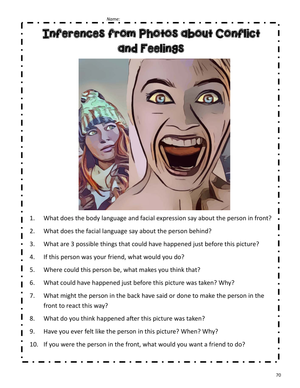
When two students are still arguing about who touched whose pencil box five minutes after recess, a worksheet is not the first thing on your mind. But once the heat of the moment passes, a structured page gives students something a verbal scolding cannot: a repeatable process they can use the next time, without you standing over them. Conflict resolution worksheets are not busywork. They are a scaffold for a skill most students have never been explicitly taught, even though they are expected to use it every single day.
Worksheetzone builds these worksheets around a simple idea: kids resolve conflicts better when they slow down and name what happened before they try to fix it. That sequencing matters more than any clever prompt or cute illustration on the page.
The Four-Step Process Behind Most Conflict Resolution Worksheets
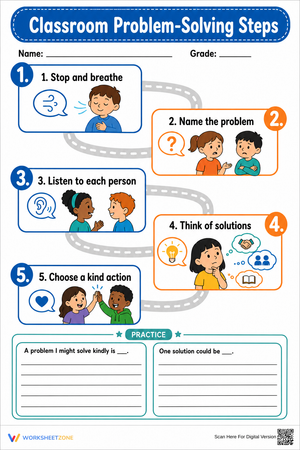
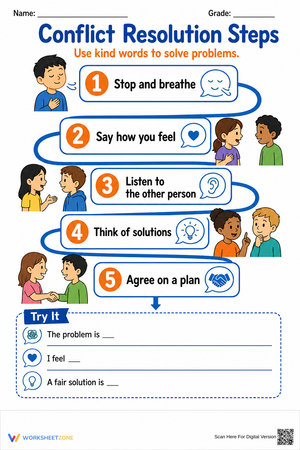
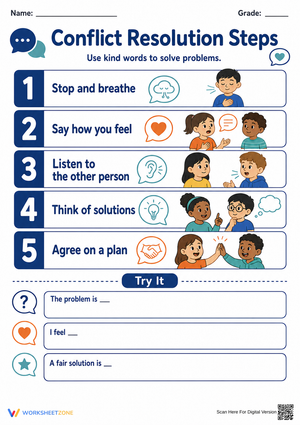
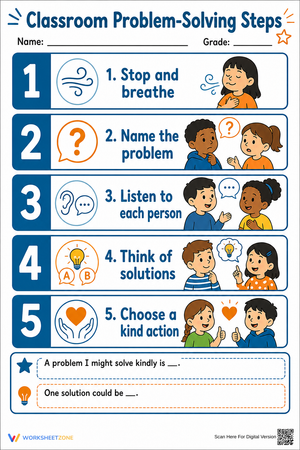
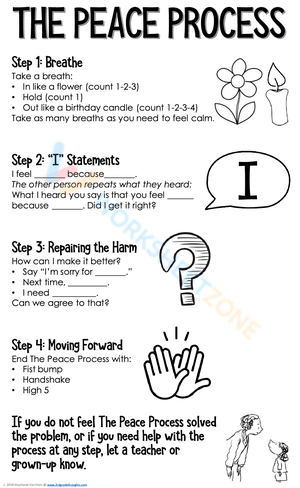
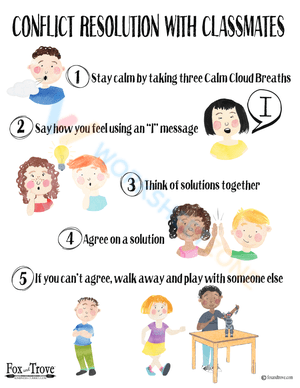
Most classroom-ready conflict resolution worksheets follow a version of the same structure: state the problem, listen to the other side, brainstorm solutions, and agree on a plan. This sequence, associated with the Crawford and Bodine model widely used in schools, gives students a script to fall back on instead of relying on whoever talks the loudest or cries first.
The order of these steps is doing real work. Students who jump straight to brainstorming solutions before both sides have stated the problem and listened to each other tend to produce solutions that only satisfy one party, which is why conflicts resurface within days. Requiring the listening step first, even in written form on a worksheet, forces perspective-taking before problem-solving, and that ordering is the actual mechanism behind why these routines reduce repeat incidents.
Using a Worksheet During an Actual Restorative Conversation
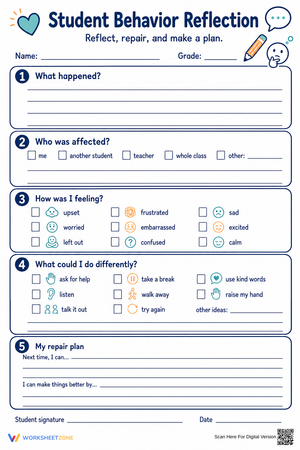
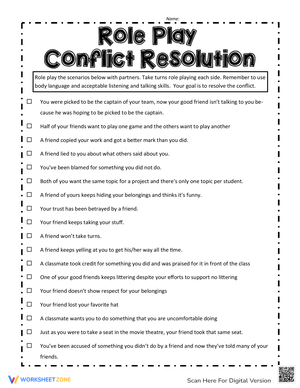
Teachers often reach for a conflict resolution worksheet in the minutes right after an incident, not as a pre-planned lesson. In that moment, the worksheet is less a writing assignment and more a conversation guide. Sit the two students down, hand each one a copy, and walk through it together rather than sending them off to fill it out alone.
- Have each student write or say their version of what happened without interruption
- Ask both students to identify how the other person might have felt
- List two or three possible solutions before picking one
- Write down the agreed plan so it can be referenced if the conflict repeats
This format works for a quick five-minute hallway conversation and for a longer counselor pull-out session. The paper trail also matters: a stack of completed worksheets becomes a light, informal record you can point to when a pattern of conflict between the same two students needs to go to a counselor or behavior team.
Differentiating by Grade Band
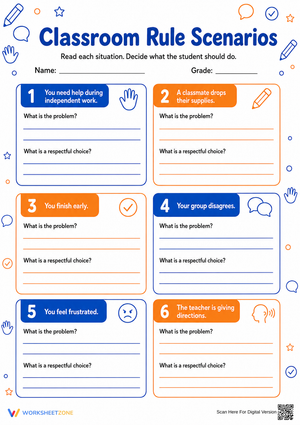
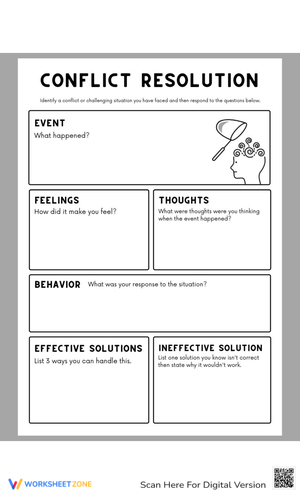
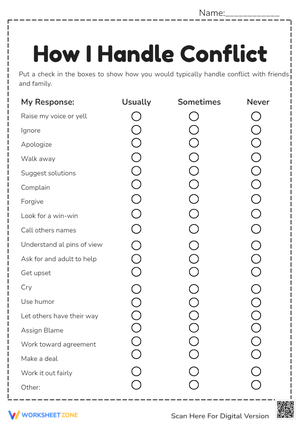
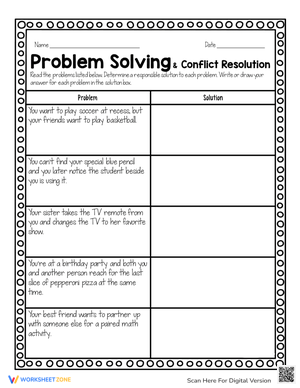
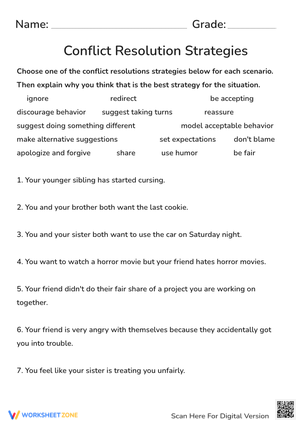
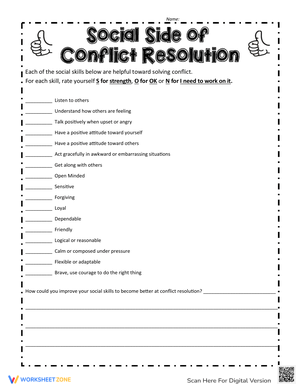
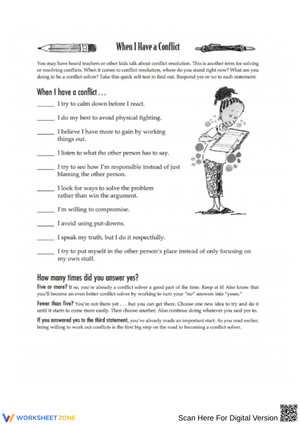
A conflict resolution worksheet for a first grader and one for a seventh grader should not look the same, even if the underlying process is identical. Primary students need simpler entry points built around naming feelings and choosing between two or three concrete options, often with pictures or short phrases instead of paragraphs. Upper elementary and middle school students can handle more written reflection, including perspective-taking prompts that ask them to describe the conflict from the other student's point of view.
If you teach a self-contained elementary classroom, keep the vocabulary short and pair the worksheet with a quick verbal walkthrough. If you teach middle school, you can lean more heavily on independent written response, since students at that age are more capable of separating their own account of events from what actually happened.
Frequently Asked Questions
1. What grade level are conflict resolution worksheets appropriate for?
They work across K-8 classrooms when the language and format are adjusted. Primary grades need simple feelings-and-choices formats, while upper elementary and middle school students can handle more written perspective-taking and reflection.
2. How should a teacher use a conflict resolution worksheet during an actual student conflict?
Use it as a guided conversation rather than an independent assignment. Walk both students through stating the problem, listening to each other, brainstorming solutions, and agreeing on a plan, writing down the agreement at the end.
3. How do these worksheets fit into an SEL curriculum like CASEL-aligned programs?
CASEL names social awareness and relationship skills as two of its five core competencies, and both include conflict resolution. If your school uses a curriculum like Second Step, align worksheet language and steps with what students already practice in those units.
4. Can these worksheets be used for restorative practice or discipline conversations?
Yes. Many teachers use them specifically as a restorative conversation guide immediately after an incident, and the completed pages can serve as a light record if a pattern of repeated conflict needs to be flagged for further support.
5. How often should conflict resolution be taught versus reviewed?
CASEL guidance favors consistent, ongoing practice over a single lesson. A short review or hypothetical practice round built into a weekly SEL block keeps the process familiar so students can use it quickly when a real conflict happens.












 Interactive Worksheet Maker
 Quiz Maker
 Word Search Maker
 Crossword Puzzle Maker
 Word Scramble Generator
 Sentence Scramble Generator
 Handwriting Worksheet Generator
 Name Tracing Generator
 Fill In The Blank Generator