


























Views
Downloads

Circle of Control Worksheet | Grade 7-9 Essential
Paste this activity's link or code into your existing LMS (Google Classroom, Canvas, Teams, Schoology, Moodle, etc.).
Students can open and work on the activity right away, with no student login required.
You'll still be able to track student progress and results from your teacher account.
This Circle of Control worksheet provides middle and high school students with a structured framework to manage stress and build emotional resilience. By distinguishing between internal and external factors, learners develop the self-awareness necessary to focus their energy on productive actions rather than uncontrollable anxieties. This resource is vital for fostering a growth mindset during the transition into higher secondary education.
At a Glance
- Grade: 7-9 · Subject: English / SEL
- Standard:
CCSS.ELA-LITERACY.W.8.10— Write routinely for reflection and discipline-specific tasks to build self-awareness- Skill Focus: Resilience and Anxiety Management
- Format: 3 pages · 14 tasks · Answer key included · PDF
- Best For: Advisory periods and SEL reflection
- Time: 25–35 minutes
What's Inside
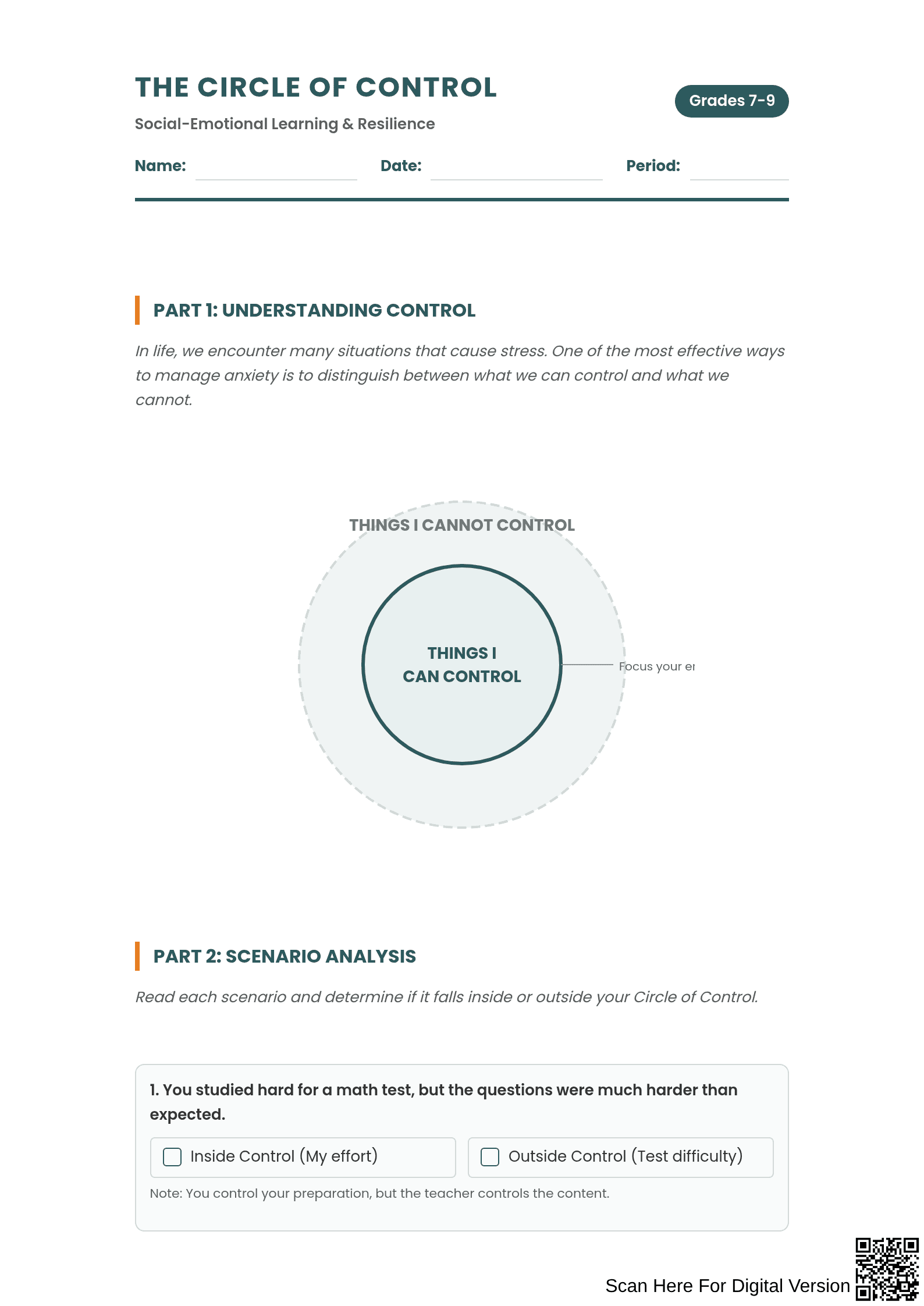
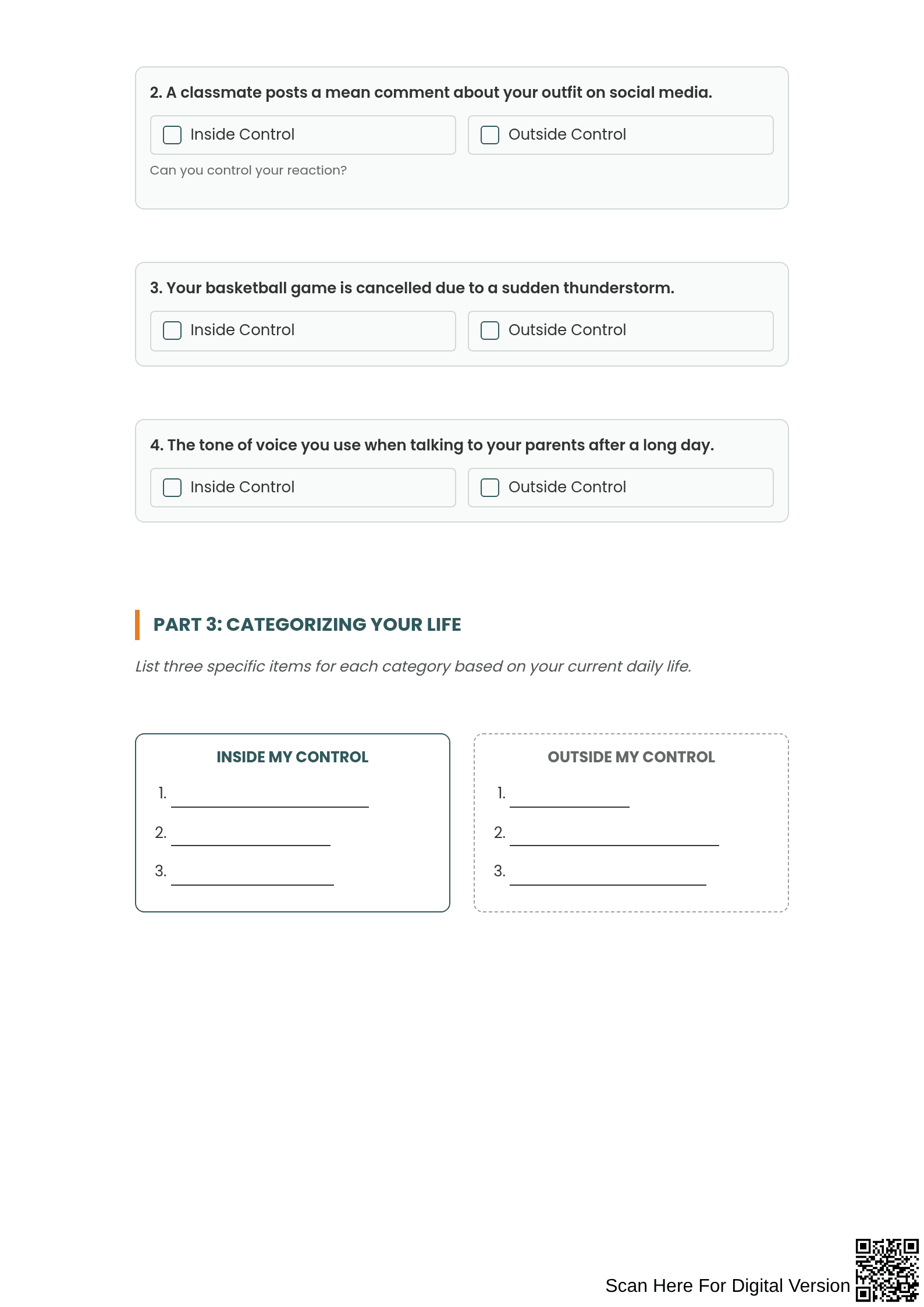
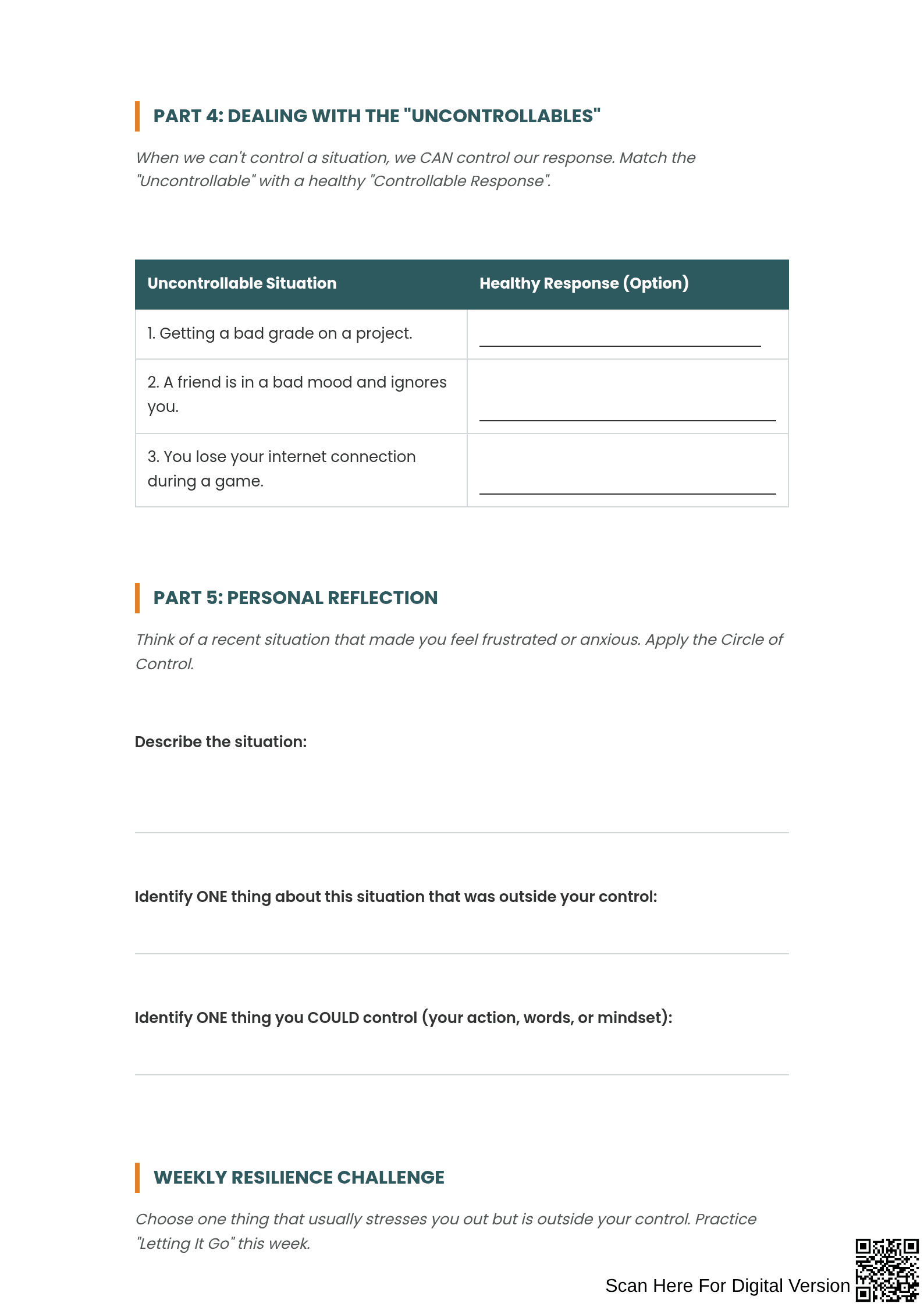
This 3-page PDF includes a visual "Circle of Control" diagram, four scenario-based analysis questions, and a categorization exercise for personal life events. Students also engage with a matching table for healthy responses to "uncontrollables" and a deep-dive personal reflection. The packet concludes with a weekly resilience challenge to ensure long-term skill application and behavioral reinforcement.
Zero-Prep Workflow
- Print: Generate the 3-page packet for your entire class in under 1 minute.
- Distribute: Hand out the self-explanatory worksheets; no complex teacher introduction is required.
- Review: Spend 5 minutes at the end of the period discussing the scenario answers to provide a formative assessment of student emotional maturity.
This streamlined workflow makes the resource an ideal sub-plan or a ready-to-use intervention for guidance counselors.
Standards Alignment
This resource aligns with CCSS.ELA-LITERACY.W.8.10, which requires students to write routinely over shorter time frames for a range of discipline-specific tasks and purposes. By engaging in reflective writing about personal stressors and responses, students practice precise expression and critical self-analysis. This standard code can be copied directly into lesson plans, IEP goals, or district curriculum mapping tools.
How to Use It
Use this during a dedicated Social-Emotional Learning (SEL) block or as a reflective writing prompt in an ELA classroom. It serves as an excellent tool for school counselors or as a calm-down activity for students experiencing acute academic stress. Educators should observe student responses during the categorization phase to identify common classroom stressors that may require further group discussion. Completion typically takes 25 to 35 minutes.
Who It's For
Designed for students in grades 7 through 9, this resource is particularly effective for those struggling with academic pressure or social anxiety. It is accessible for diverse learners and can be paired with anchor charts regarding growth mindset or mindfulness journals. The clear structure supports students who benefit from visual organizers and explicit categorization tasks.
Research by Fisher & Frey (2014) emphasizes the importance of metacognitive reflection in developing student agency and resilience. This worksheet applies these principles by requiring students to categorize 14 different life situations based on their locus of control. According to the RAND AIRS 2024 report, structured SEL interventions that focus on self-management significantly improve classroom climate and individual student focus. By utilizing the CCSS.ELA-LITERACY.W.8.10 standard for routine reflective writing, this resource bridges the gap between emotional regulation and academic literacy. The inclusion of a weekly challenge ensures that the cognitive shift from external to internal focus is reinforced through repeated practice, a key component of behavioral change in adolescent learners. This evidence-based approach provides a reliable tool for educators to support student mental health while maintaining rigorous standards for written expression and critical analysis.


