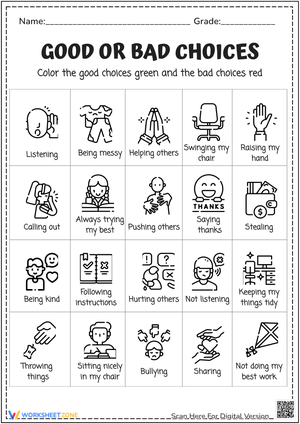
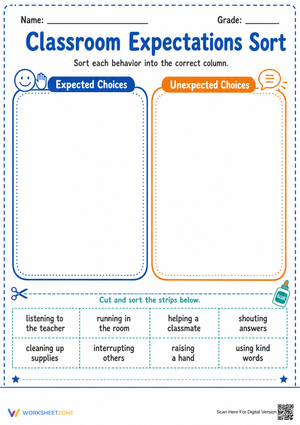
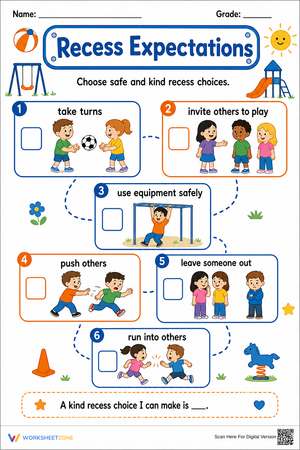
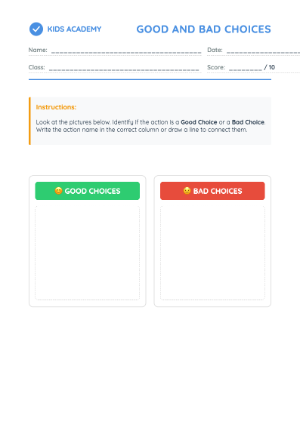
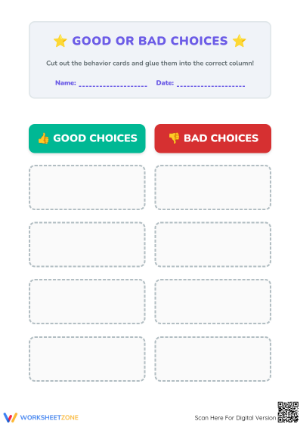
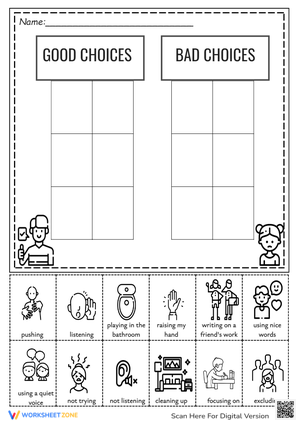
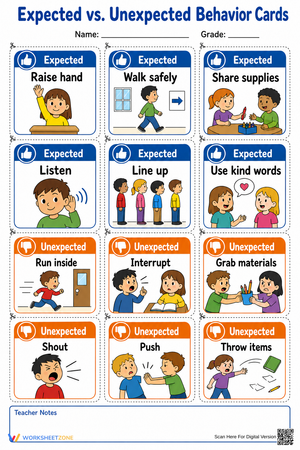
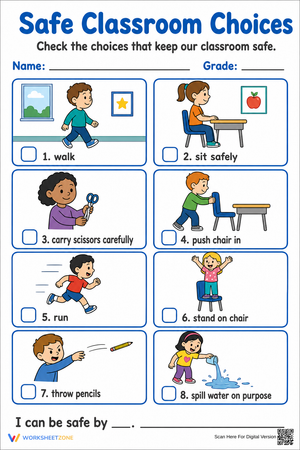
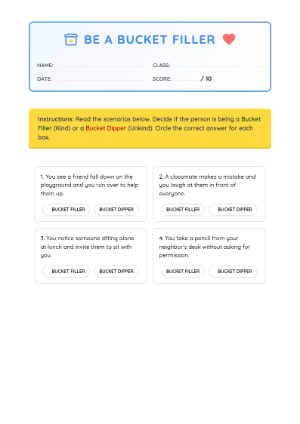
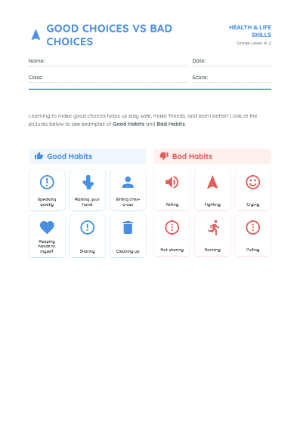
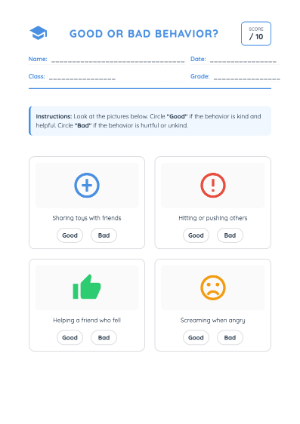
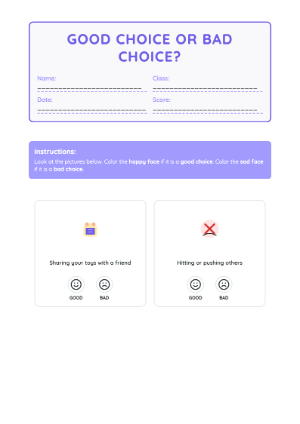
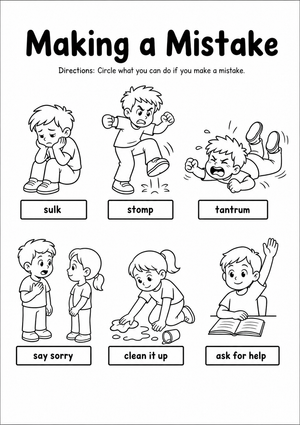
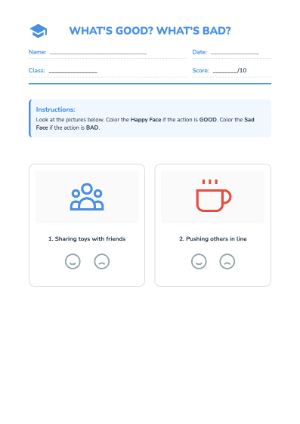
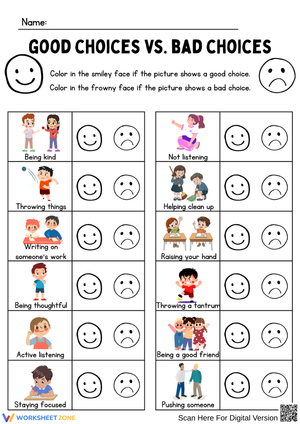
If you teach PreK through third grade, you already know that responsible decision-making does not develop on its own. Students need repeated, low-stakes practice naming a choice, predicting its consequence, and connecting it to a feeling before they can apply that thinking in a real hallway conflict or recess disagreement. Good choices bad choices worksheets give you a quick, printable way to build that habit during morning meeting, a counselor pull-out, or a dedicated SEL block, without needing a full lesson plan every time.
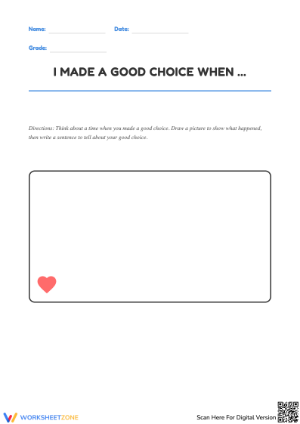
These worksheets work because they isolate one skill at a time. A student sorting picture cards into a good choice column and a bad choice column is practicing categorization and cause-and-effect thinking. A second grader writing two sentences about why sharing a crayon was the better option is practicing perspective-taking and written reasoning. Both are decision-making practice, just at different developmental stages.
Responsible Decision-Making as a Core SEL Competency
Good vs. bad choices worksheets map directly onto responsible decision-making, one of five core competencies in the CASEL framework, alongside self-awareness, self-management, social awareness, and relationship skills. When you frame a worksheet activity around this competency rather than as a generic behavior handout, it becomes easier to justify time spent on it during an SEL block and to explain the purpose to families or administrators.
CASEL organizes SEL competencies into grade bands, including early elementary (K-3) and late elementary (4-5), with decision-making tasks growing in complexity across those spans. That means a kindergarten worksheet asking a student to circle the picture showing a good choice and a third-grade worksheet asking a student to justify a choice in writing are both valid responsible decision-making tasks, just calibrated to different points on the same developmental continuum.
Pairing Worksheets With Classroom Behavior Systems
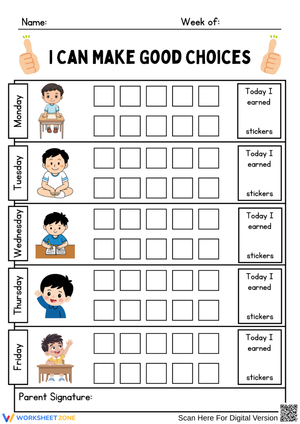
A good choices bad choices worksheet is most effective when it connects to something already happening in your classroom, rather than standing alone as an isolated activity. If you use a choice board for behavior redirection, reference the same vocabulary on the worksheet so students recognize the language. If your classroom relies on restorative conversations after a conflict, a worksheet can serve as a written reflection step before that conversation happens, giving a student time to organize their thinking before talking it through with you.
This kind of alignment matters because SEL language works best when it is consistent across contexts. A student who practices naming a good choice on a worksheet and then hears that same phrase used during an actual behavior redirection is more likely to internalize the concept than one who only encounters it in isolated worksheet form.
Adapting Scenarios for Real Classroom Relevance
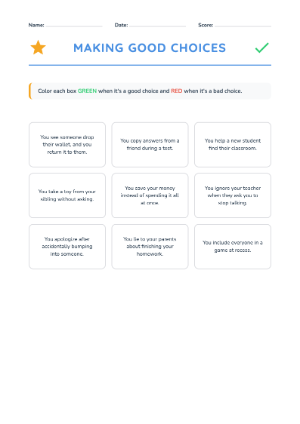
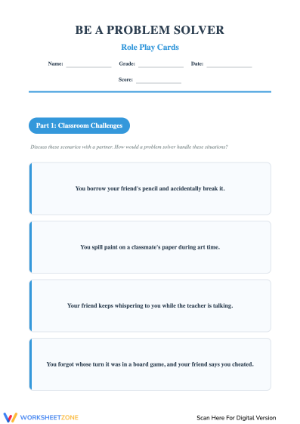
The most effective good choices bad choices worksheets reflect situations your students actually encounter, not generic or abstract examples. If your class has been working through a recurring issue, like interrupting during read-aloud or not returning shared supplies, build a scenario around that exact behavior. Students recognize themselves in specific, relevant scenarios far more readily than in vague or overly simplified ones, which increases the odds that the lesson transfers into the moment when the real choice comes up.
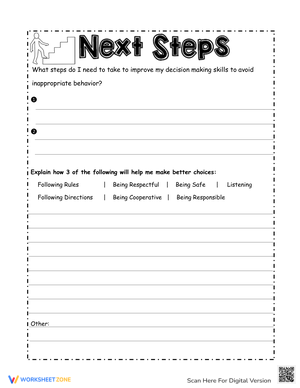
For older students in grade 3, consider adding a follow-up question that asks what a peer might have felt as a result of the choice. This small addition shifts the worksheet from pure behavior identification toward empathy and perspective-taking, both of which support the broader goal of responsible decision-making instruction.
Frequently Asked Questions
1. What grade levels are good choices bad choices worksheets appropriate for?
These worksheets work best for PreK through grade 3. Early elementary formats favor sorting, matching, and coloring, while grades 2 and 3 shift toward short written responses that explain reasoning and consequences.
2. How can teachers use these worksheets in morning meeting or SEL block routines?
Use a short worksheet as an independent warm-up before a group discussion, giving every student time to form their own answer before the class talks through one or two scenarios together.
3. What SEL skills do good vs. bad choices worksheets target?
They target responsible decision-making, one of the five core CASEL competencies, along with impulse control, accountability, empathy, and connecting choices to feelings and consequences.
4. How should teachers adapt scenarios for older elementary students who need more writing practice?
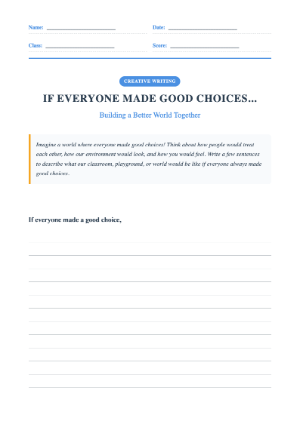
Move from sorting or coloring formats to scenarios that ask students to write a sentence or two explaining their reasoning and, for grade 3, what a peer involved in the scenario might have felt.












 Interactive Worksheet Maker
 Quiz Maker
 Word Search Maker
 Crossword Puzzle Maker
 Word Scramble Generator
 Sentence Scramble Generator
 Handwriting Worksheet Generator
 Name Tracing Generator
 Fill In The Blank Generator