




























1 / 4
0
Views
0
Downloads

0.0
0
Save
0 Likes
Share
Map My Circle of Control Worksheet
0 Views
0 Downloads

Paste this activity's link or code into your existing LMS (Google Classroom, Canvas, Teams, Schoology, Moodle, etc.).
Students can open and work on the activity right away, with no student login required.
You'll still be able to track student progress and results from your teacher account.
Information
Description
What It Is:
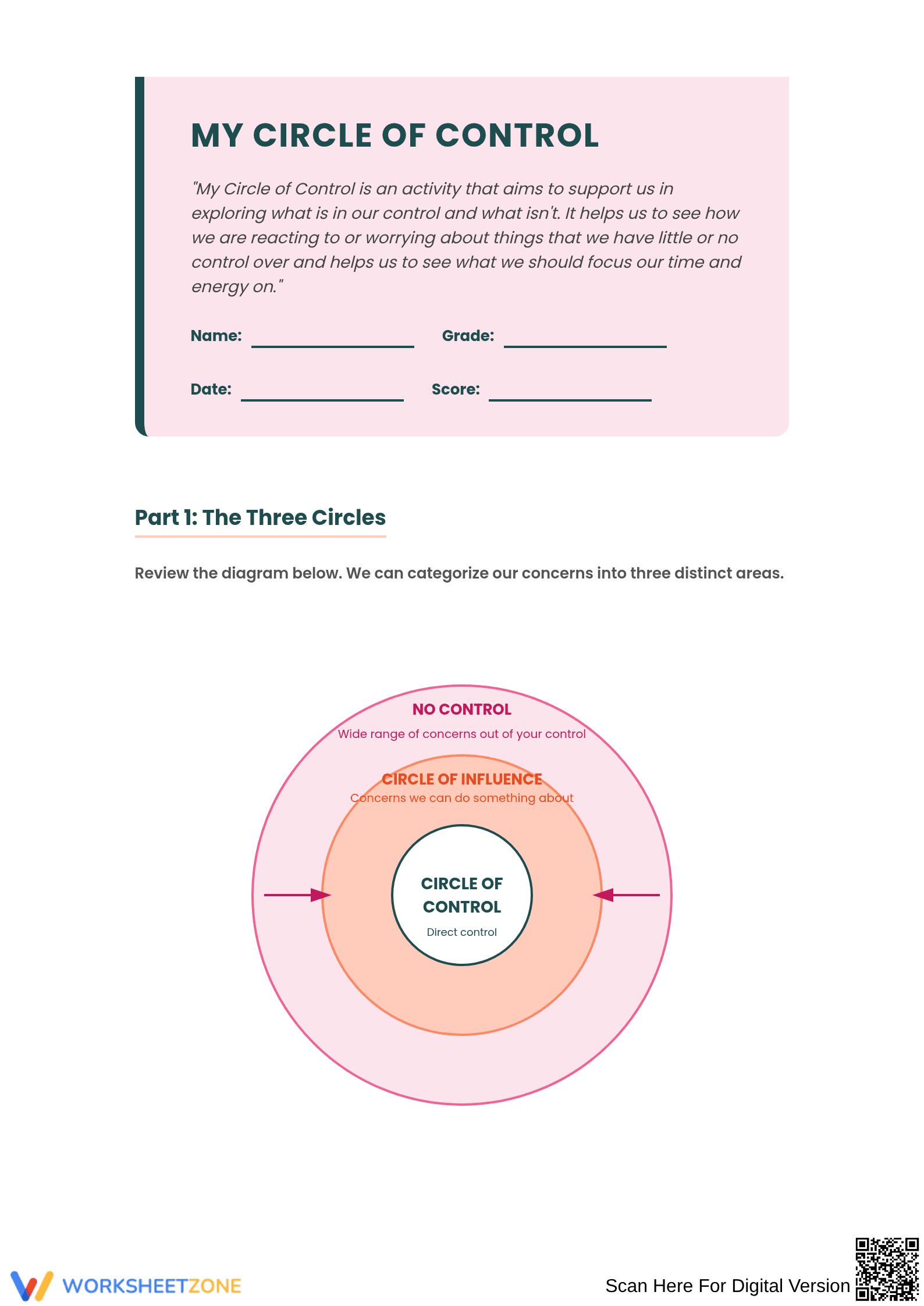
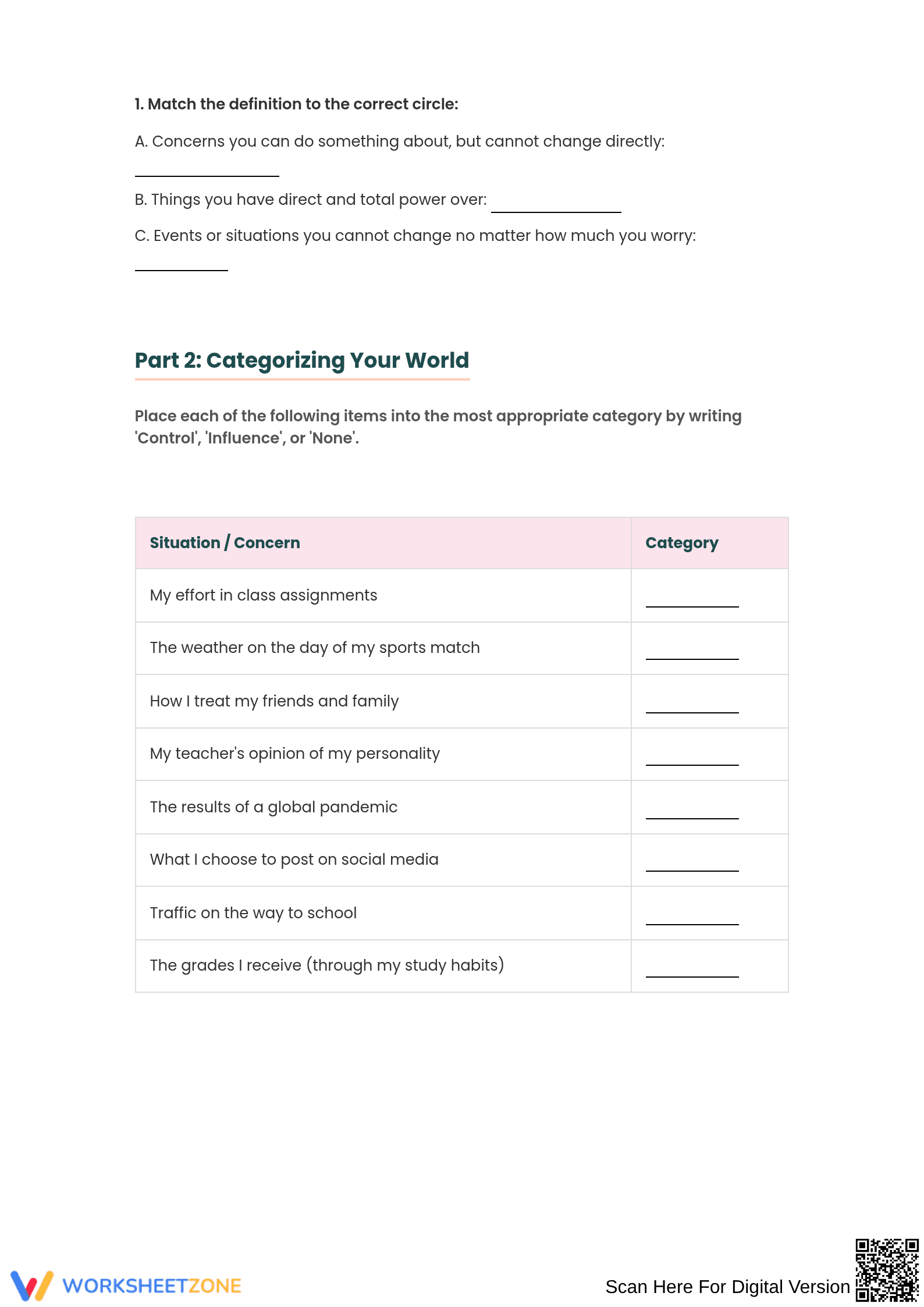
This is a worksheet titled 'My Circle of Control.' It includes two pages. The first page shows a pre-filled circle diagram divided into concentric rings labeled with areas of control, influence, and no control. Examples are given for each area, such as 'My actions' and 'My choices' within the circle of control, 'The opinions of others' within the circle of influence, and 'What happened in the past' within the area of no control. The second page presents a blank version of the same circle diagram with spaces to write a name and date, allowing the user to fill in their own examples for each category.
Grade Level Suitability:
This worksheet is suitable for upper elementary (grades 4-5), middle school (grades 6-8), and potentially even high school (grades 9-12) students. The concepts are simple enough for younger students to grasp with guidance, while older students can benefit from reflecting on their own spheres of influence and control.
Why Use It:
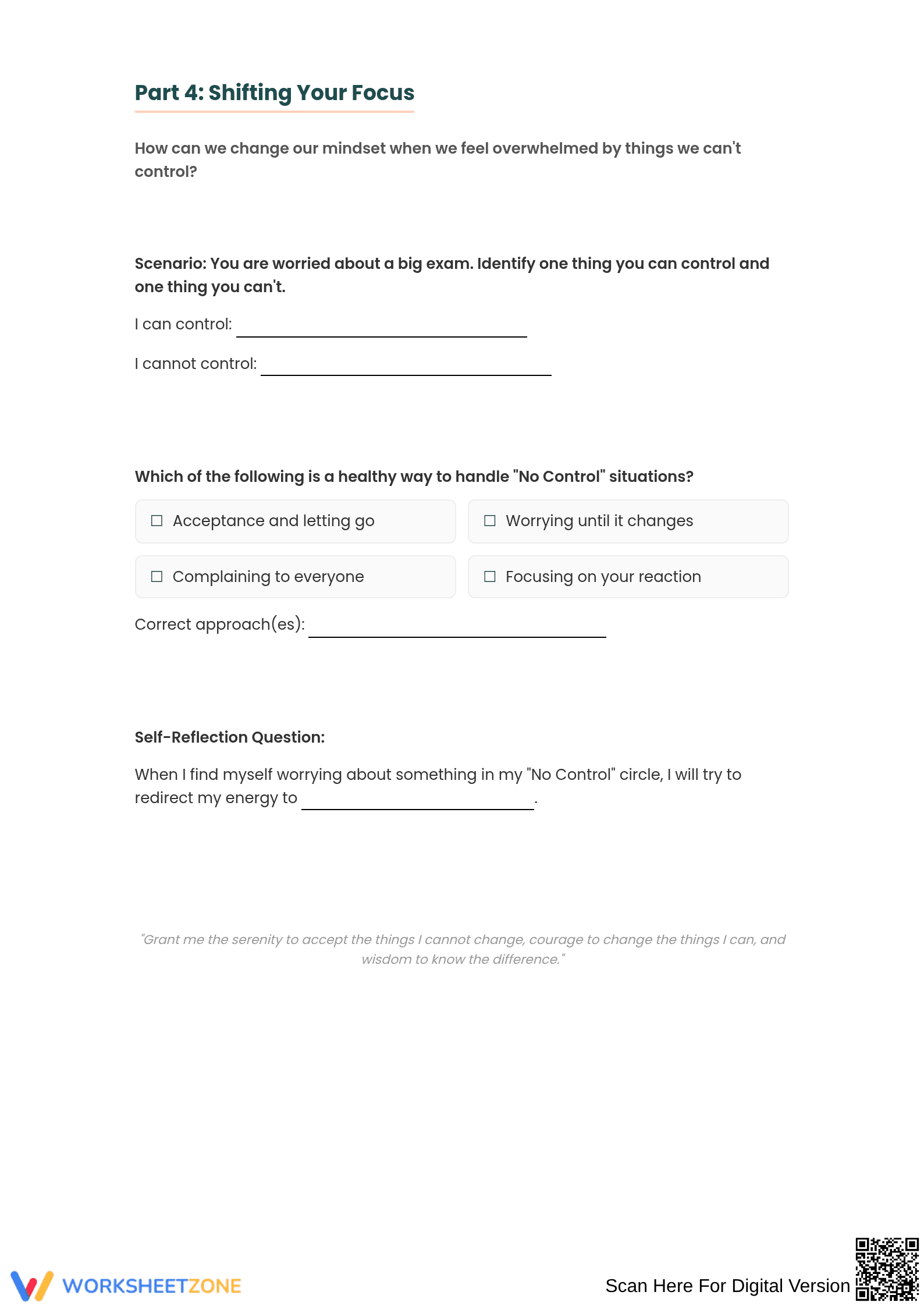
This worksheet helps students develop self-awareness and emotional regulation skills. It encourages them to identify what they can control in their lives, what they can influence, and what they cannot change. This can reduce anxiety, promote a sense of agency, and foster a more proactive approach to problem-solving.
How to Use It:
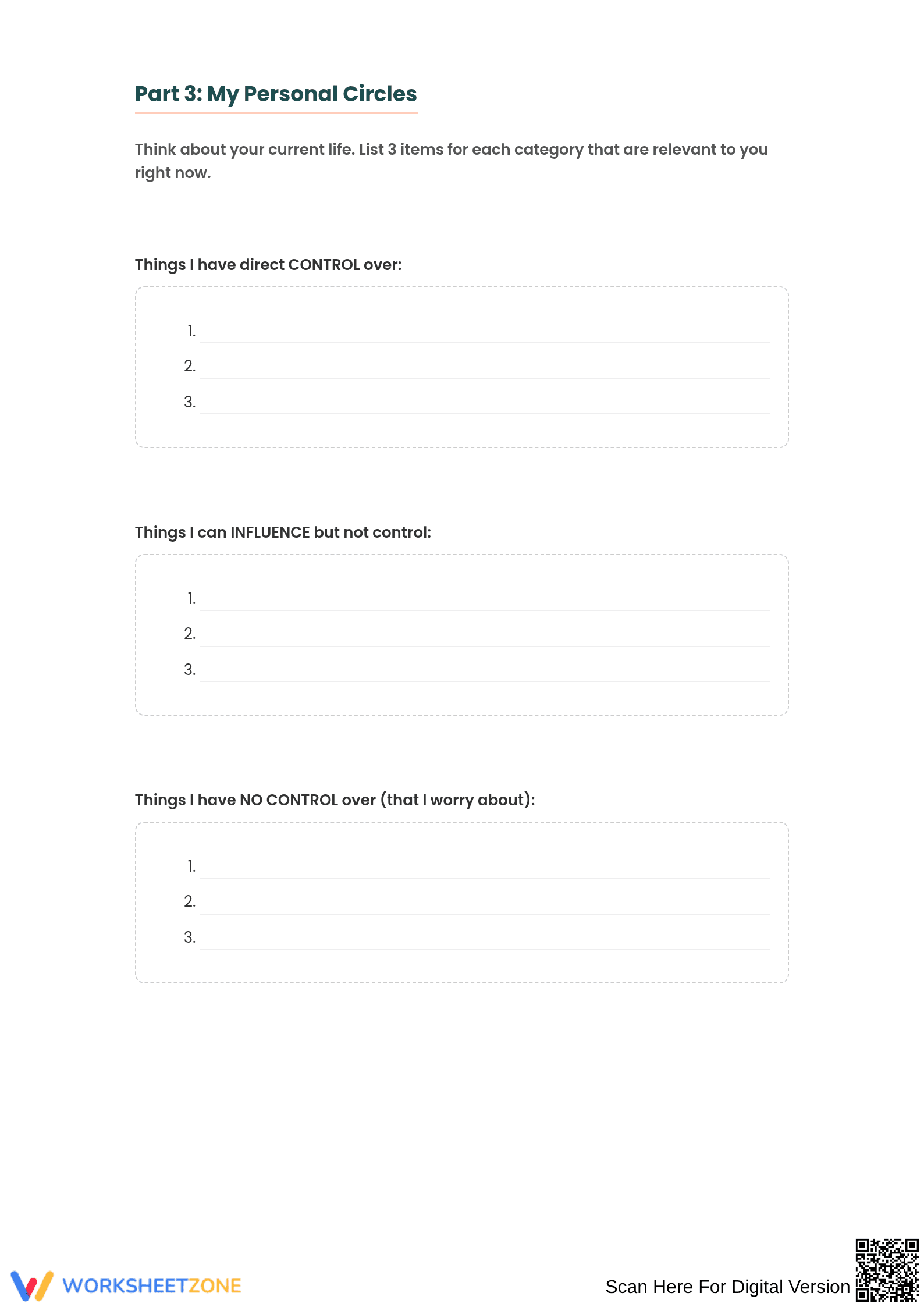
Begin by discussing the concept of control, influence, and things beyond one's reach. Use the pre-filled example page as a guide. Then, have students individually fill out the blank circle diagram on the second page, brainstorming specific examples from their own lives for each category. Encourage reflection and discussion after completion.
Target Users:
This worksheet is beneficial for students struggling with anxiety, feeling overwhelmed, or having difficulty distinguishing between what they can and cannot control. It's also useful for social-emotional learning activities, character education programs, and counseling sessions focused on building resilience and coping skills.
This is a worksheet titled 'My Circle of Control.' It includes two pages. The first page shows a pre-filled circle diagram divided into concentric rings labeled with areas of control, influence, and no control. Examples are given for each area, such as 'My actions' and 'My choices' within the circle of control, 'The opinions of others' within the circle of influence, and 'What happened in the past' within the area of no control. The second page presents a blank version of the same circle diagram with spaces to write a name and date, allowing the user to fill in their own examples for each category.
Grade Level Suitability:
This worksheet is suitable for upper elementary (grades 4-5), middle school (grades 6-8), and potentially even high school (grades 9-12) students. The concepts are simple enough for younger students to grasp with guidance, while older students can benefit from reflecting on their own spheres of influence and control.
Why Use It:
This worksheet helps students develop self-awareness and emotional regulation skills. It encourages them to identify what they can control in their lives, what they can influence, and what they cannot change. This can reduce anxiety, promote a sense of agency, and foster a more proactive approach to problem-solving.
How to Use It:
Begin by discussing the concept of control, influence, and things beyond one's reach. Use the pre-filled example page as a guide. Then, have students individually fill out the blank circle diagram on the second page, brainstorming specific examples from their own lives for each category. Encourage reflection and discussion after completion.
Target Users:
This worksheet is beneficial for students struggling with anxiety, feeling overwhelmed, or having difficulty distinguishing between what they can and cannot control. It's also useful for social-emotional learning activities, character education programs, and counseling sessions focused on building resilience and coping skills.


