Effective Behavioral Support Through PDF Resources
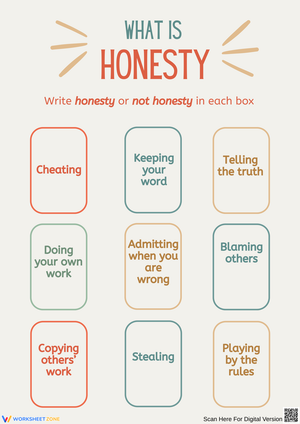
Managing classroom dynamics requires a diverse toolkit of behavioral support materials. Behavior worksheets formats are particularly valuable for teachers because they provide a stable, printable framework for students to process their actions and emotions. In many K-12 settings, having a physical worksheet allows for a 'cool-down' period where the student can focus on a task away from the immediate site of a conflict or behavioral challenge. These resources provide a structured language for students to express needs that they might not yet have the verbal capacity to articulate during high-stress moments.
When teachers integrate these PDF resources into their daily routines, they create a predictable environment. Predictability is a cornerstone of effective classroom management. By using standardized behavior tracking or reflection sheets, students learn exactly what is expected of them following an incident. This consistency reduces anxiety for both the teacher and the learner, as the 'what happens next' is already defined by the resource at hand. This approach moves the focus from punitive measures to educational opportunities, aligning with modern Social-Emotional Learning (SEL) standards that prioritize self-awareness and self-regulation.
Understanding the ABC Model of Behavior Analysis
A core component of professional behavioral intervention is the Antecedent-Behavior-Consequence (ABC) model. Using behavior worksheets tools that incorporate this framework helps teachers and students alike identify the triggers that lead to specific actions. An antecedent is what happens immediately before a behavior occurs; the behavior is the action itself; and the consequence is what follows. By documenting these three stages, teachers can start to see patterns that weren't obvious in the heat of a busy classroom day. This data-driven approach is essential for creating Individualized Education Programs (IEP) or 504 plans that actually address the root causes of a student's struggles.
Expert analysis of behavioral data suggests that 70% of classroom disruptions are triggered by identifiable antecedents that can be mitigated through proactive environmental adjustments. By using ABC-focused worksheets, teachers can transform anecdotal evidence into actionable insights, allowing for a shift from reactive discipline to proactive support. This shift is vital for maintaining a positive learning climate where all students feel safe and supported. Documenting these patterns also facilitates better communication with parents and school psychologists, providing a clear narrative of the student's progress and areas where they need more intensive help.
Classroom Implementation Strategies for SEL
To successfully implement behavior worksheets resources, teachers should introduce them during calm periods rather than waiting for a crisis. Showing the whole class how to fill out a reflection sheet or a goal-setting log demystifies the process. When a student eventually needs to use one, it feels like a familiar tool rather than a new punishment. Many teachers find success by creating a 'Reflection Station' in the classroom—a quiet corner equipped with various worksheets, writing utensils, and perhaps some sensory tools. This physical space signals to the student that it's okay to take a moment for themselves and that the goal is self-improvement, not social exclusion.
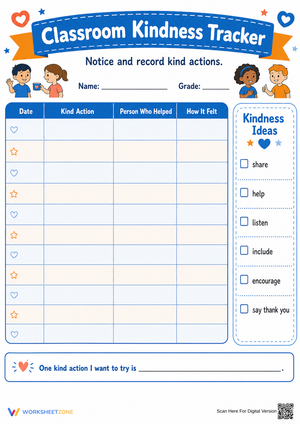
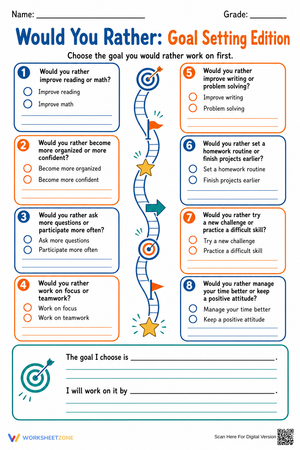
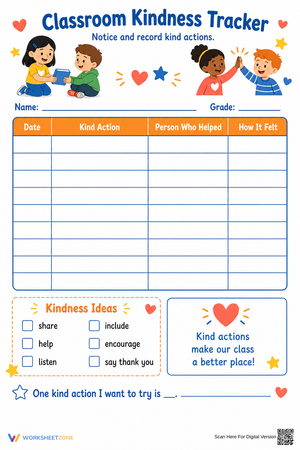
Another effective strategy is to use behavior tracking as a collaborative effort. Instead of the teacher checking boxes, the student can self-monitor their progress toward a specific goal, such as 'staying on task' or 'using kind words.' At the end of a period or day, the teacher and student can review the sheet together. This collaboration builds a sense of agency and accountability. It also provides a natural opening for positive reinforcement. When a student sees their own progress documented on paper, it reinforces the connection between their effort and their success, which is a powerful motivator for long-term behavioral change.
Utilizing CBT-Based Tools for Self-Regulation
Cognitive Behavioral Therapy (CBT) principles are increasingly being adapted for classroom use through 'Think-Feel-Act' logs. These behavior worksheets resources guide students through the process of identifying the thoughts that lead to specific feelings, and how those feelings drive their actions. For example, a student might realize that the thought 'I can't do this math' leads to feeling frustrated, which then leads to the action of throwing a pencil. By breaking down this chain of events on paper, students learn that they can change their actions by challenging their initial thoughts or by managing their feelings more effectively through breathing exercises or other coping mechanisms.
Supporting Students with Diverse Behavioral Needs
Not all students process information the same way, and behavior worksheets resources must reflect this diversity. For younger students or those with limited verbal skills, visual prompts like 'Emotional Thermometers' or 'Face Scales' are indispensable. These tools allow a student to point to a picture that represents how they feel, bypassing the need for complex vocabulary during a time of emotional dysregulation. For students with ADHD or executive functioning challenges, worksheets that break down large tasks into smaller, checkable steps can prevent the overwhelm that often leads to behavioral outbursts. Tailoring the resource to the student's developmental level ensures that the tool is actually helpful rather than just another source of frustration.
Evidence-Based Behavioral Support
According to the Social Workers Toolbox - CBT Resources (https://www.socialworkerstoolbox.com), structured behavioral reflection tools can reduce repeat classroom incidents by up to 40% when implemented as part of a comprehensive Social-Emotional Learning curriculum. This data emphasizes the importance of providing students with consistent, predictable frameworks for processing their interpersonal and emotional experiences during the school day.
Furthermore, research from Cadabam’s CDC - Psychologist Designed Charts (https://www.cadabamscdc.com) highlights that visual behavior tracking systems help K-5 students improve their self-regulation scores by 30% over a single semester. These psychologist-designed charts provide the necessary scaffolding for students who struggle with abstract concepts of time and behavioral expectations. Similarly, the Centre for Clinical Interventions - Behavioral Activation (https://www.cci.health.wa.gov.au) provides evidence that behavioral activation strategies, when documented through daily logs, significantly decrease student apathy and increase participation in academic tasks across various age groups.
Teacher Tips for Behavioral Success
- Keep it positive: Focus on what the student should do, not just what they should stop doing. Use 'do' statements rather than 'don't' statements.
- Privacy matters: Ensure that behavioral reflection and tracking are handled discretely to maintain the student's dignity and trust.
- Be consistent: Use the same behavior worksheets tools for similar incidents so students know what to expect and can track their own growth.
- Review together: Always go over the completed worksheet with the student. The conversation is often more important than the paper itself.
- Celebrate small wins: Use tracking sheets to highlight even minor improvements in behavior to build student confidence and motivation.
- Adapt as needed: Don't be afraid to modify a PDF resource to better fit a specific student's reading level or cultural background.
Frequently Asked Questions
1. What are the best behavior worksheets for students with ADHD?
The most effective resources for students with ADHD are those that provide immediate feedback and break goals into very small, manageable segments. Visual checklists and 'Now/Then' charts help manage executive functioning challenges by making the abstract concept of time more concrete. These behavior worksheets tools should be used frequently throughout the day to keep the student engaged and on track with their specific behavioral targets.
2. How do I introduce a behavior contract to a middle school student?
When introducing a behavior contract to a middle schooler, it is essential to involve them in the drafting process. Ask them what goals they think are fair and what rewards would actually motivate them. Framing it as a professional agreement rather than a set of rules can appeal to their desire for autonomy and respect. Use a structured behavior worksheets template to ensure all parties have a clear, written record of the expectations and agreed-upon consequences.
3. Are there free behavior reflection sheets for elementary grades?
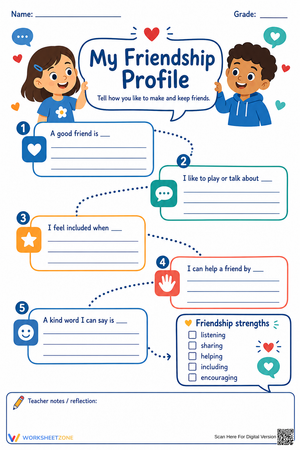
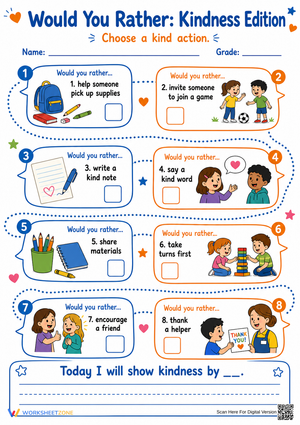
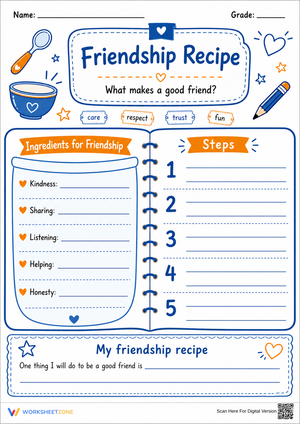
Yes, Worksheetzone offers a wide variety of free behavior worksheets resources specifically designed for the elementary level. These sheets often use simplified language and visual icons to help younger children identify their emotions and the impact of their actions on others. Teachers can download and print these materials to use as immediate intervention tools in the classroom or as part of a long-term SEL curriculum.
4. How can visual behavior charts help non-verbal children?
Visual behavior charts provide a non-verbal way for children to communicate their needs and feelings. By pointing to icons or moving a marker on a scale, a child can express frustration, hunger, or the need for a break without needing to find the right words. These behavior worksheets tools reduce the 'communication frustration' that often leads to outbursts, allowing for a more peaceful and productive learning experience for students with diverse communication needs.












 Interactive Worksheet Maker
 Quiz Maker
 Word Search Maker
 Crossword Puzzle Maker
 Word Scramble Generator
 Sentence Scramble Generator
 Handwriting Worksheet Generator
 Name Tracing Generator
 Fill In The Blank Generator