


























Views
Downloads
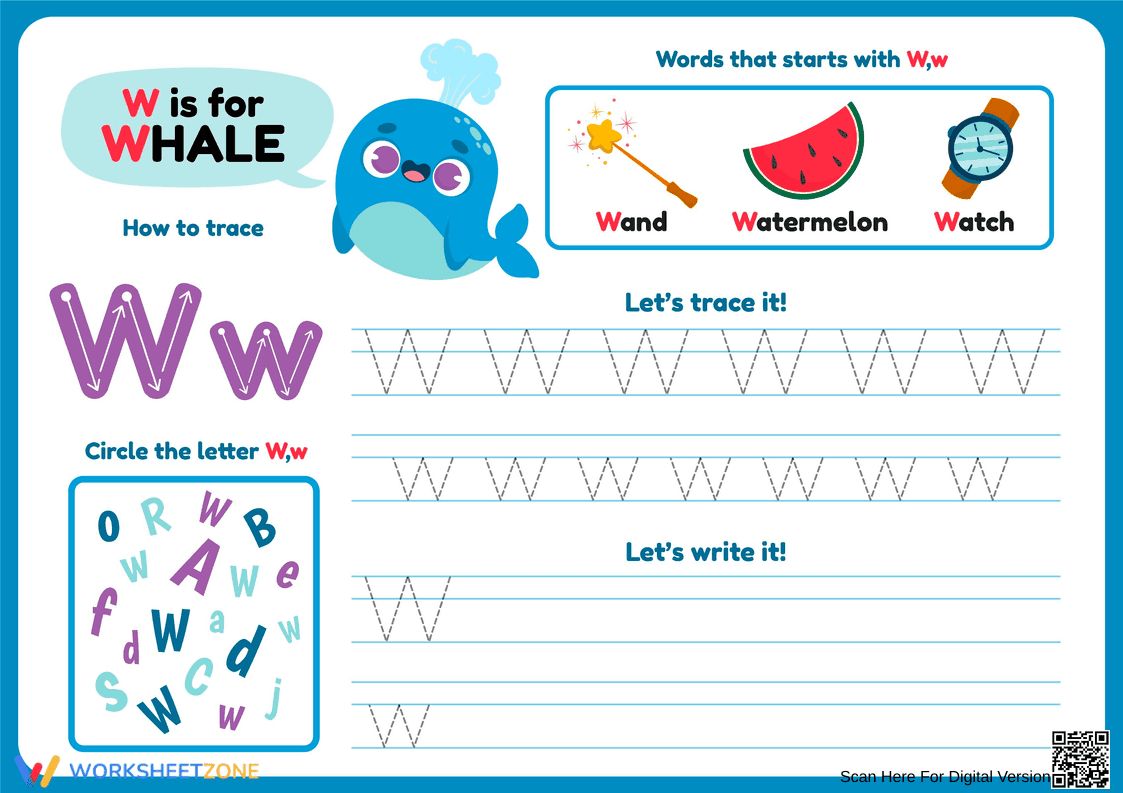

Letter W Tracing Worksheet | Grade 1 Printable
Paste this activity's link or code into your existing LMS (Google Classroom, Canvas, Teams, Schoology, Moodle, etc.).
Students can open and work on the activity right away, with no student login required.
You'll still be able to track student progress and results from your teacher account.
This Grade 1 handwriting worksheet provides students with targeted practice to master printing the uppercase and lowercase letter W. By combining guided tracing lines with letter recognition activities, early learners develop fine motor skills and foundational phonics knowledge in one engaging, easy-to-use resource.
At a Glance
- Grade: 1 · Subject: English
- Standard:
CCSS.ELA-LITERACY.L.1.1.A— Print all upper- and lowercase letters.- Skill Focus: Letter W tracing and recognition
- Format: 1 page · 4 task types · No answer key needed · PDF
- Best For: Morning work or literacy centers
- Time: 10–15 minutes
This single-page printable features four distinct activity zones to reinforce letter formation. Students begin with a large, directional guide showing exactly how to form the letter W. Next, they explore a visual vocabulary bank featuring words like whale, wand, watermelon, and watch. A letter-hunt box challenges students to circle the target letter among distractors, followed by four lines of structured tracing and independent writing practice.
Zero-Prep Workflow
This resource requires zero teacher preparation.
- Print (1 minute): Simply download the PDF and print a class set. It prints beautifully in grayscale.
- Distribute (1 minute): Hand out the worksheets during morning routines or transition periods. The visual instructions make it completely self-explanatory for young learners.
- Review (0 minutes): Because this is a foundational handwriting task, students can self-monitor their tracing accuracy, requiring zero grading time.
With a total teacher prep time of under two minutes, this worksheet is an ideal addition to any emergency sub plan or last-minute literacy center.
Standards Alignment
This handwriting practice aligns directly with CCSS.ELA-LITERACY.L.1.1.A, requiring students to print all upper- and lowercase letters accurately. By integrating vocabulary words that start with the target letter, it also supports early phonemic awareness. Both standard codes can be copied directly into lesson plans, IEP goals, or district curriculum mapping tools.
How to Use It
Deploy this worksheet as a focused morning work activity as students settle into the classroom. It takes approximately 10 to 15 minutes to complete, establishing a calm, productive routine. Alternatively, place it in a literacy center alongside tactile letter-building materials like playdough or sand trays. As a formative assessment tip, observe students while they complete the tracing lines to ensure they are starting their strokes from the top down, correcting pencil grip early if necessary.
Who It's For
This resource is primarily designed for Grade 1 students mastering their alphabet and handwriting skills. It is also highly effective for kindergarten students ready for structured practice, or older students requiring fine motor intervention. For differentiation, provide highlighters for students who need thicker lines to trace before using a standard pencil. Pair this worksheet with a read-aloud book featuring heavy W alliteration to reinforce the phonetic connection.
Developing automaticity in handwriting is a critical precursor to expressive writing and reading fluency in early childhood education. When students practice CCSS.ELA-LITERACY.L.1.1.A to print all upper- and lowercase letters accurately, they reduce the cognitive load required for basic letter formation, thereby freeing up essential mental resources for spelling, grammar, and composition. According to a comprehensive EdReports 2024 analysis on foundational literacy skills, explicit and repeated handwriting instruction in the primary grades significantly correlates with higher reading comprehension and written expression scores in later elementary years. This targeted letter W worksheet provides the exact type of structured, repetitive motor practice necessary to build these vital neural pathways. By combining directional tracing with visual vocabulary and letter discrimination tasks, educators can ensure students are not just copying shapes, but actively connecting the physical act of writing with phonetic meaning and alphabetic principles.


