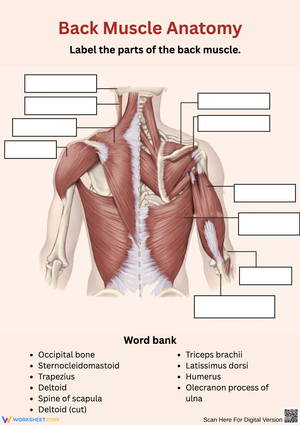
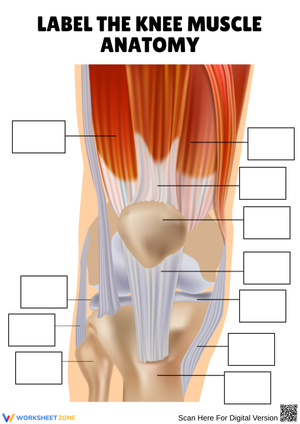
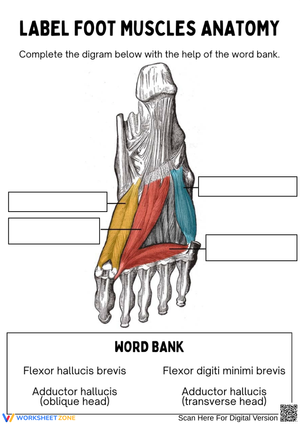
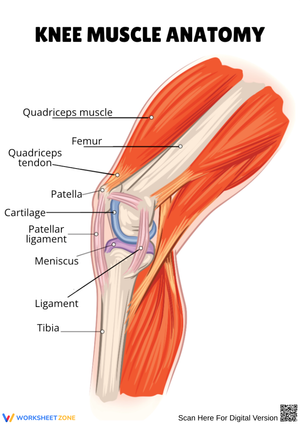
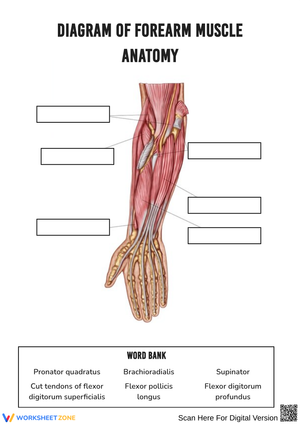
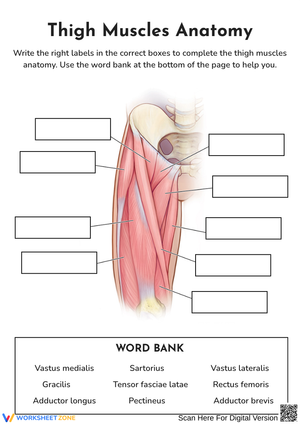
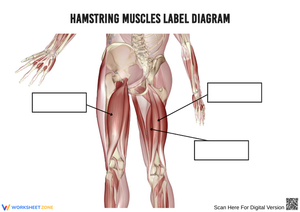
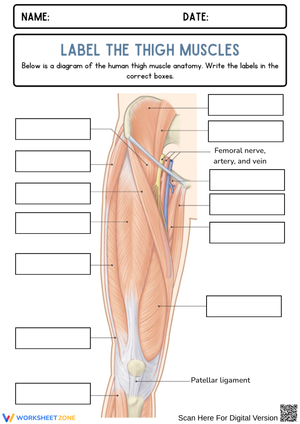
The 11th grade muscle worksheets set collected here gives biology and human anatomy teachers a ready stock of targeted practice — from three-muscle-type comparisons to anterior and posterior skeletal muscle labeling to short-answer function prompts. These are standalone downloadable worksheets, not a bound packet, so teachers can pull what a particular lesson calls for without committing to a fixed sequence. The set covers the core content most Grade 11 anatomy units require before a unit exam.
What Each Worksheet Targets
Grade 11 students enter the muscular system unit with uneven prior knowledge. Most can name the biceps and hamstrings; very few can explain why smooth muscle operates without conscious control. Each worksheet in the set addresses a specific concept cluster rather than trying to cover everything in one sitting. The activity types include:
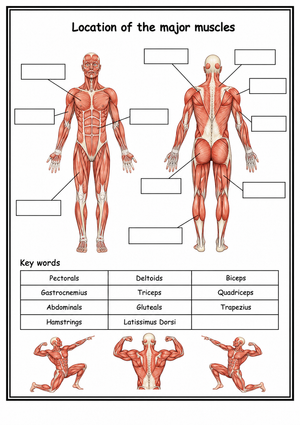
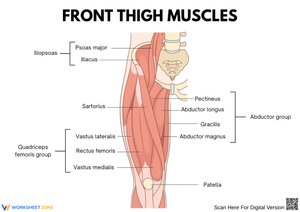
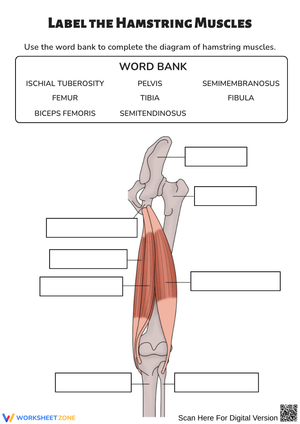
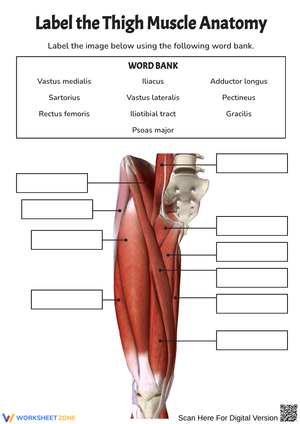
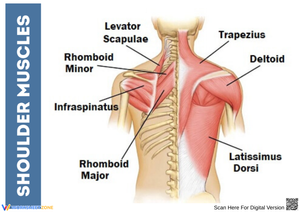
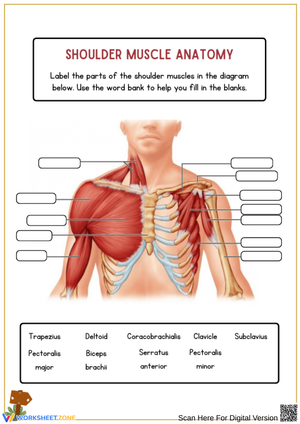
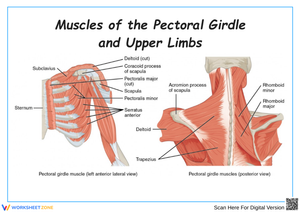
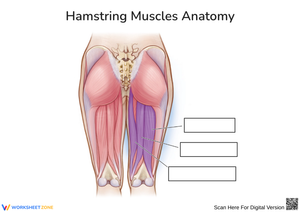
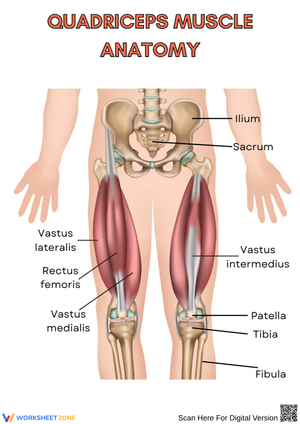
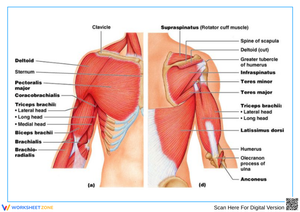
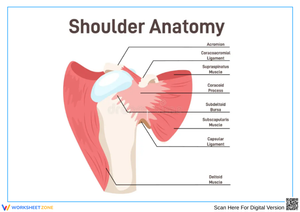
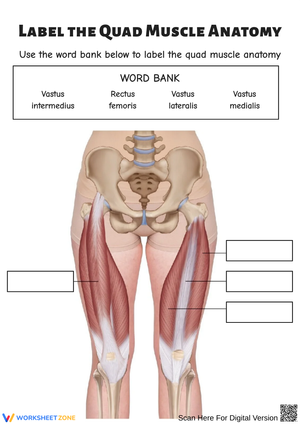
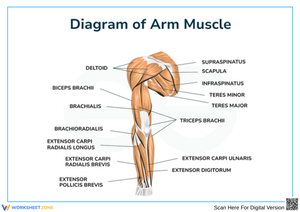
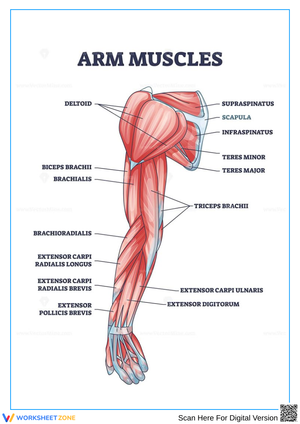
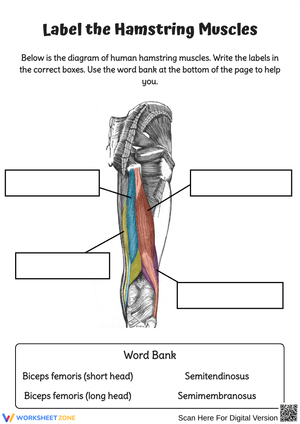
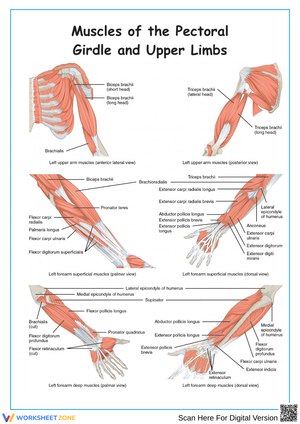
- Anterior and posterior muscle labeling — students mark major skeletal muscles including the deltoid, pectoralis major, rectus abdominis, trapezius, quadriceps group, hamstrings, and gastrocnemius
- Three-muscle-type sort — students categorize skeletal, smooth, and cardiac muscle by structure, location, and control type
- Voluntary versus involuntary comparison — short-answer prompts that ask for a body-based example alongside the explanation
- Function connection questions — students match a named muscle to its primary role in movement, posture, or organ function
- Muscle contraction basics — students describe what happens when antagonistic pairs contract and relax
- Vocabulary in context — terms like origin, insertion, tendon, and myofibril applied at the sentence level, not just matched to definitions
Each worksheet is self-contained and works as bell work, station practice, homework, or pre-quiz review. The question types vary across the set so students aren't completing the same cognitive task each time they pick up a new worksheet — which matters in a dense content unit where repetition without variety leads to surface-level memorization.
Frequent Student Errors Worth Anticipating Before You Assign These
The muscular system generates some durable misconceptions. The most persistent one shows up in labeling tasks: students who correctly identify the biceps brachii will write "bends the arm" as its function and stop there, missing the antagonist relationship with the triceps entirely. They understand the agonist in isolation but haven't built the paired-muscle concept that explains how joints return to starting position. The worksheets address this by pairing function questions with follow-up prompts about the opposing muscle.
A second pattern: students treat cardiac muscle and smooth muscle as interchangeable because both are involuntary. On short-answer questions, they write that cardiac muscle lines the digestive tract, or that smooth muscle pumps blood through the heart. The three-muscle-type worksheet in this set separates these using location and structural appearance as organizing features rather than the voluntary/involuntary axis alone. That reframing reduces the confusion more reliably than having students re-read the same two-column chart from their notes.
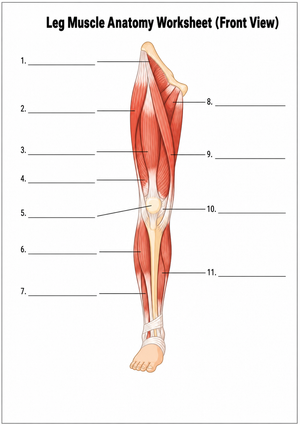
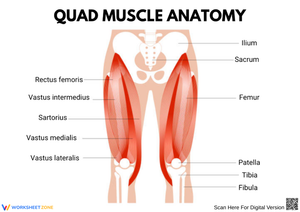
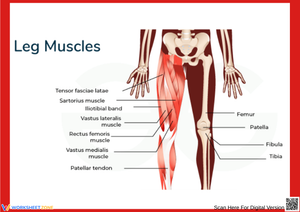
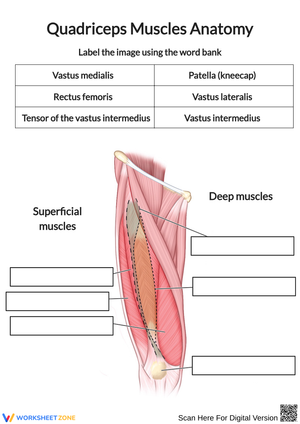
A third issue surfaces during diagram work: students label the quadriceps as a single muscle. The labeling worksheet names the quadriceps group and asks students to identify that it comprises four separate muscles. That level of precision belongs in Grade 11 anatomy, and an 11th grade muscle worksheets set should hold students to it rather than accepting "quads" as a complete answer.
Building These Worksheets Into Your Unit Without Losing Class Time
The most effective use pattern is spacing the worksheets across a two-week anatomy unit rather than assigning them all at once. A muscle-type sort fits well on day two — after direct instruction but before students have fully solidified the distinctions. The labeling worksheets belong at the midpoint, when students have enough vocabulary to attempt blank diagrams without freezing. Short-answer function questions are strongest near the end of the unit, when students should integrate location, structure, and purpose together rather than treating each as a separate fact.
- Bell work: 5 labeled structures or 3 vocabulary questions to open class — takes 6–8 minutes and surfaces confusion before a lesson deepens it
- Post-instruction anchor: one worksheet immediately after a mini-lesson while content is fresh — students complete it independently while you circulate
- Station rotation: one worksheet per station, rotating through labeling, matching, and short-answer formats
- Homework before a quiz: the mixed-review worksheet revisits locations, types, and functions without introducing new content
- Sub plans: each worksheet includes enough context in the directions that a substitute can manage the period without anatomy expertise
One classroom move worth trying on any labeling worksheet: have students use two pen colors — one to write the muscle name and a second to circle whether the muscle primarily serves movement, posture, or internal organ function. It takes the same time as standard labeling but forces a functional judgment for every structure students mark. That addition turns identification into analysis without requiring a separate activity.
Adjusting These Worksheets Across a Mixed-Readiness Class
The labeling worksheets exist in two versions: one with a word bank and one without. For students who need additional support, the word bank reduces the retrieval load and lets them concentrate on matching terms to locations correctly. Removing the word bank for students ready for full recall creates a meaningful difference in task demand without requiring a redesigned worksheet. In practice, printing both versions and handing them out by readiness group takes less than a minute of preparation.
For students who move through the set quickly, adding one extension sentence to any labeling item sustains engagement: "Describe how this muscle is activated during a specific physical activity." That question applies to any named muscle and keeps fast finishers working on the same content rather than sitting idle. An 11th grade muscle worksheets set is well suited to this kind of ceiling-raising because the base content is rigorous enough that one added question meaningfully increases the demand without requiring a separate resource.
On the short-answer worksheets, sentence stems help students who understand the concepts but freeze when starting a written response. Printing a second copy with starters like "This muscle controls... because..." gives those students a structured entry point while the original version stays appropriate for students who write independently. The underlying content being assessed stays the same either way.
Standard Alignment
These worksheets align to NGSS LS1-2, which asks students to develop and use a model to illustrate how interacting systems provide specific functions within multicellular organisms. Applied to the muscular system at Grade 11, this standard pushes past naming structures toward explaining how muscles contribute to body-level functions — exactly what the function-connection and short-answer items address. The labeling worksheets cover the structural side of LS1-2; the comparison and short-answer worksheets address the functional reasoning the standard requires.
For anatomy electives operating under state-level standards rather than NGSS, these worksheets address skeletal muscle identification, muscle type classification, voluntary and involuntary control, and basic contraction mechanics — content areas that appear consistently across state anatomy frameworks at the Grade 11 level.
Frequently Asked Questions
Do these worksheets work in both a standard biology class and a dedicated anatomy elective?
The core worksheets — muscle type comparisons, basic labeling, voluntary versus involuntary control — fit a standard biology unit on body systems. The more detailed worksheets, including those covering origin and insertion vocabulary and the quadriceps group breakdown, suit an anatomy elective where students spend more class time on the muscular system. Most teachers draw from both groups depending on the course and where students are in the unit.
How long does a typical worksheet take to complete?
Most students finish a labeling worksheet in 10–15 minutes. Short-answer and comparison worksheets typically run 15–20 minutes depending on how much writing students are expected to produce. The vocabulary worksheets vary — some work as a 5-minute warm-up; others carry a full review segment when used at the end of a class period.
Do the worksheets come with answer keys?
The set includes a teacher answer key for every worksheet. Labeling keys show correct placement on the diagram. Short-answer keys provide sample responses with the main points each answer should address, which makes it practical to assign these as homework and grade efficiently rather than reading each response from scratch.
Are these worksheets appropriate for students heading toward a health science pathway?
Students preparing for CNA programs, sports medicine, or kinesiology coursework benefit from the diagram precision and function-based questioning in the set. An 11th grade muscle worksheets resource at this depth aligns well with that academic direction, especially for students who will be expected to discuss musculoskeletal anatomy in clinical or exercise science contexts. The vocabulary load and content expectations reflect what those pathways require at the entry level.