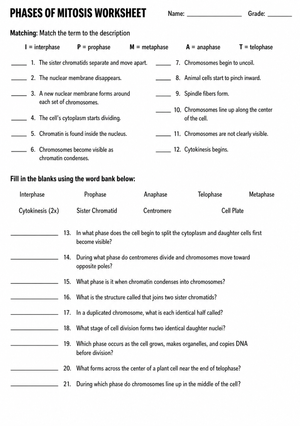
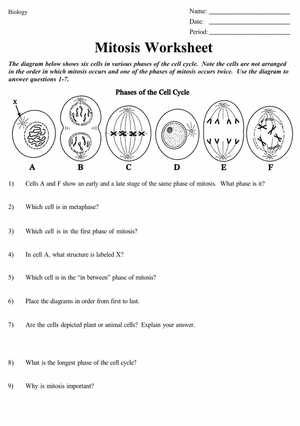
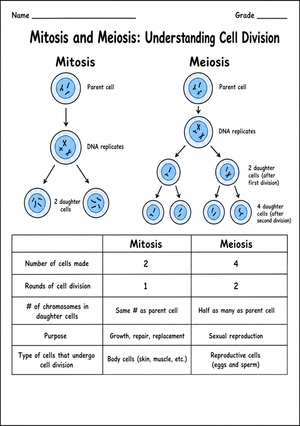
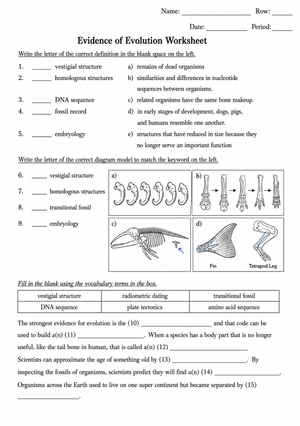
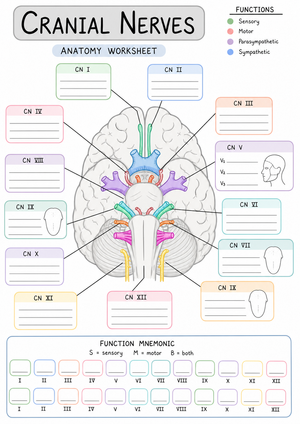
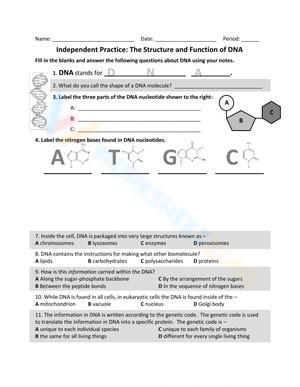
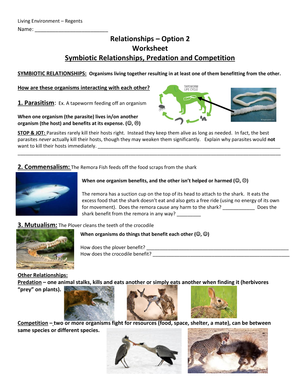
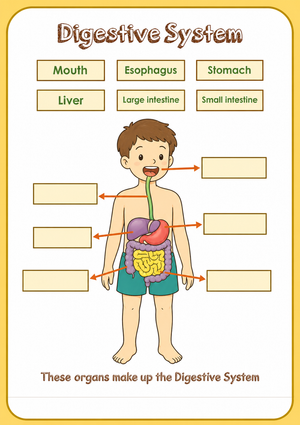
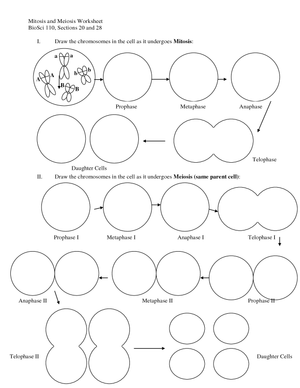
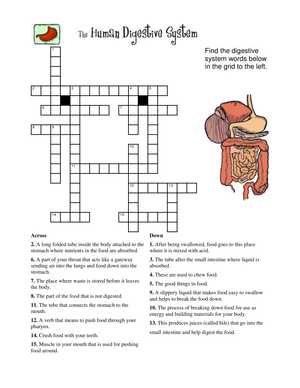
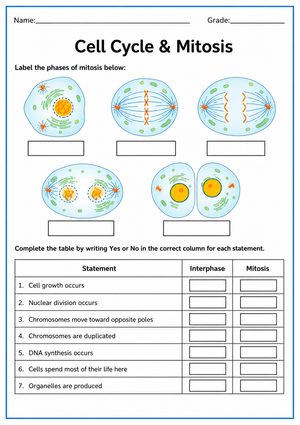
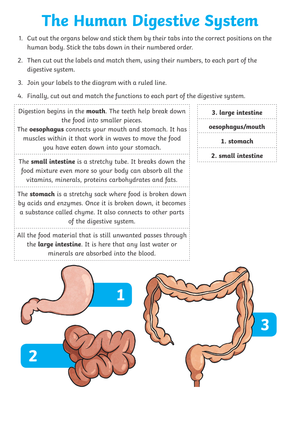
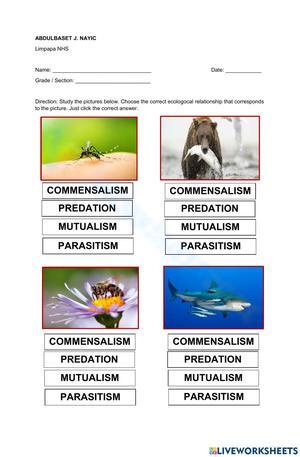
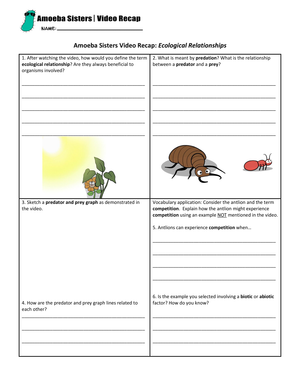
These 11th grade biology printable worksheets address the gap that appears when students return to biology after a year or two away — they carry surface-level recall from prior courses layered over misconceptions they never fully corrected. A student might confidently say "mitosis makes copies" but then sketch four daughter cells instead of two when asked to draw the process. Each worksheet in this set targets a discrete, testable skill within the major units of a high school biology course: cells and cellular processes, genetics, heredity, evolution, ecology, and human body systems.
What Each Worksheet Targets
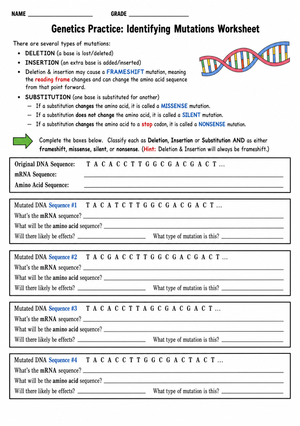
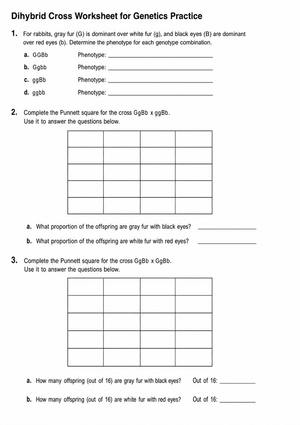
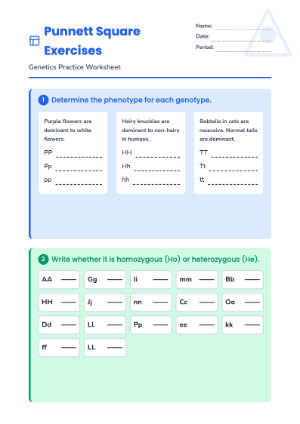
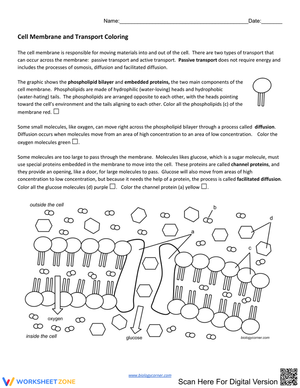
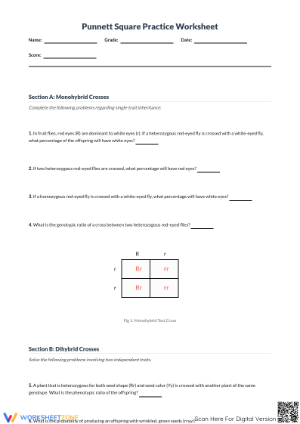
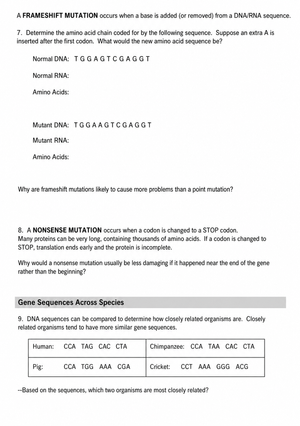
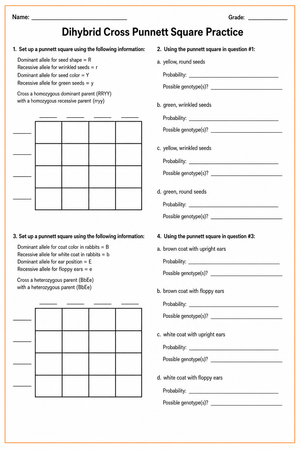
The skills across the set move students past definition-copying into biological reasoning they can apply. Cell worksheets ask students to predict the direction of water movement in osmosis scenarios, compare prokaryotic and eukaryotic cells across multiple structural features, and annotate diagrams of cellular respiration to show where ATP is produced at each stage. Genetics worksheets cover Punnett square construction for both monohybrid and dihybrid crosses, genotype-to-phenotype reasoning, and pedigree chart analysis for autosomal and sex-linked inheritance patterns.
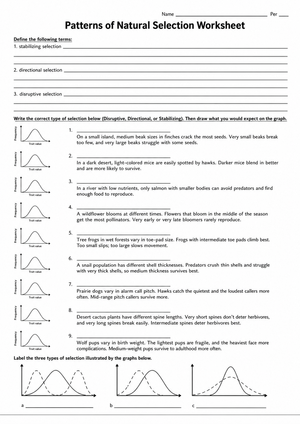
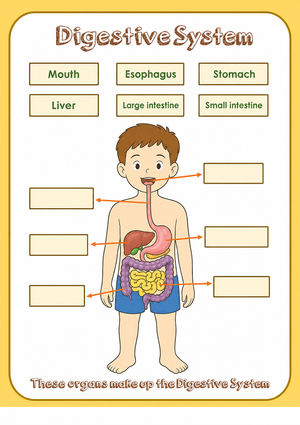
Evolution resources focus on reading and evaluating evidence — fossil record, comparative anatomy, molecular data — rather than restating the mechanism of natural selection from memory. Ecology worksheets include food web analysis, energy flow calculations through trophic levels, and cause-and-effect reasoning about population dynamics and human impact. Human body systems worksheets prioritize structure-function relationships and homeostasis scenarios over isolated term definitions. Each worksheet is self-contained, with no prerequisite packet to track or prior worksheet to reference.
Errors Students Make That These Worksheets Help Surface
Genetics produces a reliable cluster of errors across ability levels. Students who complete a monohybrid Punnett square without difficulty often freeze or make systematic errors on dihybrid crosses because they try to track two traits simultaneously in a single grid instead of working through each locus independently. A separate and persistent misconception: students conflate "dominant" with "most common in a population," which leads to wrong predictions in problems where a recessive phenotype appears frequently in a sample group.
Evolution errors tend to be conceptual rather than mechanical. Many students describe natural selection as organisms deciding to adapt — treating the process as intentional. When asked to explain why antibiotic resistance spreads through a bacterial population, they write that "bacteria learned to resist the antibiotic" rather than explaining that resistant individuals already existed before antibiotic exposure and were the ones that survived to reproduce. Worksheets that ask for a written mechanism-based explanation — not just a labeled diagram — expose this error clearly and give teachers a concrete decision point about whether to reteach before moving on.
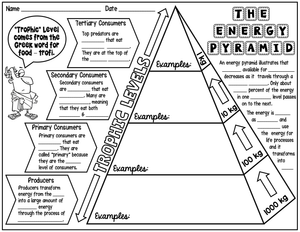
Ecology brings its own calculation traps. Students understand in principle that energy decreases between trophic levels, but when asked to calculate how much energy reaches a tertiary consumer given a specific input at the producer level, many multiply instead of taking successive percentages, or they apply the 10 percent rule to the wrong level in the chain. A worksheet that models the first calculation and then asks students to complete three more without the model shows teachers exactly where the reasoning breaks down.
How to Build These Worksheets Into Your Lesson Plans
The most effective use of 11th grade biology printable worksheets is not "assign as homework." Students who are already confused on a concept will practice the wrong process independently and reinforce the error. A stronger sequence is: introduce the concept through instruction or a lab, use a worksheet as a whole-group check during the final 15 minutes of class while you scan responses and redirect immediately, then send a shorter review version home once students have demonstrated basic accuracy. That progression turns the worksheet into a diagnostic moment rather than just an assignment to collect later.
- Bell ringers: pull three or four items from a genetics or cell worksheet to reactivate prior knowledge — particularly effective on Mondays following a Friday lab when students need to reconnect with the concept before the lesson continues.
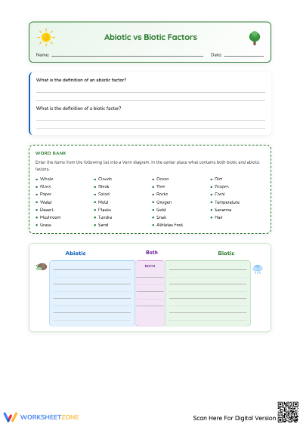
- Station work: distribute different worksheet types around the room — vocabulary application, diagram labeling, short data analysis, reading with questions — so students rotate through skill types on the same unit topic without duplicating practice.
- Pre-quiz retrieval: assign one focused worksheet the class period before an assessment so students practice pulling information from memory rather than re-reading their notes one more time.
- Substitute plans: worksheets with labeled diagrams, readable directions, and an included answer key run smoothly without additional teacher explanation — the self-contained format makes them dependable for planned or unplanned absences.
For each unit, it is worth keeping a small folder with three versions on the same topic: one lower-demand worksheet focused on labeling and vocabulary application, one mid-level version with comparison and explanation tasks, and one analysis-focused worksheet built around data or a short scenario. When a lesson runs long or a class period gets interrupted, you can reassign a different version without reteaching from scratch.
Standard Alignment
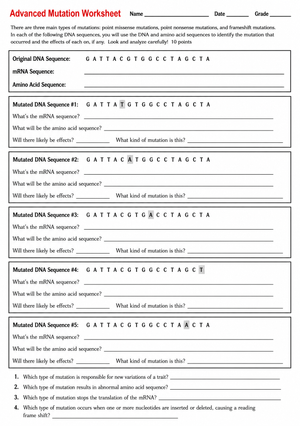
These worksheets align to Next Generation Science Standards for high school life science. Cell and cellular process resources connect to HS-LS1-2, which asks students to develop and use models illustrating how interacting systems are organized from cells through organisms — the labeling and annotation tasks in these worksheets build that modeling skill directly. Genetics worksheets address HS-LS3-2, focused on making evidence-based claims about how inheritable genetic variations arise through meiosis, replication errors, and environmental factors. Evolution resources connect to HS-LS4-2 and HS-LS4-4, which require constructing explanations for natural selection and evaluating evidence for common ancestry. Ecology worksheets tie to HS-LS2-2, which involves mathematical representations of how population and biodiversity factors interact within ecosystems.
Teachers in states that adopted NGSS or adapted their standards from it will find these alignment points map directly to their disciplinary core idea frameworks. Teachers working within AP Biology will find strong overlap in the genetics, evolution, and ecology sections — particularly around inheritance patterns, population genetics, and energy flow through ecosystems.
Adjusting the Worksheets for a Range of Learners
11th grade biology printable worksheets in this set work for grade-level students without modification, but they hold up equally well with targeted adjustments for students at either end of the ability range. For students who need more support, pare down the task to one or two items per concept and add a reference element alongside — a mini-glossary of key terms, a labeled diagram to consult, or a sentence frame for written responses. This reduces working memory load without simplifying the biology concept itself.
For students ready for a harder challenge, the same worksheet becomes a starting point. After completing the Punnett square items, they can extend by writing a paragraph explaining how those results would shift if the locus were sex-linked. After annotating an energy flow diagram, they can calculate the efficiency ratio between two specific trophic levels and compare it to data from a real ecosystem. These extensions require no additional materials — just a written prompt added at the bottom of the existing worksheet.
One practical limitation worth naming: students with significant reading difficulties struggle with the short-response and scenario-based items even when they understand the underlying biology. For those students, a verbal explanation or a labeled drawing often serves as a more accurate measure of what they actually know, and substituting that task preserves the conceptual rigor without penalizing the reading gap.
Frequently Asked Questions
Do these worksheets come with answer keys?
Yes. Each worksheet includes an answer key with expected responses for diagram tasks and written-response items. For questions asking students to justify a claim or explain a mechanism, the key identifies what reasoning or evidence should be present rather than locking in a single acceptable wording — useful for grading short explanations consistently across a class.
How many worksheets are in the set, and how are they organized?
The set contains multiple worksheets organized by unit: cells, genetics, evolution, ecology, and human body systems. Within each unit, the worksheets move from foundational tasks — labeling, vocabulary application, basic comparison — toward higher-demand work such as data analysis, multi-step reasoning, and written explanations. Teachers can move through them sequentially or pull individual worksheets to fit a specific lesson need.
Are these appropriate for AP Biology as well as general biology?
Most of the set works for both. General biology students benefit from the structured practice and visual tasks. AP students can use the same worksheets for early-unit retrieval review and then extend their thinking through the analysis and evidence-based items. The genetics and evolution sections align closely with AP Biology expectations around inheritance patterns, population genetics, and natural selection evidence.
Can these be used for unit review without reteaching everything first?
That is exactly where 11th grade biology printable worksheets perform best. A focused cell worksheet, a genetics practice set, an ecology graph task, and an evolution evidence worksheet together give students targeted retrieval practice by topic — more useful than a single mixed review guide that tries to cover every unit at once. Students approach unit-specific review with more focus because the task is bounded and clear, and teachers get a sharper picture of where gaps remain before the assessment.












 Interactive Worksheet Maker
 Quiz Maker
 Word Search Maker
 Crossword Puzzle Maker
 Word Scramble Generator
 Sentence Scramble Generator
 Handwriting Worksheet Generator
 Name Tracing Generator
 Fill In The Blank Generator