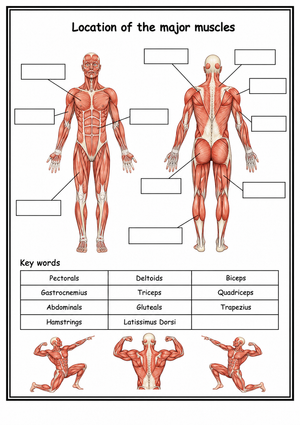
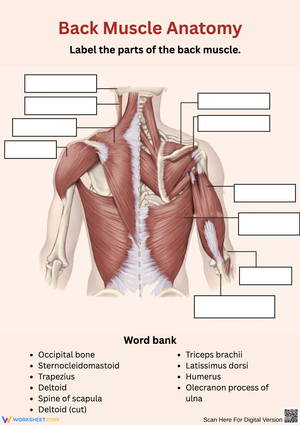
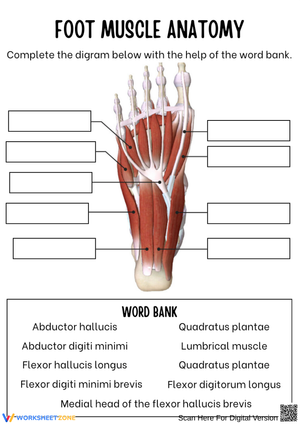
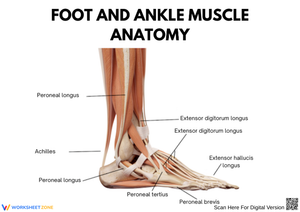
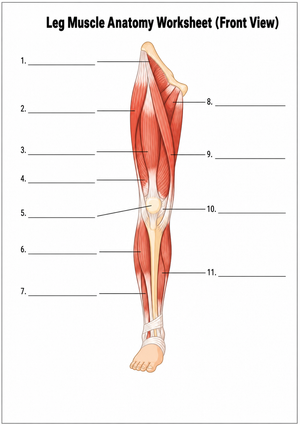
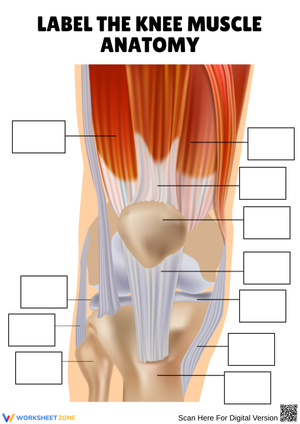
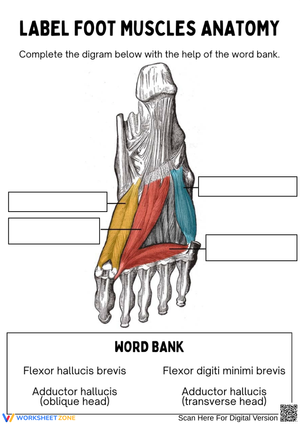
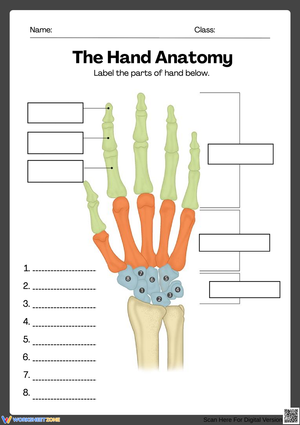
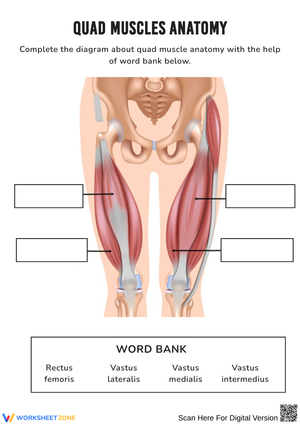
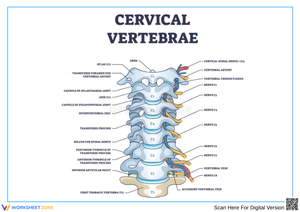
These 11th grade human anatomy worksheets resources give junior-year anatomy and biology teachers the labeled diagrams, terminology drills, and physiological flowcharts that move students past surface-level identification into functional reasoning about the body. The set spans all eleven major organ systems, and within each system, the worksheets address both macroscopic structure and the cellular-level organization that explains why structures look and behave the way they do. The diagrams are drawn to reflect actual anatomical proportions and spatial relationships — the kind of accuracy that matters when students later encounter a dissection specimen or a clinical imaging scan and need their mental map to hold up.
The Specific Skills and Content Areas Targeted
At the Grade 11 level, students move from general biology into detailed systems analysis, and the worksheets reflect that shift. Each worksheet targets one of four content areas that mirror what a rigorous anatomy-physiology course actually demands:
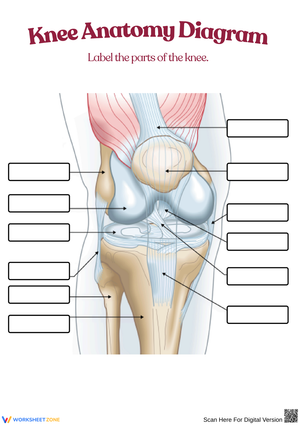
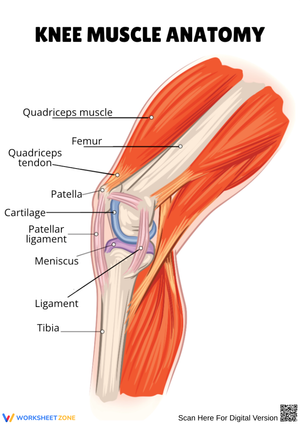
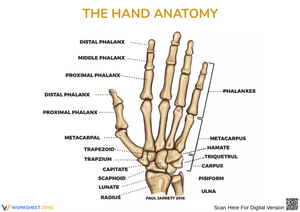
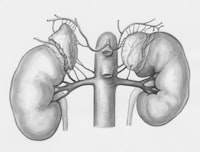
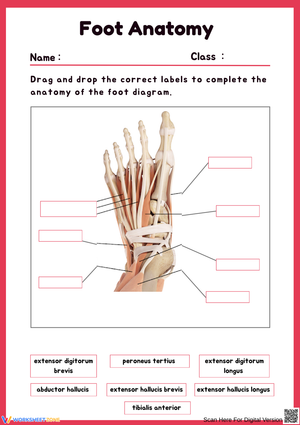
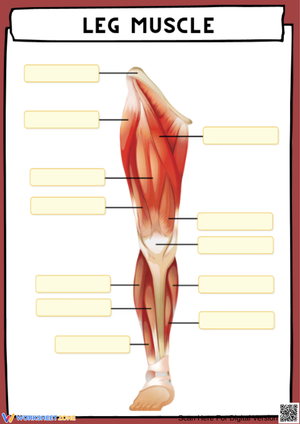
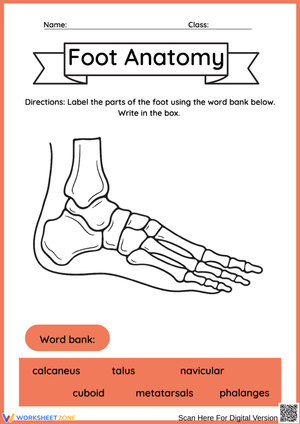
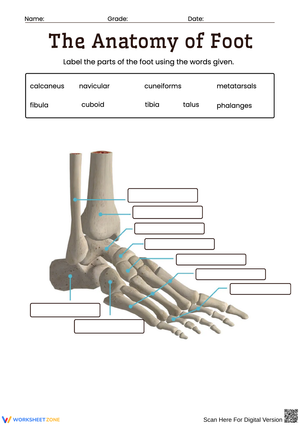
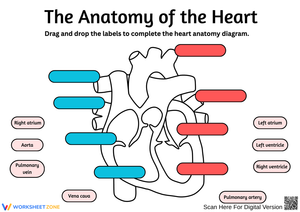
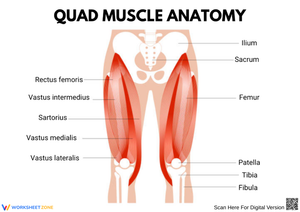
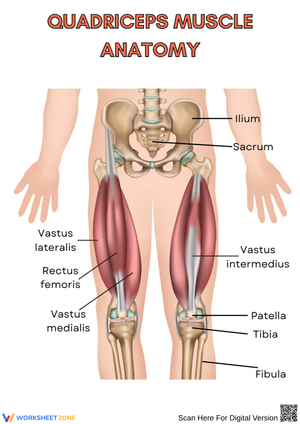
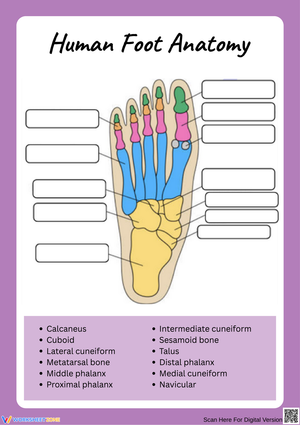
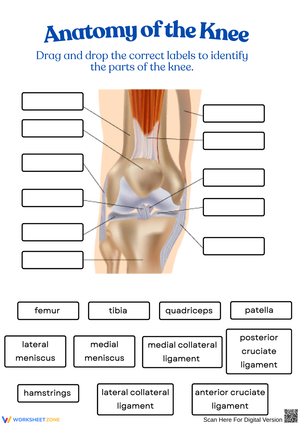
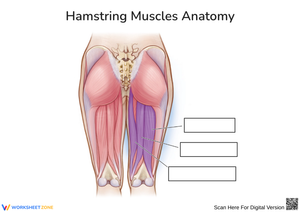
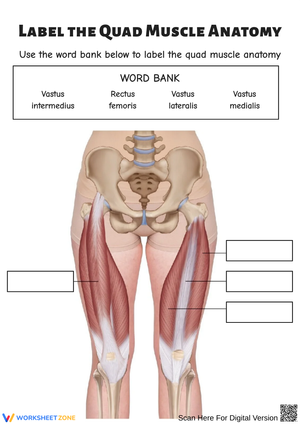
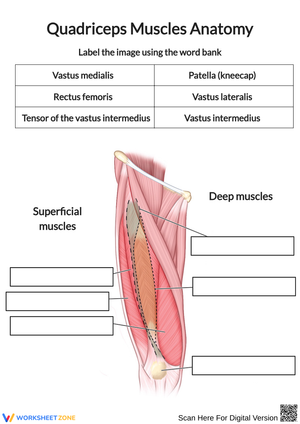
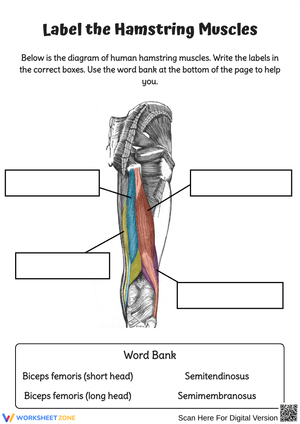
- System-by-system structural identification: Students label the chambers and valves of the heart, name the bones of the axial and appendicular skeleton, trace the path of a nephron through the kidney, and map the major branches of the brachial plexus. Diagrams are detailed enough that students cannot guess by process of elimination — they have to know the structures.
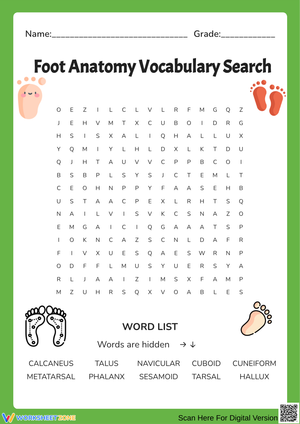
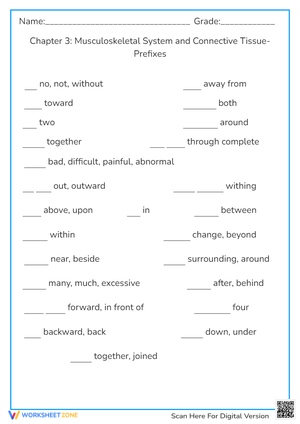
- Medical terminology and word analysis: Worksheets in this category break terms into their Latin and Greek components — prefix, root, suffix — and require students to apply that analysis to unfamiliar terms. Understanding that myocardium combines myo (muscle) and cardium (heart) is more durable than memorizing a definition out of context.
- Histology and microscopic anatomy: Students identify the four primary tissue types and their subtypes from diagram views that simulate microscope slides. These exercises connect cellular structure to organ-level function — a relationship most students only internalize when they see it drawn out explicitly.
- Physiological processes and homeostasis: Flowchart worksheets walk students through feedback mechanisms, action potential propagation, hormonal regulation, and gas exchange. The format forces students to trace cause-and-effect sequences step by step rather than describing them abstractly.
An 11th grade human anatomy worksheets collection that covers all four areas gives teachers the flexibility to assign targeted practice for each phase of a unit rather than piecing together resources from disconnected sources.
Frequent Student Errors Worth Anticipating and Addressing
Anatomy at this level produces a predictable set of misconceptions, and knowing what to expect lets teachers address errors before they settle into long-term memory as fact.
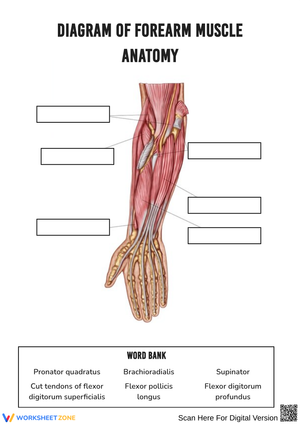
The most persistent error involves directional terminology. Students learn "medial" and "lateral" correctly when a figure stands in anatomical position. The moment they see the forearm pronated or the figure seated, they lose confidence. More specifically, the radius and ulna become interchangeable in student work because most initial instruction anchors the names to a single static diagram. A worksheet that presents the forearm in multiple orientations — and requires identification in each — exposes this gap in a way that one correctly labeled diagram never will.
Cardiovascular worksheets reveal a second consistent confusion: students know the general rule that arteries carry oxygenated blood, then apply it incorrectly to the pulmonary arteries. They write "oxygenated" on both pulmonary vessels because the rule feels absolute. This error almost never surfaces during lecture — it appears when students commit an answer in writing on a diagram and have to stand behind it.
The feedback loop flowchart worksheets expose a third pattern. Students understand homeostasis conceptually and can explain that the body resists change. But when asked to trace a negative feedback loop through a thermoregulation or blood glucose scenario, they frequently invert the corrective response. They identify the receptor and effector correctly, then describe the effector as amplifying the stimulus rather than opposing it. This is a reasoning error, not a vocabulary gap, and the flowchart format makes it visible in a way that multiple-choice questions do not.
Building These Worksheets Into Your Anatomy-Physiology Lesson Cycle
One approach that consistently works at this level: distribute the system labeling worksheet before the lecture, not after. Ask students to attempt identification using only their textbook index. The pre-exposure — even when partial and imperfect — reduces cognitive load during direct instruction. When students have already wrestled with the word "myelin sheath" on a printed diagram, hearing it explained in context registers differently than encountering it cold from a projector. The first ten minutes of class become about correcting specific misconceptions rather than introducing every term from scratch.
The feedback loop flowcharts work well as a Monday warm-up the week after initial instruction. Students have had a weekend of passive forgetting, and completing the loop from memory before seeing the correct version again produces more durable retention than re-reading notes. The physiology worksheets also translate into effective station activities: print different system diagrams at five stations, give groups eight minutes, then rotate. The movement and time pressure shift the energy noticeably in a late-afternoon anatomy block.
For exam preparation, the clinical application worksheets pull content out of the abstract and into scenario-based reasoning. Students who can label a normal kidney diagram often struggle to explain what changes structurally and functionally in glomerulonephritis — the clinical worksheet forces them to apply anatomical knowledge to a pathological deviation, which mirrors how this content appears on nursing entrance exams and college-level biology assessments.
Adjusting These Worksheets for Different Levels Within One Class
The labeling worksheets include word banks by default, which gives students still building vocabulary a realistic chance on a complex diagram. Removing the word bank is the most immediate way to increase rigor for students who have moved past that stage. In practice, this means printing two versions of the same worksheet and distributing by readiness rather than sorting publicly by ability. The activity stays the same; the support structure changes quietly.
The terminology worksheets have a natural extension built in. Once students have correctly broken down a term like hyperglycemia into its components, they can construct a novel term using the same roots and define it — a higher-order task the worksheet format supports without requiring a separate assignment. It takes two minutes to write the extension prompt on the board, and it gives fast finishers something genuinely rigorous to work through.
For students on advanced or dual-enrollment tracks, the physiological flowchart worksheets take on a second layer when paired with a clinical extension: ask students to annotate each step in the diagram with the consequence of a failure at that point. What happens if the SA node misfires? What does a broken negative feedback loop look like in type 1 versus type 2 diabetes? These questions are not printed on the worksheet, but the format invites them naturally.
Standard Alignment
The worksheets align most directly with two NGSS performance expectations at the high school level. HS-LS1-2 asks students to develop and use a model to illustrate the hierarchical organization of interacting systems in multicellular organisms — which maps onto the system-overview and integration worksheets in the set. HS-LS1-3 requires students to plan and conduct investigations providing evidence for feedback mechanisms in homeostasis; the physiological flowchart worksheets supply the conceptual groundwork that makes that investigation meaningful rather than procedurally hollow.
In classroom terms, HS-LS1-2 is usually the organizing frame introduced at the start of an anatomy unit — why do complex organisms need systems at all? — and returned to at the end when students synthesize how the cardiovascular, respiratory, and nervous systems coordinate a single physiological response. An 11th grade human anatomy worksheets set that explicitly addresses both the structural and integrative dimensions of that standard gives teachers materials to build toward that synthesis across the full unit arc, rather than treating each system as a self-contained module.
Frequently Asked Questions
Do the worksheets include answer keys?
Yes. Each worksheet includes a detailed answer key with correctly labeled diagrams and completed flowcharts. For the terminology and root-word exercises, the keys show the component breakdown — prefix, root, suffix — rather than just the final definition, which makes them useful for reviewing student reasoning rather than simply confirming a correct answer.
Are the anatomical diagrams legible after standard printing?
The diagrams are built for print. Fine structures — the trabecular network of cancellous bone, the layered organization of the skin, the branching of alveolar ducts — retain their detail at 8.5 × 11. The nervous system worksheets, which carry the highest labeling density in the set, are laid out so that leader lines do not cross, and label fields are large enough for legible student handwriting even in fine-detail regions.
How many worksheets cover each organ system?
Coverage varies by instructional weight. The cardiovascular and nervous systems each have four to five worksheets — structural identification, histology, physiological process, and clinical application. Systems that receive less instructional time in a standard course, like the integumentary or lymphatic systems, have two to three worksheets focused on structure and primary function. The 11th grade human anatomy worksheets set is weighted toward the systems that account for the largest share of class time and assessment in a typical anatomy-physiology curriculum.












 Interactive Worksheet Maker
 Quiz Maker
 Word Search Maker
 Crossword Puzzle Maker
 Word Scramble Generator
 Sentence Scramble Generator
 Handwriting Worksheet Generator
 Name Tracing Generator
 Fill In The Blank Generator