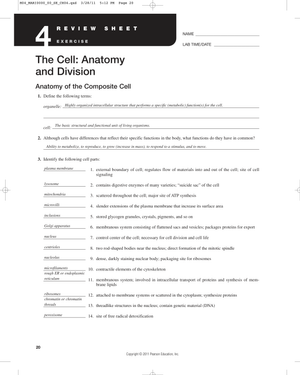
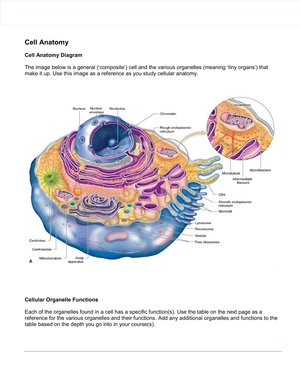
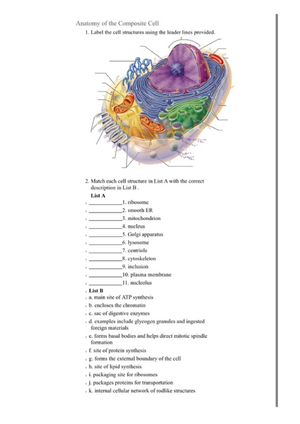
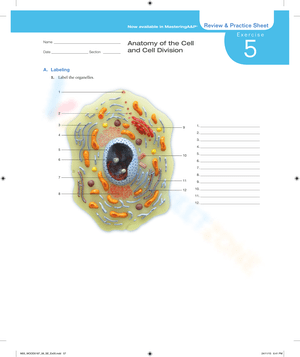
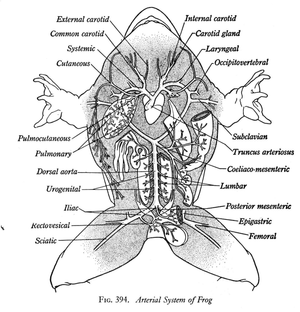
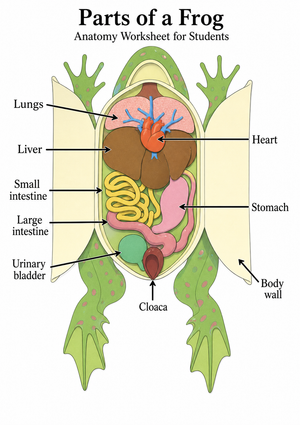
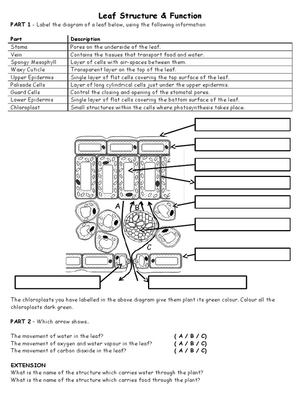
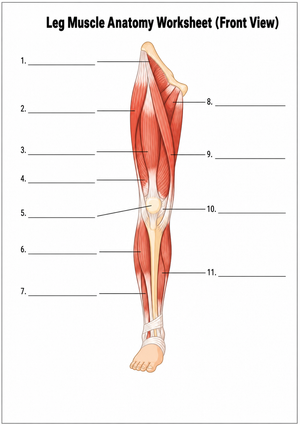
These anatomy pdf worksheets for 11th grade target the gap most teachers recognize immediately: students who can name the four chambers of the heart during class discussion but then freeze in front of an unlabeled diagram. The set addresses all eleven major organ systems through labeling exercises, annotation tasks, and short-answer questions built for the depth that eleventh-grade biology actually requires — not a simplified version of it.
Systems and Skills the Set Covers
The skeletal worksheets distinguish between the axial and appendicular skeleton and require students to identify specific bone landmarks — the greater trochanter, the mastoid process, the lateral epicondyle — not just broad regional names. Multiple orientations appear across the set: anterior, posterior, and lateral perspectives of the skull and vertebral column, because students who learn anatomy from a single view consistently fail to recognize structures in lab practicals or clinical images.
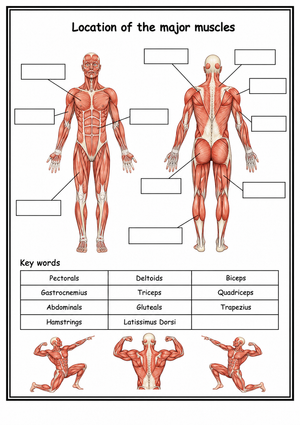
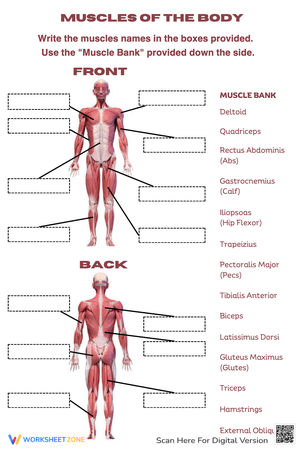
For the muscular system, each worksheet asks students to identify the three tissue types — skeletal, smooth, and cardiac — and apply that knowledge to functional contexts, including marking origin and insertion points on major limb muscles. The nervous system worksheets map neuron structure in detail, trace the full path of a spinal reflex arc, and diagram the major divisions of the central and peripheral nervous systems. Endocrine worksheets use flowcharts to show feedback loops: how the anterior pituitary, thyroid, and adrenal glands coordinate to regulate internal conditions. Digestive and excretory worksheets zoom in on the nephron and the layers of the alimentary canal, pushing students to connect microscopic structure to whole-organ function.
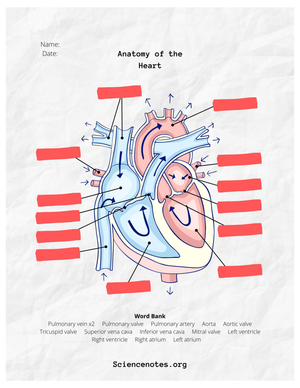
The circulatory worksheets center on tracing blood flow through the complete cardiac cycle. Students follow a single red blood cell from the right atrium through the pulmonary circuit and back into systemic circulation, naming every valve and vessel in sequence. Respiratory worksheets pair with these to show gas exchange at the alveolar membrane — the structural link between these two systems that students consistently need reinforced.
Errors That Come Up Repeatedly in Grade 11 Anatomy Work
The pulmonary-versus-systemic confusion is nearly universal. Students know both terms but consistently reverse which circuit carries oxygenated blood, writing that the pulmonary artery delivers oxygen-rich blood from the heart to the lungs — exactly backward. A labeling step that forces students to write "deoxygenated" directly beside the pulmonary artery before moving on corrects this faster than any follow-up explanation during lecture.
On neuron diagrams, students regularly draw arrows moving in both directions along the axon, treating it like a two-way road. That error persists because students understand the general idea of neural communication without internalizing that impulse transmission is unidirectional. A separate but related problem shows up in histology: students who have memorized "cardiac muscle = heart" still cannot distinguish cardiac tissue from smooth muscle on an unlabeled slide. Cardiac muscle is striated, but its striations look different enough from skeletal muscle that students assume it must be smooth — which it isn't. The comparative diagrams in these worksheets address that confusion directly, placing all three tissue types side by side for annotation.
The clavicle causes skeletal classification errors almost every year. Students place it in the axial skeleton because it sits near the neck, even though it is appendicular. Building a definition-writing step into the worksheet — where students record the criteria for each category before they begin labeling — reduces that error rate noticeably compared to jumping straight to the diagram.
Fitting These Worksheets Into Your Lesson Sequence
The most productive placement for a labeling worksheet is the day after direct instruction, not during it. Introducing the circulatory system on Monday through diagrams and discussion, then opening Tuesday's class with the heart-labeling worksheet as a retrieval task, uses the 18-hour gap productively. That spacing — even overnight — produces stronger long-term retention than labeling during the same lesson where the terms were first encountered. The science on spaced retrieval is consistent on this point.
Lab station rotations work particularly well with the skeletal and muscular worksheets. One station uses a model or articulated skeleton; the next runs the corresponding labeling worksheet; a third asks students to use directional terms — superior, inferior, medial, lateral, proximal, distal — to describe the spatial relationship between two named structures. Students who rotate through all three stations in a 50-minute period show stronger quiz performance than students who worked only from diagrams.
These anatomy pdf worksheets for 11th grade also function well as exit tickets at the close of a unit. A three-question worksheet on the endocrine feedback loop tells you immediately which students have internalized the mechanism and which ones are still treating hormones as a vocabulary list rather than a regulatory system. That data shapes the next day's instruction more precisely than most unit tests do.
Standard Alignment
The worksheets align primarily with HS-LS1-2, which asks students to develop and use a model to illustrate the hierarchical organization of interacting systems that provide specific body functions. In classroom terms, that standard is met when a student can not only label a nephron but explain how that microscopic structure connects to whole-organ kidney function and then to whole-body fluid regulation — three levels of hierarchy in a single explanation. Several worksheets in the set are built around exactly that three-tier analysis structure, moving from cell to organ to system within one task. Teachers preparing students for state summative assessments should know that HS-LS1-2 shows up in testing contexts as systems-level application, not isolated identification, which is why these anatomy pdf worksheets for 11th grade consistently push past labeling toward functional explanation.
Adjusting the Set for Different Learners in the Same Room
For students who are still developing their science vocabulary, pre-filling the word bank on a labeling worksheet removes enough friction to let them concentrate on spatial relationships rather than spelling retrieval under pressure. That is not a concession — it is a deliberate choice to isolate the skill actually being assessed. If the goal is understanding where the left ventricle sits relative to the right atrium, the word bank removes an irrelevant obstacle.
Students who are ready for more challenge receive the same diagram with the word bank removed and an additional requirement: after labeling, they write two sentences explaining why one labeled structure would be directly affected if another failed. That extension turns a labeling task into a genuine systems-thinking exercise. The endocrine and digestive worksheets support that kind of extended analysis especially well because both systems involve multi-step regulated processes where a single failure point has downstream effects throughout the body.
Frequently Asked Questions
Which organ systems do the worksheets cover?
The set addresses all eleven major systems: integumentary, skeletal, muscular, nervous, endocrine, circulatory, lymphatic, respiratory, digestive, urinary, and reproductive. Standard Grade 11 courses concentrate most instructional time on the skeletal, muscular, nervous, circulatory, and endocrine systems, and those systems receive the most worksheet depth in this set.
Can individual worksheets be assigned on their own, or does the set need to be used in sequence?
Each worksheet stands alone. A teacher running a focused cardiovascular unit can assign just the heart-labeling and blood-flow worksheets without using anything else in the set. That said, the directional-terms worksheet pays off throughout the rest of the curriculum — students who internalize superior, inferior, medial, and lateral early in the year describe anatomy more precisely on every subsequent task.
Are these resources usable for digital submission on tablets?
These are anatomy pdf worksheets for 11th grade formatted in standard PDF, so students can annotate them directly on a tablet using any PDF markup application, or teachers can print them. The diagrams hold their clarity at both screen resolution and standard print size, so neither delivery method produces a degraded image.
Do the worksheets include answer keys?
Yes. Each worksheet includes a full answer key. Beyond grading efficiency, the keys support peer-review and self-assessment routines — both of which tend to produce faster error correction than waiting a week for teacher-graded work to come back.












 Interactive Worksheet Maker
 Quiz Maker
 Word Search Maker
 Crossword Puzzle Maker
 Word Scramble Generator
 Sentence Scramble Generator
 Handwriting Worksheet Generator
 Name Tracing Generator
 Fill In The Blank Generator