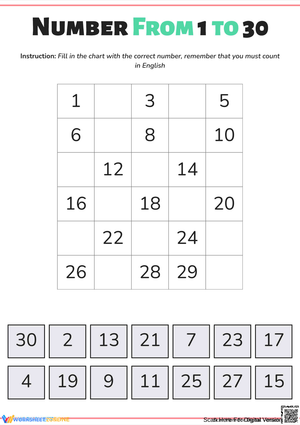
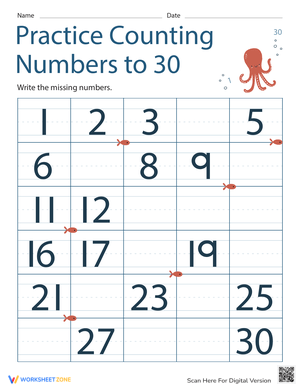
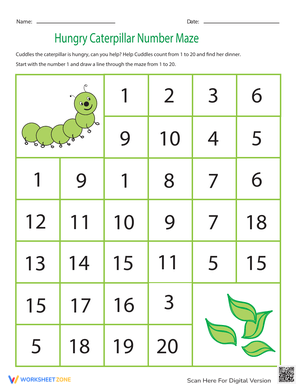
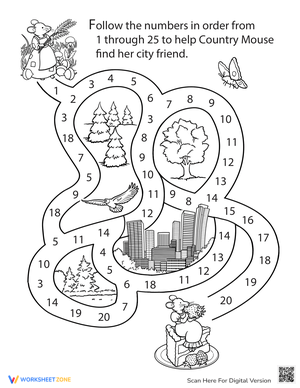
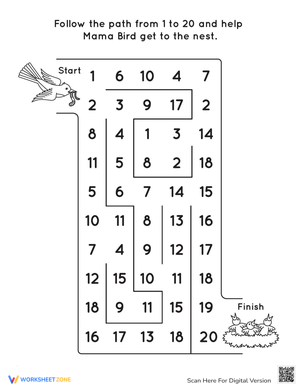
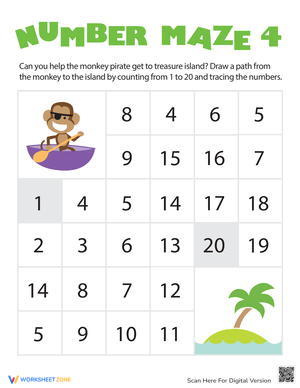
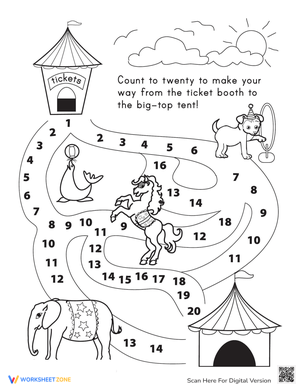
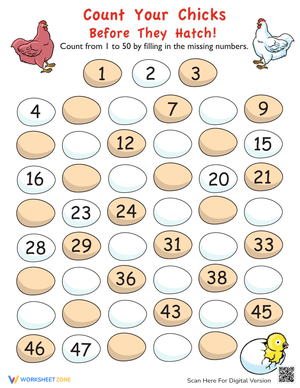
These ordering numbers 11 20 printable worksheets for 1st grade target the stretch of the number line where English does the most damage — eleven, twelve, and thirteen carry no auditory cue about their place-value structure, unlike twenty-two or thirty-five, where children can hear the tens digit in the spoken word. Each worksheet in the set uses a distinct format, from least-to-greatest sequencing to missing-number fill-ins, giving teachers enough variety to cycle through the skill across multiple lessons without repeating the same activity.
What Each Worksheet Targets
The formats vary enough that assigning a different one each day of the week doesn't feel repetitive to students, yet every worksheet drives toward the same underlying skill: placing teen numbers correctly relative to one another.
- Least-to-greatest ordering: Students receive a scrambled row of five or six teen numbers and rewrite them in ascending sequence. This is the entry point — forward counting is the more natural direction for first graders, so it builds confidence before the harder task of reversal.
- Greatest-to-least sequencing: Reversing the order forces students to think about relative magnitude rather than simply reciting the count from memory. A student who handles ascending order by mentally counting from eleven will stumble here, which exposes exactly the gap teachers need to close.
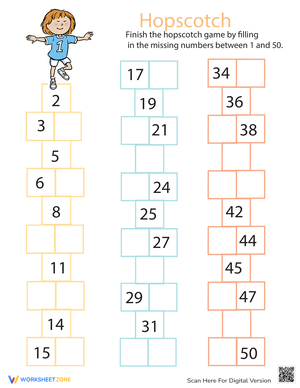
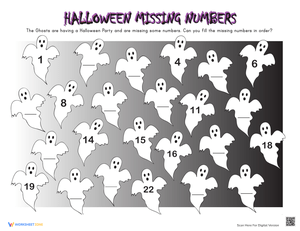
- Missing-number sequences: A row of teen numbers appears with two or three blanks. Students identify and write what's missing. This tests whether they understand the neighbors of a given number — knowing what comes before and after 16, not just where 16 falls in a memorized chant.
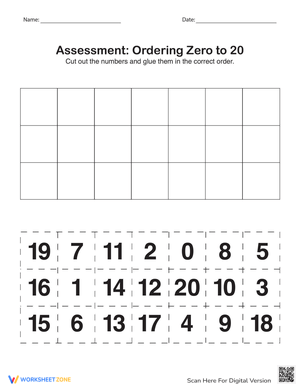
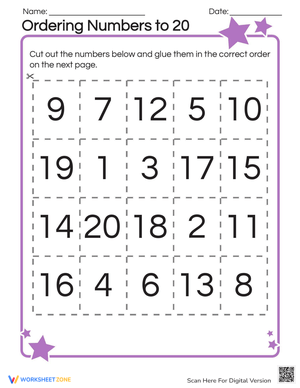
- Cut-and-paste ordering: Printed number tiles get cut apart and arranged before gluing. Students can physically move 17 in front of 15, see that it doesn't fit, and swap without erasing — the trial-and-error step that written-only formats skip entirely.
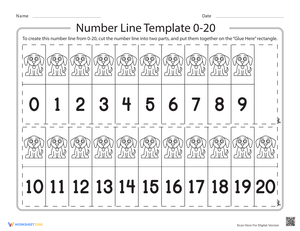
- Number line placement: Students mark where a given teen number belongs on a partially labeled number line. This connects sequencing directly to the linear mental model that underpins addition and subtraction strategies later in the year.
Why Repeated Practice With This Specific Skill Pays Off Later
The Common Core places two-digit number comparison (1.NBT.B.3) in first grade because this is the developmental window when most children can begin holding a tens-ones framework in working memory — but that ability develops unevenly across a class. Teen numbers land at the intersection of two separate demands: grasping place value and overriding misleading language. A child who understands that 14 means one ten and four ones still has to actively suppress the impulse to reverse the digits, because nothing in the spoken word fourteen signals which digit comes first on paper.
Consistent sequencing practice builds what researchers call automaticity — the digit-placement recognition becomes fast enough to run without conscious effort, freeing working memory for harder tasks. The goal is not that students can reason through why 14 comes before 15. The goal is that they no longer have to. That cognitive overhead disappears, and the child can direct that capacity toward something more demanding.
Student Errors Worth Anticipating Before You Grade the First Set
The most persistent error is the 12/21 reversal. Unlike 14 and 41, where the spoken word gives some auditory cue about the tens digit, twelve is an entirely opaque label — it sounds nothing like ten-two. Students who sequence 14, 15, and 16 without hesitation will still occasionally place a 12 or 13 in the wrong decade. When reviewing returned work, focus specifically on sequences that include 11, 12, and 13; errors cluster there far more than in the 14–20 range.
A second pattern appears with students who have memorized the forward count but lack genuine number sense. These students ace an ascending-order worksheet by mentally reciting the count from eleven, but they leave the greatest-to-least version blank or produce a random sequence. A student who handles ascending fluently and descending not at all is following a memorized track, not reading the values — the understanding is incomplete. The ordering numbers 11 20 printable worksheets for 1st grade that pair both directions within the same week catch this split performance directly, which is exactly why descending order should not be treated as an optional extension saved for later.
Smart Ways to Work These Into Your Weekly Lesson Plans
The most effective placement is the first five to eight minutes of the math block, after morning calendar but before introducing new content. A short sequencing warm-up activates the teen-number sequence in working memory and surfaces confusion from the previous day before you build on it. Monday mornings are especially valuable for this — a two-day gap lets retention slip, and a quick warm-up tells you immediately who needs a small-group check before the week moves forward.
For centers, laminate the missing-number worksheets and pair them with dry-erase markers so students practice and reset without consuming paper. Reserve one unlaminated copy per student for the unit's final assessment, so you have a written record. The cut-and-paste format holds attention well on Friday afternoons, when a hands-on task keeps engagement higher than a written exercise in the last block. Teachers who use ordering numbers 11 20 printable worksheets for 1st grade as five-question exit tickets at the end of each week report that the results sort students into three planning groups — mastered, almost there, and needs reteaching — which makes small-group decisions on Friday afternoon straightforward rather than guesswork.
Standard Alignment
These worksheets align most directly with 1.NBT.A.1 — count to 120 starting from any number less than 120; read and write numerals within that range — and 1.NBT.B.3, which asks students to compare two two-digit numbers using the meanings of the tens and ones digits. In classroom terms, 1.NBT.A.1 is the skill students are actively building when they arrange teen numbers in sequence; 1.NBT.B.3 becomes relevant as students articulate why a number belongs in a specific position, not just where. Most first-grade pacing guides address 1.NBT.A.1 in the first quarter and return to it as a foundation for 1.NBT.B.3 work in the second, which means these worksheets remain useful across a wide stretch of the school year rather than within a single unit.
Differentiating the Set Across Different Student Levels
For students still uncertain about the forward count, attach a printed reference strip — 11 through 20, clearly labeled — to the top of their worksheet. This removes the retrieval burden so they can concentrate on the logic of sequencing. A student who uses a reference strip to accurately order five teen numbers is doing real work; a student who can't retrieve the sequence yet will produce errors that, without that guided support, can harden into persistent habits. Remove the reference strip only when they're ordering correctly without glancing at it.
Students with the ascending sequence firmly in place can move to greatest-to-least worksheets, then to exercises that mix teen numbers with single-digit and low-twenties values in the same sequence — placing 9, 14, and 22 in order requires genuine place-value reasoning across three structural categories at once. Teachers using ordering numbers 11 20 printable worksheets for 1st grade with students who are ready for more challenge can ask those students to write a comparison sentence after completing each sequence: "17 is greater than 14 because..." This adds a written-reasoning layer that extends the task without requiring a different worksheet entirely.
Frequently Asked Questions
Why do first graders keep reversing 12 and 21 even after weeks of number line work?
The reversal is partly a language problem. Twelve provides no auditory hint about its place-value structure — there is no "ten" sound the way there is in twenty-one. Students who reverse these two numbers benefit from extended work with ten-frames and base-ten blocks: twelve fills one complete ten-frame plus two singles, while twenty-one requires two full groups of ten plus one. The physical and visual distinction has to come before the written-digit correction sticks.
Should ascending or descending order be taught first?
Always begin with ascending. The forward count is well-practiced by the time first graders encounter teen numbers, and building from that foundation lets students apply existing knowledge to a new format. Once a student can sequence five scrambled teen numbers in ascending order without consulting a reference strip, introduce descending as a separate lesson with its own explicit instruction. Treating the two directions as distinct skills in the early weeks prevents the confusion that arises when students aren't sure which way a sequence is supposed to run.
Can these worksheets function as a standalone formative assessment?
A five-item ordering worksheet works well as a weekly formative check, especially if it includes at least one ascending and one descending sequence. The data is fast to read — a quick scan of where errors cluster tells you whether the issue is with the teen range broadly, with specific numbers like 11 and 12, or with direction. What it won't tell you is why a student made an error; that diagnosis still requires a brief conversation. Use the worksheet data to identify who to pull for a small-group discussion, not to replace the discussion entirely.













 Interactive Worksheet Maker
 Quiz Maker
 Word Search Maker
 Crossword Puzzle Maker
 Word Scramble Generator
 Sentence Scramble Generator
 Handwriting Worksheet Generator
 Name Tracing Generator
 Fill In The Blank Generator