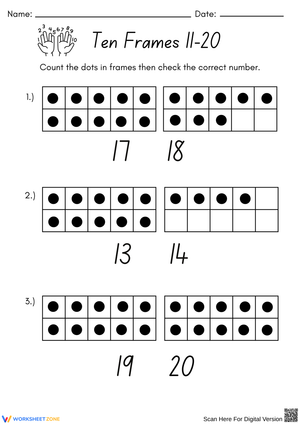
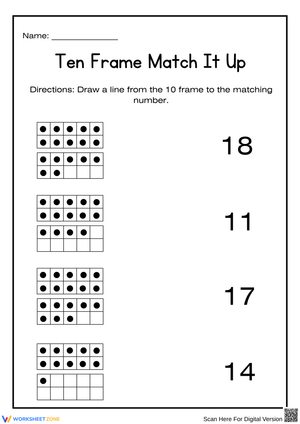
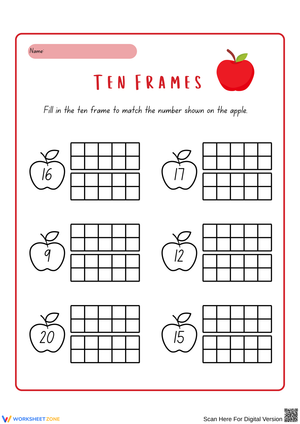
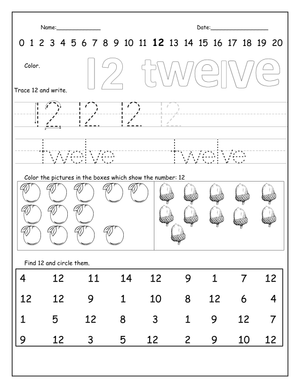
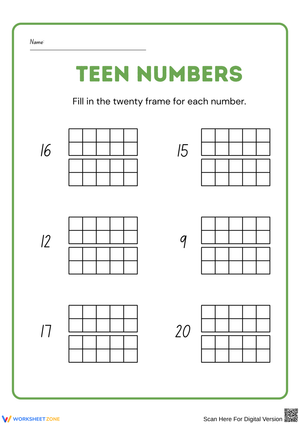
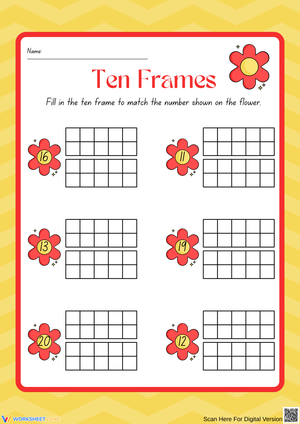
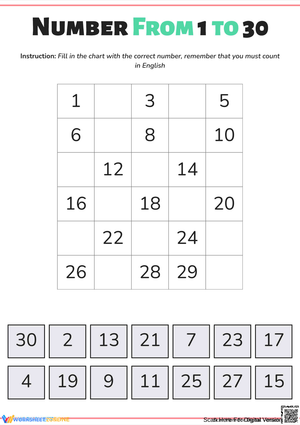
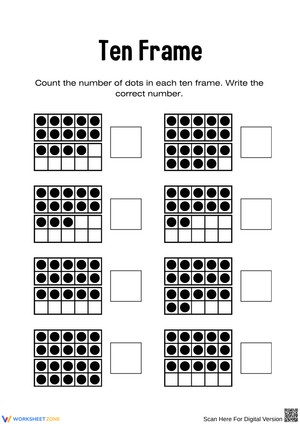
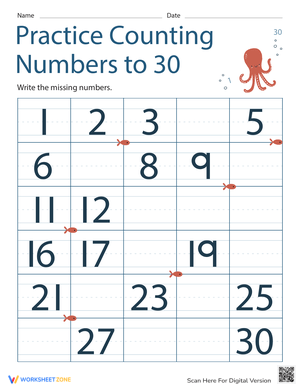
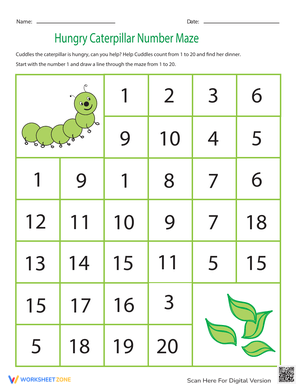
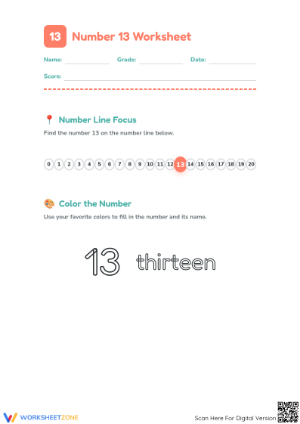
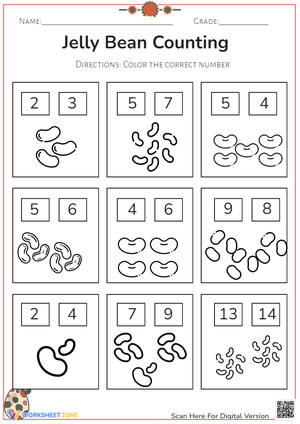
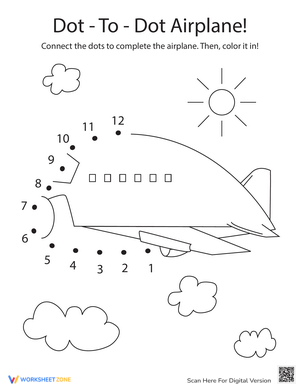
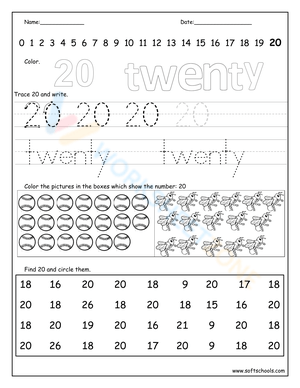
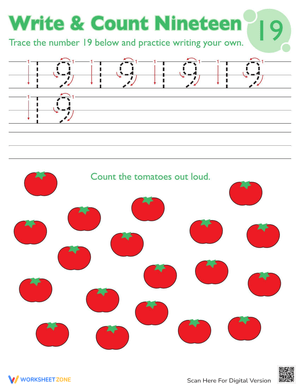
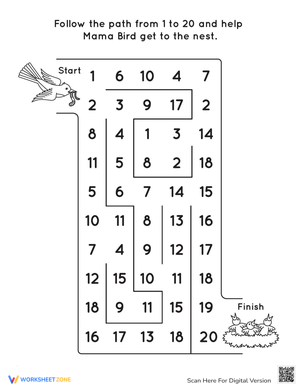
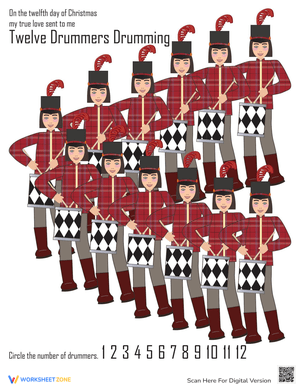
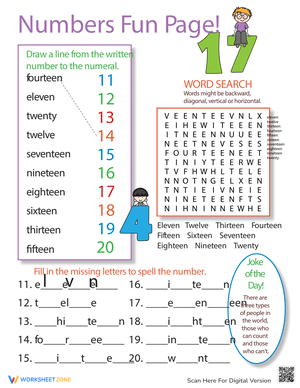
These 1st grade numbers 11 20 pdf worksheets give teachers a targeted set of practice materials for one of the trickiest transitions in early elementary math: moving from single-digit fluency into the teens. The set covers numbers 11 through 20 across a range of exercise types—from double ten-frame representation to written decomposition—with enough variety to sustain repeated practice without repetition fatigue.
Why Teen Numbers Hit Differently Than Any Other Range
No other ten-number span in the base-ten system creates as much confusion as eleven through twenty, and the reason is largely linguistic. English borrows "eleven" and "twelve" from Old Germanic roots that carry no numerical logic for a six-year-old. Then "thirteen" through "nineteen" flip the digit order: the ones value comes first in the spoken word ("four-teen") but second in the written numeral. That mismatch reliably produces digit reversals. A student who writes 17 correctly on Monday will write 71 by Wednesday when attention drifts. This is not a conceptual error — it is an encoding error driven by the sound of the word, and distinguishing between those two error types changes how teachers respond and how much re-teaching is actually necessary.
The deeper conceptual challenge is the hidden ten. Students who count eleven objects correctly often still see 11 as two separate 1s rather than one group of ten plus a leftover one. Double ten frames are the most efficient visual tool for breaking that habit, because once one full frame is lit and a second begins to fill, the structure of the number becomes visible rather than abstract.
Skills These Worksheets Build
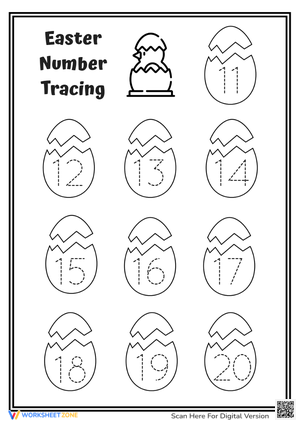
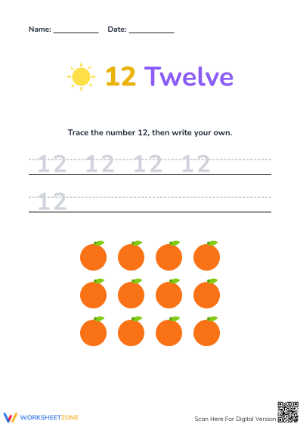
- Reading and writing numerals 11–20, with enough tracing repetition to establish correct digit orientation before students move to independent production
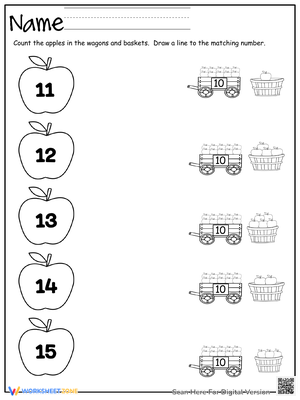
- Matching spoken number names to written numerals — a step often skipped, but necessary given the irregular naming conventions in this specific range
- Filling and interpreting double ten frames to anchor the "ten and some ones" structure visually
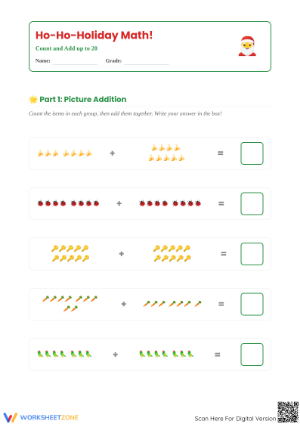
- Writing decomposition equations (10 + 7 = 17) and identifying tens and ones values within each teen number
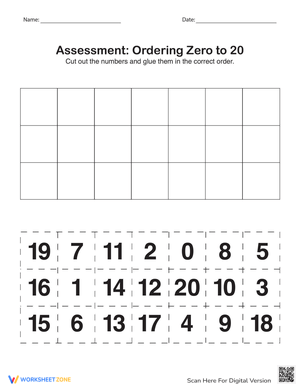
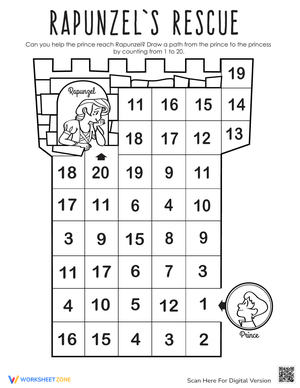
- Sequencing numbers within 11–20, including identifying what comes before and after a given numeral
- Drawing base-ten block representations to connect symbolic notation to a concrete quantity model
Standard Alignment
CCSS.MATH.CONTENT.1.NBT.B.2b requires first graders to understand that numbers from 11 to 19 are composed of a ten and one to nine ones. This standard sits in first grade — not kindergarten — deliberately: it depends on students already having solid one-to-one correspondence and cardinality with single-digit numbers. Teachers who know the progression understand why this standard is a gateway. Students who genuinely internalize "a ten and some ones" pick up two-digit addition with regrouping far more readily than students who moved through teens practice by counting all objects from one each time. The worksheets use base-ten blocks and double ten frames as their primary visual models precisely because those representations map directly onto the structure the standard describes.
Putting These Worksheets to Work in Your Planning
The most productive placement for 1st grade numbers 11 20 pdf worksheets is the practice phase of a concrete-pictorial-abstract lesson sequence, not the opening introduction. Lead instruction with linking cubes or counters on a physical double ten-frame mat. Once students have built and named three or four numbers with manipulatives, hand them a worksheet that asks them to record the same information in written and visual form. That sequence — build first, then document — reduces the number of students who fill in answers mechanically without underlying understanding. Handing out paper before students have touched physical objects tends to produce correct-looking work from students who are still pattern-matching symbols rather than reasoning about quantities.
The decomposition worksheets hold up especially well as a Monday warm-up or a five-minute re-engagement at the start of a math block. They are short enough to complete before transitioning to new content but rigorous enough to function as spaced retrieval rather than busywork. The ten-frame worksheets, by contrast, fit better inside a center rotation where students can reference physical materials alongside the page. Sliding a PDF worksheet into a dry-erase pocket lets students practice writing and erasing numerals repeatedly during morning work without burning through copies.
Where Students Consistently Go Wrong in This Number Range
Digit reversal is the most visible error — students write 61 for 16, 31 for 13 — but a subtler problem is place-value confusion masked by correct answers. A student who writes "10 + 6 = 16" on a decomposition worksheet may have arrived there by counting all sixteen dots on a ten frame rather than identifying the filled group of ten first. The worksheet looks right; the reasoning is not. The tell is behavioral: watch for students who hesitate unusually long before writing the tens digit, or who erase the "10" and recount from one each time they start a new problem. That pattern signals they are recomputing the teen number from scratch rather than seeing it as a unit.
A second pattern worth anticipating: students write and name teen number words correctly in isolation but fail to connect the spoken name to the written numeral under mild time pressure. Matching exercises expose this gap quickly, and catching it early prevents the disconnect from hardening into a stubborn habit.
Differentiating Practice Within the 11–20 Range
For students who are still solidifying one-to-one correspondence with numbers through 10, pair 1st grade numbers 11 20 pdf worksheets with a physical reference card showing a completed ten frame beside each numeral. That removes the need to reconstruct what "ten" looks like from memory and lets students direct their attention toward the ones portion of the number — the genuinely variable piece in this range. Removing one variable at a time keeps the practice productive. For students who freeze when they see unfamiliar number arrangements, pre-filling the tens digit across a worksheet column before distributing it removes the reversal risk entirely and focuses their work on the ones digit.
Students who have already moved past the ten-frame stage extend any decomposition worksheet by writing a second equation in expanded notation, naming the number in words, or identifying the teen numbers that are one more and one less. These extensions require no additional materials and keep faster students working within the same mathematical territory rather than jumping ahead to unrelated content. That matters in a mixed-ability classroom where you want everyone anchored to the same conceptual objective.
Frequently Asked Questions
Why do digit reversals keep appearing even after students seem to know the correct numeral?
Reversal is an encoding issue, not a knowledge issue. A student can identify 17 correctly when they see it and still write 71 when producing it from memory, because "seven-teen" places the seven sound first. Re-teaching the concept does not fix it — repeated low-stakes writing practice does. Students need enough repetitions writing the numeral in correct sequence that the motor pattern becomes automatic. A dry-erase pocket over a worksheet works well for this kind of massed production practice because it removes the cost of paper and lets students reset instantly.
At what point in a unit should students begin independent worksheet practice?
After two to three lessons of concrete manipulation with actual objects. Distributing 1st grade numbers 11 20 pdf worksheets before students have physically composed and decomposed teen numbers with counters or cubes typically produces correct-looking papers from students who are still pattern-matching rather than reasoning. The worksheet confirms and consolidates understanding — it does not build it from scratch.
How do these worksheets function as assessment tools?
Each worksheet serves as a formative snapshot rather than a summative measure. The decomposition and ten-frame activities in particular reveal whether students understand the structure of teen numbers or are relying on a count-all strategy. Collecting a completed worksheet at the end of a center rotation gives a quick read on where each student stands — but the real diagnostic value comes from watching students work, not only reading the finished page. The student who hesitates over the tens digit and the student who fills it in immediately are giving you different information even when both papers show the correct answer.













 Interactive Worksheet Maker
 Quiz Maker
 Word Search Maker
 Crossword Puzzle Maker
 Word Scramble Generator
 Sentence Scramble Generator
 Handwriting Worksheet Generator
 Name Tracing Generator
 Fill In The Blank Generator