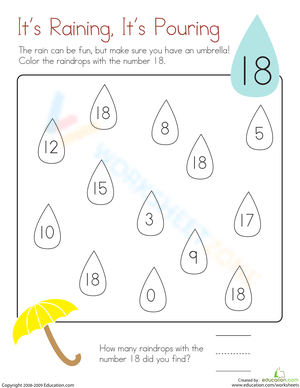
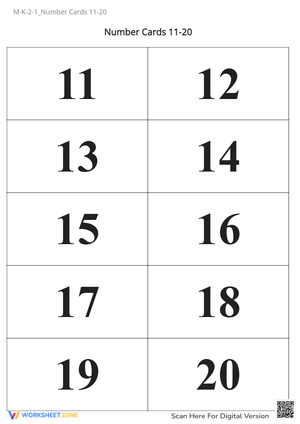
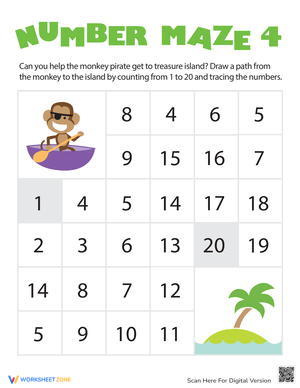
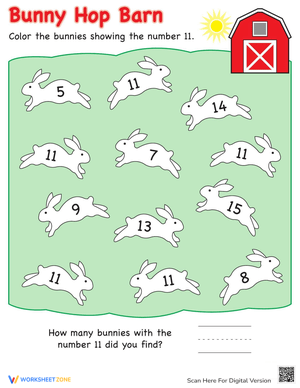
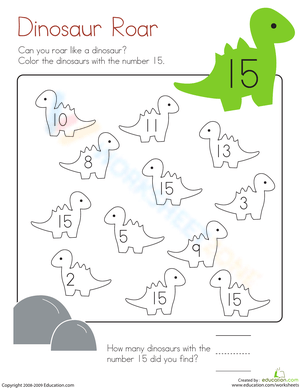
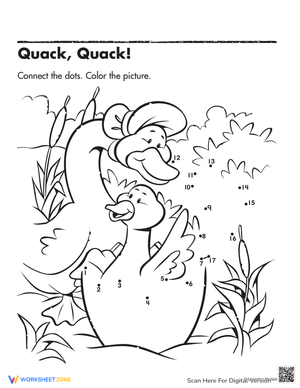
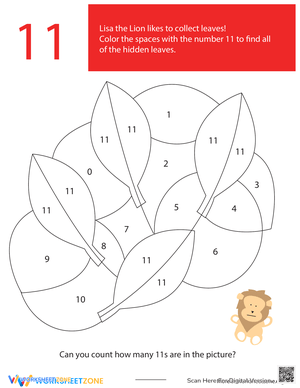
Identifying numbers 11 20 worksheets for 1st grade address one of the most persistent gaps in early number sense — the teen numbers. Unlike single-digit quantities children have already internalized, eleven through twenty carry irregular English names that give no structural clue about their base-ten composition. "Eleven" and "twelve" sound nothing like "one-ten-one" or "one-ten-two," and that linguistic mismatch means students need visual, hands-on, and written practice working together, not just oral counting.
The Specific Skills These Worksheets Build
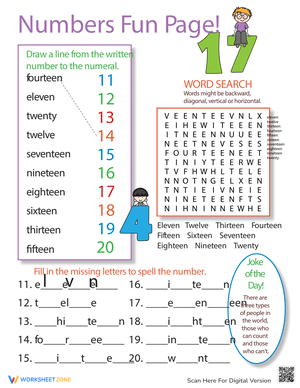
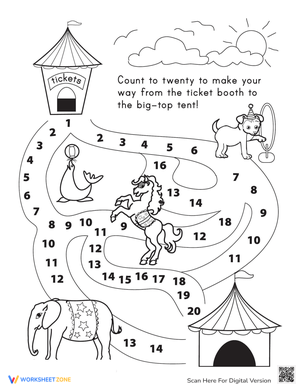
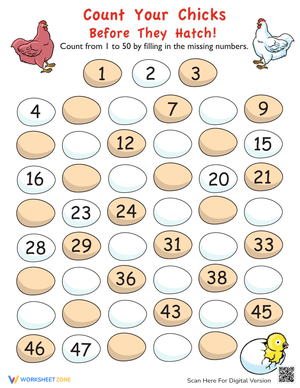
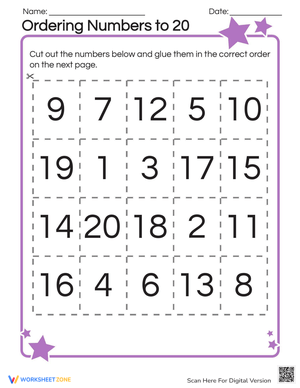
Each worksheet targets a distinct slice of teen-number work. Across the set, students practice reading double ten-frame images and writing the corresponding numeral, matching base-ten block illustrations (one tens rod plus unit cubes) to the correct number, filling in missing values on a partial number line spanning 11 to 20, counting object sets in that range and recording both the numeral and the number word, and decomposing teen numbers into "ten and ___" to build early place value fluency.
The ten-frame format appears across multiple worksheets because anchoring on "one full ten" measurably reduces counting errors. Students who see the first frame as a completed group of ten no longer recount it — they carry that value forward and count only the additional cells. That cognitive shortcut is exactly the kind of efficiency first graders need before moving into two-digit addition.
Errors Students Make That These Worksheets Help You Catch
The most consistent reversal pattern in actual first-grade work is writing 21 when shown a ten-frame for 12, or 51 for 15. This isn't inattention — it reflects how the child is processing the spoken number name. "Fifteen" ends in "five," so some students write the five first. Worksheets that include a separated tens/ones recording box, one labeled cell for each digit, address this directly by giving each digit a designated position before the student writes the full numeral.
A second predictable breakdown shows up at the 16–20 range. Students who count accurately to 15 frequently stall or guess above that point, a sign the upper teen sequence hasn't been practiced with the same frequency as 11–15. Running a worksheet that isolates 16–20 — rather than always presenting the full span — lets students build fluency in that narrower range before returning to the complete set.
The sound-alike substitution is harder to catch on paper alone. A student who hears "thirteen" and writes 30 often doesn't realize the error because the digit sequence felt correct in the moment. The most effective fix pairs written work with verbal confirmation: students say "one ten and three ones" before recording 13. A worksheet that includes a "say it, build it, write it" sequence in its directions catches this error at the point of production rather than after the fact.
How to Build These Worksheets Into Your Lesson Plans
The most reliable entry point is the transition after morning meeting — typically five to eight minutes before the formal math block opens. Dropping one teen-number worksheet during that window costs no instructional time and gives students a focused, low-stakes start. Students who finish early can circle their two favorite numbers and write one sentence about what they notice, which surfaces informal reasoning worth discussing with the whole class.
During guided math rotations, identifying numbers 11 20 worksheets for 1st grade function as a strong independent station. The visual nature of ten-frame and base-ten tasks means most first graders can work through them without asking for help, which matters when you're running a small group across the room. Pairing each worksheet with a basket of linking cubes — students build the number before writing it — deepens the concrete-to-representational-to-abstract sequence that NCTM research identifies as more durable than pencil-and-paper practice alone.
Use completed worksheets as a formative sort at the end of the week: three piles — solid, developing, needs support — takes under ten minutes and tells you which students are ready to move into two-digit comparison and which still need repetition in the 11–20 range. That data shapes Monday's warm-up more usefully than any formal quiz.
Standard Alignment
CCSS.MATH.CONTENT.1.NBT.B.2 requires first graders to understand that the two digits of a two-digit number represent amounts of tens and ones — specifically that the numbers 11 through 19 are composed of a ten and one, two, three, four, five, six, seven, eight, or nine ones. Teen numbers are the instructional entry point for this standard because their base-ten structure is visible in a double ten-frame in a way that larger numbers aren't yet. Mastering 11–20 means the conceptual extension to 34 or 58 is a continuation of something already understood, not a new abstraction introduced cold.
Differentiating These Worksheets Across Ability Levels
Students still working on numbers 1–10 can use the same ten-frame format on a single-frame worksheet before transitioning to the double-frame version. The visual language stays consistent; only the quantity range changes. Once they reliably recognize single-digit quantities on a ten-frame, the double-frame for teen numbers reads as a natural continuation rather than an unexplained jump.
For students who grasp 11–20 quickly, the extension isn't more of the same tasks — it's a shift in cognitive demand. Ask those students to generate their own ten-frame drawings for assigned numbers, then swap with a partner for checking. That production task is harder than recognition and reveals whether understanding is genuinely solid or just pattern-matched from repeated exposure. Identifying numbers 11 20 worksheets for 1st grade used this way become both practice and informal assessment at the same time.
English language learners benefit from worksheets that pair the numeral with the number word in a consistent, predictable layout. The sound-symbol mismatch that trips up all first graders is compounded when the number word itself is being learned in a new language. Clear visual formatting reduces that extra cognitive demand without removing the number-name component of the task.
Frequently Asked Questions
Why do so many first graders write teen numbers in reversed digit order?
English number names front-load the ones digit in many teen words — "four-teen," "six-teen" — so children transcribe the digit they hear first. This is a naming-system problem, not a memory problem. The correction isn't more counting practice; it's explicit instruction on digit position. Worksheets that label the tens and ones columns separately give students a physical reference point while the positional convention becomes automatic.
How many worksheets on this topic are enough before moving on?
A reliable readiness signal is fluent, unprompted recognition — the student looks at a double ten-frame and writes the numeral without rebuilding the count from scratch. Most first graders need four to six spaced exposures over two to three weeks before that automaticity appears, especially for 16–20. Moving on while students are still inconsistent above 15 creates a gap that resurfaces during two-digit addition and is harder to close later in the year.
Can these worksheets be used with kindergarteners who are ready for the content?
Yes, identifying numbers 11 20 worksheets for 1st grade work well with high-readiness kindergarteners who have already demonstrated solid recognition of 1–10. The double ten-frame format is especially accessible because kindergarteners have typically worked with single ten-frames before. The main adjustment is pacing — introduce 11–15 before layering in 16–20, and keep manipulatives on the table throughout rather than offering them only as a fallback option.













 Interactive Worksheet Maker
 Quiz Maker
 Word Search Maker
 Crossword Puzzle Maker
 Word Scramble Generator
 Sentence Scramble Generator
 Handwriting Worksheet Generator
 Name Tracing Generator
 Fill In The Blank Generator