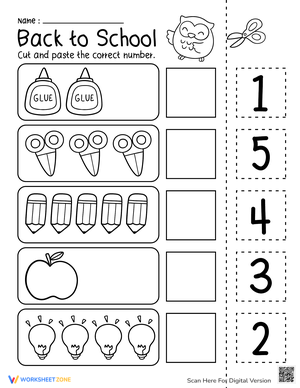
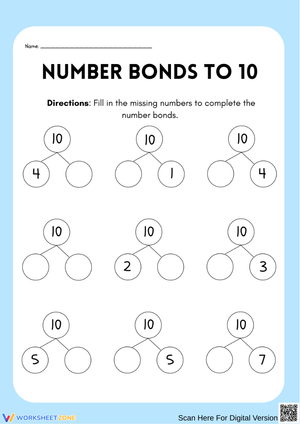
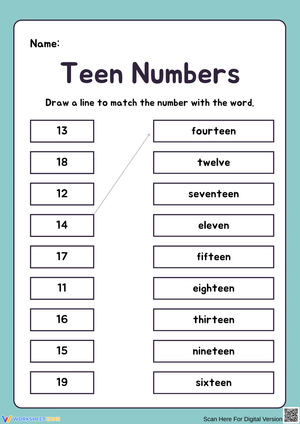
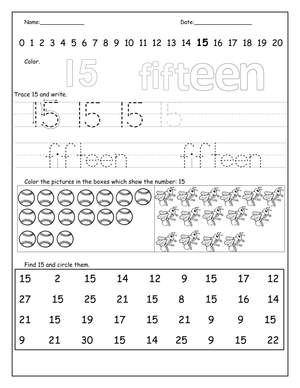
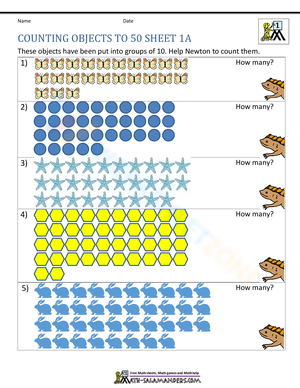
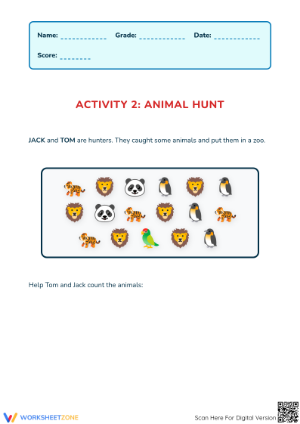
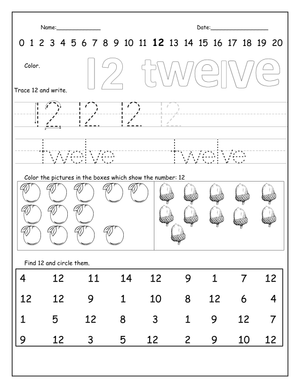
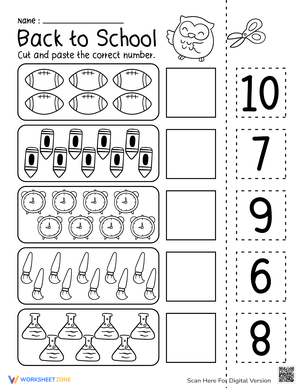
A first grade classroom moves fast between counting routines, place value lessons, and quick checks for understanding. Numbers worksheets give teachers a reliable way to reinforce those skills without reinventing a warm-up every morning. Whether you're running a whole-class counting drill or pulling a small group for reteaching, having a stack of purposeful numbers worksheets on hand saves planning time and keeps instruction consistent across the year.
Why Numbers Worksheets Works for 1st Grade Math
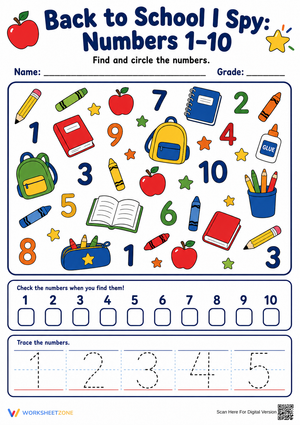
Number sense is the backbone of first grade math. Before students can add or subtract within 20, they need to understand what numbers represent, how they're sequenced, and how tens and ones combine to form larger values. Worksheets that target counting, sequencing, and place value give students repeated, low-stakes practice with these ideas. That repetition matters especially for students who need more exposure before a concept clicks.
Numbers worksheets also give teachers a paper trail. When a student struggles with a specific skill, like writing numerals past 100 or comparing two-digit numbers, a quick look at recent worksheet samples can reveal exactly where the breakdown is happening. That kind of evidence is useful during grade-level meetings, parent conferences, or intervention planning.
Place Value: Tens and Ones in Focus
1.NBT.B.2 asks students to understand two-digit numbers as amounts of tens and ones. This is where numbers worksheets shift from simple counting to conceptual work. Effective worksheets ask students to build a number using base-ten blocks or drawings, then record the tens and ones separately before writing the standard numeral. Expanded form tasks, where students write 34 as 30 + 4, reinforce the same understanding from a different angle.
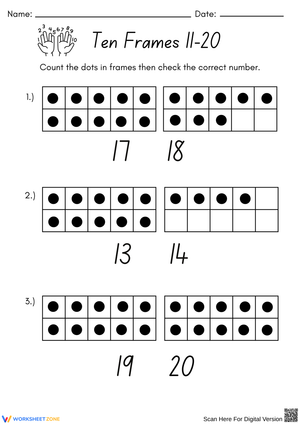
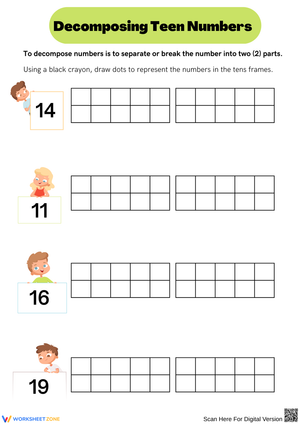
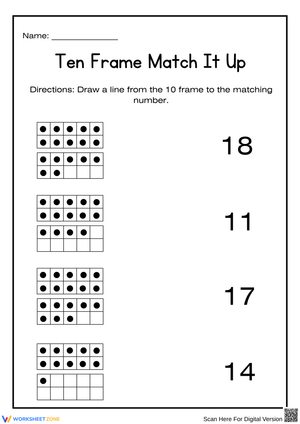
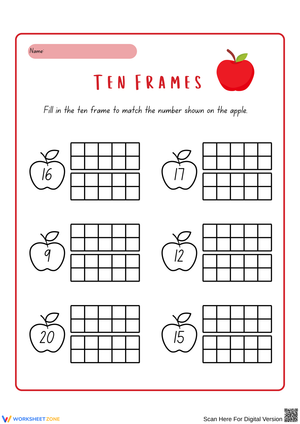
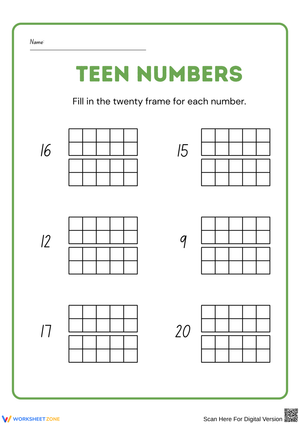
Teachers running small groups often find that place value is where the widest skill gaps appear. Some students can count fluently but still see a two-digit number as a single unfamiliar symbol rather than a combination of tens and ones. Worksheets that pair a visual model, like ten-frames or base-ten drawings, with the numeral help bridge that gap without requiring extra manipulative sets for every student.
Comparing Numbers with Greater Than, Less Than, and Equal To
1.NBT.B.3 covers comparing two two-digit numbers using greater than, less than, and equal to symbols. This standard builds directly on place value understanding, since comparing 42 and 47 requires recognizing that both numbers share the same tens digit and differ only in ones. Worksheets that combine place value review with comparison symbols give students a natural bridge between the two skills rather than treating them as separate topics.
Comparison worksheets work well as a quick formative check. A five-question strip with pairs of two-digit numbers, asking students to fill in the correct symbol, takes under five minutes and gives an immediate read on whether the whole group is ready to move forward or needs another day of modeling.
Hundred Charts and Skip Counting Activities
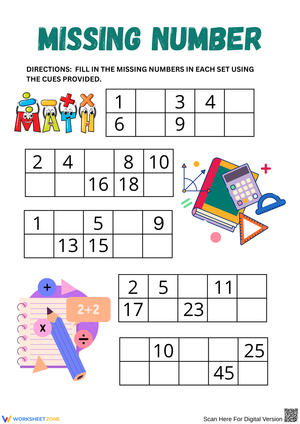
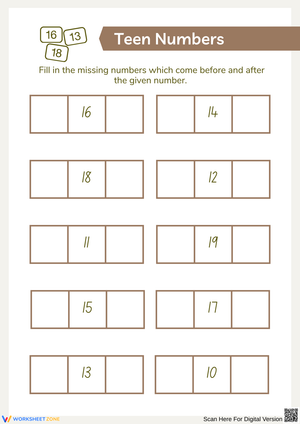
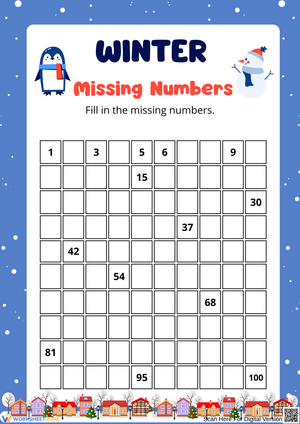
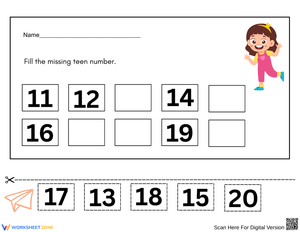
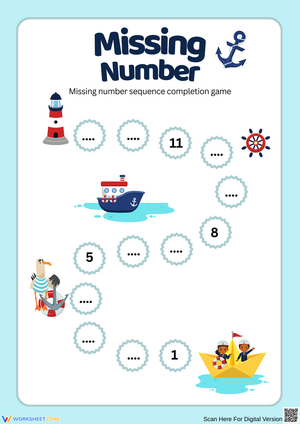
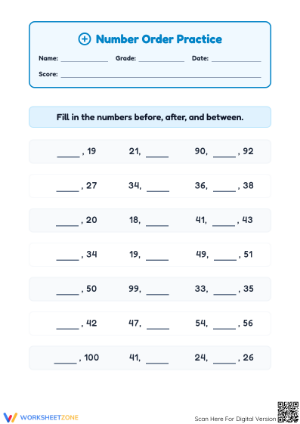
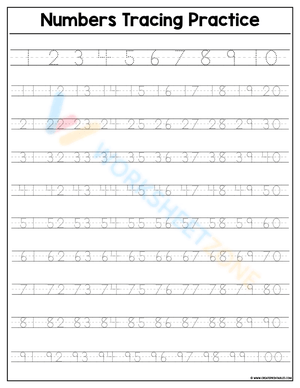
Common number sense worksheet formats include hundred charts with missing numbers, skip counting, expanded form, and number sequencing tasks. Hundred charts with blanks are especially versatile because they can be adjusted for difficulty. A worksheet with only a handful of missing numbers scattered across the chart offers gentle review, while one with entire rows blanked out pushes students toward stronger counting fluency and pattern recognition.
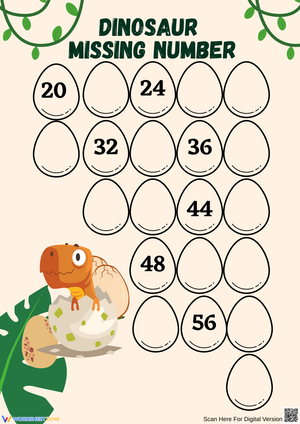
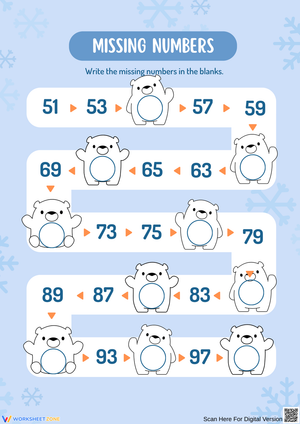
Skip counting worksheets, particularly by twos, fives, and tens, prepare students for later work with arrays and repeated addition. Even though skip counting isn't the primary focus of 1.NBT, it strengthens the same number sequencing muscles that counting to 120 requires, making it a natural pairing activity during a numbers unit.
Differentiating for Intervention and Enrichment
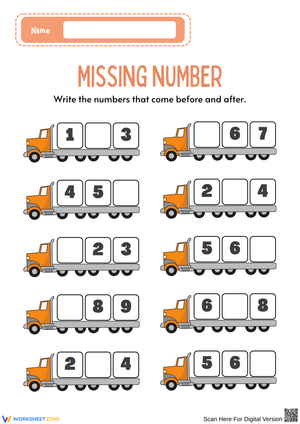
Not every student in a first grade classroom needs the same numbers worksheet on the same day. For intervention groups, choose worksheets that isolate one skill at a time, such as writing numerals from a starting number without any place value component layered in. This keeps the cognitive load manageable and lets you pinpoint exactly where the difficulty lies.
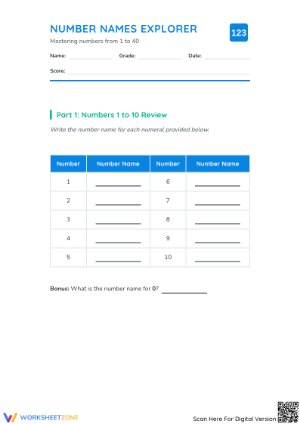
For students ready for enrichment, worksheets that ask for numbers written multiple ways, such as standard form, word form, and expanded form together, add depth without introducing entirely new content. Comparing three-digit numbers, even though it's technically a second grade standard, can also serve as a stretch task for students who have already mastered the first grade range.
Classroom Implementation
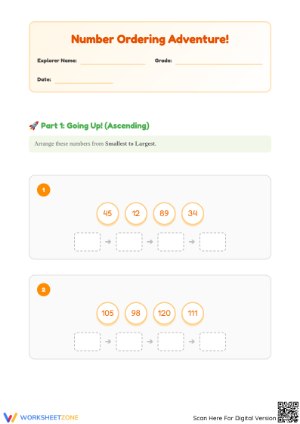
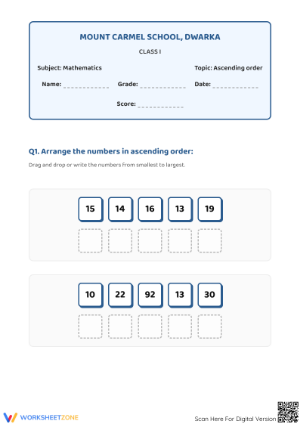
Numbers worksheets fit naturally into several parts of the daily schedule. A short counting or missing-number worksheet works well as a morning warm-up, giving students an immediate, low-pressure task while attendance and other routines happen. During math block, a place value worksheet can follow a hands-on lesson with base-ten blocks, letting students transfer what they built with manipulatives onto paper.
Small-group time is where differentiation matters most. Keep a folder of leveled numbers worksheets sorted by skill, counting range, or difficulty, so you can grab the right one quickly when pulling a group. Rotating through counting, place value, and comparison worksheets across the week ensures no single skill gets neglected, and it keeps students from settling into a routine that only tests what they already know well.
Exit tickets are another strong use case. A single comparison problem or a short sequencing task at the end of a lesson gives a fast read on whether the class is ready to move forward the next day, without requiring a full assessment period.
Frequently Asked Questions
1. What number range should 1st graders master by end of year?
By the end of first grade, students should be able to count to 120 starting from any number within that range, and read and write the numerals accurately, in line with CCSS 1.NBT expectations.
2. How do these worksheets align with Common Core place value standards?
Numbers worksheets that focus on tens and ones, expanded form, and two-digit comparisons directly support 1.NBT.B.2 and 1.NBT.B.3, which cover understanding two-digit numbers as tens and ones and comparing them using greater than, less than, and equal to symbols.
3. How often should number sense worksheets be used in a 1st grade classroom?
Many teachers use a short numbers worksheet daily as a warm-up or exit ticket, supplemented by more focused practice worksheets several times a week during math block or small-group instruction.
4. Can these worksheets be used for intervention or only whole-class instruction?
They work for both. Whole-class versions can introduce or review a skill, while simplified, single-skill worksheets are useful for small-group intervention, and multi-step versions can extend the same skill for enrichment.
5. How do teachers assess mastery of counting and place value skills?
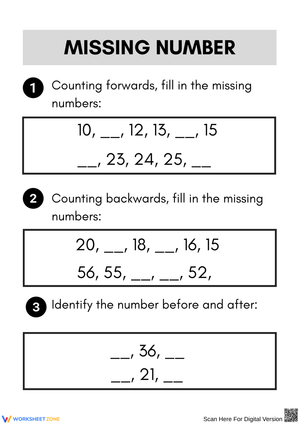
Quick formative checks, such as a five-question comparison strip or a missing-number hundred chart segment, let teachers gauge mastery in just a few minutes and decide whether to move forward or reteach.













 Interactive Worksheet Maker
 Quiz Maker
 Word Search Maker
 Crossword Puzzle Maker
 Word Scramble Generator
 Sentence Scramble Generator
 Handwriting Worksheet Generator
 Name Tracing Generator
 Fill In The Blank Generator