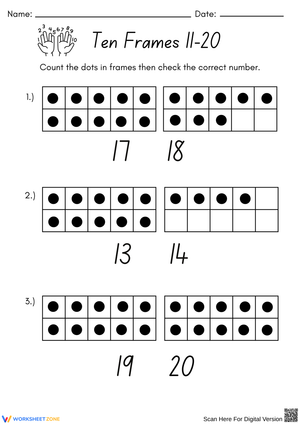
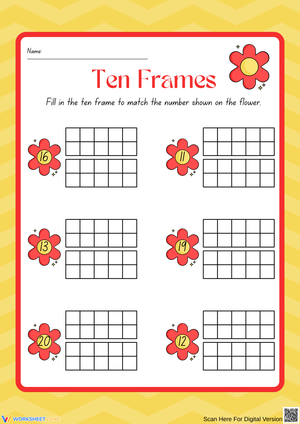
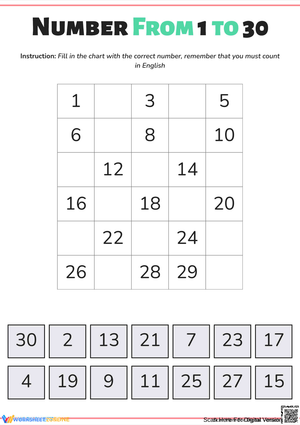
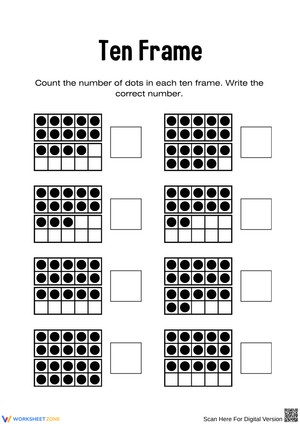
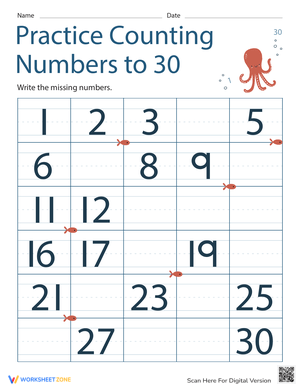
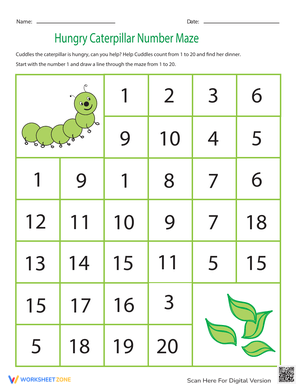
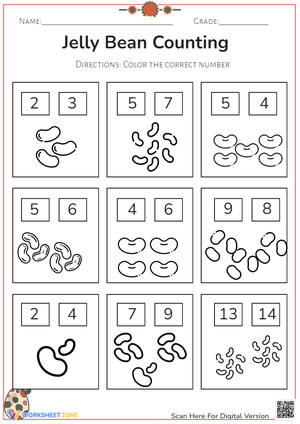
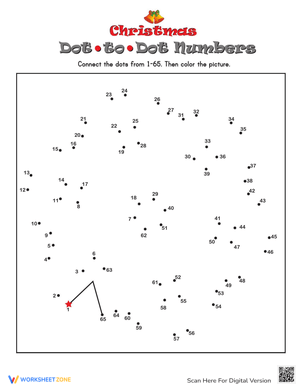
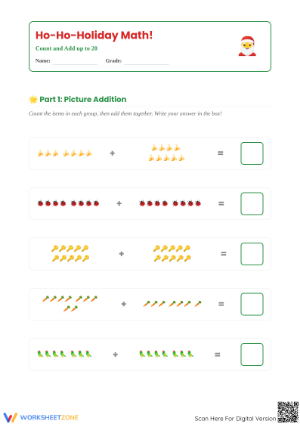
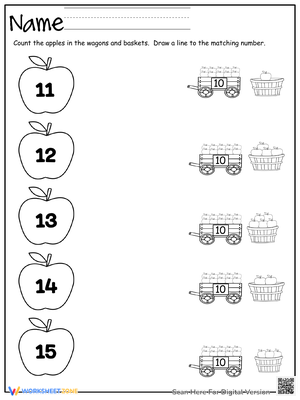
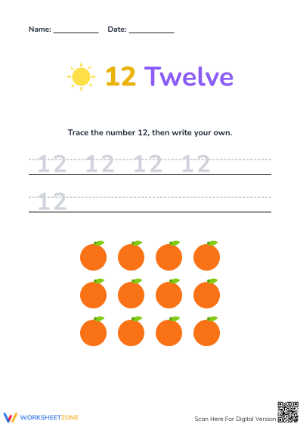
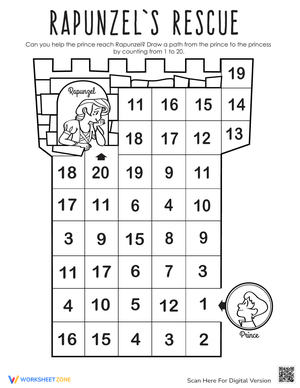
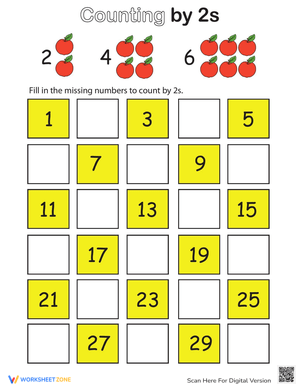
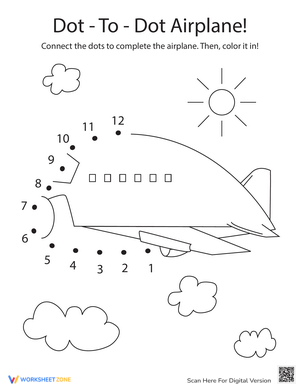
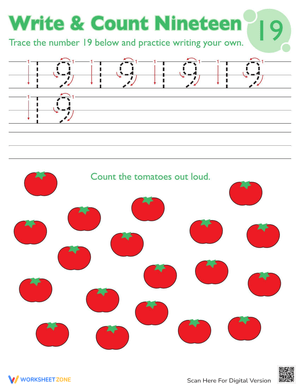
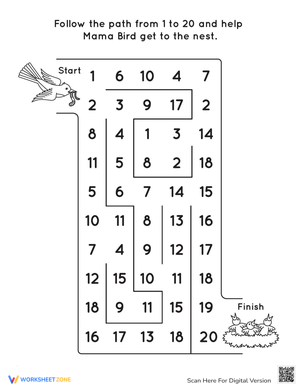
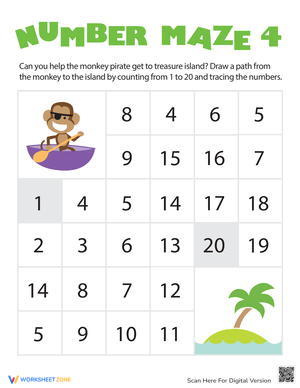
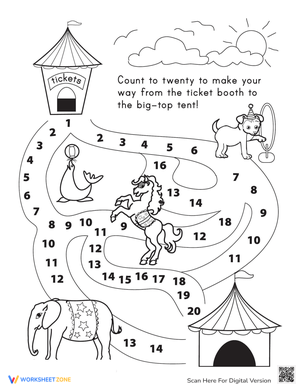
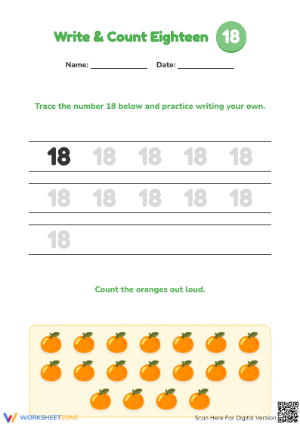
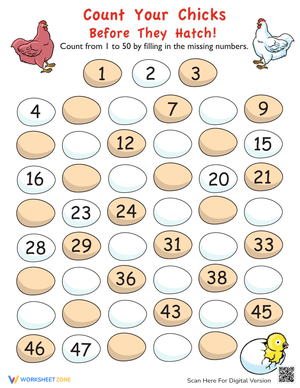
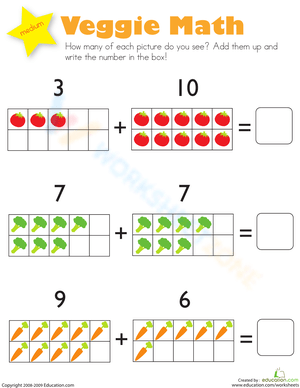
These 1st grade counting numbers 11 20 worksheets cover the full range from eleven through twenty using four distinct visual models — double ten frames, base-ten blocks, number lines, and written numerals — so students encounter teen numbers in multiple forms before the concept solidifies. Each worksheet isolates this specific number range rather than sweeping through all of first-grade math, giving teachers a focused practice tool rather than a catchall packet.
The Linguistic Trap Inside Teen Numbers
Eleven and twelve carry no audible clue that they mean "one ten and one" or "one ten and two." Even thirteen through nineteen, while closer to transparent, place the ten sound at the end of the word — "thir-teen," "fif-teen" — which reverses the order a child hears the digits relative to how they read them on paper. Students working with this range are managing a three-way translation simultaneously: the spoken word, the printed numeral, and the quantity itself. When any one of those representations is shaky, the others pull loose. This is why students who can recite "eleven, twelve, thirteen" in sequence will still hesitate when asked to write 13 from dictation — the count sequence and the numeral are stored differently until enough practice links them firmly.
Skills Each Worksheet Builds
The set covers the following distinct skills, each practiced in its own worksheet:
- Reading and writing numerals 11–20 — students trace, copy, and produce the numerals independently
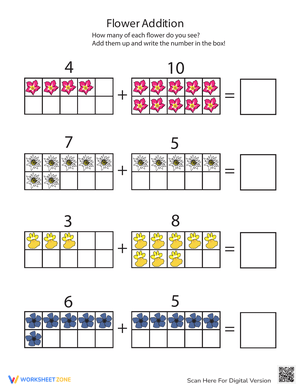
- Ten-frame recognition — students count dots on double ten frames and write the matching numeral
- Base-ten block correspondence — students identify one rod and additional unit cubes, then record the two-digit number
- Number line placement — students locate and label positions between 10 and 20, reinforcing both sequence and relative magnitude
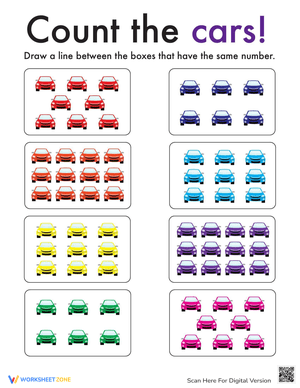
- Count-and-match tasks — students count a set of objects and draw a line to the correct numeral from a field of three distractors
- Decomposition recording — students fill in frames structured as ___ ten and ___ ones = ___, making the place-value logic explicit rather than implied
That last task deserves attention. Writing "1 ten and 4 ones = 14" forces students to articulate the structure they are often just pattern-matching on ten frames. It is the point where shallow understanding becomes visible, and it is the most reliable formative signal in the set.
Standard Alignment
Two standards anchor this number range directly. 1.NBT.A.1 requires students to count to 120 starting at any number, and to read and write numerals within that range — the number line and numeral-writing worksheets address this explicitly. 1.NBT.B.2b specifies that students understand numbers 11–19 as composed of a ten and one, two, three, four, five, six, seven, eight, or nine ones — the ten-frame and decomposition worksheets target exactly this standard. In instructional sequence, 1.NBT.B.2b typically receives direct instruction before students work independently on abstract numeral tasks. Students who skip the conceptual step can write 14 correctly while believing the 1 simply means "one" rather than "one complete group of ten," and that misconception compounds through the rest of the year.
Errors Worth Anticipating Before You Distribute These
The reversal error is the most common and the most informative. A student who writes 71 instead of 17 is not making a random mistake — they are writing digits in the order they hear them in the word "seventeen": seven, then teen. This tells you the student is translating symbol by symbol from the spoken word rather than reading a place-value structure. The same reversal logic produces 31 for 13, 41 for 14, and on through the teens. When you see this pattern in completed worksheets, the intervention is concrete: return to a physical double ten frame, fill it completely, confirm it holds ten, then count on.
A quieter error appears in ten-frame tasks: students who count all twenty dots individually rather than recognizing the filled top frame as ten. These students have the counting skill but are missing unitizing — the understanding that ten individual things can be treated as a single chunk. When you circulate and see a child touching each dot one by one on a full frame, that is the diagnostic moment. Redirect them to the empty bottom frame first, confirm it would hold ten, then transfer that certainty back to the full top frame.
Fitting These Worksheets Into Your Math Block
The ten-frame recognition worksheets work well during the first five minutes of a math block as a daily warm-up — they complete quickly, reset students to the concrete level before instruction, and generate no confusion about what to do. The decomposition worksheets belong later in the unit, after students have handled base-ten blocks in whole-group instruction and can draw on that physical memory when the blocks are no longer in front of them. Running one copy through a laminator or sliding it into a dry-erase sleeve extends it across a week of center rotations, which is worth the two minutes of prep.
For the color-coding technique that makes tens and ones visually distinct: ask students to trace the digit in the tens place with a red crayon and the ones digit with a blue crayon before they begin counting the corresponding objects. This forces a visual pause on the numeral's structure rather than letting students treat 14 as a single shape. It adds about thirty seconds per problem and produces an immediate reduction in reversal errors — enough that it is worth building into the whole-group introduction before students work independently.
Adjusting the Work for Students at Different Points
Students who are still uncertain in the 11–15 range should not move to the full 11–20 set. Pull the worksheets covering only eleven through fifteen, pair them with physical counters students can touch, and ask them to build the number before they write it. The act of physically filling a ten frame to the top and placing extra counters beside it does what the printed page cannot: it makes the group-of-ten tangible before it becomes abstract. Once a student can fill the frame without prompting, the printed representation starts to carry real meaning.
Students who are secure through twenty and ready to move further can use the same ten-frame logic to explore 21–29, where the base-ten structure finally becomes regular and the teen pattern generalizes. Asking these students to explain why 23 follows the same "two tens and three ones" structure as 13 follows "one ten and three ones" surfaces the generalization explicitly. For ELL students whose home language uses a regular base-ten naming convention — Mandarin and Spanish speakers in particular — the irregularity of English teen number names is especially disorienting. Naming this directly ("in Spanish we say diez y tres, which means ten and three — English does the same math but hides it in the word") separates the language obstacle from the math concept and validates what they already know.
Frequently Asked Questions
Why do first graders write 71 instead of 17?
The reversal follows the spoken word. "Seventeen" sounds like "seven" then "teen," so students record the seven first. This is not a vision or attention issue — it signals that the student is working from sound rather than reading a place-value structure. Double ten-frame practice corrects it because the visual model presents the full ten before the ones, overriding the auditory sequence.
How does this connect to what students did in kindergarten?
Kindergarten standard K.NBT.A.1 asks students to compose and decompose numbers 11–19 as ten ones and further ones using objects or drawings. First grade moves that understanding from objects to numerals and extends the range to 120. The 1st grade counting numbers 11 20 worksheets set bridges that transition by keeping the ten frames and visual models students already know while introducing the numeral-writing and decomposition recording that first grade requires.
Are these worksheets usable in math intervention or RTI settings?
Yes. The ten-frame and base-ten block worksheets are self-explanatory enough for an intervention specialist or paraprofessional to use without a detailed lesson script. The decomposition recording format — ___ ten and ___ ones = ___ — generates a clean written record of exactly where a student's understanding holds and where it breaks down, which supports the data-collection requirements of a tiered intervention cycle.
How should these be sequenced across the unit?
A reasonable progression moves from ten-frame recognition (most concrete, most familiar from kindergarten) through base-ten block correspondence and number line placement, and finishes with decomposition recording (most abstract). The 1st grade counting numbers 11 20 worksheets set is organized so teachers can follow this sequence straight through or pull individual worksheets to match exactly where students currently are rather than starting from the beginning every time.













 Interactive Worksheet Maker
 Quiz Maker
 Word Search Maker
 Crossword Puzzle Maker
 Word Scramble Generator
 Sentence Scramble Generator
 Handwriting Worksheet Generator
 Name Tracing Generator
 Fill In The Blank Generator