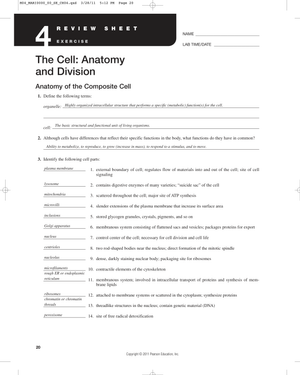
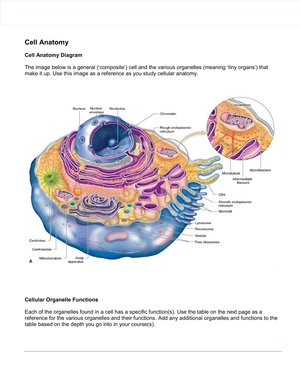
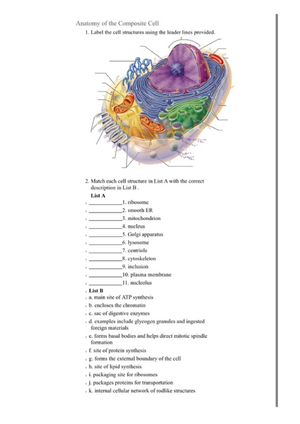
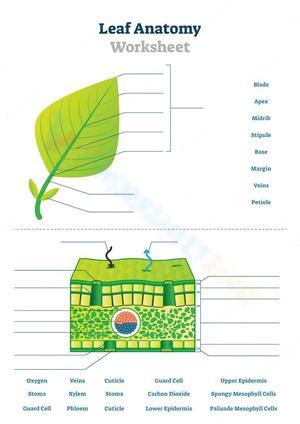
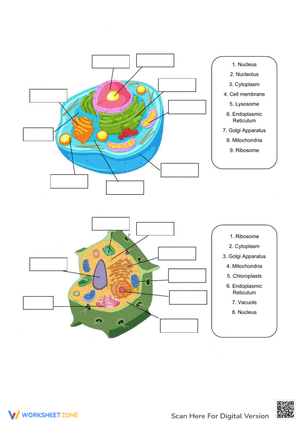
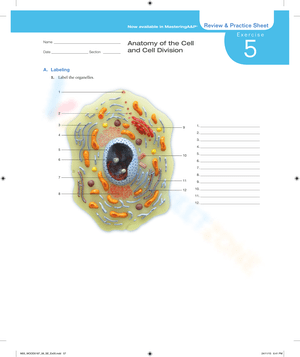
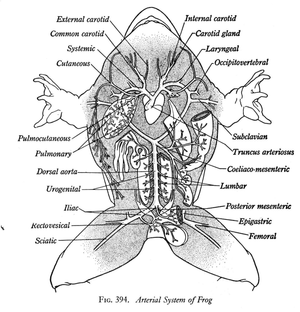
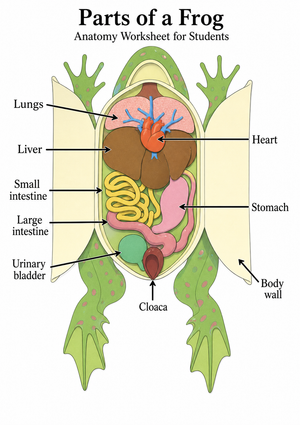
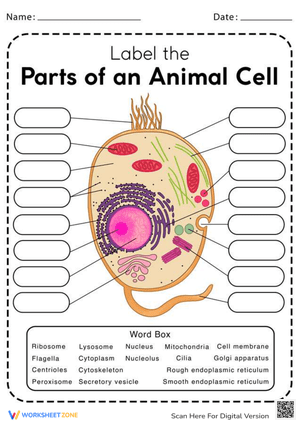
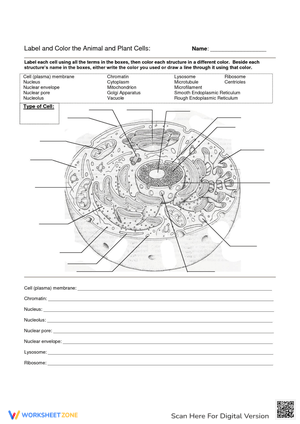
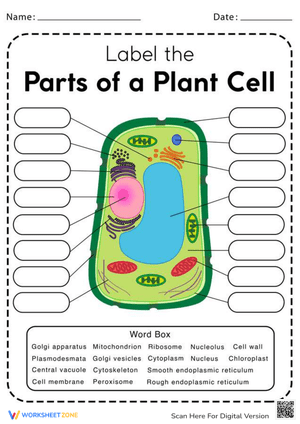
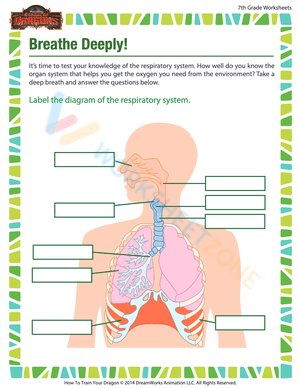
These anatomy printable worksheets for 9th grade give biology teachers a set of activities that push students past surface-level identification and into genuine systems thinking. Ninth graders arrive with scattered prior knowledge — they know the heart pumps blood and the lungs deliver oxygen — but they haven't internalized how those systems regulate each other through continuous feedback. The worksheets in this set address that gap directly, organizing content around major organ systems and the physiological relationships that connect them.
What Each Worksheet Targets
The set moves students through the body's major systems in a sequence that mirrors the NGSS expectation: structural identification first, then functional explanation, then system interaction. Each worksheet focuses on one system or one physiological process rather than attempting an overview of everything at once.
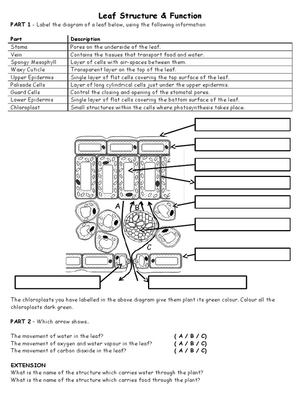
- Skeletal and muscular systems: Students annotate diagrams to explain how bone and muscle shape predicts mechanical role — why the femur's dense shaft resists compression while the rotator cuff's tendon arrangement allows multi-directional shoulder movement.
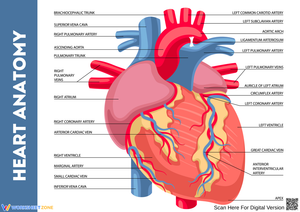
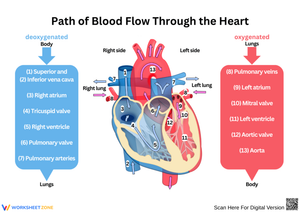
- Cardiovascular system: Tracing tasks require students to follow oxygenated and deoxygenated blood through all four chambers and into both the pulmonary and systemic circuits, committing to directionality with every arrow they draw.
- Nervous system: Brain region diagrams ask students to match structural location to specific function — placing Broca's area in relation to speech production, for instance — rather than shading generic regions with no functional label attached.
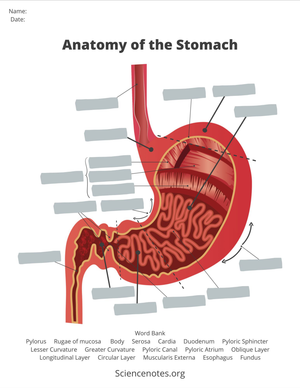
- Digestive and endocrine systems: Activities trace nutrient pathways alongside hormone signals, showing how these two systems communicate to regulate blood glucose. The pairing sets up the feedback loop concept before students encounter it as a formal unit.
- Homeostasis: Short-answer prompts ask students to describe full negative feedback cycles — thermoregulation, blood pressure response, insulin release — using organ system vocabulary rather than vague phrases like "the body adjusts."
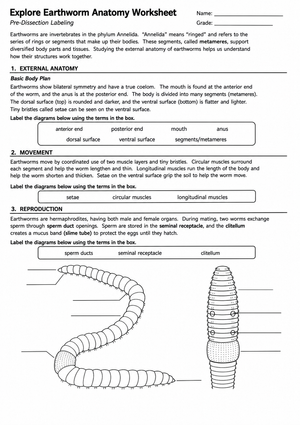
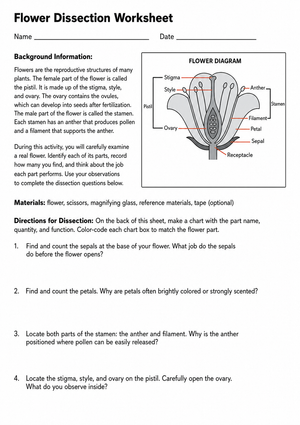
The diagrams are anatomically accurate and drawn at a level of detail appropriate for this grade. They're clear enough to be instructive without the dense label density of a college atlas that overwhelms students who are still building the vocabulary to read one.
Frequent Student Errors Worth Watching For
The most persistent error in cardiovascular work is directionality. Students can correctly name all four chambers of the heart and still draw arrows sending blood from the left ventricle into the pulmonary artery — reversing the entire oxygenation circuit. They've memorized the part names without internalizing the flow logic. The tracing tasks in this set force a direction commitment with every arrow, making that confusion visible immediately rather than at the unit test.
In homeostasis work, students routinely write half a feedback loop. They'll explain that the pancreas releases insulin when blood sugar rises — accurate — and stop there, omitting the subsequent drop in blood glucose and the shutoff signal that returns the system to set-point. The short-answer prompts here explicitly ask for both the activation step and the return to equilibrium, which catches that truncated reasoning before it gets reinforced as a complete answer.
A third pattern surfaces on nervous system diagrams: students consistently conflate the central nervous system with the entire nervous system, leaving peripheral pathways out of any stimulus-response sequence they're asked to trace. The pathway they draw begins and ends in the brain — receptor and effector never appear. Catching this before the class reaches reflex arc diagrams saves real re-teaching time later.
Standard Alignment
These resources align directly with NGSS HS-LS1-2, which asks students to develop and use a model to illustrate how the hierarchical organization of interacting systems provides specific functions within multicellular organisms. In classroom terms, that standard means students must move from "the kidney filters blood" to explaining how the kidney, cardiovascular system, and endocrine system coordinate to regulate fluid balance and waste removal. The anatomy printable worksheets for 9th grade in this set are organized around exactly that progression — structural identification first, functional explanation second, and system interaction third — so the sequence of tasks mirrors the intellectual demand the standard describes.
Teachers in states using NGSS-adjacent frameworks will also find these resources support the science and engineering practice of constructing explanations, particularly in the short-answer and case-study tasks that require written reasoning rather than labeled diagrams alone.
How to Build These Worksheets Into Your Lesson Plans
The labeling tasks work well as Monday warm-ups when opening a new system unit. Putting five to seven unlabeled structures in front of students at the start of the week surfaces prior knowledge gaps immediately and tells you what needs re-teaching before the week's instruction advances. These are also a natural fit for the last ten to twelve minutes of a period when the main activity has closed and launching a new concept doesn't make sense — the task is focused, requires no setup, and keeps students working until the bell.
The clinical case-study variations — presenting a patient scenario alongside the diagram rather than asking for a straight label — belong mid-unit, after students have enough vocabulary to reason through a hypothesis. Present a scenario with a patient experiencing shortness of breath and an elevated resting heart rate, have students mark their cardiovascular diagram to show which structure might be involved, then ask for a written sentence justifying the choice. That single shift in task design raises the cognitive demand considerably without requiring additional preparation. The anatomy printable worksheets for 9th grade in this set include several of these case-study tasks alongside color-coded cardiovascular tracing activities, and together they give teachers a real-time read on understanding — a student who colors the pulmonary artery red has revealed a misconception that can be corrected before it calcifies.
For exit-ticket use, a single diagram with three short questions attached tells you at the door whether students understood the day's content well enough to carry it into homework or need a brief clarification the following morning.
Adjusting the Set for Different Levels of Readiness
Students who are still building anatomical vocabulary work through the same diagrams with a word bank available — posted on the board or on a reference card at their desk. Removing the word bank for students who are ready shifts the cognitive demand without changing the content or the standard being addressed. No second version of the worksheet required.
For students who finish early, the case-study prompts extend naturally into brief research tasks. After a student hypothesizes which heart valve is failing based on a symptom description, assign a follow-up: find one real condition — aortic stenosis, mitral valve regurgitation — and compare its clinical presentation to their prediction. That extension works with no additional materials; it's a question on the board.
The visual format of these worksheets makes them more accessible for students with text-processing difficulties than paragraph-heavy reading assignments. A clean digestive tract diagram with clear callout lines carries the content more efficiently than three paragraphs of description for many learners who struggle with dense prose. That said, the short-answer sections do require sentence-level writing, so teachers working with students who have expressive language goals in their IEPs may want to offer a sentence frame or accept an annotated diagram in place of a written response for those prompts.
Frequently Asked Questions
Which organ systems get the most depth in this set?
The cardiovascular and nervous systems receive the greatest instructional depth because those are where 9th graders encounter the most complex feedback mechanisms — and where misconceptions are hardest to correct once they settle. Digestive, endocrine, skeletal, muscular, and respiratory systems are all covered, with homeostasis treated as a cross-cutting theme woven through multiple worksheets rather than isolated in one unit. The anatomy printable worksheets for 9th grade here are sequenced so that students meet system-interaction concepts in the cardiovascular unit and carry that analytical framework into every system they study afterward.
Can these worksheets function as assessments rather than practice?
Yes. The labeling tasks work as low-stakes quizzes, the tracing activities serve as performance-based formative checks, and the short-answer prompts translate directly into unit-assessment items when teachers need written evidence of student reasoning. Several diagrams arrive without pre-filled labels, so they move into quiz format without modification.
How do these resources handle the shift from cellular biology to organ systems?
The homeostasis worksheets include prompts that explicitly connect cellular-level events — glucose entering a cell after insulin binds to its receptor — to the organ-system feedback loop that triggered the insulin release in the first place. That bridge is essential at this grade because NGSS HS-LS1-2 specifically requires students to explain hierarchical organization, not just name its levels. A student who understands the organ system without connecting it to cell-level function cannot fully meet that standard, and the short-answer tasks here are written to surface exactly that gap.












 Interactive Worksheet Maker
 Quiz Maker
 Word Search Maker
 Crossword Puzzle Maker
 Word Scramble Generator
 Sentence Scramble Generator
 Handwriting Worksheet Generator
 Name Tracing Generator
 Fill In The Blank Generator