


























Views
Downloads

Printable Flower Dissection Worksheet | Grades 9-11
Paste this activity's link or code into your existing LMS (Google Classroom, Canvas, Teams, Schoology, Moodle, etc.).
Students can open and work on the activity right away, with no student login required.
You'll still be able to track student progress and results from your teacher account.
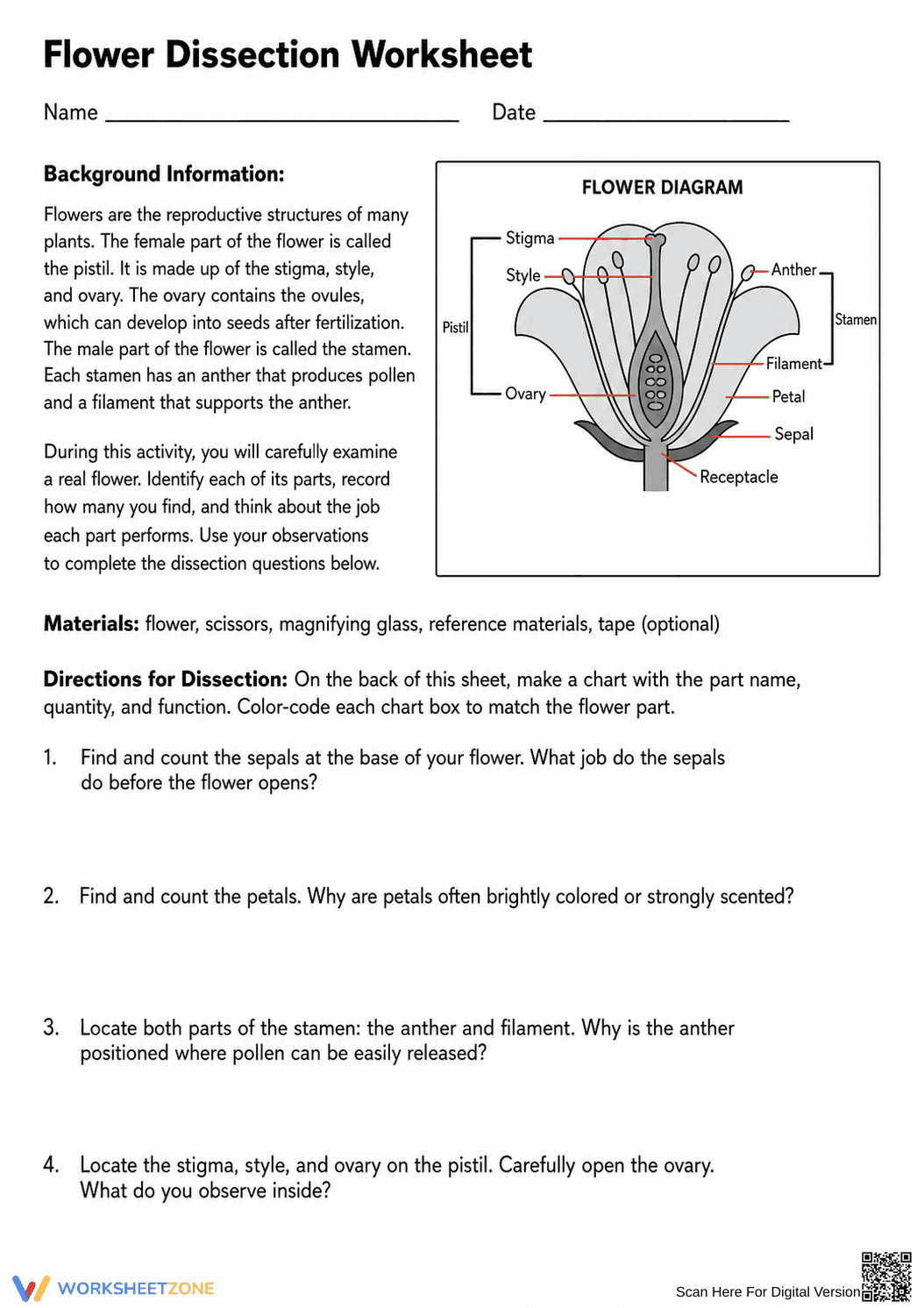
This high school biology worksheet provides a hands-on approach to mastering flower anatomy and plant reproduction. Students will actively dissect a real flower, identifying essential reproductive structures and analyzing their specific functions. By connecting physical structures to biological processes, learners develop a concrete understanding of multicellular organism systems.
At a Glance
- Grade: 9-11 · Subject: Biology
- Standard:
HS-LS1-2— Illustrate interacting systems providing specific functions in organisms- Skill Focus: Flower Anatomy and Dissection
- Format: 2 pages · 10 problems · PDF
- Best For: Hands-on laboratory practice
- Time: 30–45 minutes
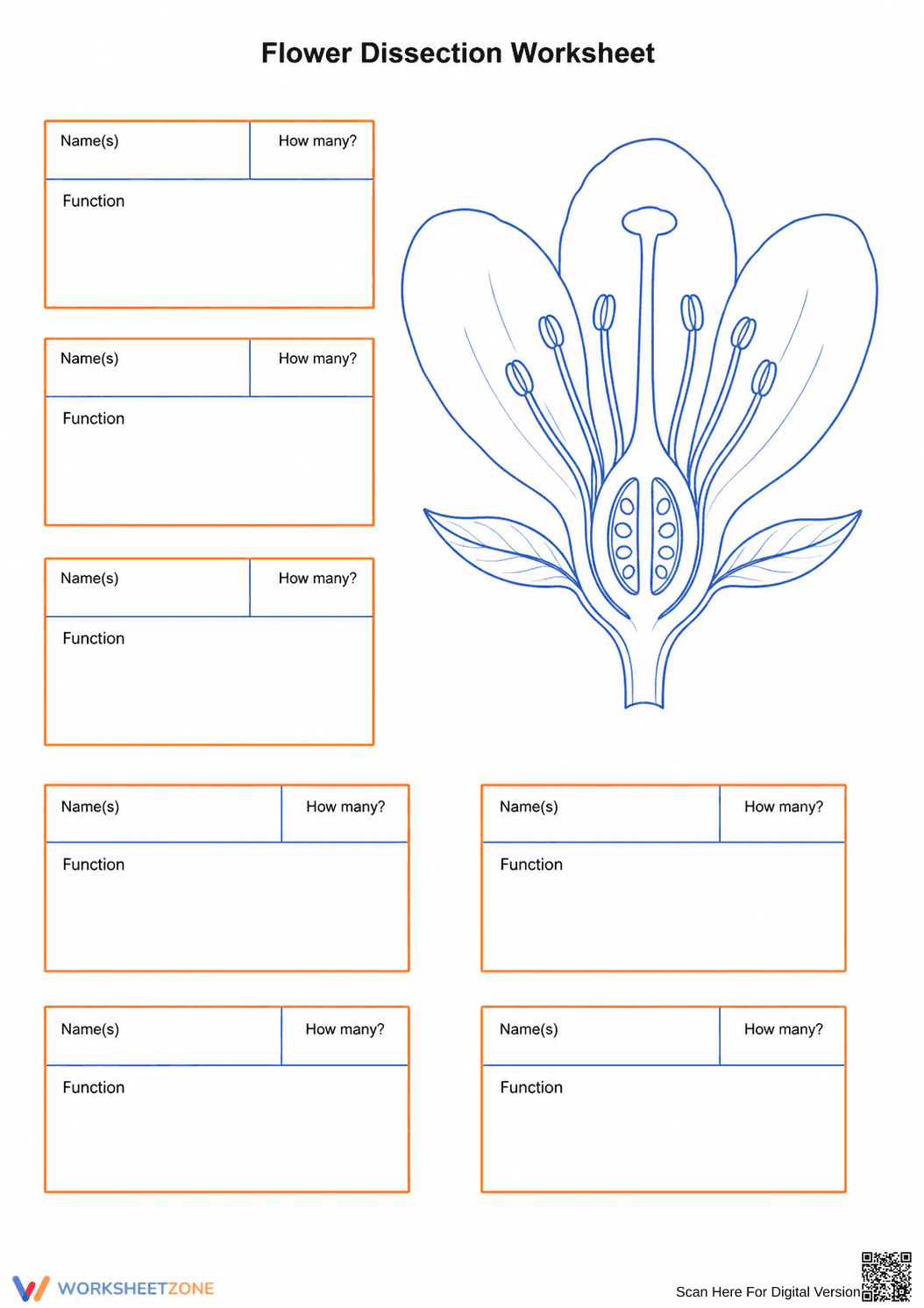
This two-page resource includes everything needed for a successful dissection lab. The first page features background information, a labeled reference diagram, and four guided analysis questions. The second page provides a blank diagram alongside six recording boxes where students document the name, quantity, and biological function of each dissected component.
This resource structures the dissection process:
- Guided practice: Students read the background text and study the labeled diagram to learn the vocabulary.
- Supported practice: Learners follow directions to locate and analyze specific parts of their flower specimen.
- Independent practice: Students complete the chart, categorizing each part's name, quantity, and function.
This gradual-release approach ensures students confidently transition to practical application.
This activity is directly aligned with HS-LS1-2: Develop and use a model to illustrate the hierarchical organization of interacting systems that provide specific functions within multicellular organisms. By dissecting the flower, students physically model and observe how the male and female reproductive systems interact to ensure plant survival. Both standard codes can be copied directly into lesson plans, IEP goals, or district curriculum mapping tools.
This worksheet is highly effective when used during a plant biology or reproduction unit. Teachers can introduce the activity after a brief direct instruction session on angiosperm reproduction, allowing students to immediately apply their new vocabulary. As a formative assessment tip, educators can circulate during the dissection phase, asking students to verbally explain why the anther is positioned where pollen can be easily released before they write their answers. The entire activity typically takes 30 to 45 minutes to complete.
This resource is designed for high school biology students in grades 9 through 11. It naturally supports visual and kinesthetic learners who benefit from tactile, hands-on experiences rather than traditional lectures. To differentiate for students needing extra support, teachers can provide pre-cut flower specimens or a word bank of anatomical terms. This worksheet pairs perfectly with a microscopic slide observation lab or an anchor chart detailing the plant life cycle.
Aligning laboratory activities with HS-LS1-2 ensures students can effectively illustrate interacting systems providing specific functions in organisms. According to a ScienceDirect TpT Analysis, integrating hands-on dissection tasks with structured recording sheets significantly improves long-term retention of complex biological vocabulary. When students physically separate and categorize the stamen and pistil, they move beyond rote memorization and begin to understand the evolutionary purpose behind plant structures. This dual approach of physical manipulation and written reflection caters to multiple learning modalities, reinforcing the hierarchical organization of multicellular organisms. By requiring learners to document both the quantity and function of each anatomical part, educators can accurately measure student comprehension of reproductive systems. Utilizing targeted, standards-based lab worksheets provides a reliable framework for developing critical scientific observation skills in the secondary classroom.


