


























Views
Downloads



Earthworm Dissection Lab Guide | Essential Biology Worksheet
Paste this activity's link or code into your existing LMS (Google Classroom, Canvas, Teams, Schoology, Moodle, etc.).
Students can open and work on the activity right away, with no student login required.
You'll still be able to track student progress and results from your teacher account.
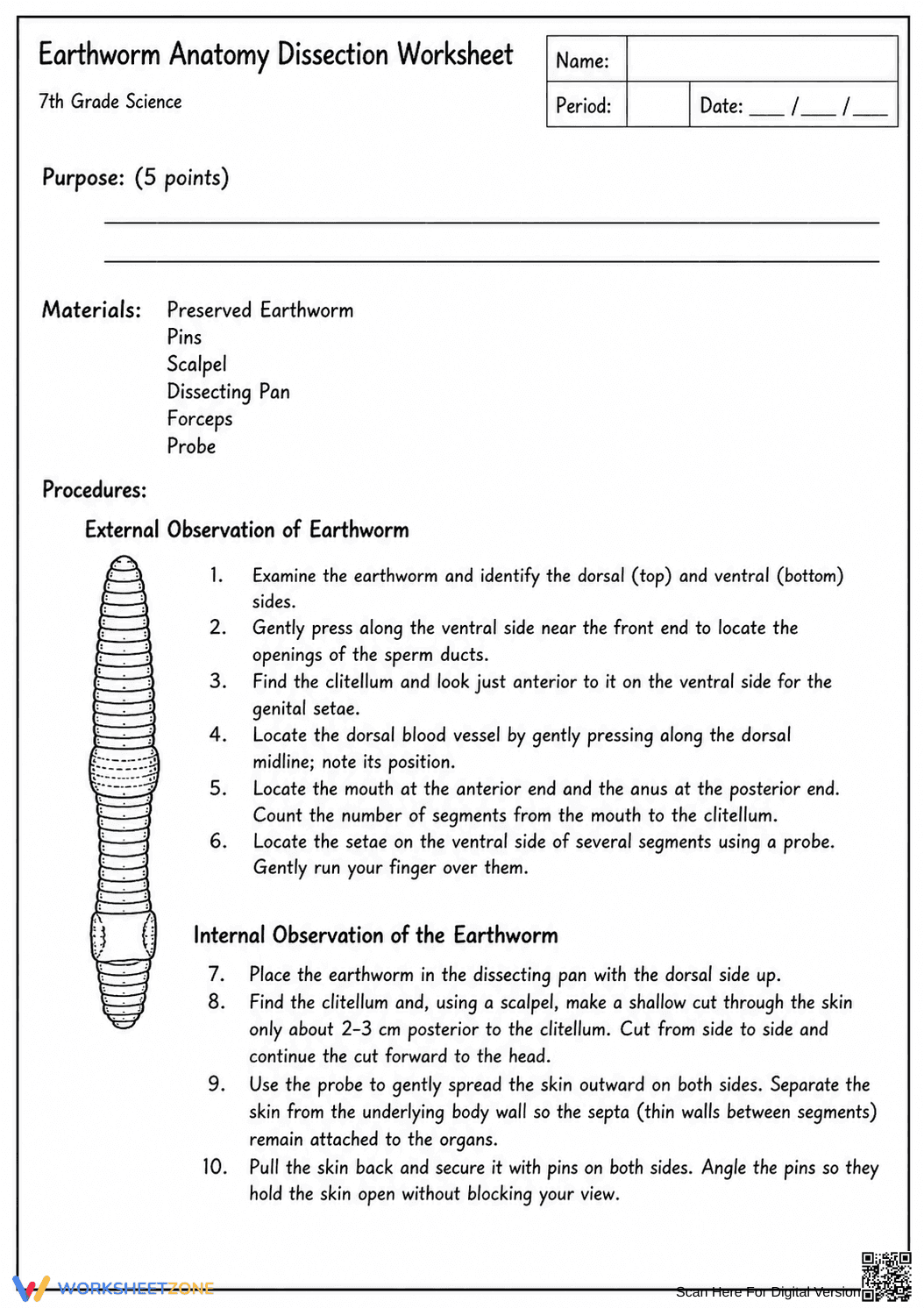
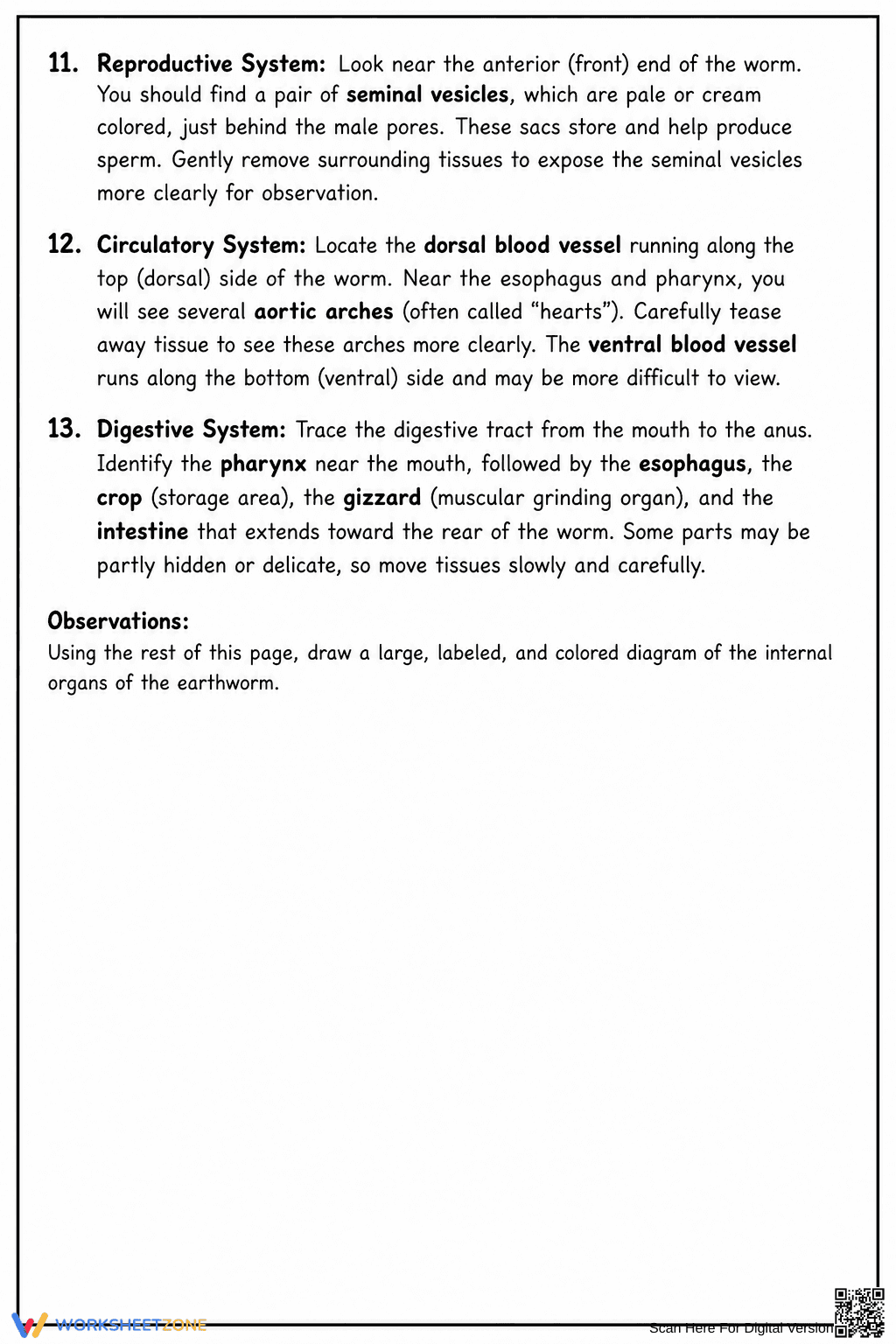
This comprehensive earthworm dissection lab guide provides a structured framework for students to explore annelid anatomy. By following detailed procedural steps, learners identify external features and internal organ systems to understand biological structure and function. This resource ensures students achieve high-level observational accuracy while documenting their findings through scientific sketching and analysis.
At a Glance
- Grade: 9-12 · Subject: Biology
- Standard:
HS-LS1-2— Illustrate the hierarchical organization of interacting systems in multicellular organisms- Skill Focus: Comparative Anatomy & Dissection
- Format: 7 pages · 15 tasks · Lab procedures included · PDF
- Best For: High school biology laboratory sessions
- Time: 45–60 minutes
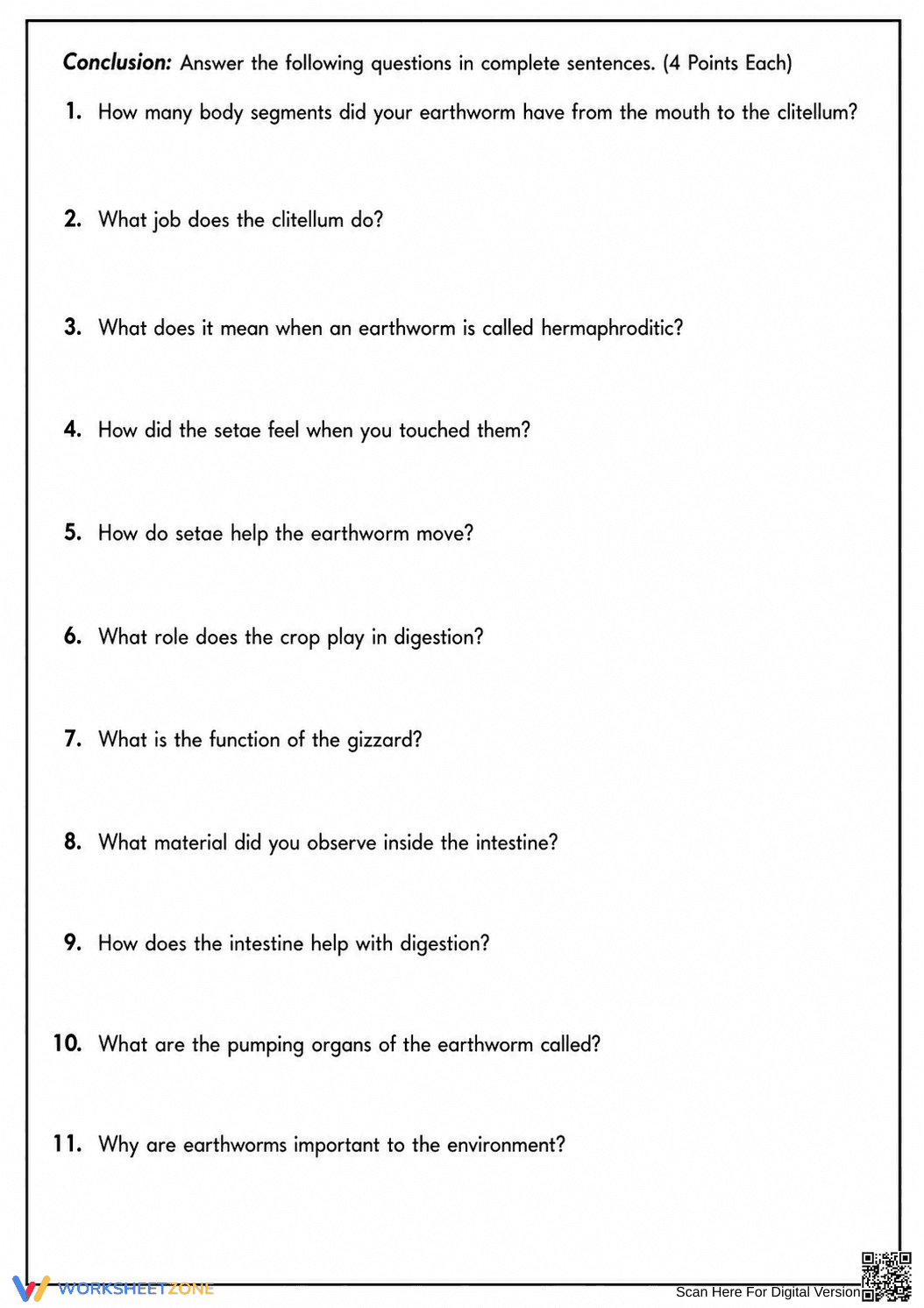
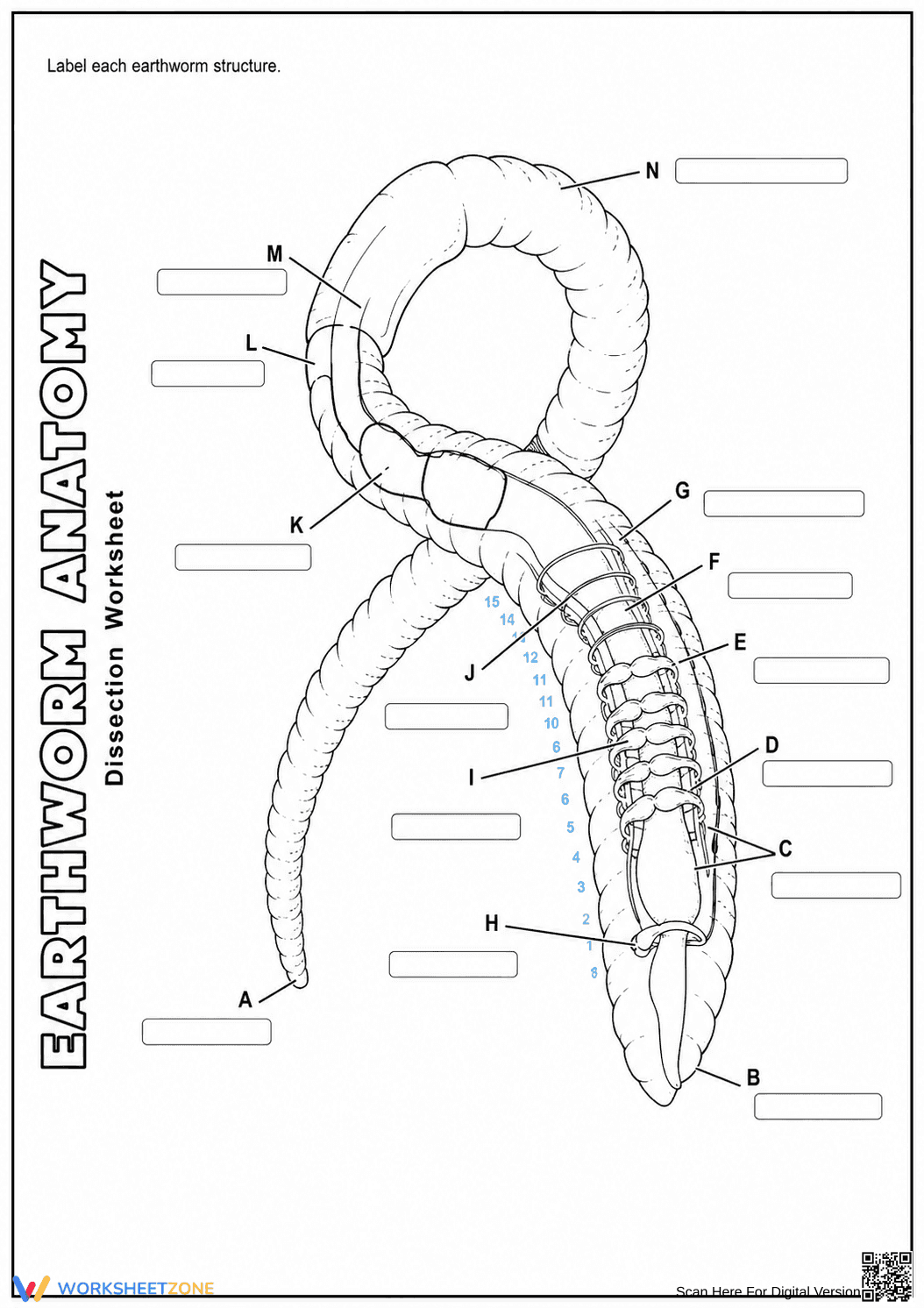
The packet contains seven pages of instructional material, including a materials list, safety protocols, and step-by-step dissection procedures. Students engage with a detailed labeling diagram featuring 14 distinct anatomical structures, from the aortic arches to the ventral nerve cord. The worksheet also includes a vocabulary bank, a dedicated space for biological illustrations, and 15 conclusion questions designed to evaluate conceptual understanding.
The zero-prep workflow for this lab is designed for maximum efficiency. First, print the 7-page packet for each student group (1 minute). Next, distribute the worksheets alongside the dissection kits (1 minute). Finally, facilitate the hands-on observation as students follow the self-explanatory numbered procedures, allowing the teacher to circulate for formative assessment rather than repeating instructions. Total teacher setup time is under 2 minutes.
This resource aligns with `HS-LS1-2`, focusing on how the earthworm's circulatory, digestive, and reproductive systems interact to maintain homeostasis. By identifying the crop, gizzard, and aortic arches, students visualize the hierarchical organization of tissues and organs. Both standard codes can be copied directly into lesson plans, IEP goals, or district curriculum mapping tools.
Use this worksheet during the "Explore" phase of a unit on invertebrates or body systems. It serves as a primary lab document where students record real-time observations. For formative assessment, observe students as they locate the clitellum or setae; their ability to find these structures indicates successful application of the directional vocabulary (dorsal vs. ventral) provided in the text. Expected completion time is 45 to 60 minutes.
This lab is intended for high school biology students but is accessible enough for advanced middle school life science courses. It is particularly effective for kinesthetic learners who benefit from tactile interaction with biological specimens. Pair this resource with a pre-lab video or an anchor chart detailing annelid characteristics for a complete instructional cycle.
According to the RAND AIRS 2024 report, structured laboratory guides significantly improve student retention of complex anatomical terminology compared to passive reading alone. This worksheet facilitates that active engagement by requiring students to map physical observations to the HS-LS1-2 standard. By integrating directional terms like anterior and posterior with physical manipulation of the specimen, the resource reinforces the plain-English skill of identifying interacting organ systems. Fisher & Frey (2014) emphasize that such guided procedures provide the necessary scaffolding for students to transition from basic observation to high-level biological analysis. This 7-page document ensures that the dissection remains a rigorous academic exercise rather than a mere novelty, providing clear evidence of student mastery through its multi-step conclusion and labeling tasks.


