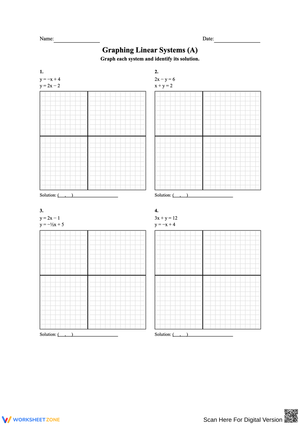
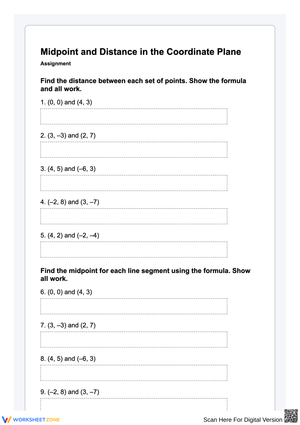
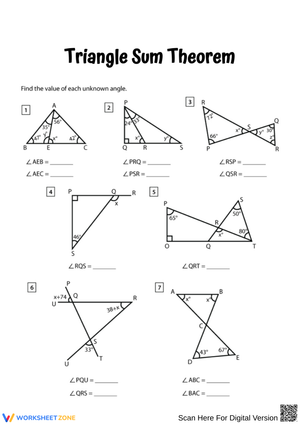
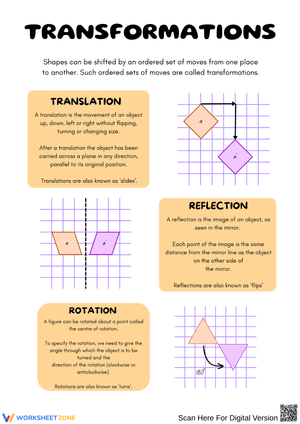
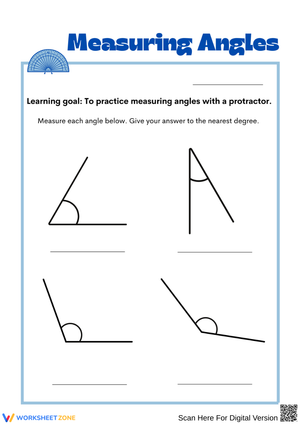
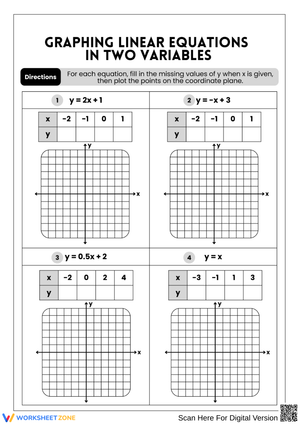
These 7th grade math worksheets resources are organized by topic, so teachers can pull practice that matches the day's lesson goal without sorting through a general packet or rebuilding materials from scratch. The collection covers every major 7th grade strand — ratios and proportional relationships, integer operations, expressions and equations, geometry, and probability — in both focused skill formats and mixed-review formats for use across the full year.
What Each Worksheet Targets by Topic
Grade 7 is the bridge between arithmetic and algebra. Students who left 6th grade comfortable with fractions and ratios now have to operate with negative numbers, write and solve equations, and reason proportionally across tables, graphs, and verbal descriptions. A well-organized 7th grade math worksheets collection maps to those transitions directly — one strand at a time, with enough problem variety to show whether students can apply a skill in more than one context.
- Ratios and proportional relationships: Unit rates, equivalent ratios, percent of change, and proportional reasoning in multiple representations.
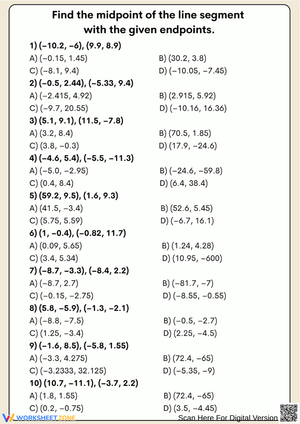
- Integers and rational numbers: All four operations with positive and negative numbers, absolute value, and number line work — the number strand that everything else in grade 7 depends on.
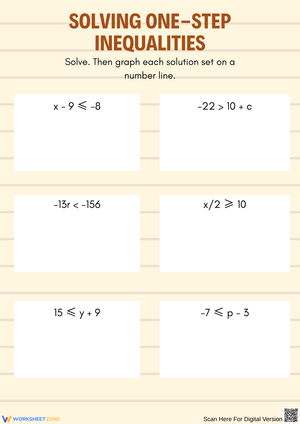
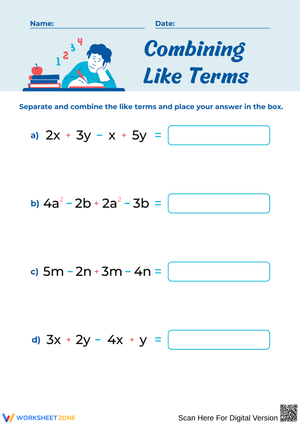
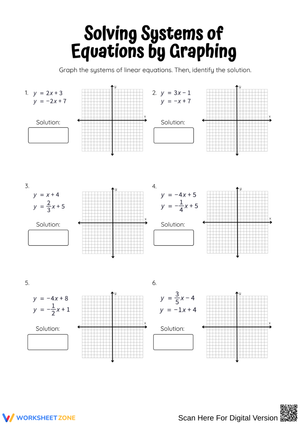
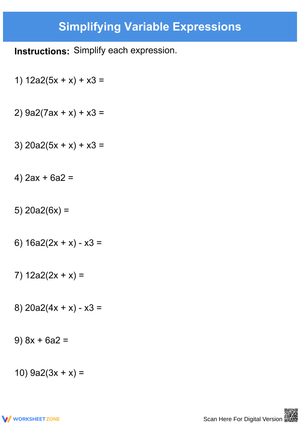
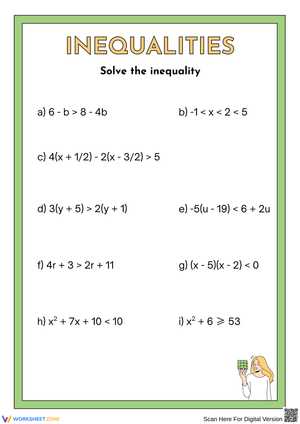
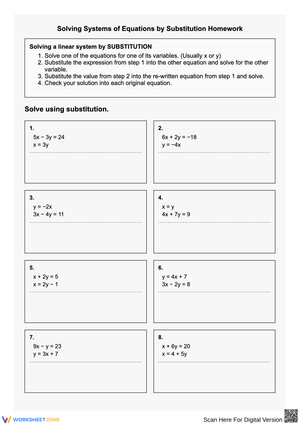
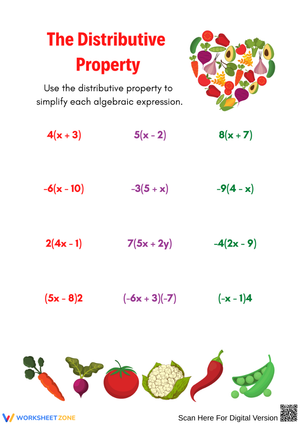
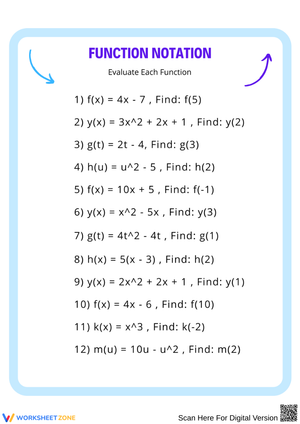
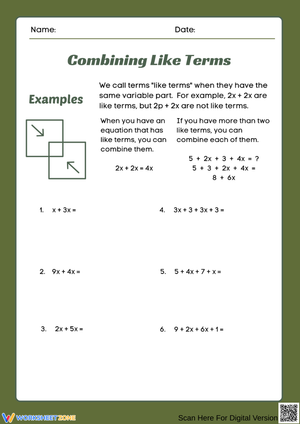
- Expressions and equations: Evaluating expressions through substitution, combining like terms, and solving one- and two-step equations and inequalities.
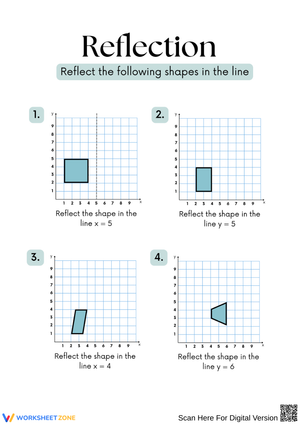
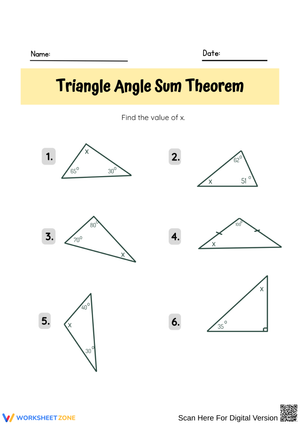
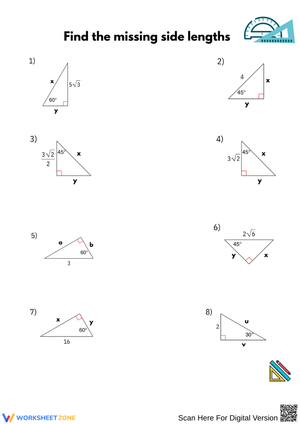
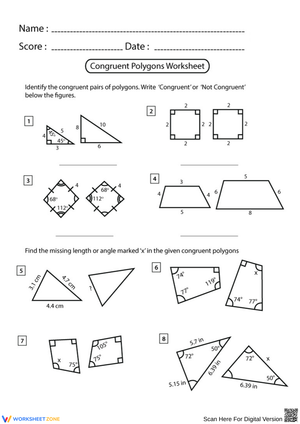
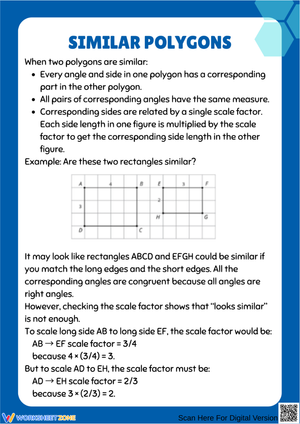
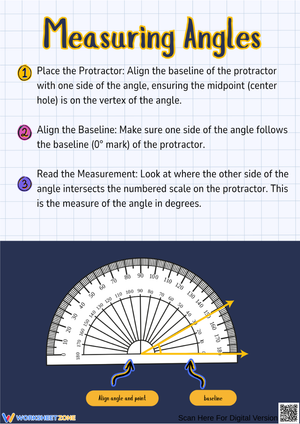
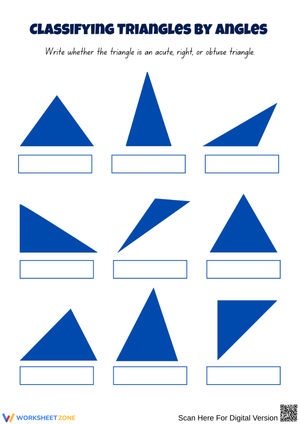
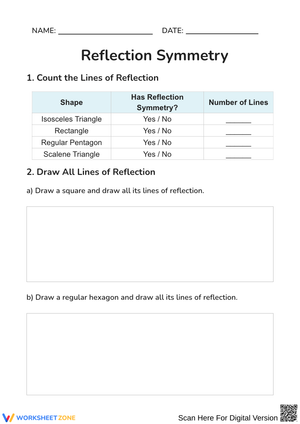
- Geometry: Angle relationships, area, circumference, scale drawings, and surface area — the 7th grade entry points before the formal geometry course.
- Probability and statistics: Simple probability, theoretical versus experimental results, random sampling, and data distributions using mean, median, and range.
- Mixed review: Cumulative worksheets that draw from multiple strands to build long-term retention across units.
Student Errors Worth Catching Before They Stick
Integer operations produce the most persistent errors in grade 7, and they follow a recognizable pattern. Students who correctly identify that a negative times a negative equals a positive in isolation will still write -3 × -2 = -6 when the same multiplication appears inside a longer expression. They apply the sign rule to whatever sign they see first and move on. These worksheets surface that pattern early by embedding integer multiplication inside multi-step problems, so teachers can catch it during practice rather than after collecting and grading the set.
Proportional reasoning breaks down at the ratio setup, not the arithmetic. When computing a unit rate, students often set up the division correctly but then lose track of which quantity belongs in the numerator. A student might get 2.5 miles per gallon when the problem situation describes the relationship the other way — the computation is accurate, the interpretation is inverted. The fastest classroom fix is asking students to label both quantities in their answer, not just write a number. Several items in the ratio worksheets build that labeling step into the problem format explicitly.
In expressions and equations, one error looks like carelessness but follows real logic. Students solve 4x - 7 = 21 correctly, then work x - 4 = 21 by subtracting 4 from both sides. They see a number and reach for something to do with it, pulling a subtraction procedure instead of reading the actual operation. That error is nearly invisible when reviewing completed homework. It shows up clearly during independent practice — which is exactly where these worksheets fit naturally.
Fitting These Worksheets Into Your Week Without Extra Prep
The places printable PDFs fit best are already built into most teachers' days — the first five minutes before attendance, the last eight minutes when a lesson wraps early, the Thursday intervention block after new content has landed. Because each worksheet in this 7th grade math worksheets set targets one strand, finding the right one takes seconds. Keeping a small folder of mixed-review worksheets ready for sub plans is equally low-effort: no explanation of where students are in the unit is required, just math they have already encountered.
A few specific routines worth building in: use a short integer or ratio worksheet as a Monday warm-up to re-engage students after the weekend before introducing new content. During station rotations, designate one station as a worksheet targeting a skill from the previous week while you pull a small group for reteaching — students know the task and don't need you to launch it. For whole-class guided practice, work the first two or three problems aloud together, then release students to complete the rest independently. That two-phase approach — modeling followed by release — is especially effective for equations, where students need to hear the reasoning verbalized before the procedure makes sense on its own.
Standard Alignment
These worksheets align to the Common Core State Standards for Grade 7 Mathematics. The proportional relationships strand targets 7.RP.A.1 (unit rates involving complex fractions), 7.RP.A.2 (identifying and representing proportional relationships), and 7.RP.A.3 (multi-step ratio and percent problems, including percent of change). Integer and rational number worksheets align to 7.NS.A.1 and 7.NS.A.2, which cover all operations with rational numbers — standards teachers often call the grade 7 diagnostic checkpoint, because gaps there carry forward into every algebra strand that follows. Expressions and equations worksheets target 7.EE.A.1 (combining like terms using properties of operations) and 7.EE.B.4 (solving real-world and mathematical problems using equations and inequalities). Geometry worksheets map to 7.G.A.1 (scale drawings), 7.G.B.4 (circumference and area of circles), and 7.G.B.6 (area, surface area, and volume of two- and three-dimensional figures). Probability worksheets align to 7.SP.C.5 through 7.SP.C.7, the first formal standards treating probability as a numerical measure of likelihood.
Teachers in states using revised or state-adapted standards will find the content maps closely to their frameworks. The cluster structure above is also useful for year-long sequencing decisions: the 7.NS worksheets belong early and function as prerequisites for the 7.EE strand, not as optional late-year review. Students who haven't secured rational number operations carry that gap into every subsequent unit.
Adjusting the Set for a Mixed-Readiness Class
Differentiation in 7th grade rarely requires an entirely separate resource for each readiness level. More often it means adjusting volume, support, or problem selection within the same topic so students aren't working on visibly different assignments. When everyone is working on proportional relationships at the same time — even at different depths — whole-class discussion still makes sense and the class doesn't fracture into groups with nothing in common.
- Cut the problem count for students building accuracy. Ten problems completed carefully reveal more about understanding than twenty with compounding errors. Assign the first half of a worksheet to students who need focused, deliberate practice.
- Mark a core set in advance — five or six items every student must complete, with remaining problems serving as optional extension rather than required work.
- Add reference supports at the top of the page: a number line for integer worksheets, the circumference and area formulas for geometry work, or a worked example for multi-step equations. These allow students who can execute a procedure to get started without waiting for teacher redirection every few minutes.
- Use partner verification before collection. Two students comparing answers and resolving a discrepancy catch errors faster than one teacher circulating, and the conversation it generates costs nothing extra.
- Extension through reversal: Ask students who finish procedural items quickly to write a word problem that matches one of the equations they solved. Moving from symbolic to contextual requires deeper understanding than the forward direction alone.
Keeping two versions of frequently used worksheets — a shorter version with the essential problems and a version with a challenge item appended — means students stay on the same topic at the same time. That small structural choice preserves the conditions for whole-class discussion while giving teachers a genuine lever for readiness differences, without making anyone feel visibly pulled aside.
Frequently Asked Questions
What topics do these worksheets cover?
The collection addresses all five major grade 7 math domains: ratios and proportional relationships, the number system (integers and rational numbers), expressions and equations, geometry, and statistics and probability. Mixed-review worksheets draw from multiple domains for cumulative practice near the end of units or before assessments.
Are answer keys included with each worksheet?
Yes. Every worksheet includes an answer key. For teachers running station rotations or self-check routines, that's a practical necessity — students verify their work during practice rather than waiting for the set to be returned. It also makes these materials straightforward to hand to a substitute without pre-grading anything yourself.
How do these worksheets fit into intervention and small-group reteaching?
The strand-by-strand organization makes 7th grade math worksheets resources a natural fit for targeted reteaching. Pull the integer operations worksheet for a group that hasn't secured those skills while the rest of the class works on current-unit practice. Students in the reteach group are still working on grade-level content they need to revisit — not an entirely separate track — which keeps the intervention grounded and straightforward to explain to students and families.
Are these worksheets appropriate for homework assignments?
Targeted worksheets work well for homework assigned the same day the skill was introduced in class. For students who struggle without teacher support nearby, assigning only the core problems — not the full worksheet — reduces the risk of errors being practiced uncorrected overnight. Mixed-review worksheets are better suited for in-class use, where teachers can respond to confusion before it compounds into the next lesson.













 Interactive Worksheet Maker
 Quiz Maker
 Word Search Maker
 Crossword Puzzle Maker
 Word Scramble Generator
 Sentence Scramble Generator
 Handwriting Worksheet Generator
 Name Tracing Generator
 Fill In The Blank Generator