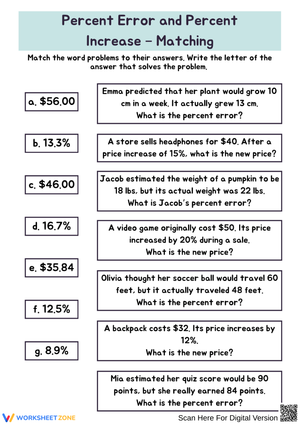
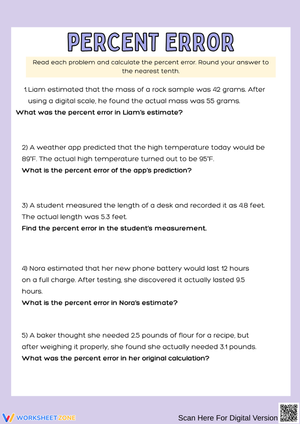
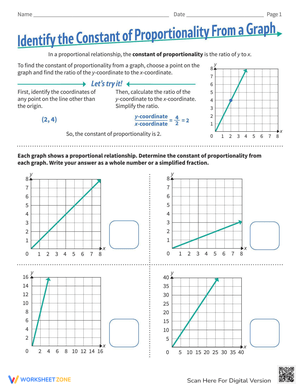
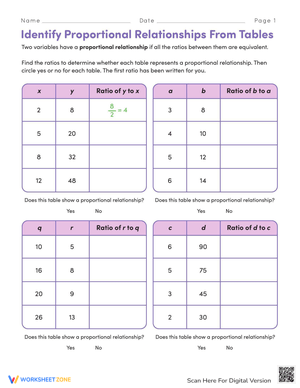
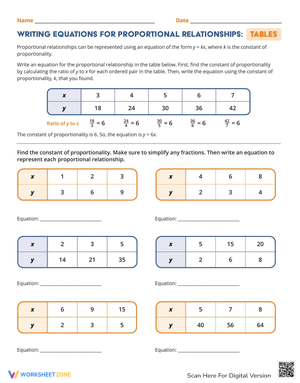
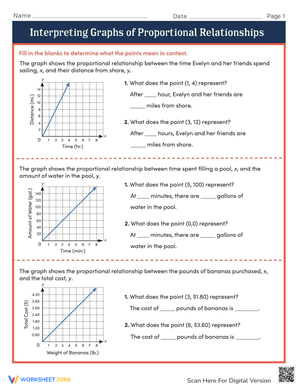
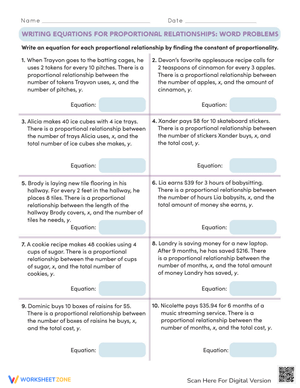
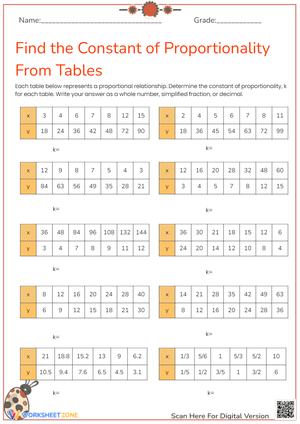
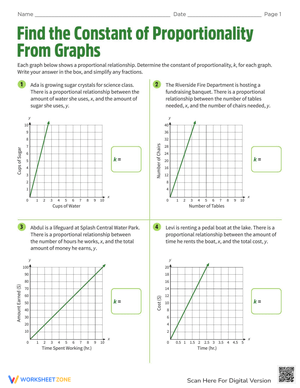
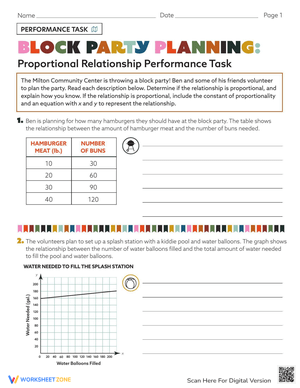
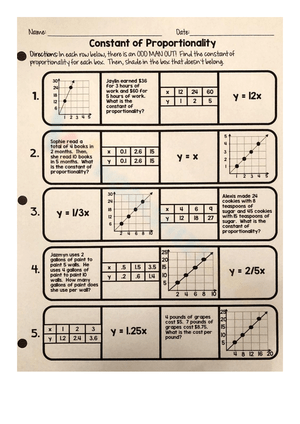
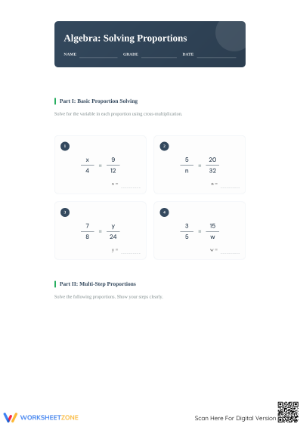
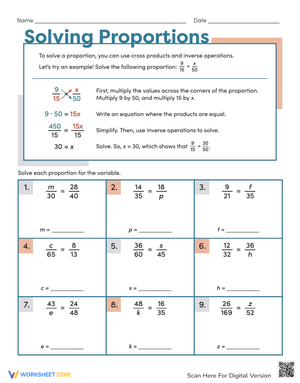
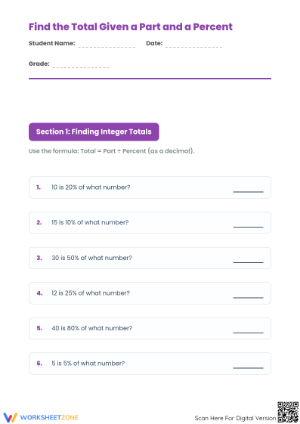
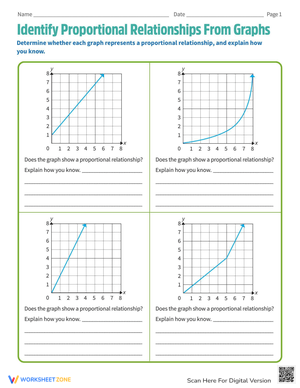
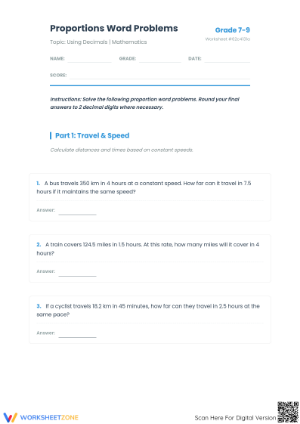
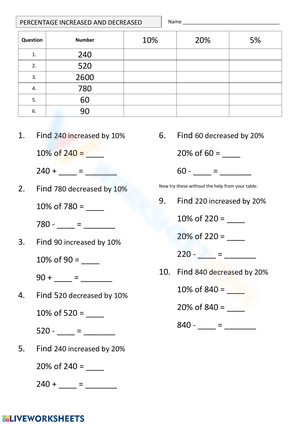
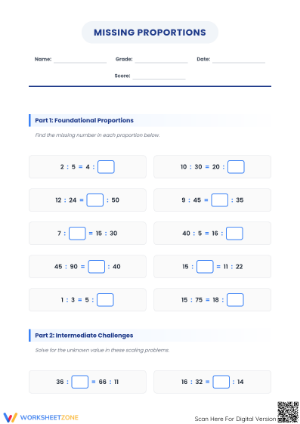
These 7th grade ratios proportions worksheets resources cover the full arc of proportional reasoning taught in grade 7 — equivalent ratios, unit rates, the constant of proportionality, graphing, and multi-step percent applications — and every worksheet includes a printable answer key. The set gives teachers something they can pull from during a follow-up mini-lesson, a small-group reteaching session, or a Friday spiral review block without redesigning a thing.
The Specific Skills Targeted in This Set
Ratio and proportion content in grade 7 is not a single idea but a cluster of connected skills that develop over several weeks. Teachers searching for 7th grade ratios proportions worksheets files typically need practice across multiple skill types — not a single mixed review that combines everything before students are ready for it.
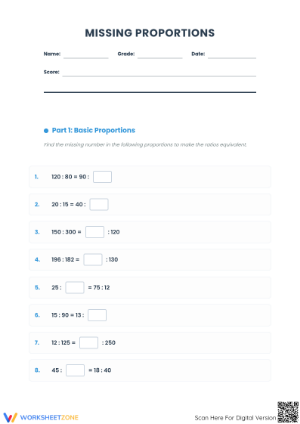
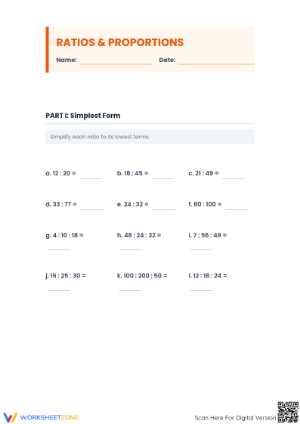
Equivalent ratio worksheets ask students to generate matching ratios using multiplication, division, and tables. Some items use simple number pairs; others embed the skill in context — scaling a recipe, adjusting a paint mixture, reading a map legend — so students practice the mathematical relationship rather than a memorized shortcut.
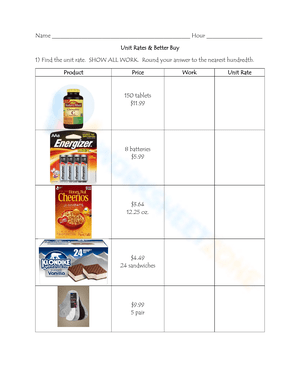
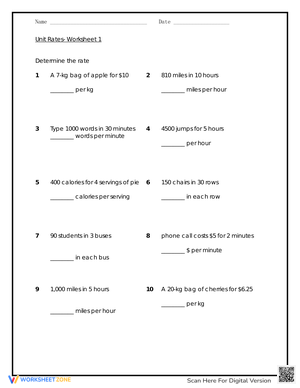
Rate and unit rate worksheets build rate language explicitly. Students calculate cost per item, words per minute, and miles per gallon. They label and interpret each unit rate, which matters because students who skip that step often solve proportion equations correctly later but have no idea what the answer means in the problem's context.
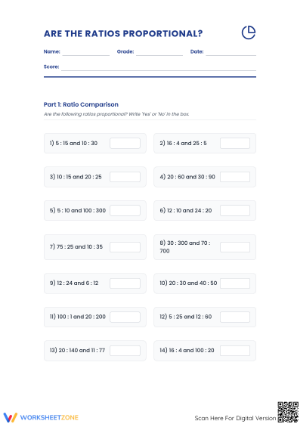
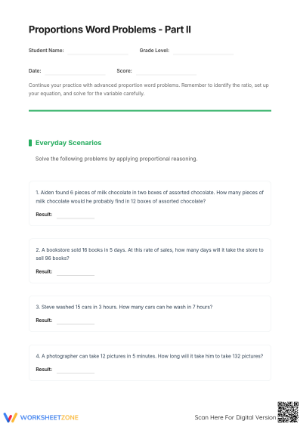
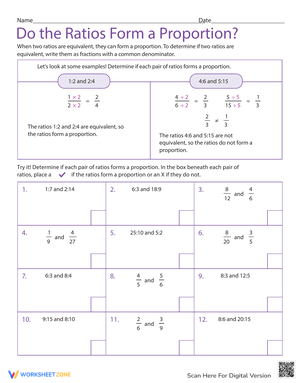
Proportions worksheets go beyond setting up and solving equations. Students determine whether two ratios are equivalent, justify their reasoning using tables, and solve for unknown values in both numeric and word problem form. Including word problem items forces students to practice reading and setting up — the step they most often skip on assessments.
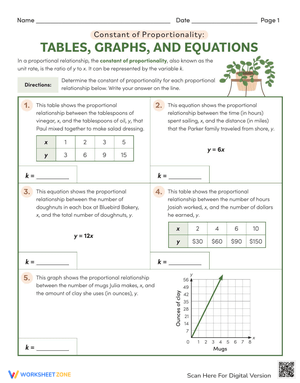
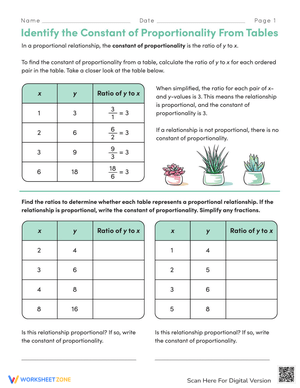
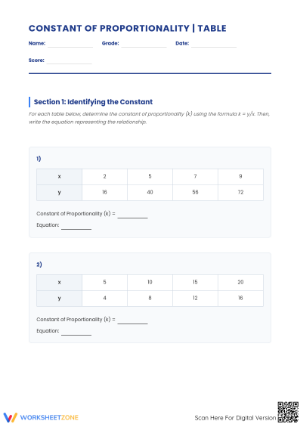
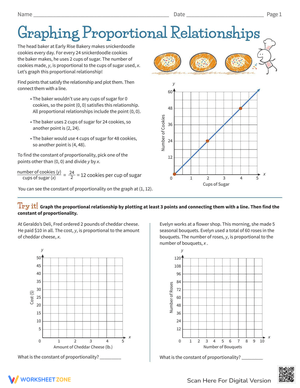
Worksheets focused on representing proportional relationships ask students to move across four forms: tables, graphs, equations, and verbal descriptions. Students complete tables, identify k, plot points, and confirm that a graph is a straight line through the origin. Percent application worksheets — covering discount, tax, tip, and markup — round out the set by connecting proportional reasoning to financial contexts students encounter outside school.
Mistakes Students Make That These Worksheets Surface
Proportional reasoning produces a predictable set of errors, and a well-rounded 7th grade ratios proportions worksheets set exposes them faster than a single-skill drill — specifically because varied item types catch mistakes that uniform formats hide.
The most persistent mistake is additive thinking. Given the ratio table (2, 5), (4, 10), (6, ?), a student using additive reasoning writes 13 — adding 3 to the previous output instead of multiplying by 2.5. This error stays invisible when every problem has the same structure and shows up immediately the moment item types change. That is exactly why mixing tables, graphs, and word problems in the same set matters.
The unit rate direction flip is equally common. A student who correctly calculates 5 gallons per car from "15 gallons for 3 cars" will sometimes write 0.2 when the question asks for cars per gallon — and not stop to check whether that number makes sense. Worksheets that require students to write the unit label after every answer catch this error in a way that number-only answer lines cannot.
On graphing questions, students frequently confirm proportionality by checking that two plotted points share a constant ratio, without verifying that the line passes through the origin. They are not wrong that those two points are in proportion, but they are drawing the wrong conclusion about the overall relationship. Worksheets that ask students to extend the graph or write a one-sentence justification make that second step unavoidable.
Standard Alignment
This set addresses three standards from the CCSS Ratio and Proportional Relationships domain. 7.RP.A.1 requires computing unit rates associated with ratios of fractions — the rate and unit rate worksheets address this directly. 7.RP.A.2 is the most demanding standard in this cluster: students must recognize, represent, and explain proportional relationships using tables, graphs, equations, and verbal descriptions, and they must identify the constant of proportionality in each form. The equivalent ratio, graphing, and proportional relationship worksheets all map here. 7.RP.A.3 covers multi-step percent problems — including percent change, discount, tax, and markups — which the percent application worksheets address.
In most grade 7 classrooms, 7.RP.A.2 demands the most instructional time because the multi-representation requirement is genuinely difficult. Students who can solve proportion equations fluently but cannot confirm proportionality from a table or graph have not yet met the standard. These worksheets reflect that expectation by distributing items across all four representations rather than concentrating exclusively on equation solving.
How to Work These Worksheets Into Your Week
Most teachers use one worksheet as a direct follow-up to a mini-lesson — assigning it within the same class period so students practice the exact skill while it is still fresh. A 15-minute block of independent work on unit rates, right after modeling on the board, produces stronger retention than waiting until the next day. That reflects spaced retrieval principles that grade 7 teachers see play out in student performance regularly.
Bell ringers are another consistent fit. Three to five equivalent ratio or unit rate items work well in the first five to eight minutes of class, before the period's energy falls off. Students can start without waiting for instructions — exactly what teachers need during attendance and the first transition of the period.
Station rotations benefit from sorting worksheets by representation type: one station with tables-based worksheets, one with graphing worksheets, one with word problems. All three can address the same underlying standard while giving students different entry points. This setup also reveals something useful — a student who struggles at the graphing station but not at the tables station has a representation gap, not a reasoning gap. That distinction changes how the teacher plans the next intervention group.
Sub plans are one of the strongest applications. A worksheet with clear printed directions and an included answer key is a fully functional sub plan with no additional materials. The sub can monitor work and check answers without knowing the current unit, and students can proceed without live explanation — which is the standard most sub plans fail to meet.
Matching Each Worksheet to the Right Student Level
A single class period can include students working two grade levels below and one or two above. Keeping worksheets separated by skill makes it straightforward to assign different tasks to different students without making the difference obvious.
Students who need reteaching do best starting with equivalent ratio or unit rate worksheets that use small whole numbers, table formats, and one skill per item. Reducing working memory load — smaller numbers, labeled columns, explicit column headers — lets students focus on the mathematical relationship rather than managing the logistics of the problem. Adding a worked example at the top of each reteaching worksheet provides concrete support students can refer to without asking for help.
On-level students need worksheets that mix formats: some numeric items, a table, and a word problem or two. The mix matters because selecting a strategy — rather than executing the one just demonstrated — is the cognitive move grade 7 students actually need to practice. A page of identical equation problems does not develop that flexibility.
For students ready for extension, the graphing and constant of proportionality worksheets offer natural depth. Rather than assigning extra problems, teachers can add a prompt written on the board or a sticky note: compare two proportional relationships on the same coordinate plane, or explain in writing why a given table does not represent a proportional relationship. These extensions require no additional prep — each worksheet is already in hand.
Frequently Asked Questions
Do the worksheets include answer keys?
Yes. Every worksheet includes a matching printable answer key. Keys show final answers clearly enough to support both teacher grading and student self-checking at a station or after independent work time.
Are the worksheets only equation-based, or do they include tables and graphs?
The set includes numeric problems, tables, coordinate graph questions, and word problems. Some worksheets focus on one format; others combine two or three. The CCSS 7.RP.A.2 standard specifically requires students to work across all four representations, so the worksheets reflect that range rather than reducing everything to equation solving.
Can this set be used for homework?
Yes. Directions are clear enough for students to interpret each worksheet at home without teacher support — which is the most common failure point for math homework sent home mid-unit. Downloading the 7th grade ratios proportions worksheets in advance and sharing the file link lets students or parents print on demand without worrying about formatting issues across different devices or browsers.
What is the best way to use these worksheets for intervention groups?
For intervention, select worksheets that isolate one skill at a time — unit rates only, or equivalent ratios using tables only. Assigning a mixed review to students who are still building foundational concepts tends to backfire; they need repetition within a single representation before moving between them. The set's skill-specific structure makes that kind of targeted selection easy without requiring teachers to cut and paste from multiple sources.













 Interactive Worksheet Maker
 Quiz Maker
 Word Search Maker
 Crossword Puzzle Maker
 Word Scramble Generator
 Sentence Scramble Generator
 Handwriting Worksheet Generator
 Name Tracing Generator
 Fill In The Blank Generator