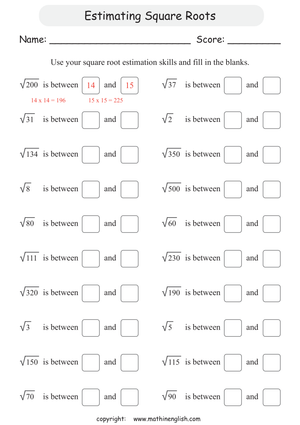
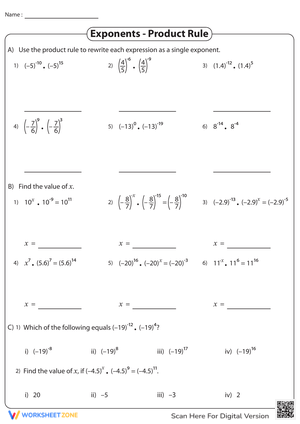
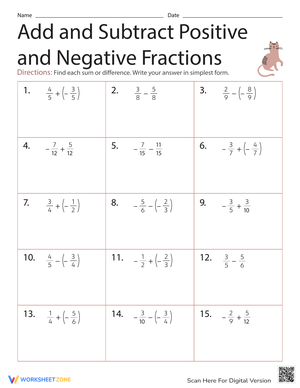
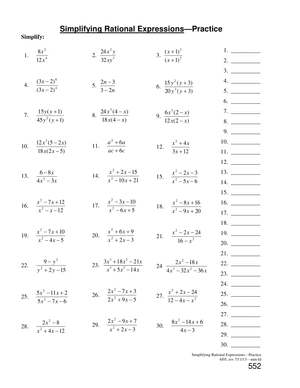
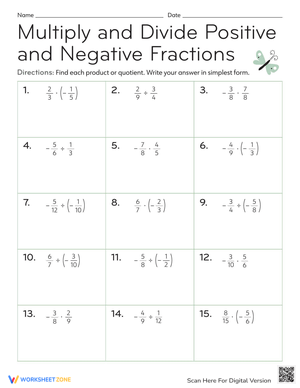
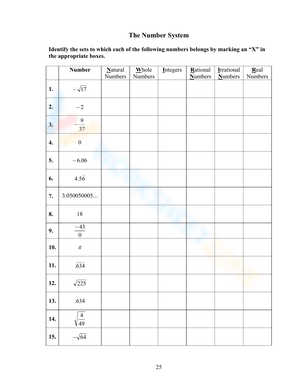
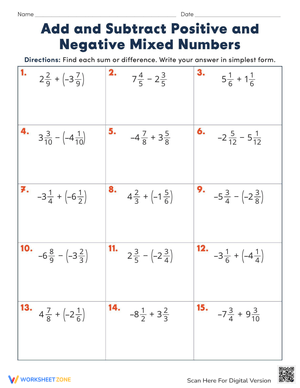
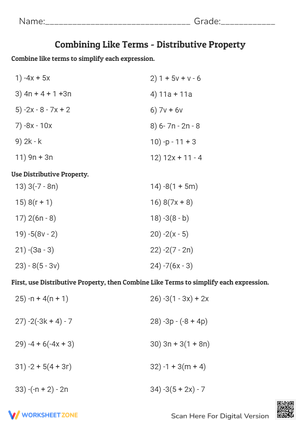
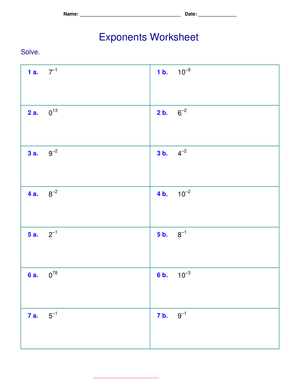
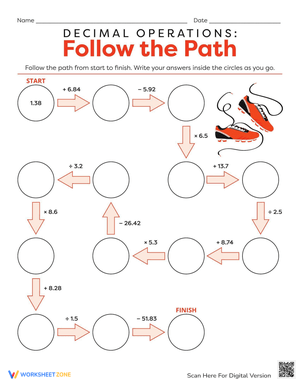
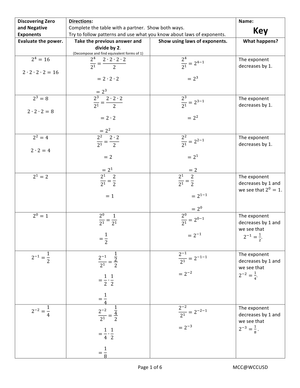
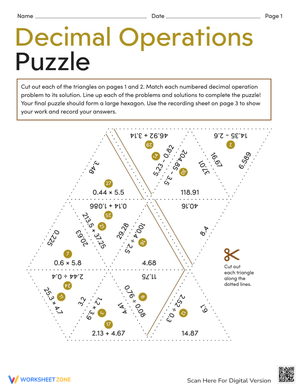
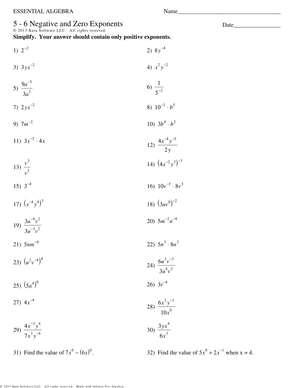
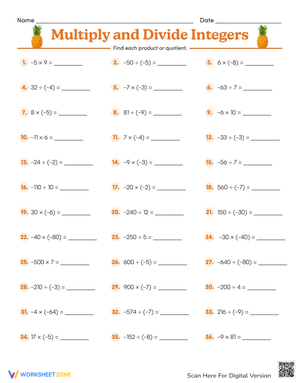
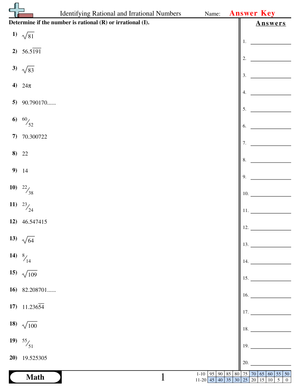
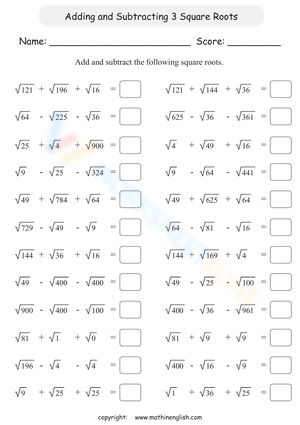
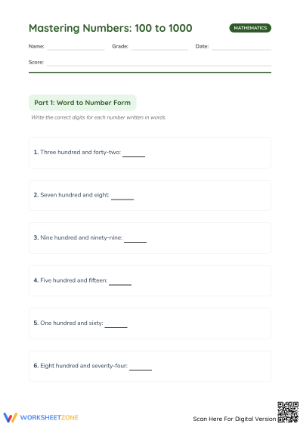
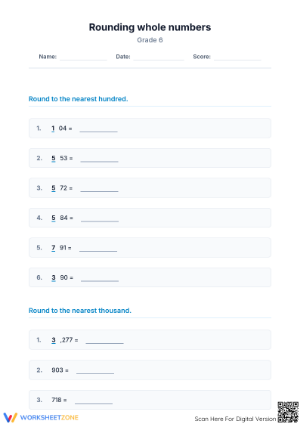
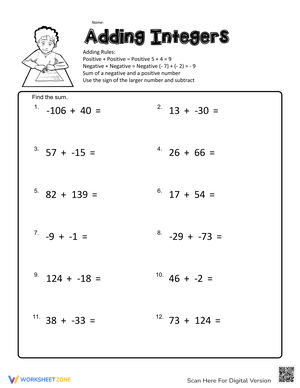
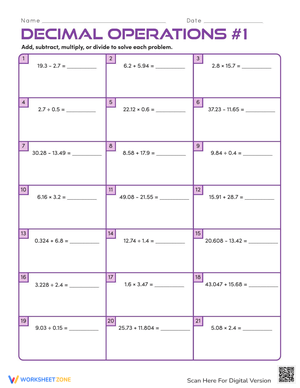
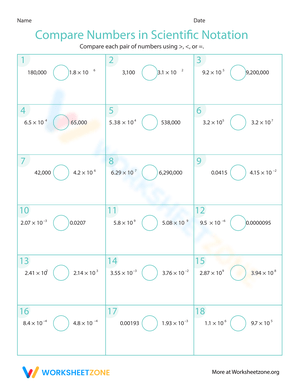
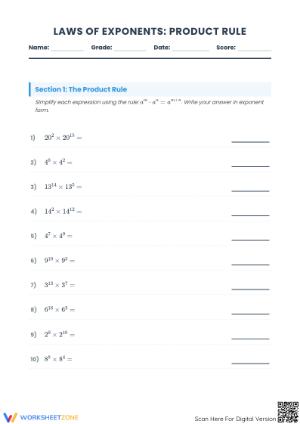
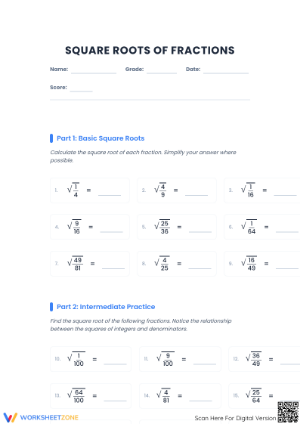
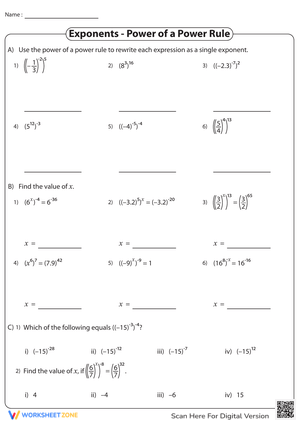
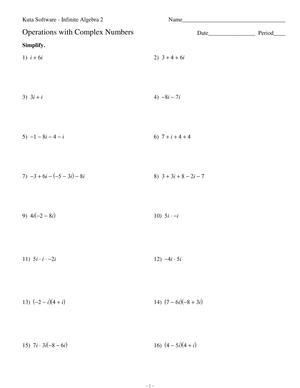
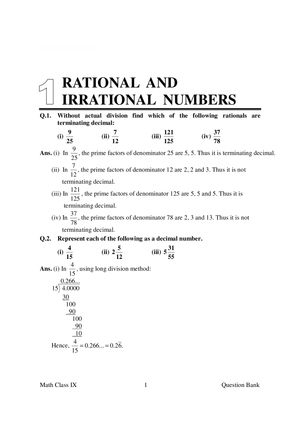
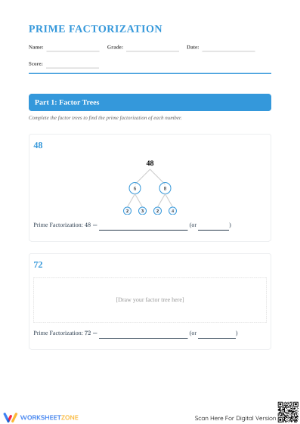
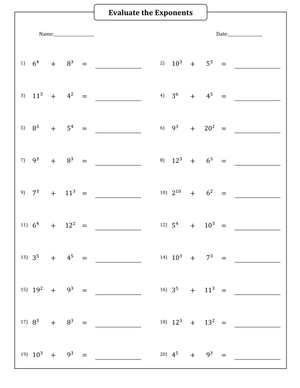
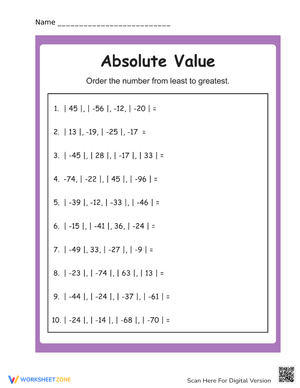
These numbers worksheets for 7th grade give teachers a focused, skill-by-skill path through the integer and rational number concepts that anchor the first unit — and resurface throughout the year in expressions, equations, and proportional reasoning. Each worksheet targets one specific skill: comparing integers, ordering signed rational numbers, applying the rules for multiplying negatives, or solving word problems that involve gains and losses. That specificity is what makes the set practical rather than generic.
The Specific Skills Targeted
The set moves through the major number clusters students need in grade 7. Integer work comes first — comparing, ordering, identifying opposites, and evaluating absolute value, including the distinction between |−8| and −|8|. The worksheets then expand into signed rational numbers, with fractions and decimals placed on a number line and ranked by value. The five main worksheet categories are:
- Absolute value and opposites, including expressions where a negative sign appears outside the absolute value bars
- Comparing and ordering integers, with and without number line support
- Signed rational numbers — fractions, decimals, and mixed representations placed and compared by value
- Operations with signed numbers — addition, subtraction, multiplication, and division, first with integers, then extended to rational numbers
- Word problems using real-world contexts: elevation change, temperature, account balances, and distance above or below a reference point
Operations follow a deliberate sequence within the set. Students use number line reasoning for addition and subtraction before shifting to purely symbolic work. Multiplication and division of signed numbers get dedicated practice because many students learn the same-sign/different-sign rule without understanding why a product of two negatives is positive — and that conceptual gap shows up again later in expressions and equations, by which point the instructional window for sign logic has usually closed.
Frequent Student Errors Worth Anticipating Before You Teach
A few error patterns appear in grade 7 number work consistently enough that naming them explicitly saves instructional time. The most common involves absolute value: students who correctly evaluate |−6| = 6 will often evaluate −|6| = 6 as well, treating the negative outside the bars as irrelevant. They have applied a mechanical rule — "drop the negative" — without understanding that absolute value measures distance and that a negative sign outside the bars still applies after that distance is found. This confusion shows up in student work most clearly when both expressions appear side by side on the same worksheet.
Subtracting a negative is a second persistent sticking point. Students presented with 5 − (−3) frequently write 2, reading the minus sign and the negative sign as redundant rather than as "adding the opposite." This is not carelessness — it comes from years of subtraction meaning "take away," and one explanation rarely resolves it. Repeated practice across several worksheets, with enough spacing between similar problem types, gives teachers the data to see who has internalized the concept and who is still pattern-matching without understanding.
Comparing negative fractions surfaces reliably as a third trouble spot. Students who correctly identify that −3 is less than −1 will then claim −3/4 is less than −1/4 because three-quarters "feels bigger." The number line representations built into several worksheets in the set address this directly — students who place both values and see their distance from zero tend to stop making this mistake faster than those who work symbolically from the start.
Building These Worksheets Into Your Weekly Lesson Plans
Numbers worksheets for 7th grade work well across several lesson structures, but the payoff is highest when each use has a stated purpose. A fluency worksheet at the start of class reactivates prior learning without cutting into direct instruction — five integer comparison problems takes about four minutes and immediately surfaces which students are still reversing inequality signs. A focused practice worksheet assigned right after a mini-lesson gives students time to work while the teaching point is fresh, which is when corrective feedback has the highest return.
The Friday block — which in many 7th grade schedules feels like a planning afterthought — suits a short mixed-review worksheet that covers multiple skills from the week and doubles as informal assessment data. Returning one or two Friday errors at the start of Monday's class, before new instruction begins, creates a low-stakes retrieval moment that reinforces the correction without reteaching from scratch. For small-group intervention, pulling three or four students for ten minutes with a targeted integer operations worksheet while the rest of the class works independently is far easier when worksheets are already printed and skill-labeled.
Standard Alignment
These worksheets address the 7.NS.A domain — the Number System cluster in the Common Core State Standards for grade 7. Standard 7.NS.A.1 covers adding and subtracting rational numbers with an understanding of number line representation and properties of operations. Standard 7.NS.A.2 addresses multiplying and dividing rational numbers, including the extension of sign rules to all cases. Standard 7.NS.A.3 requires solving real-world and mathematical problems using all four operations with rational numbers. In classroom terms, this cluster typically opens the school year and threads back through every major unit that follows — proportional reasoning, expressions, and equations all depend on fluency with signed numbers. Students who leave this cluster with shaky integer or rational number skills carry those gaps forward, which makes returning to number-focused practice well past the initial unit a sound instructional decision, not just review for its own sake.
Adjusting the Worksheets Across a Range of Student Readiness
Numbers worksheets for 7th grade in this set can flex to serve classrooms where students span two or three years of number sense development. Students who need more support benefit from starting with the number line worksheets and absolute value sheets that include visual models. Keeping the arithmetic simple — using values like −4, 2, and −7 rather than −13.5 or −7/8 — separates the conceptual challenge from the computational one, which helps teachers determine whether a student's difficulty is with sign logic or with the arithmetic itself. Those are two different problems requiring two different responses.
Students ready for a stronger challenge can extend any worksheet by writing one sentence explaining why each answer makes sense, or by identifying and correcting a deliberately wrong solution. That kind of error analysis draws on the same conceptual skills as the worksheet itself but demands a higher level of reasoning, so it functions as a genuine extension without requiring a separate handout. A practical classroom move is to assign the same worksheet to the whole group but give one cluster of students a number line to reference and ask the other to work without one — same problems, meaningfully different cognitive demand.
Frequently Asked Questions
Do these worksheets include answer keys?
Yes. Each worksheet comes with a matching answer key. For integer and rational number work especially, having accurate keys matters — negative signs are easy to misread in student work, and teachers cannot reasonably re-solve thirty problems at the end of the day. The keys also support student self-correction routines, which tend to generate better math conversation than simple right/wrong marking and help students notice patterns in their own sign errors.
What is the difference between the integer worksheets and the rational number worksheets in this set?
Integer worksheets stay within whole-number values — positive, negative, and zero — and focus on operations, ordering, opposites, and absolute value. The rational number worksheets go further by introducing signed fractions and decimals, number line placement for non-integer values, and more complex comparisons and operations. Most teachers use the integer-focused worksheets earlier in the unit and layer in rational number worksheets once students have reliable footing with sign rules.
Can I pull individual worksheets from the set for reteaching without following the whole sequence?
Yes. The worksheets follow a typical instructional sequence — foundational integer concepts first, then operations, then rational numbers and word problems — but each one stands on its own. Teachers regularly pull one worksheet for reteaching a single skill, skip ahead to application worksheets when a class is moving quickly, or return to an earlier worksheet for a struggling student weeks after the unit has ended.
Are these worksheets appropriate for intervention groups as well as whole-class practice?
The shorter, skill-focused worksheets in the set work especially well for small-group intervention — they address exactly what needs reteaching without extra material that would slow the session down. The mixed-review and application worksheets fit whole-class practice or cumulative review better. Teachers who use numbers worksheets for 7th grade by pulling specific worksheets for specific groups tend to get more mileage from the set than those who assign every worksheet in sequence regardless of where students actually are.













 Interactive Worksheet Maker
 Quiz Maker
 Word Search Maker
 Crossword Puzzle Maker
 Word Scramble Generator
 Sentence Scramble Generator
 Handwriting Worksheet Generator
 Name Tracing Generator
 Fill In The Blank Generator