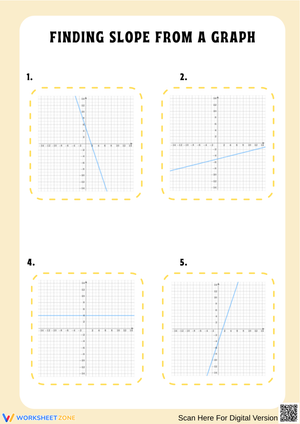
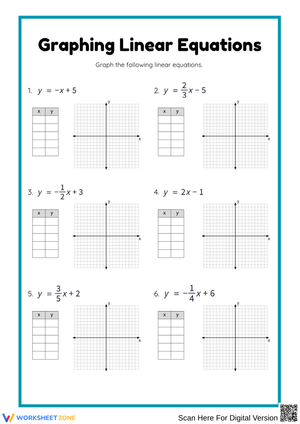
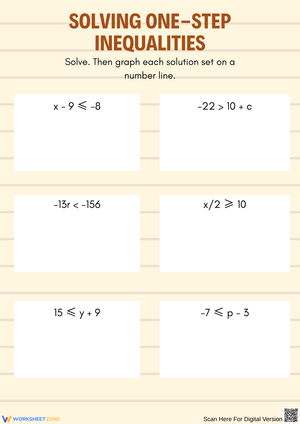
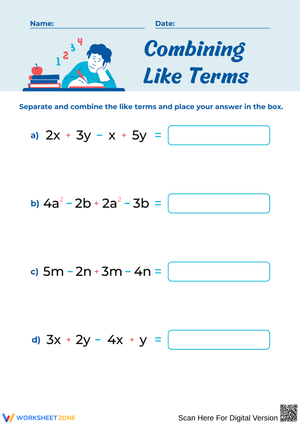
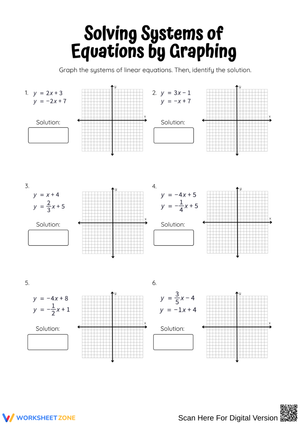
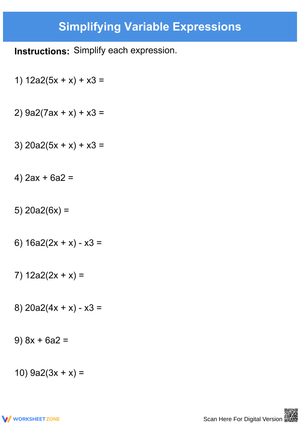
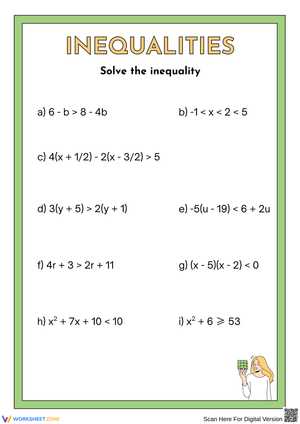
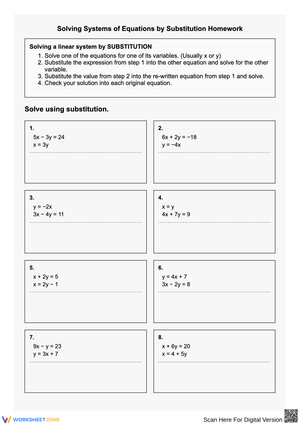
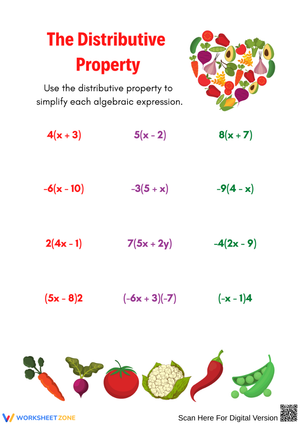
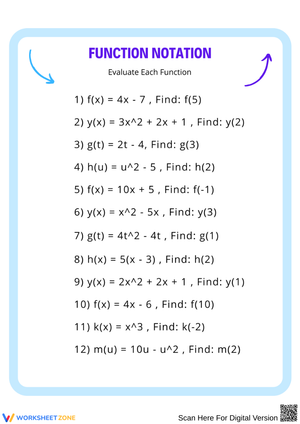
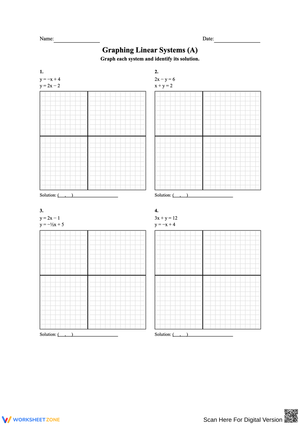
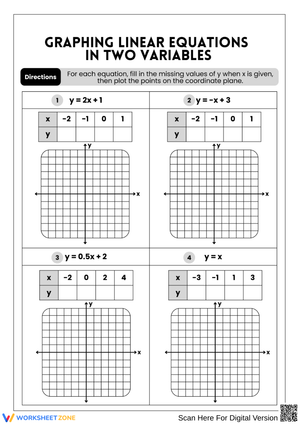
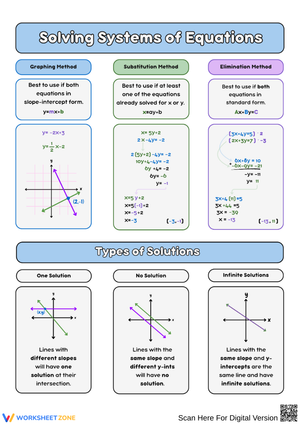
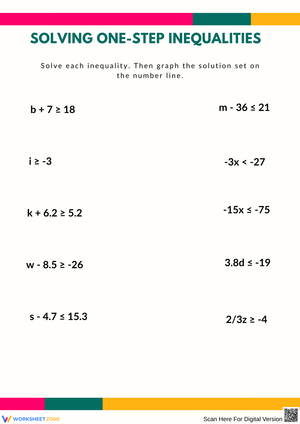
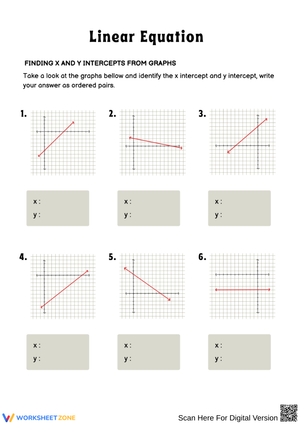
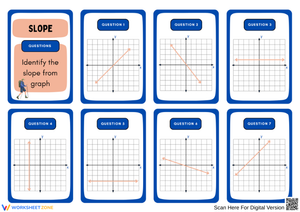
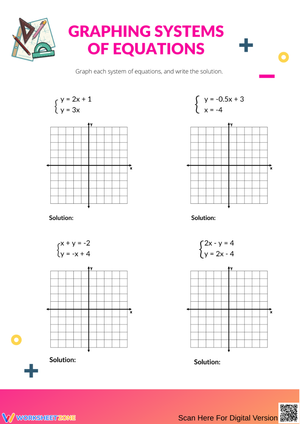
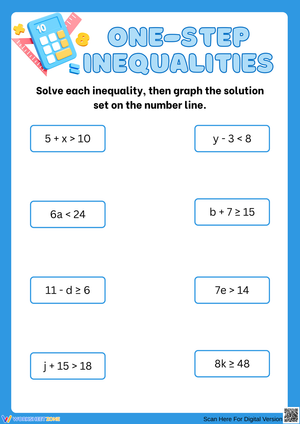
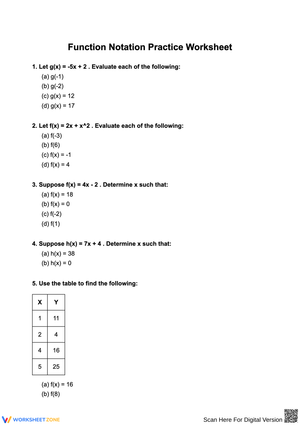
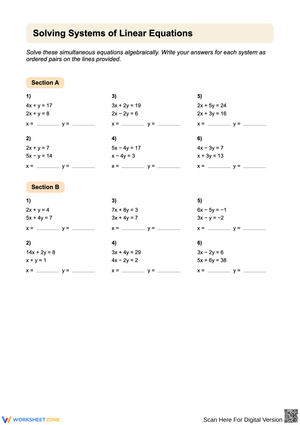
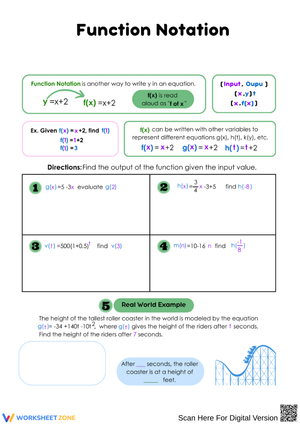
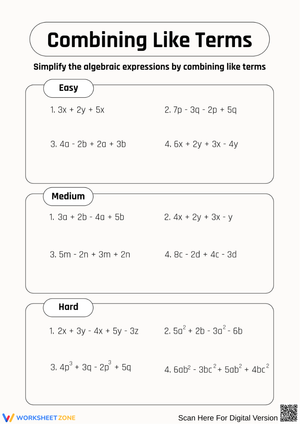
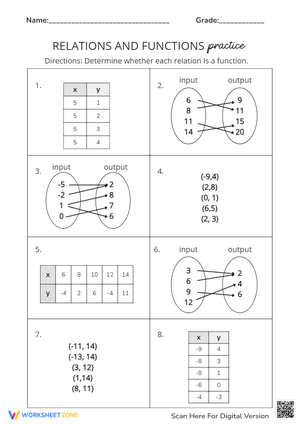
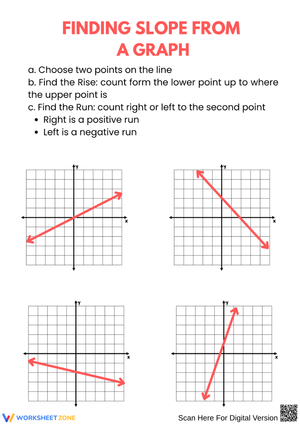
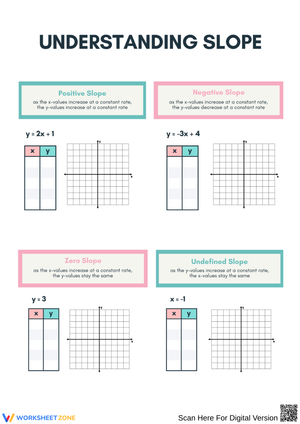
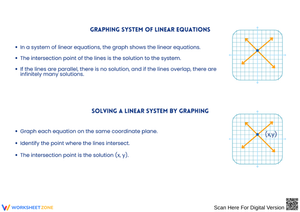
These 7th grade algebra worksheets give teachers targeted, printable practice across the four concepts that define Grade 7 math: writing and evaluating expressions, solving one- and two-step equations, reasoning with inequalities, and working with proportional relationships. Each worksheet centers on a single skill area, which makes the set easy to slot into warm-ups, direct instruction blocks, or small-group reteaching without extra formatting work.
The Specific Skills Covered
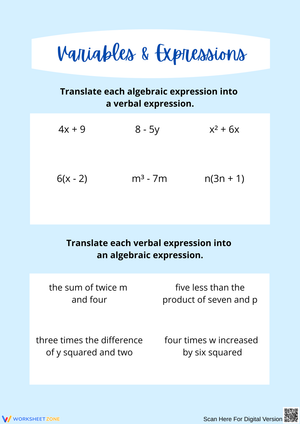
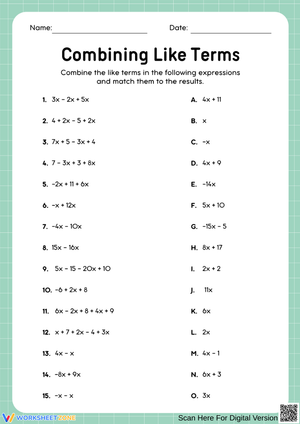
Expression practice asks students to translate verbal phrases into algebraic form, substitute given values, and simplify using integer and fraction operations. This skill sits at the heart of Grade 7 algebraic reasoning because students are making a fundamental shift — from arithmetic, where every quantity is known, to symbolic thinking, where an unknown quantity is held in place while you operate around it. That is genuinely new cognitive territory for most eleven- and twelve-year-olds, and it requires more deliberate practice than it typically receives.
Equation worksheets focus on one-step and two-step equations before extending into word problems that require students to define a variable, set up the equation, and then solve it. The word-problem worksheets are particularly valuable after students seem comfortable with procedural solving, because they expose a separate skill gap: translating a situation into symbolic form. Many students who solve 2x + 5 = 13 accurately will stall on a word problem presenting the same relationship as a story about money or distance.
Inequality worksheets pair symbolic solving with number line representation, which is the harder half of the concept for most seventh graders. Proportional relationship worksheets use tables, unit rates, and real-world contexts — price per unit, speed, scale drawings — to connect algebraic thinking to recognizable situations. Together, the 7th grade algebra worksheets collection covers the full arc of Grade 7 algebraic reasoning, from foundational symbol work through applied problem solving.
Common Student Mistakes Teachers Should Anticipate and Address
The most reliable equation error is applying the wrong inverse operation at the wrong step. When students see 2x + 5 = 13, a significant number will add 5 to both sides rather than subtracting it. The mistake is visual before it's conceptual — students see a plus sign and mirror it instead of asking what the inverse would be. These worksheets leave enough vertical space for students to write each step explicitly, which makes the error visible during a classroom walk-around instead of surfacing only at grading time.
Inequalities generate a different and more persistent confusion. Students who correctly solve x + 4 greater than 10 and arrive at x greater than 6 will still routinely plot the result with a closed dot instead of an open one. They understand the algebra but haven't internalized what the difference between greater than and greater than or equal to looks like on a number line. These worksheets require number line representation as part of every inequality answer — not as an optional extension — so the distinction is practiced consistently rather than encountered once and forgotten.
Proportional relationship work tends to break down at the division step. A student who correctly writes 3/5 = x/20 may then solve it as 20 divided by 3, pairing the wrong values. The error appears most often when the missing quantity sits in the denominator, and it signals that the student is retrieving a remembered procedure rather than reasoning about the relationship. Several worksheets in the set include a setup prompt — asking students to label what each part of the proportion represents before calculating — which interrupts the procedural-only approach and makes the thinking visible.
Fitting These Worksheets Into a Week of Instruction
The most consistent use is the opening warm-up — the 5 to 8 minutes at the start of class when students are settling in and the teacher is taking attendance. A short set of three to five expression or equation problems activates prior knowledge before direct instruction begins. Monday warm-ups are especially productive here: a brief equation exercise right after the weekend creates low-stakes retrieval practice that quickly reveals which concepts held and which ones faded over two days off.
During a lesson, a focused worksheet works well as the independent practice portion after direct instruction. After a 12- to 15-minute mini-lesson on two-step equations, students move from guided examples into solo work on a worksheet that mirrors the lesson's problem types. The consistent layout helps keep cognitive load manageable during the transition from watching to doing — students aren't decoding unfamiliar directions while also processing new math.
Exit tickets are another reliable fit. Pulling two or three items from a 7th grade algebra worksheets download at the end of a period gives a fast, checkable signal of where the class landed — enough to decide whether tomorrow should revisit the same skill or push forward. For sub plans, clearly labeled worksheets organized by topic require no institutional knowledge of where the class left off. A substitute can hand out the right worksheet based on the folder label, and students self-check against a posted answer key without needing teacher facilitation.
Adjusting These Worksheets for Mixed-Readiness Classrooms
Grade 7 algebra classes typically span a wide range — students still consolidating integer operations alongside students ready to reason through multi-step situations. Rather than building entirely separate materials, most teachers find it more sustainable to use one worksheet as the common core for the whole class, then layer targeted support or extension based on what they observe.
For students who need more support, assigning the first half of a worksheet — the problems with more straightforward number types and consistent formats — reduces overwhelm without changing the concept being practiced. Partially completed examples beside the first two problems function as worked models without requiring a separate resource. For students working above grade level, the same worksheet can be extended: ask them to write a word problem matching the equation they just solved, or to identify and explain a deliberate error in a sample student solution shown at the bottom of the worksheet.
Differentiating by task structure is often more effective than differentiating by difficulty alone. Some students work steadily through a set independently; others benefit from a partner check after every two problems, or from reading each problem aloud before writing anything down. The printable format handles both approaches without requiring separate materials — the same worksheet functions differently depending on how it's assigned.
Standard Alignment
These worksheets address the following Common Core State Standards for Grade 7 mathematics. In most district pacing guides, these standards anchor the second and third units of the year — after number system work and before the shift into geometry and statistics — which makes algebra practice most effective when these worksheets are used during those central months of instruction rather than reserved for end-of-year review.
- 7.EE.A.1 — Apply properties of operations to add, subtract, factor, and expand linear expressions with rational coefficients. Expression worksheets that ask students to simplify and rewrite target this standard directly.
- 7.EE.B.3 — Solve multi-step real-life and mathematical problems posed with positive and negative rational numbers. Word problem worksheets covering equations and proportional relationships address this standard through applied contexts.
- 7.EE.B.4 — Use variables to represent quantities in a problem and construct simple equations and inequalities to solve problems. Two-step equation and inequality worksheets are the primary vehicle for this standard in the set.
- 7.RP.A.2 — Recognize and represent proportional relationships between quantities. Proportional relationship worksheets cover the table, equation, and graph representations this standard requires.
In classroom terms, 7.EE.B.4 is the standard where many seventh graders hit their first sustained struggle with abstract algebraic thinking. These worksheets work best as formative practice during the unit — used repeatedly with small variations in number types and contexts — rather than as summative material dropped in at the unit's end.
Frequently Asked Questions
What algebra topics do these worksheets cover?
The set includes writing and evaluating algebraic expressions, one-step and two-step equations, inequalities with number line representation, proportional relationships using tables and unit rates, and word problems that integrate multiple skills. Each worksheet addresses one of these topic areas rather than mixing concepts within a single exercise set.
How do these work for intervention groups?
Intervention groups work best with a focused worksheet targeting one skill and leaving space to show each step. A small group working on two-step equations can complete one worksheet, self-check against the answer key, and then discuss only the problems they missed. That 20-minute structure is more productive than open-ended review without a concrete task anchoring it.
Can these be used for homework?
Yes. A shorter set of 8 to 10 problems mirrors the day's lesson without becoming burdensome. The consistent format helps at home because students aren't decoding unfamiliar instructions while also trying to recall the math. For families who ask what their student is working on, a clearly labeled algebra worksheet makes the topic transparent without requiring a parent to sit through an explanation.
How do these worksheets address the gap between procedural fluency and conceptual understanding?
Most worksheets in the set blend computation items with problems requiring explanation or interpretation — asking students to identify what a variable represents, compare two solution paths, or spot an error in a shown solution. That shift from executing to explaining is where 7th grade algebra worksheets resources reveal the difference between students who have memorized a procedure and students who understand the reasoning behind it.













 Interactive Worksheet Maker
 Quiz Maker
 Word Search Maker
 Crossword Puzzle Maker
 Word Scramble Generator
 Sentence Scramble Generator
 Handwriting Worksheet Generator
 Name Tracing Generator
 Fill In The Blank Generator