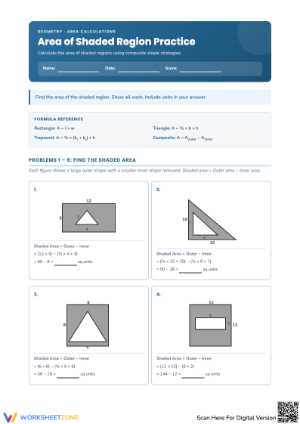
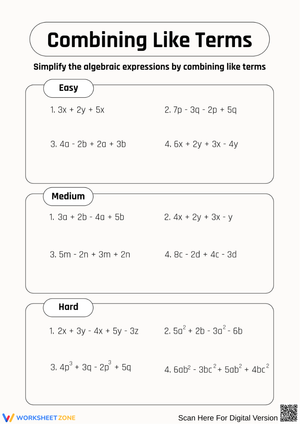
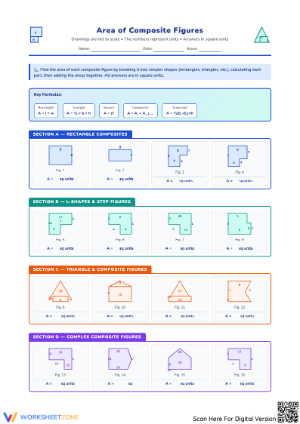
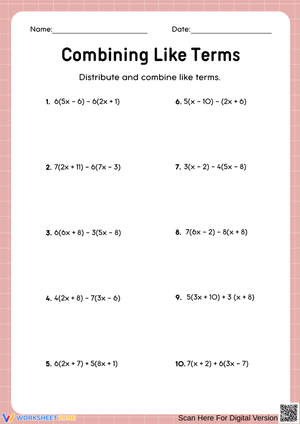
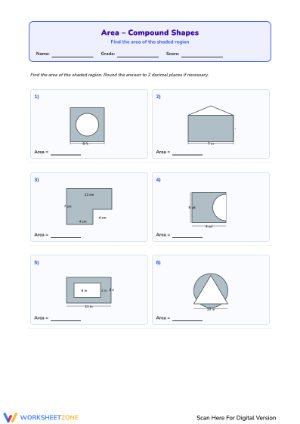
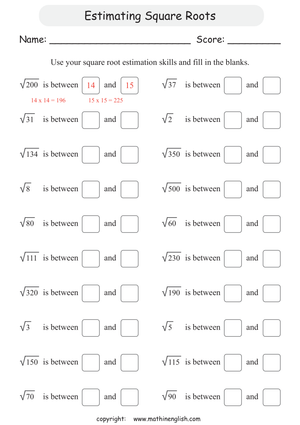
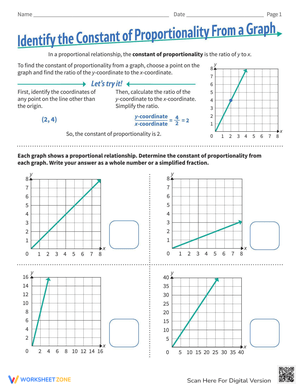
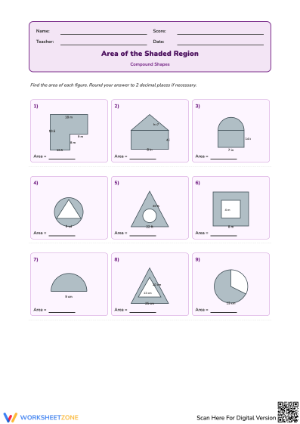
Teachers who search for others math printable worksheets for 7th grade are often between units or short on planning time and need a resource that covers real Grade 7 content without being tied to any single topic. These worksheets cover all five major CCSS domains — ratios and proportional relationships, rational numbers, expressions and equations, geometry, and data and probability — and mix computation, word problems, and model-based items within each worksheet. Answer keys are included, making the set practical for homework, small-group centers, intervention rotations, and sub days without extra prep.
What's Inside the Set
A well-built mixed worksheet set samples all five Grade 7 content domains rather than defaulting to whichever strands are easiest to write practice items for. Each worksheet draws from the following areas:
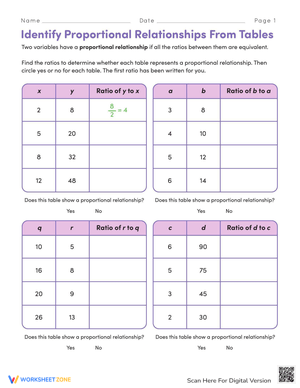
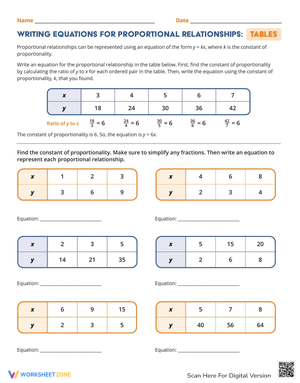
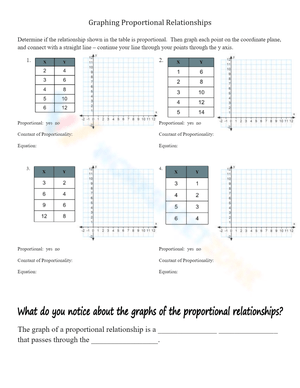
- Ratios and proportional relationships: unit rates, proportions, percent problems including percent change and simple markup and discount, and real-world comparisons
- Rational number operations: integer addition, subtraction, multiplication, and division; fraction and decimal computation; absolute value
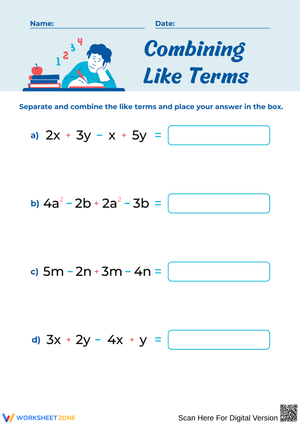
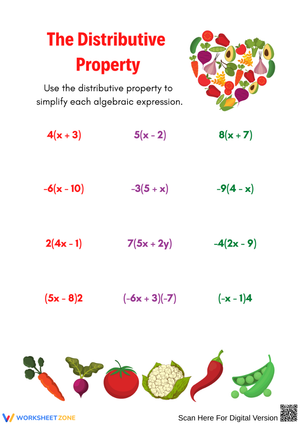
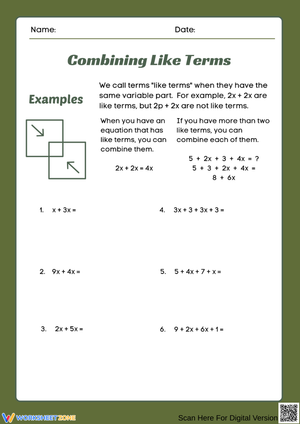
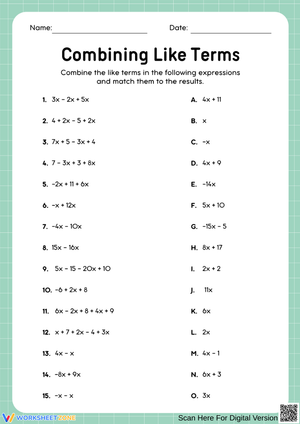
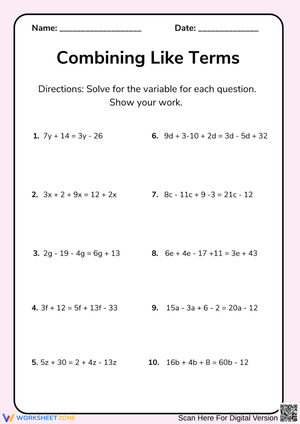
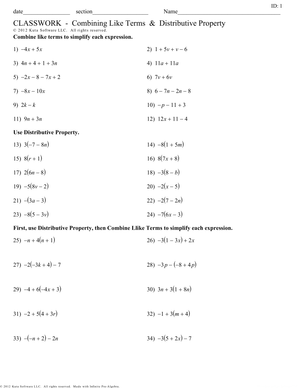
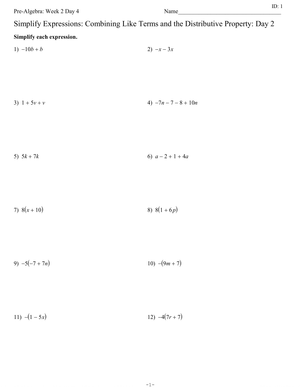
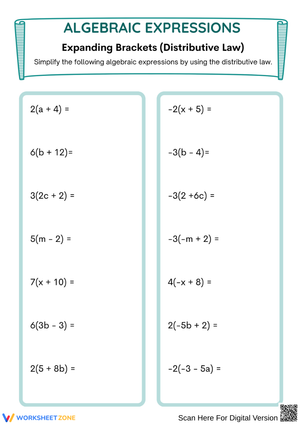
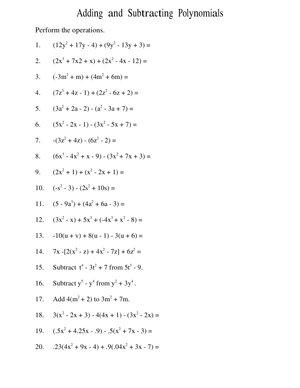
- Expressions and equations: combining like terms, solving one- and two-step equations, and writing expressions from verbal descriptions
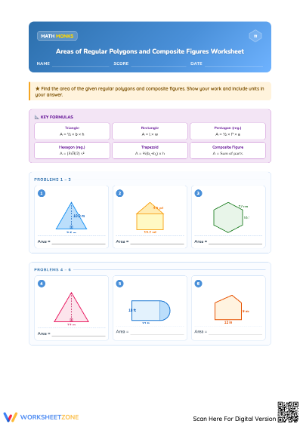
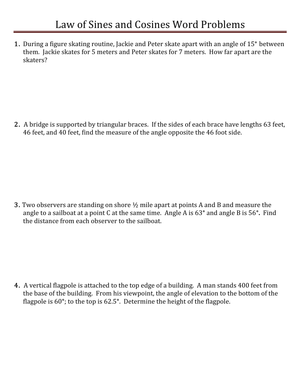
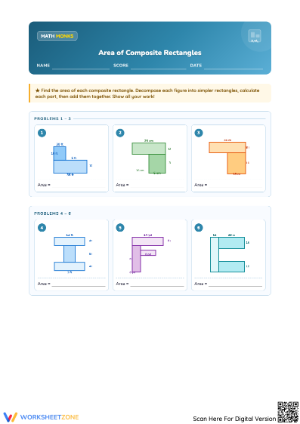
- Geometry: area and circumference of circles, angle pair relationships, surface area concepts, and scale drawings
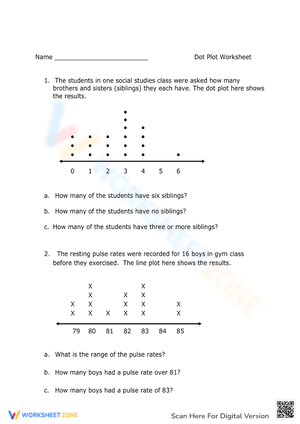
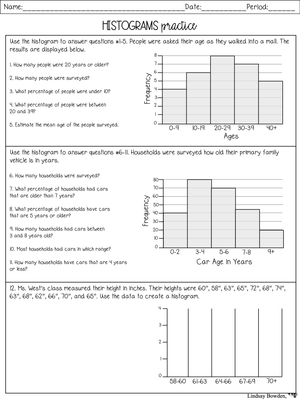
- Statistics and probability: mean, median, mode, and range; reading and interpreting data displays; simple probability reasoning
The collections that earn repeat use as others math printable worksheets for 7th grade hit all five domains rather than leaning on the ones that are easiest to format. Rational numbers and proportional relationships dominate most mixed sets simply because the problem structure is predictable — but that imbalance leaves statistics and probability consistently underserved, which matters when those standards appear on state assessments.
Common Misconceptions to Watch For and Address
Mixed-skill worksheets surface a kind of error that single-topic drills don't: students choosing the wrong strategy before they've done any calculating. When every item on a worksheet involves proportions, students never have to decide what type of problem they're reading. On a mixed worksheet, that decision step is exposed — and in Grade 7, it's often where things fall apart.
A few patterns show up consistently in student work. Students who solve percent problems accurately during a percent unit will write 0.75% instead of 75% when the same calculation appears in a mixed context — the decimal conversion is correct, but they stop before multiplying by 100, treating the decimal as the final answer. On circle problems, students regularly substitute the radius when a problem provides the diameter, producing an answer that is exactly half of correct. Two-step equation items reveal students who have memorized a procedure for one operation: they solve the first step accurately, then reverse the order of inverse operations on the second step, showing partial understanding without full procedural control. These patterns look like careless errors on the surface, but on a mixed worksheet they're identifiable as method errors — which points toward a different kind of reteach than simply assigning more practice problems.
Smart Ways to Work These Worksheets Into Your Week
The most consistent use is a short Monday opener — four to six mixed problems covering content from the prior two weeks, completed during the first eight minutes of class before new instruction starts. That routine keeps older skills active without pulling lesson time away from new content, and it gives a fast read on which students haven't retained last week's material before the class moves on.
These worksheets also hold up as sub-day tasks because each one is self-contained: clear directions, organized layout, and an answer key that handles most follow-up without teacher intervention. For others math printable worksheets for 7th grade to earn a regular spot in the weekly plan, they need to fit more than one moment in the schedule — and this set does. Small-group rotations work well: one group works with the teacher while another completes a mixed worksheet independently and self-checks before the groups switch. A low-stakes Friday spiral review, kept off the gradebook, builds the multi-topic stamina students need when formal assessments sample content from across the year.
Adapting the Worksheets Across Ability Levels
The most direct way to tier any worksheet from this set is through problem selection. For students who need additional support, assign computation-focused items first and hold off on multi-step word problems until core operations are more stable. Pre-marking key vocabulary — "circumference," "coefficient," "unit rate" — removes the language barrier so students spend their effort on mathematical reasoning rather than decoding. Assigning eight problems instead of twelve, while keeping the same mix of domains, reduces cognitive load without narrowing what students are actually practicing.
For students who move through grade-level work quickly, more problems of the same type isn't the right extension — connecting two domains is. Ask a student who finishes early to explain in writing why two methods produce the same answer on a proportion problem, or to write a geometry problem that requires a two-step equation to find a missing angle. That kind of prompt deepens thinking without requiring a separate resource. For intervention groups, worksheets that blend 6th grade prerequisite content — fraction operations, ratio tables, signed number review — alongside current 7th grade problems tend to outperform worksheets limited exclusively to Grade 7 material, because the gaps that surface in 7th grade most often trace back to unresolved 6th grade skills.
Standard Alignment
These worksheets address all five CCSS Grade 7 math domains: 7.RP (Ratios and Proportional Relationships), 7.NS (The Number System), 7.EE (Expressions and Equations), 7.G (Geometry), and 7.SP (Statistics and Probability). In classroom planning terms, 7.RP and 7.NS receive heavy instructional attention in the first semester, so mixed worksheets become particularly useful from late October onward — keeping those standards in rotation while 7.EE and 7.G take over as the main instructional priorities. The 7.SP domain is the most frequently dropped from daily review; including two or three probability and data items per worksheet maintains exposure without requiring a separate lesson period.
Frequently Asked Questions
What topics do these 7th grade mixed math worksheets cover?
Each worksheet draws from the five major CCSS Grade 7 domains: ratios and proportional relationships, rational number operations, expressions and equations, geometry, and statistics and probability. Individual worksheets vary in how heavily they weight each domain, but the set as a whole covers all five.
When during the school year are these most useful?
They work year-round, but the second semester is when mixed worksheets earn the most consistent use. Once first-semester content — rational numbers and proportional relationships — has been taught, it needs regular maintenance while new units are still in progress. A weekly mixed worksheet keeps those standards active without requiring a full reteach period.
Can these worksheets work for students who are below grade level?
Yes, with deliberate adjustment. Assigning a subset of problems, pre-marking vocabulary, and combining 6th grade prerequisite content with 7th grade items makes each worksheet accessible without removing grade-level context. The more effective approach for intervention students isn't replacing Grade 7 problems with simpler material — it's choosing which grade-level problems to prioritize and pairing them with the prerequisite content that's actually blocking performance.
Are answer keys included?
Yes. Answer keys come with the set and make these worksheets practical for independent centers, homework, absent students, and sub plans. Teachers who want to use others math printable worksheets for 7th grade as a regular diagnostic tool find that having a key allows them to scan a class set in minutes and sort errors by type — wrong operation, wrong setup, arithmetic error — rather than simply marking answers right or wrong.













 Interactive Worksheet Maker
 Quiz Maker
 Word Search Maker
 Crossword Puzzle Maker
 Word Scramble Generator
 Sentence Scramble Generator
 Handwriting Worksheet Generator
 Name Tracing Generator
 Fill In The Blank Generator