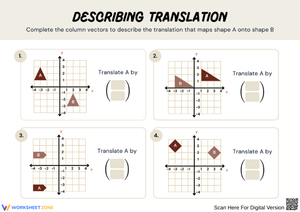
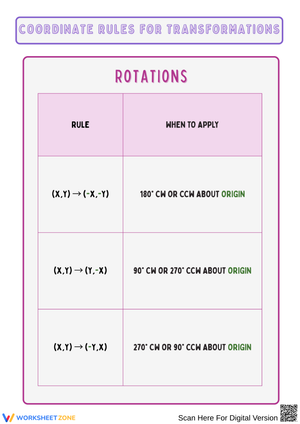
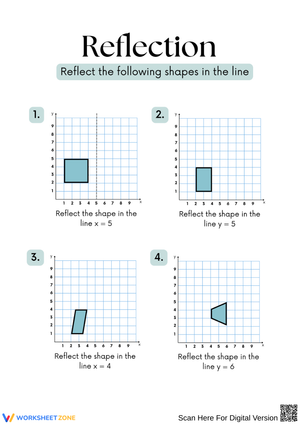
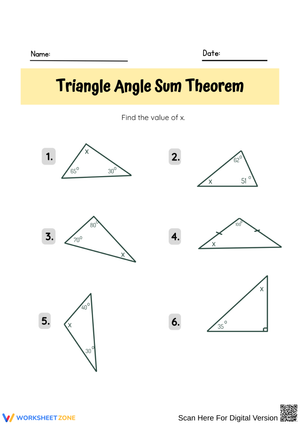
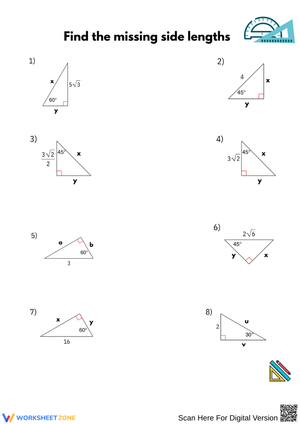
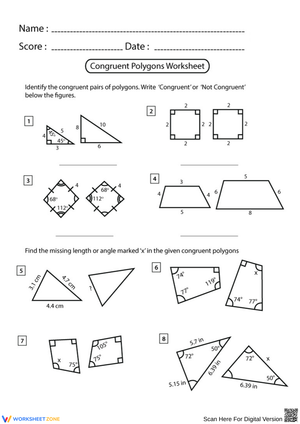
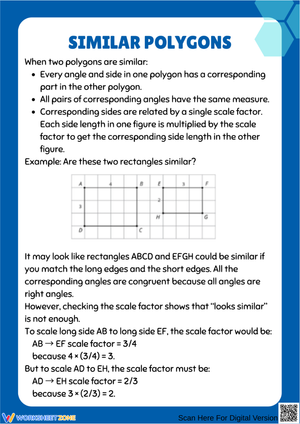
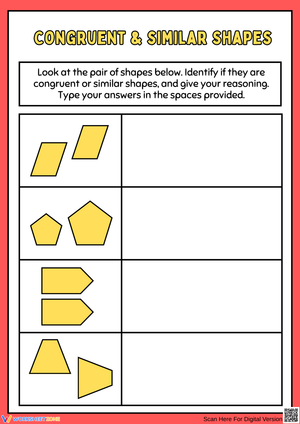
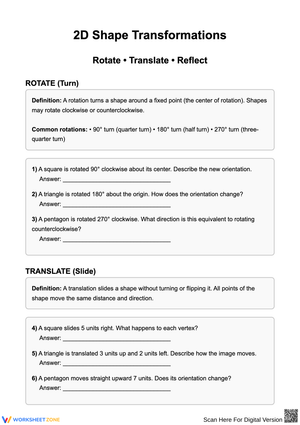
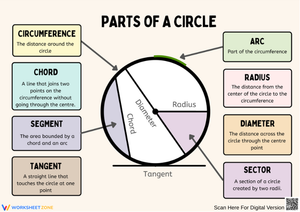
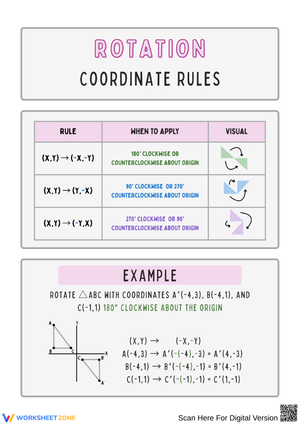
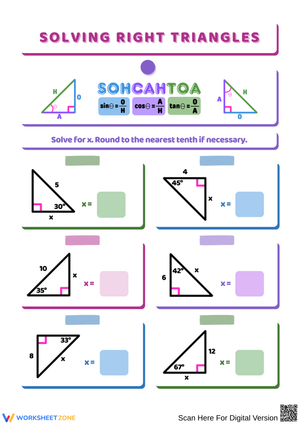
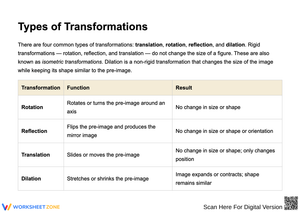
The transition from anecdotal classroom observation to quantifiable learning data is essential for math success in middle school. A well-designed set of 7th grade geometry worksheets gives teachers and parents a high-precision instrument that turns abstract spatial reasoning into measurable benchmarks. Each worksheet in the Worksheetzone collection is engineered to function as both a focused learning tool and a reliable assessment metric for classroom and home study.
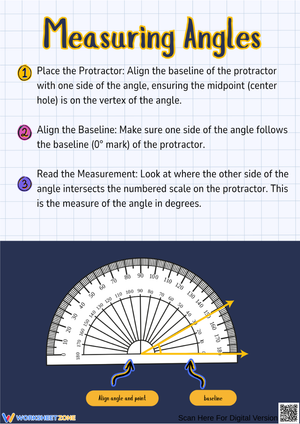
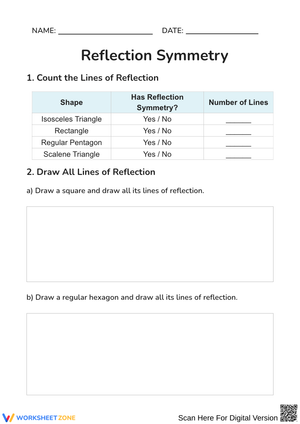
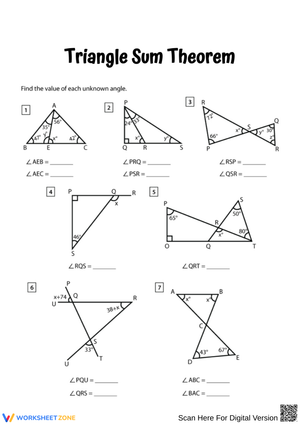
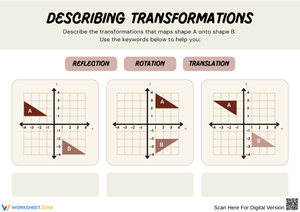
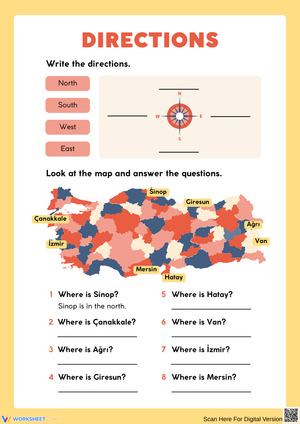
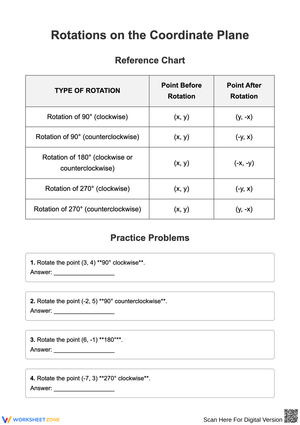
Seventh grade geometry sits at a pivotal stage of the curriculum, where students move from concrete shape recognition into formal reasoning about angles, area, surface area, volume, scale drawings, and the properties of two- and three-dimensional figures. The worksheet sequence is built around a deliberate progression: foundational vocabulary, applied calculation, multi-step word problems, and finally mixed review. This structured order allows educators to pinpoint exactly where a student struggles, whether the gap appears in angle relationships practice worksheets or in computing the area of composite figures.
Built-in answer keys are a defining feature of every printable in this library, and they directly impact instructional efficiency. Teachers can grade a full classroom set in minutes, while parents working at the kitchen table gain immediate confirmation that their child applied the correct formula. The keys also support student self-checking, which strengthens metacognition and accelerates the feedback loop that drives lasting retention. Clear scoring guidelines help convert raw responses into actionable performance data.
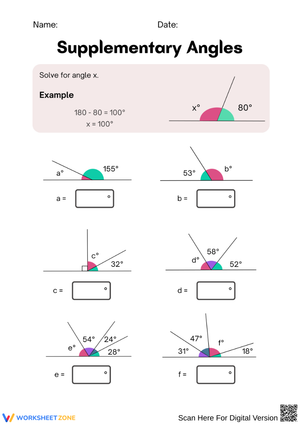
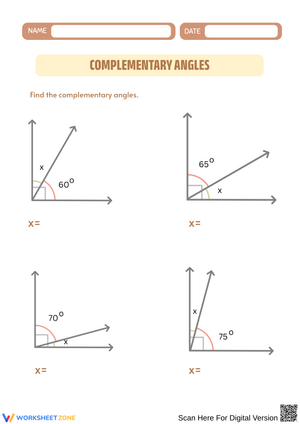
Tracking results across multiple worksheet sessions enables genuine personalized instruction. When a student consistently misses problems involving complementary angles, the data points to a targeted reteach rather than a vague concept review. Worksheetzone organizes printables by skill cluster, so educators can stack three or four exercises that isolate one strand, then compare scores week over week. Parents benefit from the same system, supported by accessible explanations like this guide on understanding vertices in geometry.
Lesson plan integration is straightforward because each worksheet lists its target standard, estimated completion time, and difficulty band. Teachers can slot worksheets into bell-ringers, guided practice blocks, station rotations, or formal assessments without adjusting the format. Students gain a consistent visual layout that reduces cognitive load, allowing them to direct their attention toward the mathematics rather than the instructions. The result is steady, documented progress on every core skill expected in 7th grade geometry worksheets aligned to the standard scope and sequence.
Frequently Asked Questions
Question 1: What topics do 7th grade geometry worksheets typically cover?
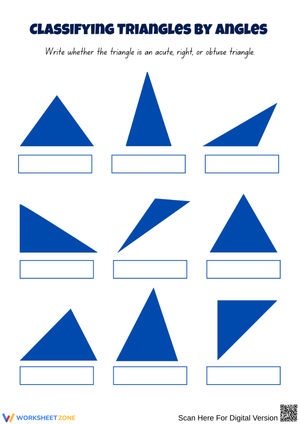
A complete set of 7th grade geometry worksheets covers angle relationships, including complementary, supplementary, vertical, and adjacent pairs, along with area and circumference of circles, surface area and volume of prisms, scale drawings, and cross-sections of three-dimensional figures. Worksheets also revisit foundational concepts such as classifying triangles and quadrilaterals so students build a coherent geometric vocabulary before moving into algebra-based reasoning.
Question 2: How can teachers use these printables for classroom assessment?
Teachers can deploy the printables as diagnostic pretests, daily exit tickets, station rotation activities, or end-of-unit reviews. Because every worksheet ships with an answer key and a clear difficulty label, educators can collect data points quickly and compare performance across sessions. This data supports differentiated grouping, targeted reteach lessons, and parent communication grounded in measurable progress rather than general impressions.
Question 3: Are these worksheets suitable for homeschool families and parents?
Yes, the printables work well for homeschool families, after-school tutoring, and parents who want to reinforce classroom learning. Each worksheet includes step-by-step examples, vocabulary references, and a self-check key, which lets parents support their student even without a formal math background. The structured progression guides families through angles, area, and volume in the same order most middle school programs follow.
Question 4: How do answer keys improve student learning outcomes?
Answer keys shorten the feedback loop between attempt and correction, which research consistently links to stronger retention. When students check their work immediately, they can identify whether an error came from a calculation slip or a conceptual misunderstanding. Teachers and parents can then focus reteach time on the specific skill that broke down, turning each completed worksheet into a precise diagnostic tool rather than a single graded assignment.













 Interactive Worksheet Maker
 Quiz Maker
 Word Search Maker
 Crossword Puzzle Maker
 Word Scramble Generator
 Sentence Scramble Generator
 Handwriting Worksheet Generator
 Name Tracing Generator
 Fill In The Blank Generator