Understanding the Role of Research Writing in Literacy Development
Research writing serves as a cornerstone of academic inquiry, requiring students to move beyond simple recall and engage in the complex tasks of evaluation, synthesis, and original thought. When teachers introduce research writing worksheets into their curriculum, they provide the necessary scaffolding that allows learners to manage the cognitive load of a multi-stage project. For many elementary and middle school students, the prospect of writing a research paper feels overwhelming. By breaking the process into manageable segments—such as topic selection, source evaluation, and drafting—teachers help students build the stamina and skills needed for higher-level academic success.
Instructional scaffolding is particularly important in the early stages of research. Students must learn that research isn't just about finding facts; it is about asking meaningful questions and seeking answers through a systematic approach. High-quality worksheets help bridge this gap by offering prompts that encourage curiosity while providing a clear structure for recording data. When students use these resources, they are not just filling in blanks; they are learning a mental framework for inquiry that will serve them across all subject areas, from science and history to language arts and social studies.
Breaking Down the Research Process: From Inquiry to Final Draft
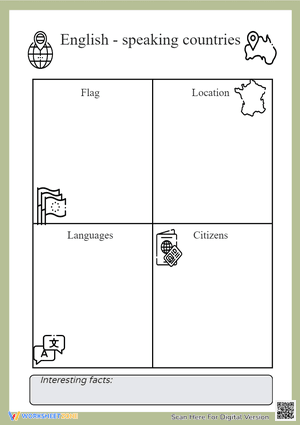
The research process is rarely linear, but for instructional purposes, it is often best presented as a series of iterative steps. The first phase involves inquiry and brainstorming, where students identify a topic that is neither too broad nor too narrow. Many teachers find that a 'Goldilocks' approach to topic selection—finding one that is 'just right'—is the most difficult part for young researchers. Worksheets that offer graphic organizers like KWL charts are excellent for this phase, as they allow students to visualize their existing knowledge and identify gaps they need to fill through research.
Once a topic is selected, the focus shifts to gathering information. This is where the utility of a research writing worksheets truly shines. Instead of staring at a blank page, students have designated spaces for different sources, which encourages them to look at a variety of perspectives. Teachers should emphasize the importance of using multiple types of sources, including books, reputable websites, and primary documents. Providing a checklist within the worksheet can help students track their progress and ensure they have a balanced array of information before they begin the synthesis phase.
Essential Components of High-Quality Research Writing worksheets
Not all research worksheets are created equal. To be truly effective in a classroom setting, a research writing worksheets must balance structure with flexibility. One essential component is a source tracking table. This section should prompt students to record the title and author of their source, along with the date of publication and the URL. By making this a standard part of the research phase, teachers instill the habit of proper attribution early on, which simplifies the later task of creating a bibliography or works cited page.
Another vital element is the note-taking template. Rather than providing large, open boxes, effective templates often use a 'Cornell Notes' style or a table that pairs a specific fact with a student’s reflection or interpretation of that fact. This encourages students to think about why a particular piece of information is important to their research goal, rather than just copying text verbatim. This dual-entry method is highly effective for preventing plagiarism, as it forces students to process the information and put it into their own words from the very beginning of the project.
Scaffolding Note-Taking and Information Synthesis for Younger Learners
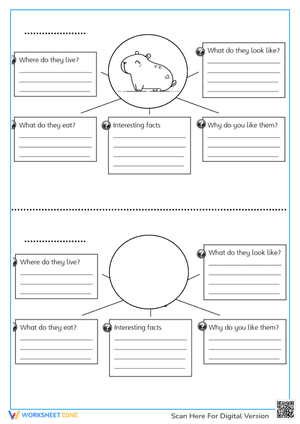
For students in grades 3 through 5, the concept of synthesis—combining information from different sources to create a new understanding—is often quite abstract. To teach this effectively, teachers must provide highly structured templates that guide the student through the 'gathering' and 'sorting' phases. A research writing worksheets designed for this age group might use color-coding or specific icons to help students group related facts. This visual organization is a prerequisite for writing organized paragraphs.
Longitudinal observations in middle school classrooms suggest that students who use structured PDF organizers for the pre-writing phase of research show a 35% higher retention of source-specific data compared to those using open-ended digital documents. This finding highlights the importance of tactile or visually constrained planning tools in developing a student's ability to categorize complex information. When learners are forced to fit their thoughts into specific boxes or sections, they are performing the mental work of categorization, which is the first step toward sophisticated synthesis and critical analysis.
Teaching Information Literacy: Evaluating Sources and Avoiding Plagiarism
In a world of infinite digital information, the ability to evaluate the credibility of a source is a fundamental survival skill. Teachers must move beyond just telling students which websites are 'good' and instead give them the tools to judge for themselves. A dedicated section in a research writing worksheets for source evaluation is an excellent way to practice this. Prompts can ask students to identify the author’s expertise, check for bias, and look for the date of the last update. These simple checks transform the student from a passive reader into a critical investigator.
According to Teaching Research Skills to Students, explicitly teaching the research process improves student confidence in information gathering by up to 40%. Their data suggests that structured graphic organizers are essential for helping elementary learners bridge the gap between reading facts and synthesizing original nonfiction narratives. By providing these tools, teachers ensure that every student, regardless of their starting point, has a clear path to success in their research endeavors. This level of support is especially important for students who may struggle with executive functioning or organizational skills.
Teacher Tips: Maximizing Classroom Engagement with Research Templates
To get the most out of research writing worksheets, teachers should consider integrating them into a larger 'Research Workshop' model. In this setup, the worksheets act as the 'lab notebook' for the student’s investigation. Start each session with a mini-lesson on a specific skill, such as writing a hook or citing a website, and then allow students to immediately apply that skill to their worksheet. This immediate application reinforces the learning and ensures that students don't feel lost when it comes time to work independently. It also allows the teacher to circulate and provide targeted feedback based on what is being written in the worksheet sections.
Another tip for engagement is to allow for 'choice and voice' within the structured framework. While the worksheet provides the structure, the student should provide the content. Encourage students to research topics they are genuinely interested in, whether it’s the history of video games or the biology of sharks. When a student is invested in the topic, they are much more likely to put effort into the 'tedious' parts of research, like source evaluation and proper citation. The worksheet becomes a tool for them to explore their passions, rather than just another assignment to complete.
Classroom Implementation
Implementing research writing worksheets effectively requires a clear timeline and consistent check-ins. Teachers often find success by dedicating the first week of a project entirely to the inquiry and information-gathering phase. During this time, the worksheet is the primary focus, and no actual drafting of the paper is allowed. This 'quarantine' of the note-taking phase ensures that students have a solid foundation of facts and sources before they start worrying about sentence structure and grammar. It also provides a clear window for teachers to catch errors in source selection before they become integrated into a draft.
Frequently Asked Questions
1. How do I help students choose a research topic that isn't too broad?
Teachers can use a 'narrowing funnel' worksheet where students start with a big idea and progressively narrow it down through sub-categories until they reach a specific question. This visual helps students understand the difference between a broad subject and a researchable topic.
2. What is the best way to explain plagiarism to younger elementary students?
Frame plagiarism as 'borrowing someone else's brain without asking.' Use research writing worksheets to practice 'brain-switching,' where students read a fact and then 'switch' to their own brain to explain what it means. This makes the concept of original voice more concrete and less about just 'breaking rules.'
3. How many sources should a middle school research project require?
For most middle school projects, requiring three to five diverse sources is a good standard. This ensures enough variety for synthesis without overwhelming the student. Using a source tracking table in their worksheets helps students see at a glance if they have met this requirement before they move to the writing phase.
4. Can these worksheets be used for group research projects?
Absolutely. Research writing worksheets are excellent for delegating tasks within a group. One student might be responsible for gathering facts on one sub-topic, while another focuses on a different area. The worksheets act as a shared record that the group can then use to collaborate on a single, unified final report.
5. How do I help students organize their notes effectively?
Encourage the use of 'topic buckets' or categorized note-taking sections. When students write notes into specific boxes based on sub-topics, they are naturally organizing their information as they go. This makes the later step of outlining much easier, as the categories for their body paragraphs are already defined.















 Interactive Worksheet Maker
 Quiz Maker
 Word Search Maker
 Crossword Puzzle Maker
 Word Scramble Generator
 Sentence Scramble Generator
 Handwriting Worksheet Generator
 Name Tracing Generator
 Fill In The Blank Generator