




























Views
Downloads

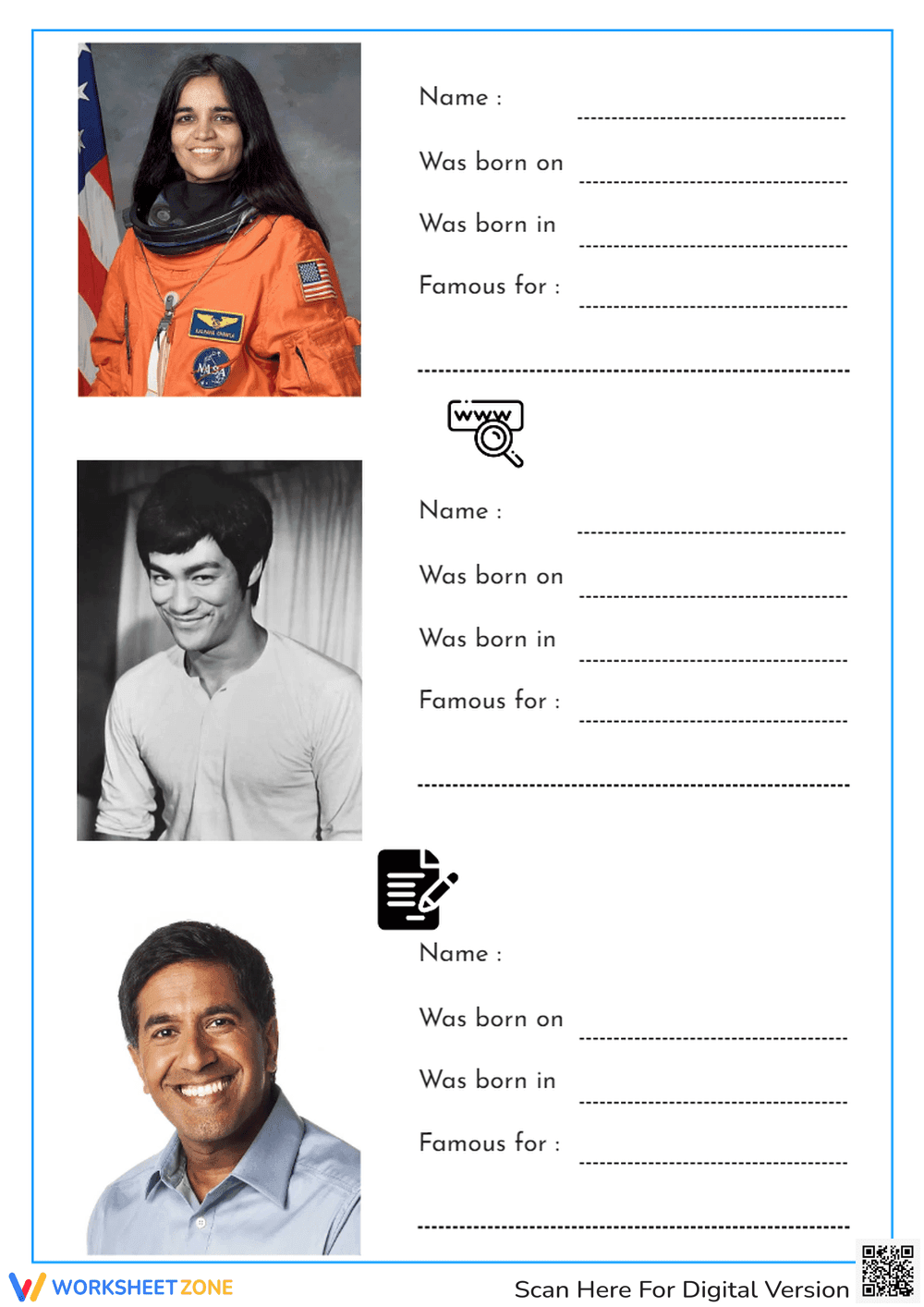

Printable AAPI Heritage Research Worksheet | Grade 4

Paste this activity's link or code into your existing LMS (Google Classroom, Canvas, Teams, Schoology, Moodle, etc.).
Students can open and work on the activity right away, with no student login required.
You'll still be able to track student progress and results from your teacher account.
This printable research worksheet guides students to investigate notable Asian American and Pacific Islander figures. By gathering biographical facts and identifying key contributions, students build foundational research skills, practice informational writing, and develop cultural awareness during AAPI Heritage Month.
At a Glance
- Grade: 4 · Subject: ELA
- Standard:
CCSS.ELA-LITERACY.W.4.7— Conduct short research projects to build knowledge.- Skill Focus: Biographical Research
- Format: 2 pages · 5 problems · PDF
- Best For: Independent practice
- Time: 30–45 minutes
This two-page resource features five structured graphic organizers for biographical research. Each section includes a photograph of a notable AAPI figure, prompting students to find and record their name, birth date, birthplace, and primary claim to fame. The open-ended format encourages students to use digital or print reference materials to complete the missing information.
This resource requires minimal setup for immediate classroom use.
- Print (1 min): Generate double-sided copies of the two-page PDF.
- Distribute (1 min): Hand out to students along with access to library books or safe search engines.
- Review (3 mins): Briefly model how to locate birth dates and achievements using a sample figure.
With under five minutes of total teacher prep time, this activity functions perfectly as a standalone lesson, a library center, or a reliable sub plan.
This activity aligns with CCSS.ELA-LITERACY.W.4.7: Conduct short research projects that build knowledge through investigation of different aspects of a topic. It also supports W.4.8 by requiring students to gather relevant information from print and digital sources. Both standard codes can be copied directly into lesson plans, IEP goals, or district curriculum mapping tools.
Deploy this worksheet during independent work time or as a structured technology center. Before direct instruction on AAPI Heritage Month, use it as an inquiry-based hook where students discover these figures on their own. During the activity, observe how efficiently students navigate search engines or reference texts to locate specific data points. Expect students to complete the five profiles in 30 to 45 minutes depending on their reading level and research proficiency.
This resource serves upper elementary students in grades 3 through 5. The highly structured fill-in-the-blank format provides built-in scaffolding for students who struggle with open-ended research writing, keeping them focused on specific data retrieval. Pair this worksheet with a curated list of kid-friendly biography websites or a classroom display of AAPI heritage books to streamline the research process.
Effective research instruction requires structured frameworks that guide student inquiry and prevent digital distraction. Aligning with CCSS.ELA-LITERACY.W.4.7 to conduct short research projects to build knowledge, this worksheet provides necessary constraints for novice researchers navigating complex informational texts. According to Fisher & Frey (2014), providing graphic organizers during the initial stages of information gathering significantly reduces cognitive overload, allowing students to focus on evaluating source accuracy rather than formatting their notes. By isolating specific biographical data points—such as birthplaces, dates, and major achievements—this tool helps students systematically process informational texts and digital media. This targeted approach ensures that learners actively engage with the content, building a robust foundation for more advanced synthesis and expository writing tasks in later grades.


