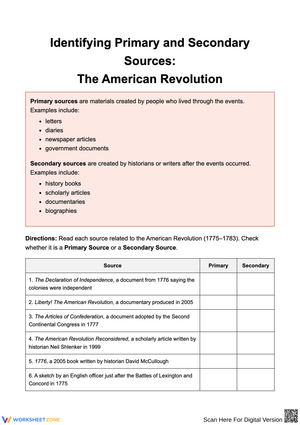
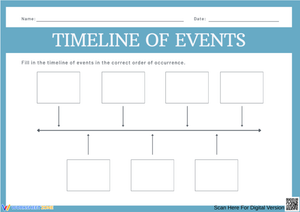
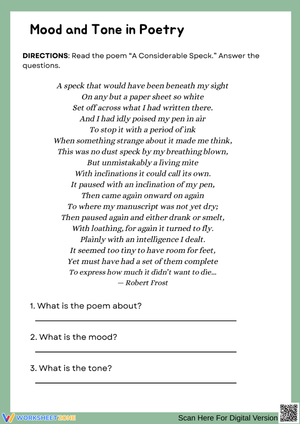
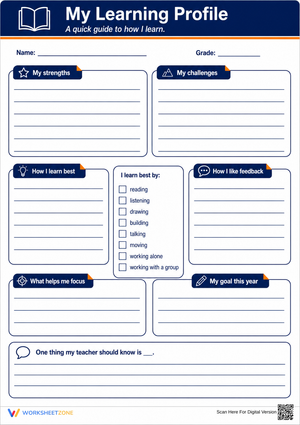
These nonfiction writing worksheets give elementary teachers targeted resources for the five core text structures, graphic organizers built for source-based research, and guided drafting practice that fits the informational writing demands of grades three through five. Each worksheet isolates one skill — description, sequence, compare and contrast, cause and effect, or problem and solution — so a teacher can assign exactly what a class needs without working through material students have already mastered.
What's Inside the Set
Text structures are the organizing logic beneath every piece of nonfiction writing, and students who can name and use them write with more direction than those who treat every topic the same way. Each worksheet walks students through the same progression: read a brief model sentence or short passage that demonstrates the structure, complete a graphic organizer matched to that structure's logic, then produce original sentences or a short paragraph using their own topic.
The description worksheet asks students to sort details by category before writing — sensory details in one column, function facts in another, contextual background in a third. That sorting step forces deliberate choices about which details belong in a description and which belong elsewhere. The sequence worksheet prompts students to identify, before drafting a single sentence, whether their topic calls for chronological order or procedural order — a distinction that matters because how-to writing and timeline writing rely on different transition words even though both move in order. The compare-and-contrast worksheet uses a two-column organizer requiring at least three similarities and three differences before students begin composing sentences, which prevents the common pattern of listing only one side. The cause-and-effect worksheet includes an annotation layer: students mark signal words in a provided informational passage first, then apply that same logical structure to a topic of their own. Problem-and-solution asks students to name three possible solutions before settling on one, because the first answer a student writes is almost always the most obvious rather than the most specific.
The research and source-tracking worksheets extend this work by giving students a structured place to record where each fact came from — not a formal bibliography template, but a source table where students write the title, the type of source, and the specific section where they found the information. A nonfiction writing worksheets that builds this tracking habit into the pre-writing stage teaches students to record citations while they research rather than searching backward through their notes at the end of a draft, which is a harder problem to fix the later it surfaces.
Patterns in Student Work Worth Catching Early
The error that shows up most consistently across upper elementary nonfiction writing is fact accumulation without explanation — what writing teachers sometimes call fact dumping. A student writing about the water cycle might produce: "Water evaporates into the air. Clouds form when water vapor cools. Rain falls back to Earth." Each statement is accurate; none explains its connection to the others. The cause-and-effect worksheet addresses this directly because the graphic organizer requires students to draw a relationship arrow and label the causal link before they write any sentences. It is harder to skip the logical connection when the organizer makes the missing step visible on the page.
The second persistent error is writing a topic statement where a main idea belongs. "My paragraph is about the rainforest" is a topic. "The Amazon rainforest supports more species of plants and animals than any other biome on Earth because of its consistent warmth and rainfall" is a main idea — it carries a claim and a reason. The main idea worksheet asks students to generate three candidate main ideas from the same set of facts, then choose the most specific one. Students who complete that task once rarely write topic statements again; they understand that a topic statement gives the reader no reason to continue reading.
A third pattern worth flagging: students often apply sequence structure to topics where it doesn't fit because it's the structure they know best. A fifth grader explaining why sea levels are rising doesn't need a "first, next, finally" frame — that topic calls for cause and effect. Teaching students to match the structure to the content, rather than defaulting to the most familiar option, is one of the cleaner lessons this set supports, and it surfaces quickly once students have all five structures in front of them at the same time.
Fitting These Resources Into Your Week
Most teachers use these worksheets as pre-writing tools rather than standalone activities. Assigning the relevant graphic organizer the session before drafting begins means students arrive at the next writing period with sorted, organized notes rather than a blank page. The annotation layer on the cause-and-effect worksheet makes it particularly effective as a mini-lesson anchor: ten minutes of whole-group work marking signal words on a shared text, then students apply the same skill on their own worksheet before independent drafting starts.
A nonfiction writing worksheets in this format also fits cleanly into content-area periods. The sequence worksheet pairs naturally with any science lab procedure; the problem-and-solution worksheet makes a solid opener for a social studies research unit. When the worksheet appears inside the science or social studies period rather than saved for writing workshop, students bring real subject knowledge to the task, which produces more specific and accurate writing than a generic informational prompt.
The problem-and-solution worksheet is especially useful at the start of a research writing unit, when students have a topic but haven't yet identified a real argument. Having them generate three solutions before committing to one keeps the drafting session from stalling at "I don't know what to say" — which is almost always a sign that a student hasn't moved past their first, most surface-level response.
Standard Alignment
These worksheets align to CCSS W.3.2, W.4.2, and W.5.2, which require students to introduce a topic clearly, group related information into paragraphs, develop points with facts and definitions, and close with a concluding statement. The text structure work also supports RI.3.5, RI.4.5, and RI.5.5, which ask students to use and describe these same organizational patterns as readers. That crossover is practically useful: students who have recently identified cause-and-effect structure in a science reading recognize when their own writing calls for the same structure more readily than students who have encountered text structures only during ELA.
Adapting the Set for Students at Different Levels
For students who are not yet writing in full sentences consistently, the graphic organizer worksheets function as note-taking tools — teachers can collect them as a formative check on comprehension and organization without requiring a complete draft. For students who need more challenge, removing the sentence frames from any worksheet and requiring a full paragraph or multi-paragraph response from the completed organizer is a straightforward extension that produces differentiated results without building a separate resource from scratch.
The cause-and-effect worksheet is the one that most visibly splits a class. Students with strong reading comprehension identify signal words quickly and move into independent writing with little friction. Students who are still building comprehension often recognize that two events are connected but can't name which caused the other — they sense a relationship, but the direction of the arrow stops them. Pairing those students for the annotation task before releasing them to work independently closes that gap faster than re-teaching the concept whole-group.
Frequently Asked Questions
Which text structure should teachers introduce first?
Description is usually the right starting point, especially in third grade. Students already know how to talk about topics they've observed — animals, places, familiar objects — so the task of sorting factual details into categories is approachable before they've built strong writing stamina. Sequence is a close second, since how-to writing often appears in second grade instruction already. Cause-and-effect benefits most from being introduced after students have worked with at least two other structures; the directional logic of causation is harder to internalize before students have had practice distinguishing between different types of relationships.
How do these worksheets handle the transition from narrative to informational writing?
The most persistent issue in that transition is register: students add dialogue, personal reactions, or invented scenes to what should be a factual piece. A student writing about volcanoes might include, "The lava rushed toward the village. 'Run!' the villagers cried." Each worksheet opens with a model sentence or short passage written entirely in informational register, giving students a concrete example of how the same topic sounds when reported rather than dramatized. Reading the model before writing — not after — orients students to the tone before they begin composing their own sentences.
Do these resources work outside the ELA period?
They work well in science and social studies blocks, and for some students they work better there. When a student is already immersed in a unit on ecosystems or early civilizations, the writing task has real content behind it rather than a generic prompt. The sequence worksheet runs cleanly alongside any science procedure, and the cause-and-effect worksheet supports historical inquiry with almost no adaptation needed. One practical note: a nonfiction writing worksheets is most effective when students have already encountered the topic in class — these resources help students organize and express knowledge, but they don't substitute for the content instruction that gives students something specific to write.












 Interactive Worksheet Maker
 Quiz Maker
 Word Search Maker
 Crossword Puzzle Maker
 Word Scramble Generator
 Sentence Scramble Generator
 Handwriting Worksheet Generator
 Name Tracing Generator
 Fill In The Blank Generator