




























0
Views
0
Downloads

0.0
0
Save
0 Likes
Share
Research Graphic Organizer Worksheet
0 Views
0 Downloads

Paste this activity's link or code into your existing LMS (Google Classroom, Canvas, Teams, Schoology, Moodle, etc.).
Students can open and work on the activity right away, with no student login required.
You'll still be able to track student progress and results from your teacher account.
Information
Description
What It Is:
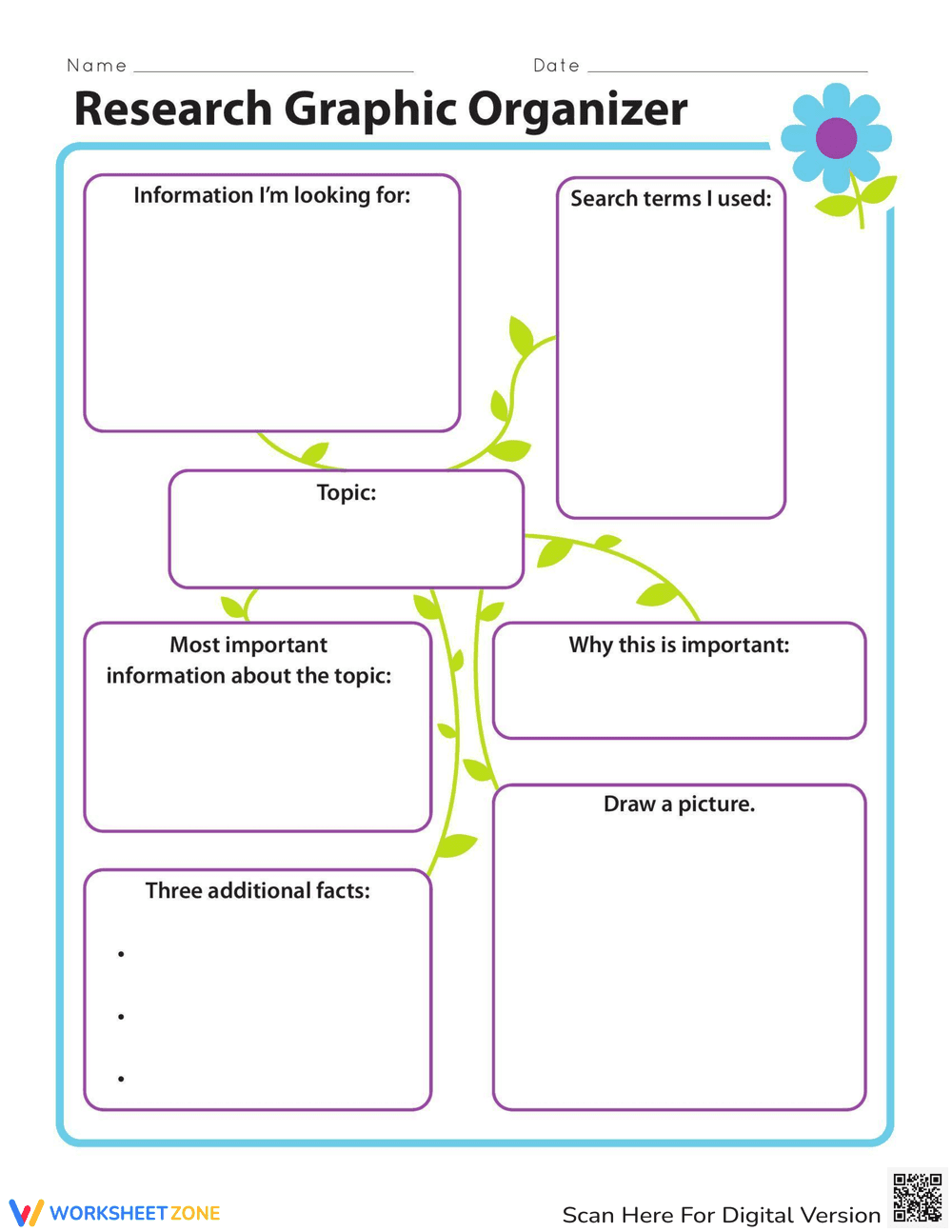
This is a printable research graphic organizer worksheet. It prompts students to identify the topic, the information they are looking for, search terms they used, the most important information about the topic, why the topic is important, three additional facts, and to draw a picture related to the research.
Grade Level Suitability:
This worksheet is suitable for grades 3-6. The prompts are simple and straightforward, allowing students to organize their research in a clear and visual manner. The 'draw a picture' section makes it accessible for younger learners, while the research prompts are appropriate for upper elementary students.
Why Use It:
This worksheet helps students structure their research process. It encourages them to define their topic, identify key information, and summarize their findings. The graphic organizer format promotes visual learning and helps students make connections between different pieces of information.
How to Use It:
First, have the student write their research topic in the 'Topic' box. Then, before starting research, have them fill in the 'Information I'm looking for' box. As they research, they can record the 'Search terms I used'. After research, they should fill in the boxes for 'Most important information about the topic', 'Why this is important', 'Three additional facts', and draw a picture to represent their findings.
Target Users:
This worksheet is ideal for elementary and middle school students who are learning to conduct research. It is particularly helpful for visual learners and students who benefit from structured activities. It can also be used as a pre-writing activity to help students organize their thoughts before writing a research report.
This is a printable research graphic organizer worksheet. It prompts students to identify the topic, the information they are looking for, search terms they used, the most important information about the topic, why the topic is important, three additional facts, and to draw a picture related to the research.
Grade Level Suitability:
This worksheet is suitable for grades 3-6. The prompts are simple and straightforward, allowing students to organize their research in a clear and visual manner. The 'draw a picture' section makes it accessible for younger learners, while the research prompts are appropriate for upper elementary students.
Why Use It:
This worksheet helps students structure their research process. It encourages them to define their topic, identify key information, and summarize their findings. The graphic organizer format promotes visual learning and helps students make connections between different pieces of information.
How to Use It:
First, have the student write their research topic in the 'Topic' box. Then, before starting research, have them fill in the 'Information I'm looking for' box. As they research, they can record the 'Search terms I used'. After research, they should fill in the boxes for 'Most important information about the topic', 'Why this is important', 'Three additional facts', and draw a picture to represent their findings.
Target Users:
This worksheet is ideal for elementary and middle school students who are learning to conduct research. It is particularly helpful for visual learners and students who benefit from structured activities. It can also be used as a pre-writing activity to help students organize their thoughts before writing a research report.


