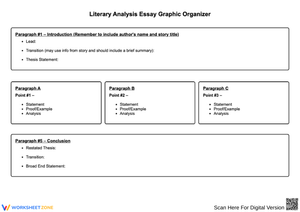
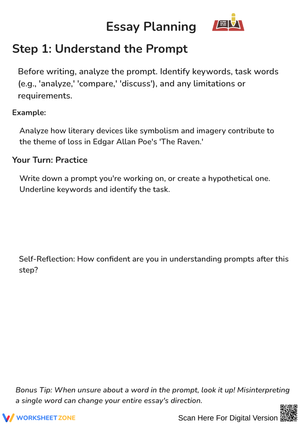
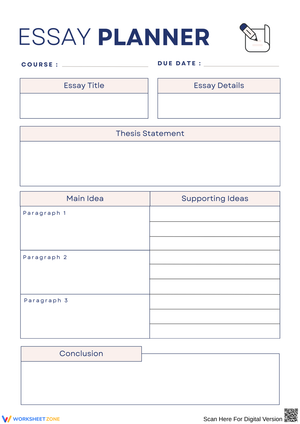
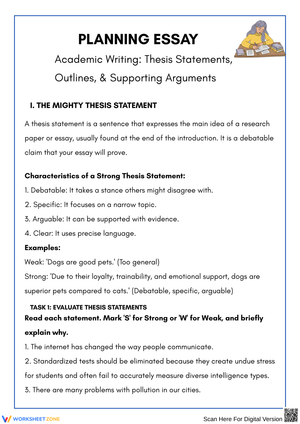
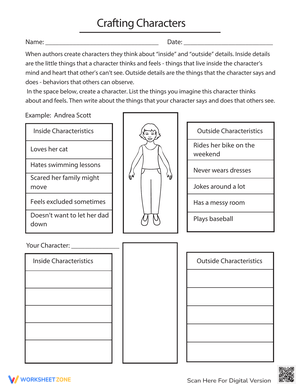
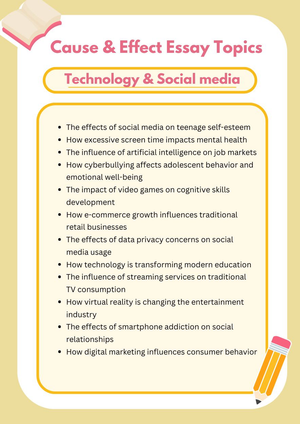
These essay writing worksheets resources give grades 4 through 8 teachers a structured entry point into one of the hardest writing transitions students face: moving from a single strong paragraph to a multi-paragraph piece with a real thesis, body paragraphs that actually support the claim, and a conclusion that earns its place rather than just restating the introduction. The set covers narrative, expository, and argumentative essay types, with separate graphic organizers and planning templates for each genre.
The Specific Skills Each Worksheet Targets
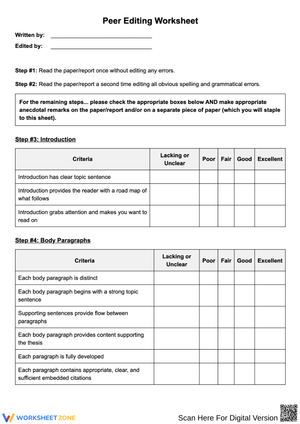
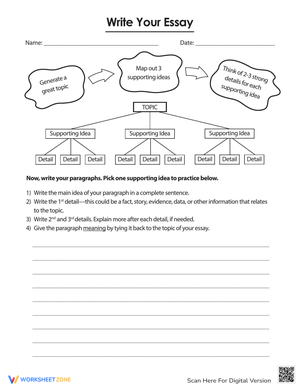
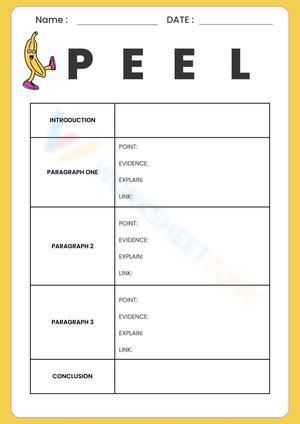
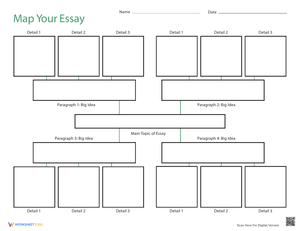
The writing skills addressed here break down into three broad areas. Pre-writing and planning tools help students generate and narrow a topic, draft and revise a working thesis, and map out supporting evidence before a single sentence of prose goes on the page. Genre-specific templates address the distinct demands of each writing type: chronological sequencing and sensory detail for narrative, objective explanation and source verification for expository, and claim-counterclaim structure for argumentative writing. Then, at the paragraph level, each worksheet walks students through the internal structure most students treat as optional until they're taught otherwise:
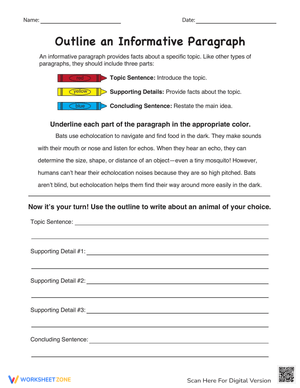
- Topic sentences that name the reason, not just the broad category
- Embedded evidence with a signal phrase that identifies the source
- An analysis sentence that explains how the evidence connects to the thesis
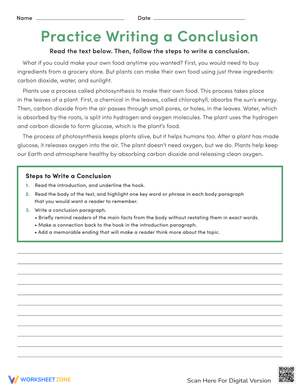
- A clincher sentence that closes the paragraph without simply reopening it
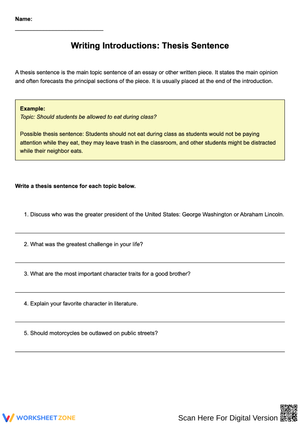
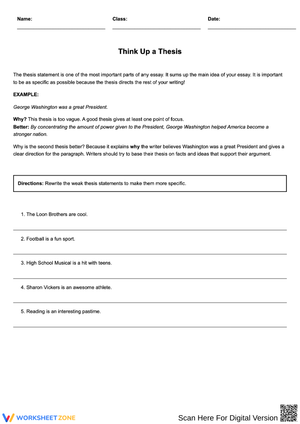
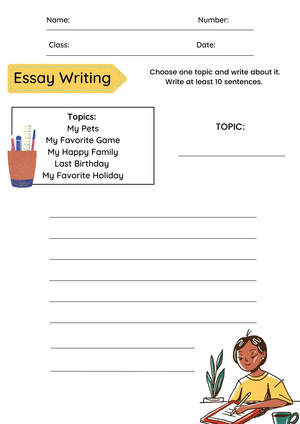
Within each worksheet, exercises move from structured prompts toward open-ended practice. Early prompts give students a partially formed thesis and ask them to identify which evidence supports it. Later prompts present a topic and ask students to construct their own thesis, select their own evidence, and explain the connection. That progression matters because many students can identify a good thesis when they see one long before they can write one from scratch.
Frequent Student Errors Worth Watching For and Addressing
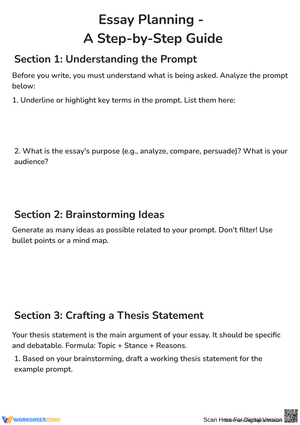
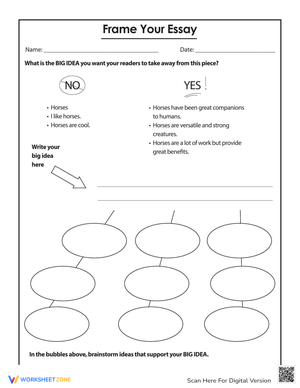
The single most common error in student essay drafts is what might be called the "topic announcement" thesis — a statement like "In this essay, I will discuss the effects of social media on teenagers." Students who write this genuinely believe they have a thesis. The planning worksheet addresses this directly by asking students to answer the question "What do you want your reader to believe or understand?" That shift in framing — from announcing a topic to staking a position — catches the error before the draft starts, rather than after a student has built two body paragraphs around a non-argument.
Two other patterns show up consistently in student work: evidence dropped into a paragraph without any analysis, and conclusions that are nearly word-for-word repetitions of the introduction. The analysis step is the one students most often skip because it feels abstract. The worksheet breaks it into a single concrete task — write one sentence explaining how your evidence supports your topic sentence. Students who struggle with this reveal a real gap in reasoning, not just in writing mechanics, which makes the planning worksheet valuable diagnostic information before drafts begin.
How to Work These Worksheets Into Your Writing Block
The most effective use of these resources is not as a pre-draft formality but as the actual instructional center of your writing block. Spend a full class period on the thesis-planning worksheet before students write a single sentence of their essay. Model the process using a think-aloud on a topic students know well — last week's read-aloud, a shared science unit, a class debate. When students see a teacher crossing out a weak thesis and revising it in real time, the abstract concept of "a strong thesis" becomes concrete and imitable.
These essay writing worksheets resources also work well as formative checkpoints. Before students move from outline to draft, collect the planning worksheet and spend five minutes scanning for red flags: missing evidence, body paragraphs that don't connect to the thesis, conclusions that trail off without resolution. A quick check at that stage saves thirty minutes of reteaching after students have already drafted two pages in the wrong direction. Building that checkpoint into your routine takes about eight minutes of class time and dramatically reduces the number of revision cycles you'll need to run.
Narrative, Expository, and Argumentative — Why Genre Distinctions Matter in Planning
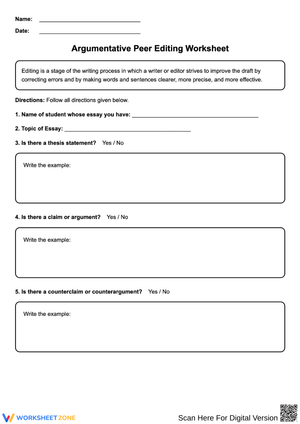
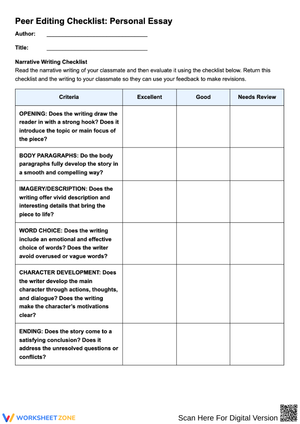
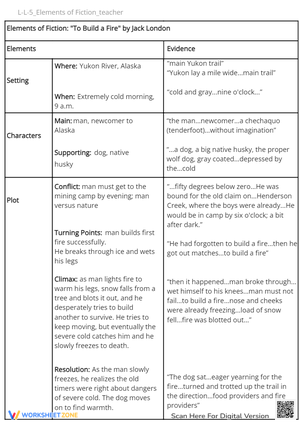
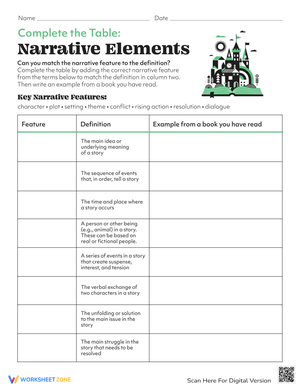
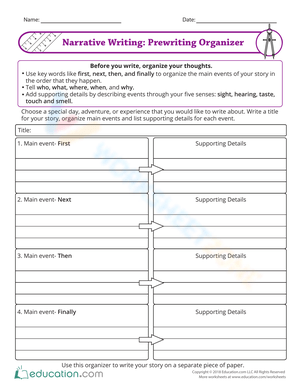
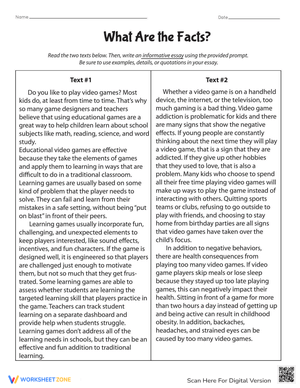
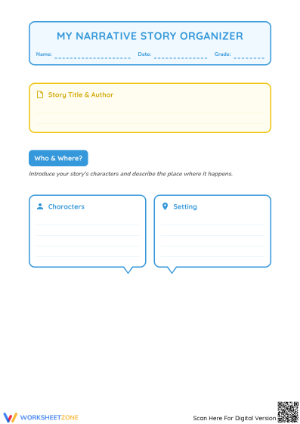
Each essay type in the set has its own planning worksheet rather than a single generic template, and that distinction is worth explaining to students directly. Narrative essays follow a chronological arc — they need a story map, a sense of rising tension, and a moment of reflection at the end. Expository essays move through a logical sequence of information and require students to distinguish relevant facts from tangential detail. Argumentative essays add a layer that students find genuinely difficult: the counterclaim. A student who has never considered the opposing side of their argument will struggle not just with the worksheet but with the underlying thinking it demands.
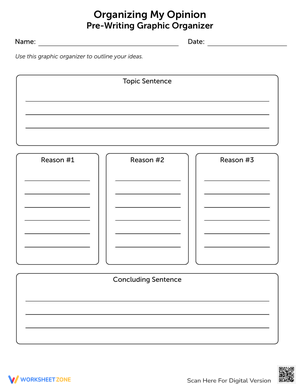
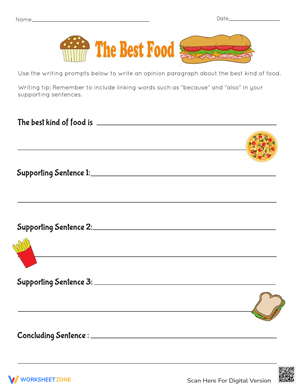
The OREO structure (Opinion, Reason, Evidence, Opinion) appears in the persuasive and argumentative worksheets as a sentence-level tool, not just a paragraph planner. When students practice it at the sentence level first, they develop the habit of always backing a claim before moving on — a transferable skill that shows up in research papers and document-based questions well beyond this unit.
Adjusting Each Worksheet Across a Range of Student Readiness Levels
For students who need additional support, the planning worksheets include sentence starters at each stage — not full sentences, but enough of a grammatical frame that a student who freezes in front of a blank box has somewhere to begin. "One reason that supports my thesis is..." is a low bar, but it breaks the paralysis. Once those students have completed a few worksheets with that support in place, pull the starters and see what holds. What remains is actual evidence of their independent thinking.
Advanced writers often find structured templates too constraining once they've internalized the underlying logic. For those students, replace the filled graphic organizer with a blank outline grid and a one-sentence direction: "Plan your essay. Your introduction must establish a clear, debatable claim." Pushing them into more complex argumentative territory — requiring a counterclaim paragraph with a direct rebuttal — adds genuine challenge without requiring a separate assignment. These essay writing worksheets materials include a version of the argumentative planner both with and without the counterclaim section, so differentiation doesn't require printing two entirely different resources for different groups.
Standard Alignment
The planning and genre-specific worksheets in this set align to Common Core State Standards for Writing at grades 4 through 8. The thesis-development and argumentative planning tools address CCSS.ELA-LITERACY.W.5.1 and W.6.1 — opinion and argument writing requiring logically ordered reasons and relevant evidence. The expository and informational planning worksheets address W.5.2 and W.6.2, covering informative and explanatory writing with organized structure and domain-specific vocabulary. Across all genres, the pre-writing process aligns to W.4–8.5, which addresses planning, revising, and producing writing appropriate to task and purpose.
In practical classroom terms, W.5 and W.6 writing standards are typically introduced during a dedicated writing unit in the fall and revisited during content-area writing assignments throughout the year. These worksheets work equally well in a standalone writing unit and as a planning tool when a science or social studies teacher assigns an explanatory essay mid-unit — contexts where students often have the content knowledge but not the organizational structure to deploy it effectively.
Frequently Asked Questions
What grade level are these worksheets built for?
The set targets grades 4 through 8. The simpler planning templates — basic thesis framing, three-part body structure — work well at grades 4 and 5. The argumentative worksheets with counterclaim sections are more appropriate for grades 6 through 8. Most individual worksheets indicate their intended level in the instructions, so a 6th-grade teacher can hand a struggling student the 5th-grade expository planner without it being obvious that it's a modified resource.
How do these work for students who struggle with writing?
Students who struggle most often get stuck at two points: getting started and explaining their evidence. The sentence starters and partially structured prompts in the support-level worksheets address both. The goal is not to lower the expectation but to remove the formatting obstacle so the student's actual thinking can get onto the page. Once thinking is there, revision is far more productive than asking a student to draft without any planning structure in place and then fixing the result from scratch.
Can these serve as formative assessment tools?
Collecting the thesis-planning worksheet before students begin drafting is one of the most reliable early-warning checks available. A student who cannot fill in the evidence boxes has not yet understood the prompt or the source material well enough to write. Catching that gap at the planning stage — rather than at the end of a full draft — changes what you do next: a five-minute conference, a pointer back to the text, or a prompt adjustment. The worksheet makes that intervention possible before the student has spent forty minutes drafting in the wrong direction.
Do these work in digital formats?
The essay writing worksheets format prints cleanly and can also be uploaded to Google Classroom, Schoology, or any LMS that accepts PDF uploads for student annotation. Students can type directly into editable fields or annotate with a stylus on a tablet. The graphic organizers include enough white space to be usable on a standard school screen without requiring students to zoom in just to read the prompts — a small detail that matters when you're trying to keep a class of thirty moving through a planning activity at the same pace.












 Interactive Worksheet Maker
 Quiz Maker
 Word Search Maker
 Crossword Puzzle Maker
 Word Scramble Generator
 Sentence Scramble Generator
 Handwriting Worksheet Generator
 Name Tracing Generator
 Fill In The Blank Generator