What Roles of the President Worksheets Actually Teach
When students first study the executive branch, most can name the president but few can explain what the job actually involves. Roles of the president worksheets close that gap by breaking one broad office into concrete, teachable duties. Instead of memorizing a single title, students connect each role to a specific power, a real example, and the part of government it touches. That structure turns a vague civics topic into something you can teach, review, and reteach inside a single class period.
For US social studies teachers, the practical value is what stands out. A role-based worksheet gives you a ready framework for direct instruction, partner sorting, and quick formative checks. It also scales cleanly. The same set of roles supports a first-grade introduction to leadership and a middle school unit on separation of powers, as long as you adjust the vocabulary and the number of roles you expect students to master. That flexibility is why this topic earns a permanent spot in most civics units.
The Presidential Roles Your Worksheets Should Cover
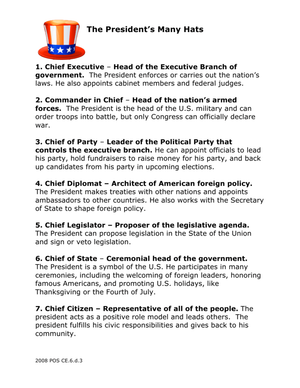
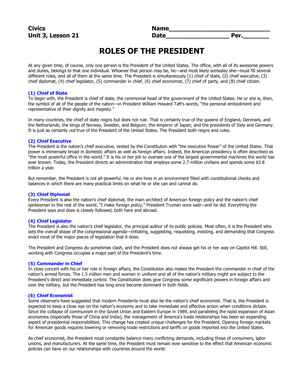
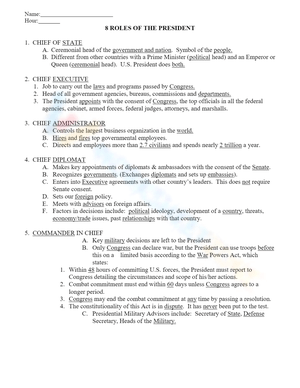
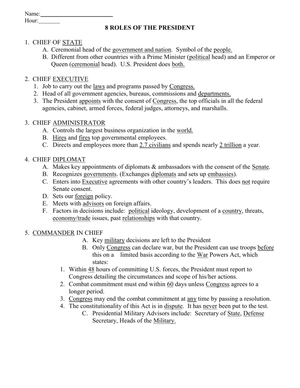
Civics curricula commonly organize the presidency into eight roles. A strong worksheet set names each one and pairs it with a plain-language description students can match, sort, or define.
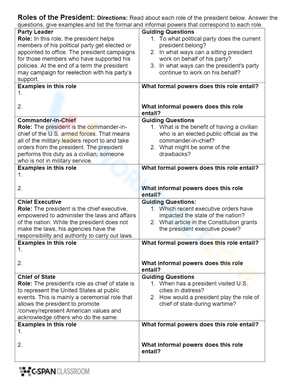
- Chief of State - the ceremonial head of the nation who represents the United States at public events.
- Chief Executive - appoints the Cabinet, appoints Supreme Court justices and ambassadors, issues executive orders, and delivers the State of the Union.
- Chief Administrator - directs the federal bureaucracy and the executive departments day to day.
- Chief Diplomat - negotiates treaties, appoints and receives ambassadors, and sets the direction of foreign policy.
- Commander-in-Chief - holds civilian control of the armed forces under the Constitution, though the president does not personally lead troops into battle.
- Chief Legislator - proposes an agenda to Congress, signs or vetoes bills, and shapes the national policy conversation.
- Chief of Party - leads the president's political party and campaigns for its candidates.
- Chief Citizen - is expected to represent and serve the interests of the American people.
You do not need every role on every worksheet. A first pass might focus on the three most visible roles - Chief Executive, Commander-in-Chief, and Chief Diplomat - before layering in the ceremonial and party roles. Sequencing the roles this way keeps early worksheets uncluttered and gives students a foundation before they tackle the fuller list.
Matching Roles to Constitutional Powers
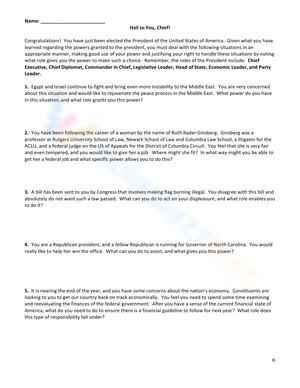
The most useful worksheet format for this topic is a matching or sorting activity where students connect a role name to a constitutional power or a real example. This forces them to distinguish the Chief Diplomat's treaty power from the Commander-in-Chief's control of the military - two roles students routinely blur. The act of sorting is where the learning happens, because students have to justify each pairing rather than recognize a definition.
According to Students of History, the U.S. president simultaneously fills eight distinct constitutional and traditional roles, from Chief Executive to Chief Citizen. That single fact reframes a common misconception in classrooms: the presidency is not one job but a bundle of eight overlapping responsibilities students can sort, define, and cite with evidence.
Classroom Implementation
Start with a short direct-instruction block that names each role and gives one clear example. Then move to the worksheet as guided practice. A sorting sheet works well in pairs: one student reads the power aloud, the other names the role, and they check each other before recording an answer. For a formative check, hand out the same roles as a fill-in or matching quiz the next day and note which roles students still confuse.
For small-group intervention, cut the worksheet down to the three roles students missed most and reteach each with a current example. For enrichment, ask fast finishers to find a recent executive order or treaty in the news and label which role it demonstrates. iCivics offers free executive-branch lesson plans and its game Executive Command, which pairs naturally with a roles worksheet as a review station or an extension activity for students who finish early.
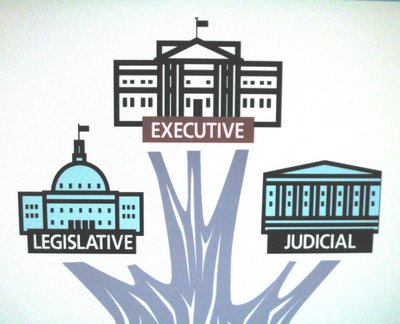
Timing matters too. This topic fits well midway through a three-branches-of-government unit, once students already understand that power is divided. Slot the roles worksheet in after you introduce the executive branch but before you compare it to Congress and the courts, so students can contrast the president's powers with the checks that limit them.
Frequently Asked Questions
1. What are the main roles of the president teachers should cover?
Most civics teachers cover eight roles: Chief of State, Chief Executive, Chief Administrator, Chief Diplomat, Commander-in-Chief, Chief Legislator, Chief of Party, and Chief Citizen. Elementary teachers often trim this list to three or four simplified roles built around leadership, decision-making, and representation.
2. How can I use these worksheets for review versus formative assessment?
For review, use an open matching sheet students complete with notes and a partner. For formative assessment, give the same roles as an independent fill-in or sort the next day, then track which roles students still confuse so you can target reteaching before the unit test.
3. What grade levels should learn the full eight-role breakdown?
The full eight-role breakdown fits middle school, where students can manage constitutional vocabulary. Elementary grades do better with three or four plain-language roles, as the C3 Teachers first-grade inquiry models with its compelling question about presidential importance.
4. How do these worksheets connect to state social studies standards?
Most state social studies standards include the structure and powers of the executive branch, so a roles worksheet maps directly to those expectations. The C3 Teachers inquiry approach connects the same content to compelling-question instruction and evidence-based reasoning students can transfer to other topics.