What Citizenship in the Community Worksheets Cover
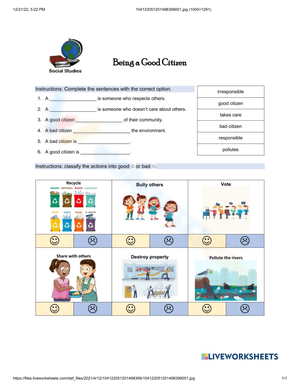
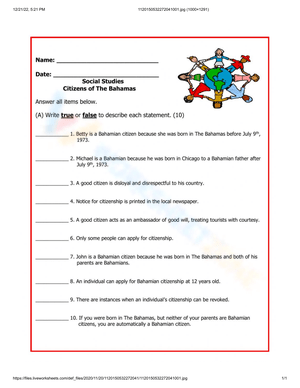
Citizenship in the community worksheets ask young students to name the rules, rights, roles, and responsibilities that hold a community together. On the Worksheetzone page, the activities center on concrete situations a first, second, or third grader already knows: classroom jobs, playground rules, following directions, helping a neighbor, and recognizing the community helpers who keep a town running. Instead of abstract talk about government, the pages give students something to sort, match, label, and explain.
That framing matters because civic ideas are hard to teach in the abstract. When a worksheet asks a child to decide whether raising your hand is a right or a responsibility, the child is practicing the same reasoning an adult uses to weigh personal freedom against shared rules. The worksheet becomes a rehearsal space for participation, not just a vocabulary drill.
The strongest pages also make the vocabulary visible. Terms like rule, right, responsibility, and helper appear next to pictures and short scenarios, so a student who cannot yet read fluently still has a way into the concept. That accessibility is what lets the same worksheet serve a confident reader and a striving reader in the same room.
Which Grades These Worksheets Fit Best
Community citizenship sits squarely in the early elementary social studies sequence. Most US districts introduce citizenship in school and community in grades 1 through 3, when students are ready to move from family and self toward the wider neighborhood. First graders usually focus on rules and helpers, second graders start comparing rights and responsibilities, and third graders begin connecting local roles to how decisions get made. Districts that follow an expanding-communities model often revisit the topic each year with more depth.
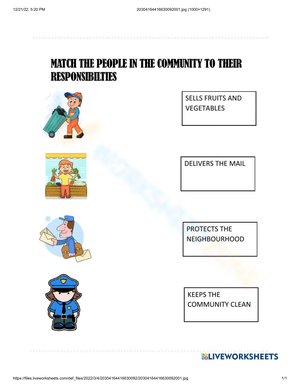
Because the concepts build on one another, one worksheet set can carry a teacher across several grade bands with small adjustments. A matching page that pairs community helpers to their jobs works as an introduction in grade 1 and as a warm-up review in grade 3 before a deeper lesson on civic action.
Watching where a class lands on that sequence also tells you which activities to assign. If most students still mix up rules and consequences, stay with grade 1 style matching. If they can already justify a responsibility in their own words, move up to the writing prompts intended for grade 3.
How These Worksheets Align to Social Studies Standards
Most state elementary standards trace back to the College, Career, and Civic Life (C3) Framework for Social Studies State Standards, which names citizenship in school and community as a core civics strand alongside history, economics, and geography. The framework's Inquiry Arc asks students to pose questions, weigh evidence, and take informed action rather than memorize isolated facts.
Here is the alignment most teachers miss: a simple rights-versus-responsibilities sorting task already touches three of the four Inquiry Arc dimensions. Deciding what belongs in each column is evaluating evidence, explaining the choice out loud is communicating conclusions, and agreeing on a new classroom rule is taking informed action. Documented this way, a ten-minute worksheet becomes defensible evidence of standards coverage during a walkthrough or planning review.
According to NAEP Civics, only 22% of US eighth graders scored at or above Proficient on the 2022 civics assessment, and 31% scored below Basic. That gap is the strongest argument for starting citizenship instruction in first grade rather than waiting for middle school, when civic habits are far harder to build from scratch.
Classroom Implementation
Worksheets work best when they open or anchor a routine rather than replace it. Try this sequence over a single lesson:
- Launch with a compelling question such as what makes a good citizen in our classroom, and let students answer on the worksheet before any instruction.
- Sort and label rights, responsibilities, rules, and helpers so students handle the vocabulary in context.
- Pair and compare answers with a partner, which turns a solo page into a short deliberation.
- Take one small action, like proposing a new class job, so the lesson ends in participation instead of a grade.
Classroom-meeting routines pair naturally with these pages. When a student finishes the responsibilities section and then raises a real playground problem in the next morning meeting, the worksheet stops being an isolated task and becomes the on-ramp to genuine civic talk.
Differentiation Across Grades 1-3
One community-citizenship worksheet can stretch across three grades if you adjust the demand rather than the topic:
- Grade 1: Match community helpers to their tools or jobs, and circle classroom rules from a picture set.
- Grade 2: Sort statements into right and responsibility columns, then write one sentence explaining a choice.
- Grade 3: Add a short response asking how a community role helps solve a shared problem, moving toward informed action.
For students in small-group intervention, shorten the sort to four or five items and read each one aloud. For enrichment, ask early finishers to invent a new community helper and describe the responsibility that role would carry for the neighborhood.
Frequently Asked Questions
1. What grade level is citizenship in the community usually taught?
In most US elementary schools it appears in grades 1 through 3. First grade leans on rules and community helpers, second grade compares rights and responsibilities, and third grade connects local roles to how a community solves shared problems.
2. How do these worksheets align with social studies standards?
They map to the College, Career, and Civic Life (C3) Framework, which lists citizenship in school and community as a core civics strand and asks students to question, use evidence, and take informed action through its Inquiry Arc.
3. What is the difference between community helpers and civic responsibility?
Community helpers teach who does what in a town, which is a knowledge goal. Civic responsibility teaches what each person owes the group, which is a reasoning and habit goal. Strong worksheets move students from naming helpers to explaining duties.
4. How can I use these worksheets for intervention or review?
Shorten the sort to a handful of items, read the prompts aloud, and focus on the single distinction a student keeps missing. Used this way, a worksheet becomes a targeted five-minute reteach rather than a full lesson.
5. What classroom routines pair well with citizenship worksheets?
Morning meetings, classroom jobs, and partner deliberation all extend the page into practice. Finishing a worksheet and then voting on a real class rule turns paper vocabulary into participatory citizenship.